Drone 101: How Propellers, Motors, and Sensors Make Drones Fly

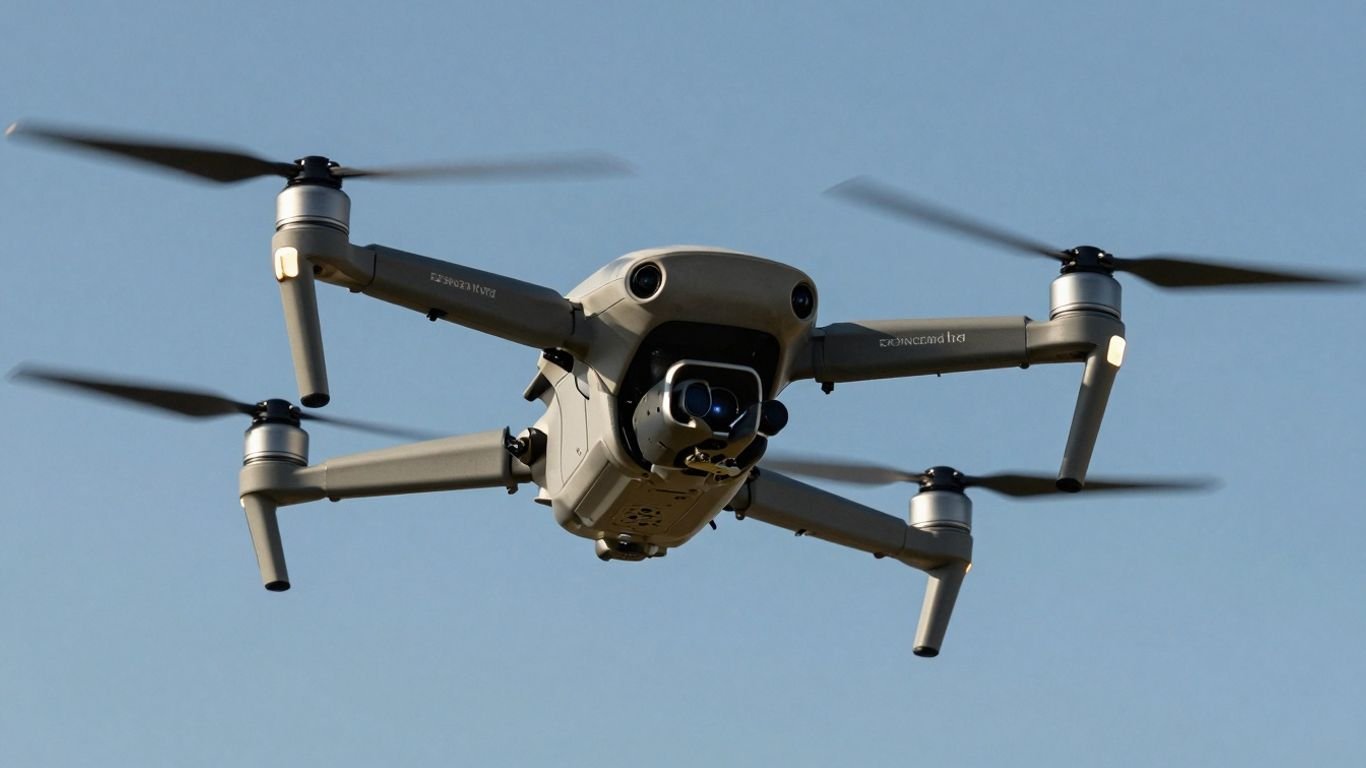
Drones are everywhere these days, from taking cool aerial shots to helping out with deliveries. But have you ever stopped to wonder, how a do drone works? It might seem complicated, but the basic idea behind how they fly is actually pretty straightforward. We’re going to break down the tech and the simple principles that keep these amazing machines in the air. So, let’s get started and figure out how these flying gadgets actually fly.
Key Takeaways
- Drones, also known as Unmanned Aerial Vehicles (UAVs), fly by using propellers to push air downwards, creating lift.
- Quadcopter drones, the most common type, use four propellers spun by motors to control their movement.
- A flight controller acts as the drone’s brain, taking information from sensors and the remote control to tell the motors what to do.
- The main parts of a drone include the frame, motors, propellers, battery, and the controller used to fly it.
- Learning to fly involves understanding basic controls like throttle, yaw, pitch, and roll, and practicing in safe, open areas.
Understanding How Drones Work
Defining Drones: Unmanned Aerial Vehicles
So, what exactly is a drone? At its core, a drone is an aircraft that doesn’t have a human pilot on board. Think of it as a flying robot. These Unmanned Aerial Vehicles, or UAVs, can be as small as your hand or as big as a small airplane. They operate either through commands from a remote control or by following a pre-programmed flight path. The main thing to remember is that they fly without a person inside.
The Two Main Types of Drones
When we talk about how drones fly, it’s helpful to know there are two main designs: fixed-wing and rotary. Fixed-wing drones are like traditional airplanes; they have wings that stay put. To fly, they need to move forward to push air over their wings, creating lift. Rotary drones, on the other hand, use spinning blades, like propellers, attached to motors. These spinning blades push air down, lifting the drone up. Most of the drones you see buzzing around, especially the popular quadcopters, fall into this rotary category.
How Drones Work: The Basics
At the heart of basic drone operation is a system that makes everything happen. For a quadcopter, this means four motors, each with a propeller. When these propellers spin, they push air downwards. This downward push of air creates an upward force, which is lift. By precisely controlling the speed of each of these four propellers, the drone can move in any direction. If all propellers spin at the same speed, the drone hovers. Speeding up the rear ones makes it go forward, the front ones to go backward, and so on. It’s all about balancing these spinning forces.
The flight controller acts as the drone’s brain. It takes signals from your remote control, information from sensors like GPS, and then tells the motors exactly how fast to spin. This constant communication is what allows the drone to stay stable and respond to your commands.
Here’s a quick look at the main parts involved in making a drone fly:
- Propellers: These are the spinning blades that push air. They generate both the lift to get off the ground and the thrust to move around.
- Motors: These spin the propellers. The speed of each motor is adjusted to control the drone’s movement.
- Flight Controller: This is the central computer that processes all the information and sends commands to the motors.
- Battery: This provides the power for the motors and the flight controller.
The Mechanics of Drone Flight
So, how does a drone actually stay up in the air and move around? It all comes down to some pretty neat physics, mainly involving propellers and motors. We’ll use the common quadcopter as our example, since they’re everywhere these days.
Propellers: Generating Lift and Thrust
Think of propellers like tiny wings that spin really fast. As they rotate, they push air downwards. This action creates an upward force, called lift, that counteracts gravity and gets the drone off the ground. The faster the propellers spin, the more air they push down, and the higher the drone goes. To move forward, backward, or sideways, the drone doesn’t just tilt; it actually adjusts the speed of individual propellers. For instance, to move forward, the rear propellers might spin a bit faster, pushing more air down and back, which nudges the drone forward.
The Role of Motors in Drone Movement
Each propeller is attached to a motor. These motors are the workhorses, providing the power to spin the propellers at high speeds. The flight controller tells these motors exactly how fast to spin. If all motors spin at the same speed, the drone hovers. If one motor speeds up or slows down, the drone tilts and moves in a specific direction. It’s a constant, rapid adjustment of motor speeds that keeps the drone stable and allows for precise movements.
How Quadcopters Achieve Flight
Quadcopter flight is all about balance and control. With four rotors, they have a lot of flexibility. Here’s a simplified breakdown:
- Hovering: All four motors spin at a speed that generates just enough lift to keep the drone in place.
- Ascending/Descending: Increasing the speed of all four motors makes the drone go up; decreasing the speed makes it go down.
- Moving Forward/Backward: The rear motors spin faster to push more air down and back, tilting the drone forward and causing it to move ahead. The opposite happens for backward movement.
- Moving Left/Right: Similar to forward/backward movement, the speed of the motors on one side is adjusted to tilt and move the drone laterally.
- Rotating (Yaw): This is a bit trickier. Two motors spin clockwise, and two spin counter-clockwise. To rotate the drone, the speeds of the clockwise and counter-clockwise spinning motors are adjusted relative to each other, causing the drone to spin on its axis.
Understanding these basic principles of drone aviation is key to appreciating how these machines work. It’s a delicate dance of air pressure, motor speed, and precise control.
These principles of drone flight mechanics are what allow for everything from simple aerial photography to complex delivery services.
The Drone’s Brain: The Flight Controller
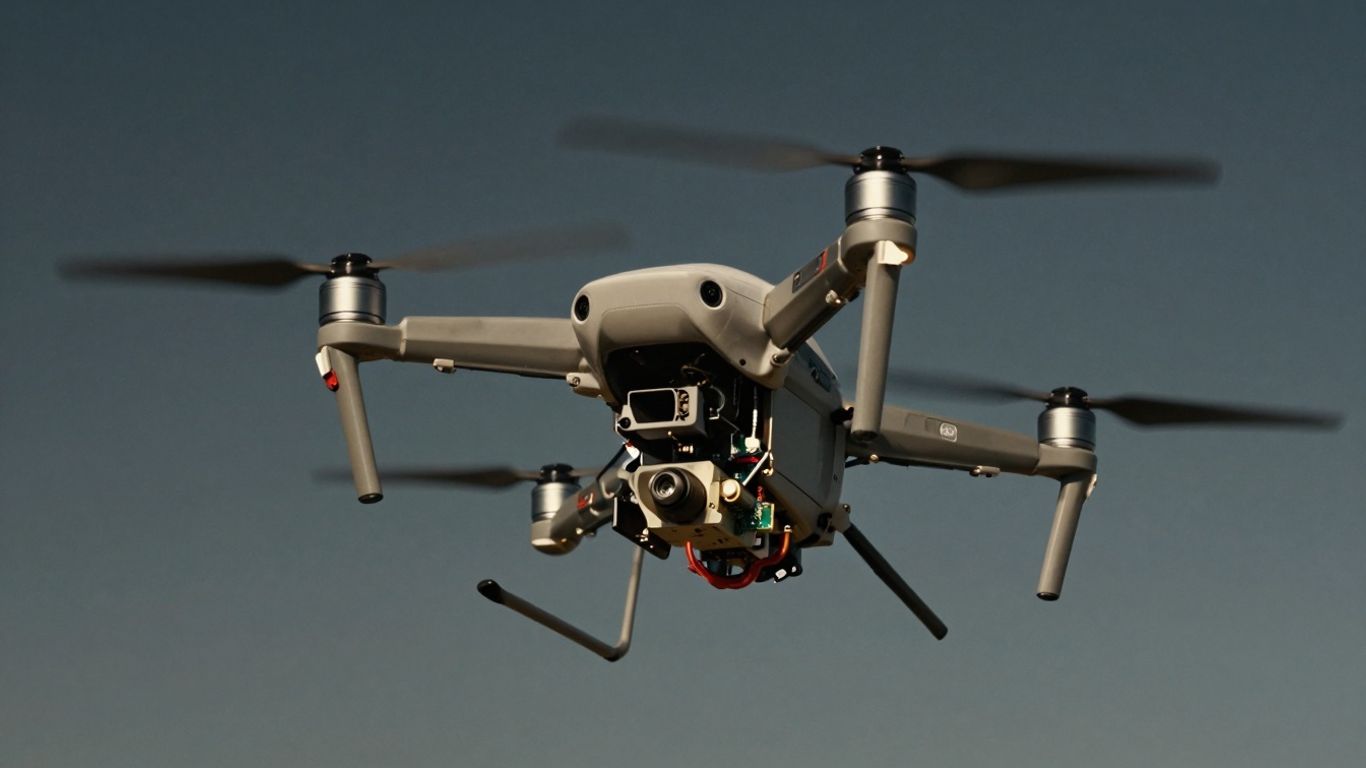
Think of the flight controller as the central nervous system of your drone. It’s the part that takes all the information coming in and figures out what the drone needs to do. This tiny computer is what makes flying possible. Without it, your drone would just be a collection of parts.
Receiving Inputs from the Controller
When you move the sticks on your remote control, you’re not directly telling the motors what to do. Instead, those stick movements send signals to the flight controller. For example, pushing the right stick forward tells the flight controller you want the drone to move forward. The flight controller then processes this command.
Integrating Sensor Data for Navigation
But it’s not just about your commands. The flight controller also listens to a bunch of sensors. Things like GPS tell it where it is in the world, and other sensors help it understand its orientation – is it level, tilted, or spinning? If the drone has obstacle avoidance, the flight controller gets data from those sensors too, letting it know if something is in the way.
Sending Commands to the Motors
Once the flight controller has your command and all the sensor data, it figures out the best way to make it happen. It calculates exactly how fast each motor needs to spin. For instance, to move forward, it might tell the rear motors to spin a bit faster than the front ones. This constant calculation and adjustment is what keeps the drone stable and responsive.
Here’s a quick look at how commands translate:
- Your Input: Move right stick forward.
- Flight Controller Action: Processes command, checks sensors for stability and obstacles.
- Motor Adjustment: Increases speed of rear motors, decreases speed of front motors (for a quadcopter).
- Result: Drone pitches forward and moves ahead.
The flight controller is constantly making tiny adjustments, many times a second. It’s like a super-fast pilot inside the drone, making sure everything stays balanced and goes where you want it to, all while reacting to the environment.
Essential Drone Components
So, you’ve got your drone, and you’re wondering what makes it actually fly? It’s not just magic, though sometimes it feels like it! Let’s break down the main parts that make up these flying machines.
The Drone Frame: Housing the Technology
Think of the frame as the drone’s skeleton. It’s the structure that holds everything together – the motors, the battery, the flight controller, and all the other bits and pieces. Frames come in all sorts of shapes and sizes, usually made from lightweight but strong materials like carbon fiber or plastic. The design of the frame isn’t just for looks; it affects how stable the drone is in the air and how it handles different conditions. A good frame protects the delicate electronics inside from bumps and crashes, which, let’s be honest, happen.
Powering the Drone: Batteries and Motors
No power, no flight. The battery is the heart of the drone, providing the juice for everything to work. Most drones use rechargeable lithium-polymer (LiPo) batteries. The bigger the battery, generally the longer your drone can stay airborne, but it also adds weight. Then you have the motors. These are what spin the propellers. For a quadcopter, you’ve got four motors, and they work together to lift the drone and make it move. The speed at which these motors spin is precisely controlled to make the drone go up, down, or move in any direction.
Control and Communication: Controller and Sensors
This is how you talk to your drone and how it talks back. The controller, the thing you hold in your hands, sends commands to the drone. It’s like the steering wheel and gas pedal, but for the sky. But the drone isn’t just blindly following orders. It’s got sensors! These can include GPS for knowing where it is, accelerometers and gyroscopes to keep it stable, and sometimes even cameras or other specialized equipment for tasks like mapping or photography. These sensors feed information back to the drone’s ‘brain’ – the flight controller – which then makes tiny adjustments to keep the flight smooth and on course. Understanding how these parts work together is key to safe drone operation.
Here’s a quick look at some common components:
- Frame: The structural body.
- Motors: Spin propellers for lift and movement.
- Propellers: Generate thrust by pushing air.
- Battery: Provides electrical power.
- Flight Controller: The drone’s ‘brain’.
- Radio Receiver: Gets signals from the controller.
- Sensors: GPS, IMU (Inertial Measurement Unit), etc.
The interplay between the controller, the drone’s sensors, and the flight controller is what allows for precise aerial maneuvers. Without these communication lines and data inputs, a drone would just be a collection of parts.
For professional work, you might see drones with extra gear like thermal cameras or LiDAR scanners, but the core components remain the same. It’s all about getting those parts to work in harmony.
Navigating and Controlling Your Drone
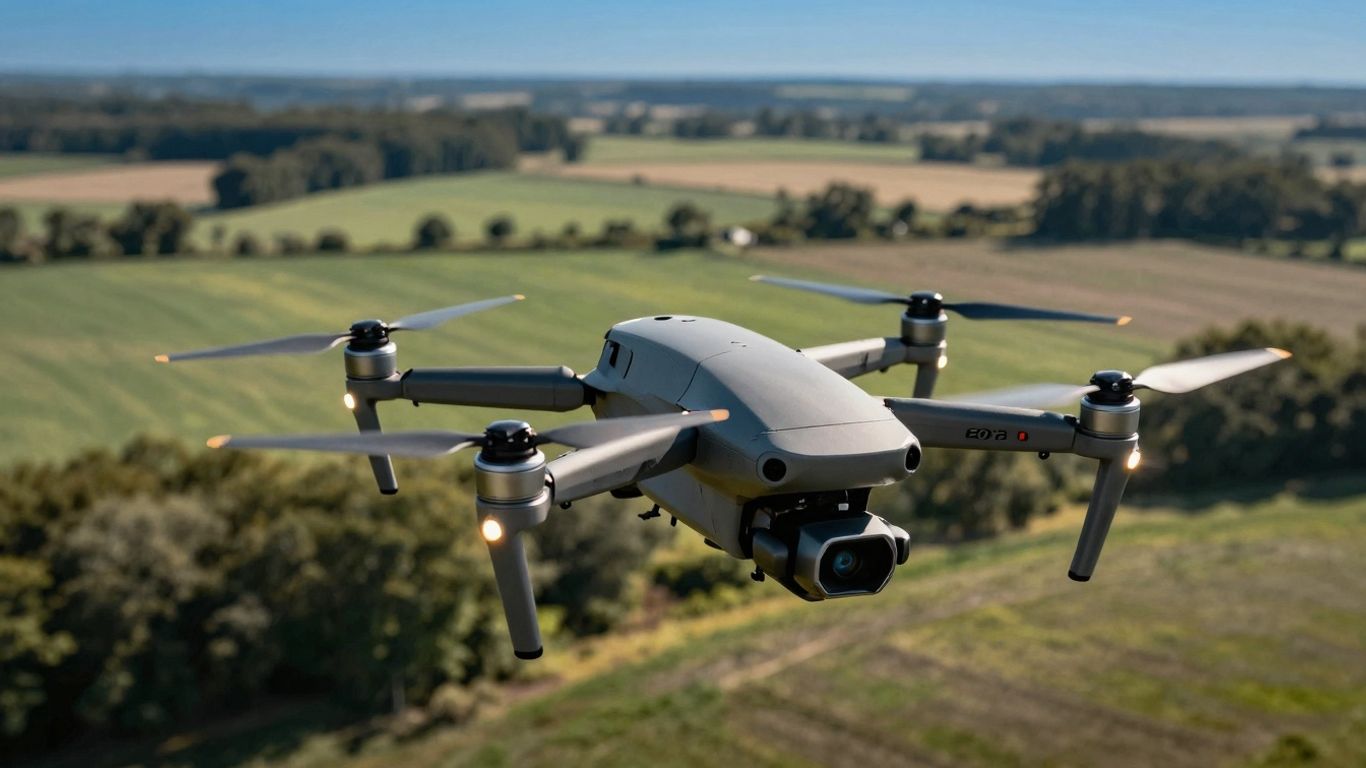
So, you’ve got your drone up in the air, and now it’s time to actually fly it. Learning how to pilot a drone might seem a bit tricky at first, but with a little practice, it becomes second nature. Think of it like learning to ride a bike – wobbly at first, then smooth sailing.
Understanding Basic Flight Controls
Most drone controllers have two joysticks. The left stick usually handles throttle (how high the drone goes) and yaw (rotating the drone left or right). The right stick controls pitch (moving forward or backward) and roll (moving left or right). It’s important to remember that when the drone is facing away from you, the controls feel pretty intuitive. Push forward, it goes forward. Push right, it goes right. But when the drone is facing you, those controls flip – push forward, and it moves backward! It takes a bit of getting used to.
Here’s a quick rundown of the main controls:
- Throttle: Pushing the left stick forward makes the drone go up; pulling it back makes it go down. You’ll need to keep a steady throttle to maintain altitude while doing other maneuvers.
- Yaw: Moving the left stick left or right spins the drone on its axis. This is super useful for changing direction or following a subject.
- Pitch: Pushing the right stick forward or backward tilts the drone and makes it move forward or backward. This is how you cover ground.
- Roll: Moving the right stick left or right tilts the drone sideways, making it move left or right. This is great for strafing or making quick adjustments.
When you’re first starting out, use very gentle stick movements. Big, jerky movements can easily send your drone spinning or crashing. Small, controlled inputs are key to smooth flying. You’ll get the hang of it faster than you think.
Achieving Stable Hovering
Hovering is the first real test of your control. You want the drone to stay in one spot, not drift around. To hover, you’ll use the throttle to get the drone about a foot or so off the ground. Then, it’s all about making tiny, precise adjustments with the right stick (pitch and roll) to keep it perfectly still. You might also need to nudge the left stick (yaw) a bit if it starts to turn. It’s a delicate balance, but mastering it is a huge step. When you’re ready to land, just ease back on the throttle slowly until it’s on the ground. You can check out some great tips on drone controllers here.
Maneuvering Through the Air
Once you can hover, you can start moving. Try flying in simple patterns like a square or a circle. To fly a square, you’ll combine pitch (forward), roll (sideways), and then yaw (to turn the corner) and repeat. For a circle, you’ll be using pitch, roll, and throttle all at the same time to keep it moving smoothly around a point. Don’t be afraid to practice these patterns over and over. The more you fly, the more comfortable you’ll become with how the drone responds to your inputs. Remember to always keep an eye on your drone and its surroundings, and always fly responsibly.
Advanced Drone Features and Technology
Obstacle Avoidance Systems
Modern drones are getting pretty smart, and a big part of that is their ability to see and avoid things. Think of it like giving your drone eyes. These systems use sensors, like ultrasonic or vision-based ones, to detect objects in the drone’s path. If something pops up – a tree branch, a building, or even a bird – the drone’s brain tells it to slow down, stop, or even find a way around it. This is a game-changer for safety, especially for beginners. It really helps prevent those accidental crashes that can end a flight (and a drone) way too soon. Some advanced systems can even help the drone find a safe place to land if the battery gets low.
Gimbals for Smooth Aerial Footage
If you’ve seen those amazing, steady shots from drones in movies or professional videos, chances are a gimbal was involved. A gimbal is basically a mount that keeps the camera level and stable, no matter how the drone itself is moving. Drones can tilt, turn, and vibrate, but a good gimbal uses motors to counteract those movements. This means you get super smooth video, even when the drone is flying through wind or making quick turns. It’s what separates a shaky home video from something that looks like it belongs on the big screen.
Specialized Equipment for Professional Use
Drones aren’t just for taking pretty pictures anymore. For folks working in fields like agriculture, construction, or surveying, there’s a whole range of specialized gear. You’ve got drones equipped with:
- LiDAR sensors: These use lasers to create detailed 3D maps of the ground or structures. It’s incredibly accurate for mapping and measuring.
- Thermal cameras: These detect heat signatures, which are super useful for inspecting buildings for heat loss, finding wildlife at night, or checking on solar panels.
- High-zoom cameras: For inspecting things from a safe distance, like power lines or wind turbines, without getting too close.
These add-ons turn a simple flying camera into a powerful tool for specific jobs. Staying updated on the latest in aerial innovation is key if you’re looking to use drones for more than just a hobby.
So, What’s Next?
And that’s pretty much the lowdown on how these things actually get off the ground and stay up there. We’ve talked about how spinning propellers push air down to lift the drone, and how the flight controller is like the brain, making sure everything works together. It’s not magic, just some clever engineering. Whether you’re thinking about flying one for fun or for work, knowing the basics of how they fly is a good start. There’s a lot more to learn, but hopefully, this gives you a solid foundation for understanding these amazing flying machines.
Frequently Asked Questions
What exactly is a drone?
A drone is basically an aircraft that doesn’t have a human pilot on board. Think of it as a robot that can fly. It’s controlled either by someone using a remote control or by following a pre-programmed flight path.
How do drones stay in the air?
Most drones, especially the popular quadcopters, use spinning propellers. These propellers push air downwards really fast. This action creates an upward force, kind of like how a fan pushes air, which lifts the drone off the ground and keeps it flying.
What makes a drone move in different directions?
Drones change direction by adjusting the speed of their propellers. For example, to move forward, a quadcopter might make its back propellers spin faster while slowing down the front ones. The flight controller figures out exactly how much to change each propeller’s speed.
What is the ‘brain’ of a drone?
The ‘brain’ of a drone is called the flight controller. It’s a small computer that takes in information from the remote control, GPS, and other sensors. Then, it sends precise instructions to the motors to make the propellers spin at the right speeds for flying.
Are there different kinds of drones?
Yes, there are two main types: fixed-wing and rotary. Fixed-wing drones look more like airplanes with wings that stay still. Rotary drones, like quadcopters, have propellers that spin, similar to a helicopter. Quadcopters are super common for everyday use.
What are some cool extra features drones have?
Many drones come with helpful features like obstacle avoidance systems that help them steer clear of things. Drones used for filming often have ‘gimbals’ which keep the camera steady for smooth videos, even when the drone is moving around.