What Are Tethered Drones? A Complete Guide

Drones are pretty cool, right? We see them everywhere now, from delivering packages (eventually) to taking those epic shots in movies. But what if you need a drone to stay up there for a really, really long time, or need it to be super stable? That’s where tethered drones come in. They’re basically drones with a cord connecting them to the ground, and it changes everything. Think of it like giving a drone superpowers for certain jobs. This article is all about these special drones, what they can do, and where they’re headed.
Key Takeaways
- Tethered drones connect to a ground station via a cable, allowing for unlimited flight time and a stable connection.
- These drones are great for jobs that need a drone to stay in one place for a long time, like monitoring an event or providing security.
- They offer a reliable power source and data link, which is better than relying solely on batteries and Wi-Fi.
- Applications include aerial photography for events, keeping an eye on things for security, helping out during emergencies, and checking on industrial sites.
- The technology is getting better, with stronger tethers and smarter control systems, meaning tethered drones will be used for even more things in the future.
Understanding Tethered Drones
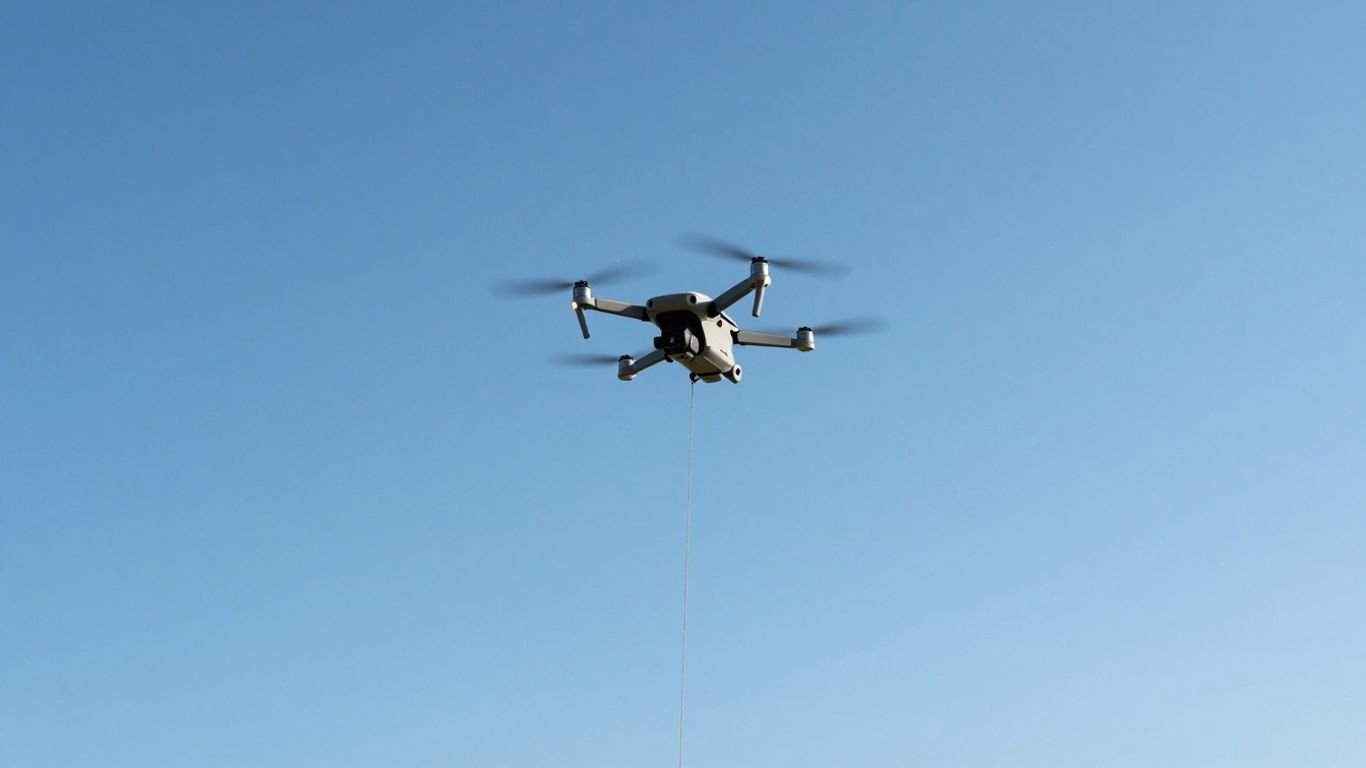
So, what exactly are tethered drones? Think of them as regular drones, but with a special connection. Instead of relying solely on their internal batteries, they’re linked to a ground station via a physical cable. This cable isn’t just for show; it’s a lifeline that provides continuous power and a stable data link. This setup completely changes the game for how long drones can stay airborne.
The Evolution of Drone Technology
Drone technology has come a long way. We started with simple remote-controlled aircraft, then moved to sophisticated multi-rotors capable of complex maneuvers. However, a major hurdle has always been flight time. Batteries, while improving, still limit how long a drone can operate. This is where tethered systems step in, offering a practical solution to this long-standing issue.
Key Components of Tethered Drone Systems
A tethered drone system is made up of a few core parts:
- The Drone: This is the aerial vehicle itself, often designed to be lightweight and efficient.
- The Tether: This is the crucial link. It carries both electrical power from the ground to the drone and transmits data back. These drone power cable systems are engineered to be strong yet flexible.
- The Ground Station: This unit houses the power source (like a generator or mains power) and the control interface. It’s the brain and the muscle behind the operation.
Advantages Over Traditional Drones
The most obvious benefit is the ability to achieve virtually unlimited drone flight time. Because the drone is constantly powered from the ground, it doesn’t need to worry about battery life. This means drones can stay up for hours, even days, which is impossible for standard battery-powered models. This extended operational capability opens up a whole new world of possibilities for various industries.
This continuous power supply means that tasks requiring long-term aerial presence, like continuous surveillance or long-duration monitoring, are no longer a pipe dream. It’s a significant leap forward from the typical 15-20 minute flights we’re used to seeing.
Applications of Tethered Drones
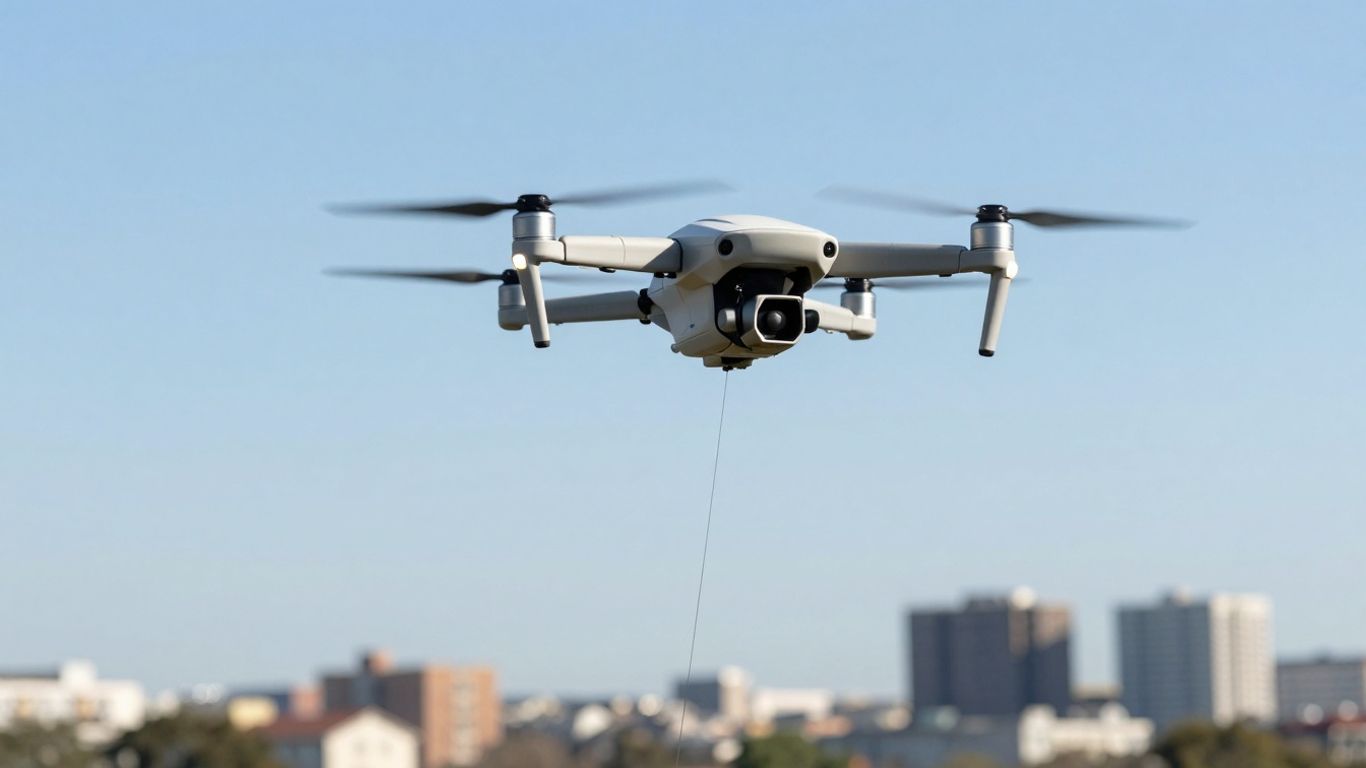
Tethered drones are really shaking things up across a bunch of different fields. Because they can stay up in the air for so long and send back live video and data, they’re becoming super useful for tasks that used to be a real pain or just not possible.
Aerial Photography and Videography
For filmmakers and photographers, tethered drones are a game-changer. Imagine needing to capture a sweeping shot of a landscape or a specific event for an extended period. Instead of worrying about battery life, a tethered drone can provide a stable, consistent aerial view. This is especially helpful for things like capturing a whole wedding day from above, where you might need continuous coverage for a specific segment.
The ability to maintain a fixed position or execute slow, deliberate movements for extended durations opens up new creative possibilities. Think about light painting with drones; a tethered system can hold a steady position for precise light trails, making complex shots much more achievable. It’s a step up from traditional drones for projects demanding long flight times and unwavering stability.
Surveillance and Security Operations
When it comes to keeping an eye on things, tethered drones are incredibly valuable. They can act as stationary aerial platforms, providing constant surveillance over a specific area. This is perfect for monitoring large events, securing perimeters, or keeping watch over construction sites overnight. The continuous power supply means they don’t need to land for battery swaps, allowing for uninterrupted observation. This kind of persistent monitoring is a big deal for security teams.
Public Safety and Emergency Response
In emergency situations, time is everything. Tethered drones can be quickly deployed to provide an overhead view of a disaster zone, a search area, or an accident scene. They can stream live video to first responders, helping them assess the situation, locate victims, or monitor the spread of a fire. Their ability to stay airborne for hours means they can provide ongoing situational awareness without interruption, which is a massive advantage when every second counts. This makes them a key tool for modern emergency response efforts.
Industrial Inspection and Monitoring
This is where tethered drones really shine for industrial drone applications. Think about inspecting tall structures like wind turbines, cell towers, or bridges. A tethered drone can hover in place for as long as needed, allowing inspectors to get incredibly detailed close-up views using high-resolution cameras. They can also be used for monitoring large industrial sites, tracking progress on construction projects, or checking the status of pipelines.
The consistent power and data link mean that detailed inspections and real-time monitoring are much more practical and efficient. For example, detailed photogrammetric flights for creating 3D models on large construction projects are made easier with the stability a tether provides. You can get a lot of detailed data without worrying about the drone running out of juice mid-flight. It’s a practical way to gather information for complex industrial tasks.
Tethered drones are proving their worth by offering extended flight times and reliable data streams, making them ideal for tasks that require persistent aerial presence. This reliability is a significant step forward from the limitations of battery-powered drones in many professional settings.
Here’s a quick look at some common industrial uses:
- Infrastructure Inspection: Bridges, power lines, cell towers, and pipelines.
- Construction Monitoring: Site progress, safety checks, and 3D mapping.
- Event Security: Providing continuous aerial oversight for large gatherings.
- Environmental Monitoring: Tracking wildlife, monitoring pollution, or assessing land use.
These applications highlight how tethered systems are becoming indispensable tools for various industries, offering a level of operational capability previously out of reach. The DJI Matrice 30 series, for instance, offers advanced capabilities that can be adapted for many of these uses, providing professionals with robust tools for demanding jobs DJI Matrice 30 series.
Tethered Drones in Action
So, where are these tethered drones actually making a difference? It’s not just about cool tech demos; they’re showing up in some pretty practical places. Think about events, for starters. Wedding photography has seen some neat innovations. While you can’t shoot an entire wedding with a drone, a 30-minute session can capture some truly unique perspectives. It takes a lot of planning, though. Teams coordinate with ground staff via radio to direct the wedding party, and an expert pilot is in control. It adds a special touch, and couples can add this to their package for a few hundred bucks.
Beyond celebrations, tethered drones are proving their worth in situations needing persistent aerial surveillance. Imagine a large public event or a critical infrastructure site. A tethered drone can stay airborne for hours, providing a constant eye in the sky. This is a big step up from battery-limited drones that need frequent swaps or recharges. It means continuous monitoring without interruption.
Here are a few ways they’re being used:
- Event Coverage: Capturing aerial views of festivals, concerts, and sporting events for broadcast or promotional material.
- Security: Providing ongoing oversight for sensitive locations, like borders or large gatherings, helping with security drone operations.
- Construction Monitoring: Offering a stable platform for detailed site surveys and progress tracking over extended periods.
The ability for these systems to remain aloft for extended durations, powered continuously through their tethers, opens up possibilities for tasks that were previously impractical or impossible with free-flying drones. This sustained presence is key for many industrial and public safety applications.
Long-duration flights are a major draw. Instead of worrying about battery life, these drones can operate for as long as needed, as long as the tether is secure and the ground support is in place. This capability is a game-changer for tasks that require constant observation or data collection over a wide area or for a prolonged time. It’s about reliability and endurance, making them suitable for serious, ongoing work.
Technical Considerations for Tethered Drones
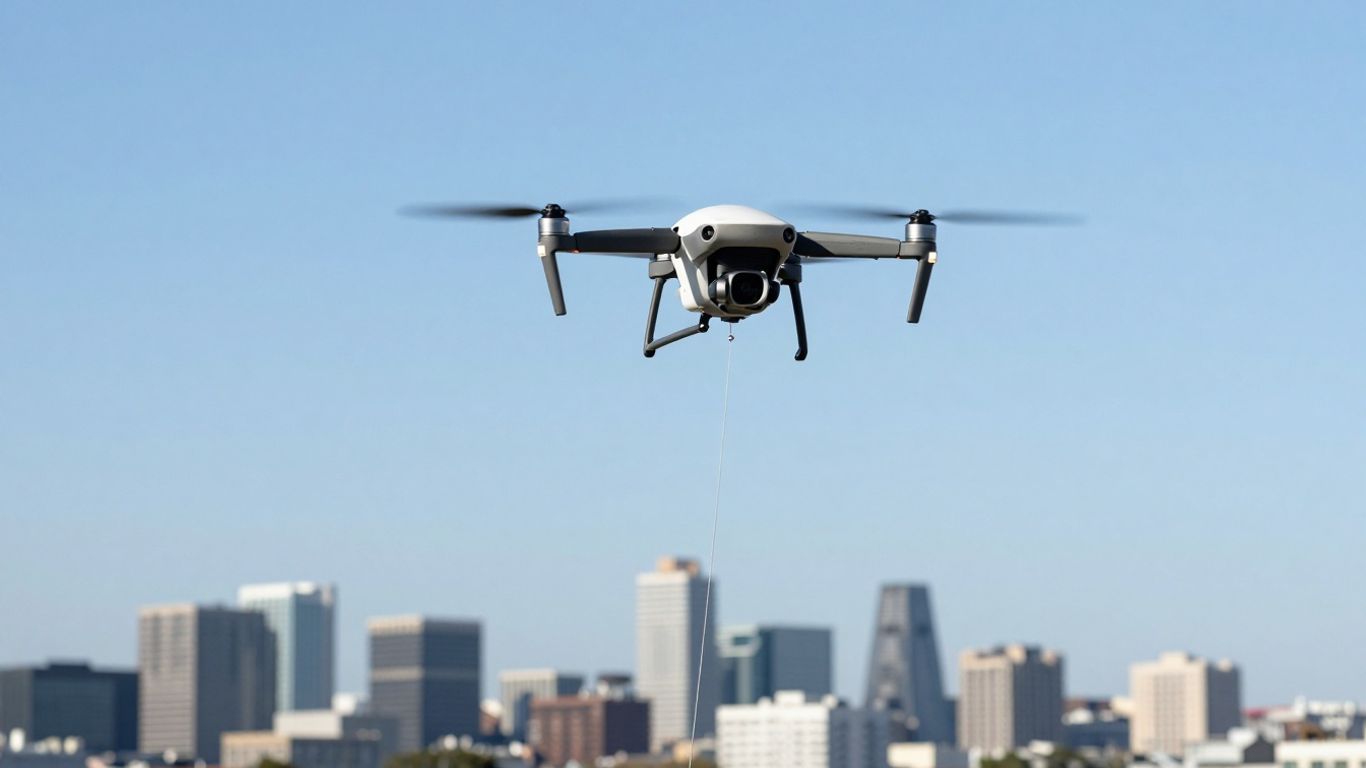
So, you’re thinking about using a tethered drone, huh? They’re pretty neat for staying up longer and keeping a solid connection. But, like anything, there are some technical bits you gotta get right. It’s not just about plugging it in and flying.
Power Supply and Management
This is probably the biggest deal. Unlike regular drones that rely on batteries, tethered ones get their juice from the ground. This means the tether itself has to carry electricity. The amount of power needed depends on the drone, what it’s doing (like carrying extra gear), and how long it needs to stay airborne. You’ve got to make sure the tether can handle the load without overheating or causing a power drop. Sometimes, you’ll see systems with a ground-based generator or a connection to a standard power outlet. It’s all about keeping that steady flow so the drone doesn’t suddenly decide to take an unplanned nap.
- Continuous Power: The main draw is the ability to stay airborne indefinitely, limited only by ground support.
- Voltage and Amperage: Matching the drone’s requirements to the tether’s capacity is key.
- Safety Features: Overcurrent protection and proper grounding are non-negotiable.
Data Transmission and Connectivity
It’s not just about power; the tether also carries data. This is how the drone talks to the operator and sends back video or sensor information. For things like high-definition video or complex commands, you need a fast and reliable connection. Fiber optics are often used in the tether because they’re quick and don’t get messed up by radio interference. This is super important for tasks where you need real-time feedback, like inspecting a bridge or keeping an eye on a large event. A stable link means you can trust the information you’re getting and control the drone precisely. You can find more about how these systems work on drone data links.
Flight Stability and Control
Having a tether means there’s a physical connection to the ground. This can actually help with stability, especially in windy conditions. The tether acts like an anchor, preventing the drone from drifting too much. However, it also introduces a new challenge: the tether itself can get tangled or snagged. Operators need to be really careful about how they fly, especially around obstacles. Advanced flight control systems are designed to manage the tension in the tether and compensate for any movement from the ground end. It’s a delicate balance between using the tether for stability and managing its limitations.
The tether introduces a unique set of challenges and benefits. While it provides a constant power source and a secure data link, it also restricts the drone’s movement radius and requires careful management to avoid snags or tangles. This necessitates specialized flight planning and control strategies.
Here’s a quick look at some factors:
- Tether Management: Systems to spool and unspool the tether automatically.
- Wind Compensation: Algorithms that adjust for wind while accounting for tether pull.
- Obstacle Avoidance: Enhanced sensors and pilot awareness to prevent tether entanglement.
The Future of Tethered Drones
So, where are tethered drones headed next? It’s pretty exciting stuff, honestly. We’re looking at some serious upgrades that will make these already useful machines even better.
Advancements in Tether Technology
The tether itself is getting a makeover. Think lighter, stronger materials that can handle more power and data without being a hassle to manage. We’re talking about tethers that are almost unnoticeable but can still keep the drone powered up for days, not just hours. This means longer, more consistent operations for everything from monitoring remote sites to providing temporary communication networks after a disaster. It’s all about making the connection more reliable and less intrusive.
Integration with AI and Automation
This is where things get really interesting. Imagine a tethered drone that doesn’t just hover in place but actively works with artificial intelligence. It could analyze data in real-time, identify issues on the ground, and even make decisions without constant human input. This level of automation will open up new possibilities for tasks that are too complex or dangerous for people. For instance, a drone could autonomously inspect a bridge, flagging potential structural problems for engineers to review later. It’s about making the drone smarter and more capable.
Expanding Market Opportunities
As the technology matures, we’ll see tethered drones popping up in more places. They’re already proving their worth in security and industrial uses, but think about public events, long-term construction site monitoring, or even providing a stable aerial platform for emergency services. The ability for continuous flight and high-quality data transmission makes them ideal for situations where battery-powered drones just can’t cut it. We’re likely to see specialized models designed for very specific jobs, making them more accessible and affordable for a wider range of businesses and organizations. The potential for continuous aerial surveillance is huge.
The Future is Up
So, tethered drones are pretty neat, huh? They’re not just for taking cool wedding photos or making art in the sky, though those are pretty awesome uses. It seems like these things are popping up everywhere, from helping out with big companies to maybe even changing how we get our packages someday. Sure, there are still some rules and things to figure out, and maybe some folks are worried about who gets to fly where. But one thing’s for sure: these tethered drones are here to stay, and they’re going to keep finding new ways to be useful. It’s exciting to think about what they’ll do next.
Frequently Asked Questions
What exactly is a tethered drone?
Imagine a regular drone, but with a special cord connecting it to the ground. This cord is called a tether, and it’s like an extension cord for the drone. It gives the drone power so it can fly for a really long time, and it also lets it send information back and forth. So, instead of being limited by its battery, it can stay up in the air for hours, or even days!
How is a tethered drone different from a regular drone?
The biggest difference is how long they can fly. Regular drones have batteries that run out after maybe 20-30 minutes, and then you have to land and swap them. Tethered drones, because they get power from the ground through the cord, can stay up way, way longer. They’re also usually more stable because the tether helps keep them steady, especially in windy conditions.
What can you do with a tethered drone that you can’t do with a regular one?
Because they can fly for so long, tethered drones are great for jobs that need a drone to be in the air for a very long time. Think about watching over a large area for security, keeping an eye on a construction site all day, or even getting amazing, steady shots for movies or big events. They’re perfect for tasks that require continuous aerial views.
Are tethered drones safe?
Yes, they are designed to be very safe. The tether provides a constant power source, which means you don’t have to worry about the drone suddenly falling out of the sky because its battery died. Plus, the tether can help keep the drone stable, making it less likely to crash. Safety is a top priority when designing these systems.
Can tethered drones fly anywhere?
While they can fly very high, they are still connected to the ground by that tether. This means they can’t just fly off wherever they want freely like a regular drone. They are best used for specific locations or events where they can be set up in one spot to provide a constant aerial view. Think of them as a super-powered, flying camera that stays put.
What kind of jobs are tethered drones good for?
They’re fantastic for jobs that need a drone to stay up for a long time and provide a steady view. This includes things like monitoring large outdoor events, providing security for a specific area, helping out during emergencies by giving a bird’s-eye view, or even for really cool aerial photography and filming where the drone needs to hover in place for extended periods.