
Unlock Extended Flight Times: Essential Drone Battery Life Improvement Strategies

Want your drone to stay up in the air longer? It’s a common goal for anyone flying drones, whether for fun or for work. Getting more flight time out of your drone battery isn’t just about buying bigger batteries, though. It involves a mix of smart flying, taking care of your gear, and knowing your drone’s limits. We’re going to look at some straightforward ways to get more out of each battery charge, improving your drone battery life.
Key Takeaways
- Flying in good weather and avoiding strong winds or extreme temperatures helps your drone battery last longer.
- Don’t overload your drone; know its weight limits and try to keep things light for better flight times.
- Taking care of your batteries by charging them right and keeping them at a good temperature makes them last longer.
- Using apps to plan your flight path can help you fly more directly, saving battery power.
- Choosing batteries that hold more power for their weight is a good way to get more flight time.
Optimize Flight Conditions For Extended Endurance
Flying your drone isn’t just about pointing it at the sky and hitting go. The environment you fly in plays a surprisingly big role in how long you can stay airborne. Think of it like driving a car; you get better mileage on a smooth, flat highway than you do crawling through city traffic with lots of stops and starts. Drones are similar.
Fly in Favorable Weather
This might seem obvious, but it’s worth repeating. Strong winds are the enemy of battery life. When your drone has to fight against the wind, its motors work overtime, burning through power much faster. Even a moderate headwind can significantly cut into your flight time. Similarly, flying in heavy rain or snow isn’t just bad for your drone’s electronics; it also increases drag and requires more power to maintain stability.
- Calm Conditions: Aim for days with minimal wind. Check the forecast before you fly.
- Avoid Precipitation: Stick to dry weather for optimal performance.
- Consider Air Density: Denser air (cooler, lower altitudes) can actually help with lift, but extreme cold has its own issues (more on that later).
Minimize Environmental Strain
Beyond just wind and rain, other environmental factors can tax your drone’s battery. Flying over rough terrain might mean your drone has to constantly adjust its altitude to avoid obstacles, using more energy. Flying in dusty or sandy areas can also put extra strain on motors and require more power to keep things running smoothly.
The less your drone has to fight against its surroundings, the more energy it can dedicate to simply staying airborne and completing its task. Think about reducing unnecessary movements and keeping the flight path as smooth as possible.
Adjust for Altitude and Temperature
Temperature and altitude are two big ones that often get overlooked. Batteries don’t perform as well in extreme temperatures. In very cold weather, the chemical reactions inside the battery slow down, reducing its capacity and output. This means less flight time, plain and simple. On the flip side, extremely hot conditions can also degrade battery performance and, more importantly, pose a safety risk if the battery overheats.
Altitude also plays a part. At higher altitudes, the air is thinner. While this might seem like less resistance, it also means the propellers have less air to
Strategic Payload Management For Efficiency
When you’re out flying, what you bring along really matters. It’s not just about what you can carry, but how that extra weight messes with your drone’s ability to stay airborne. Think of it like packing for a trip; too much stuff and you’re dragging yourself down. The same goes for drones. Every extra ounce you add directly impacts how long your battery can keep you up in the air.
Understand Payload Capacity Limits
First things first, you need to know what your drone can actually handle. Pushing it beyond its limits isn’t just risky for the drone itself, but it’s a surefire way to burn through battery power way faster than you planned. It’s like trying to make your car go uphill with a trailer full of rocks – it’s going to struggle.
- Check the manual: Seriously, the manufacturer tells you the maximum weight. Don’t guess.
- Factor in conditions: Flying in wind or rain means the drone already works harder. Add a heavy payload, and you’re asking for trouble.
- Consider the mission: Is that extra camera really needed, or can you get the job done with less?
Balance Weight for Optimal Performance
It’s not just about the total weight, but how it’s distributed. A lopsided load makes the drone unstable, forcing motors to work overtime to keep it level. This wastes energy. You want things as centered and balanced as possible. This is where tools that help with spatial analysis can really come in handy, letting you visualize and plan where things should go.
| Payload Item | Weight (kg) | Distribution Impact |
|---|---|---|
| Main Sensor | 1.5 | Center-mounted |
| Secondary Cam | 0.8 | Slightly off-center |
| Battery Pack | 1.2 | Rear-mounted |
Streamline Mission Loads
Think about what you really need for a specific job. Do you need three different cameras, or will one do the trick? Sometimes, just a few small adjustments can make a big difference in flight time. Planning ahead and using flight simulation software can show you how different setups will perform before you even leave the ground. This way, you’re not guessing and wasting precious battery life on trial and error.
The relationship between how much you carry and how long you can fly is pretty straightforward: more weight means less time in the air. But it’s not always a simple, straight line. Sometimes, adding a little bit of weight has a bigger impact than you’d expect, especially as you get closer to the drone’s maximum carrying ability. Being smart about what you attach is key to getting the most out of every flight.
Enhance Battery Health Through Smart Charging

Taking good care of your drone batteries is super important if you want them to last and keep your drone flying longer. It’s not just about plugging them in and walking away. There are some smart ways to charge them that make a big difference.
Optimize Charge and Discharge Cycles
Think of your battery like a muscle; you don’t want to overwork it or leave it completely drained for too long. For day-to-day use, try to avoid fully draining the battery every single time. Landing when you have about 20-30% left is generally a good practice. This prevents stressing the cells. When you’re done flying for the day, it’s also best not to leave the battery fully charged. For longer storage, aim for a storage charge level, usually around 3.8 volts per cell. This keeps the battery in a more relaxed state and prevents degradation over time. Properly managing these charge and discharge cycles is key to extending the overall lifespan of your batteries.
Utilize Smart Charging Technology
Modern chargers are pretty clever these days. They often have features like balance charging, which makes sure each cell within the battery pack gets an equal amount of charge. This is way better than just charging the whole pack unevenly, which can lead to problems down the line. Some chargers also have built-in safety features that monitor the battery’s temperature and voltage during the charging process. If anything looks off, they’ll stop charging automatically. It’s worth looking into chargers that offer these kinds of intelligent features; they can really help prevent accidents and keep your batteries in good shape. Using a charger designed for your specific battery type is also a must.
Maintain Ideal Battery Temperatures
Batteries really don’t like extreme temperatures, whether it’s too hot or too cold. Charging a battery when it’s freezing or scorching hot can cause damage that you can’t see. It’s best to let your batteries come to room temperature before you plug them in to charge. This usually means keeping them indoors or in a climate-controlled environment.
After a flight, especially a demanding one, let the battery cool down naturally before you even think about charging it. This might mean waiting 20 minutes or so. Keeping them out of hot cars or direct sunlight is also a big help. For optimal charging, aim for temperatures between 20-25°C (68-77°F) – a comfortable room temperature is usually perfect. You can find more details on battery temperature management to keep them happy.
Leverage Flight Planning Tools
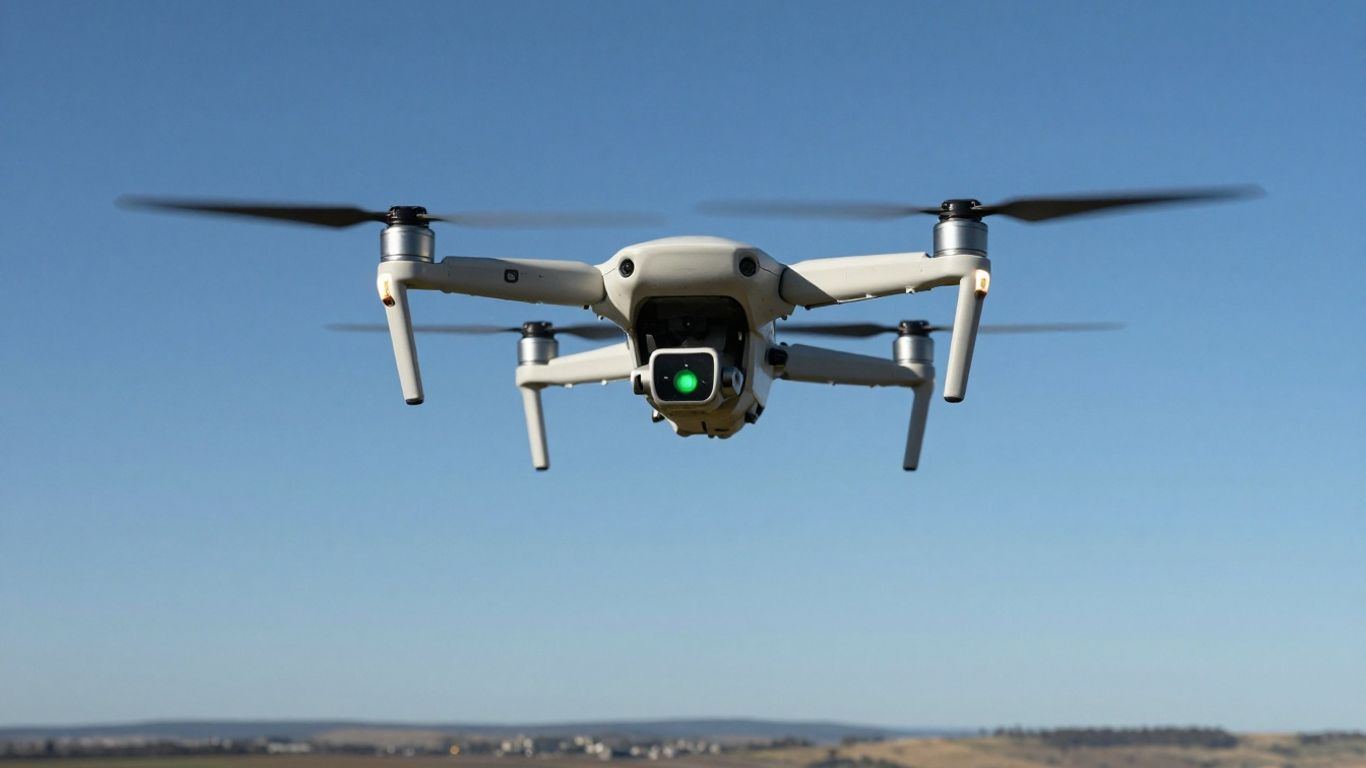
Thinking about how you’re going to fly your drone before you even leave the ground can make a huge difference in how long it stays up. It’s not just about picking a spot and going; it’s about being smart with your route and what you’re carrying.
Map Efficient Flight Paths
When you’re planning a flight, think about the shortest way to get from point A to point B. Every extra bit of distance means the drone uses more battery. Sometimes, a slightly longer path that avoids strong headwinds or tricky terrain can actually save you power in the long run. It’s like planning a road trip – you don’t always take the most direct route if it’s full of traffic lights.
- Prioritize direct routes whenever possible.
- Consider wind direction and speed when plotting your course.
- Factor in any no-fly zones or restricted airspace.
Simulate Mission Performance
Before you commit to a real flight, especially with a new setup or a complex mission, it’s a good idea to run a simulation. These tools let you plug in details about your drone, the battery you’re using, and the weight of whatever you’re carrying. The software then gives you an estimate of how long you can expect to fly. This helps you avoid surprises, like running out of juice halfway through your job.
| Drone Component | Estimated Weight (kg) |
|---|---|
| Airframe | 1.5 |
| Battery | 0.8 |
| Camera | 0.4 |
| Total | 2.7 |
Running simulations helps you understand the real-world impact of adding extra gear. It’s better to find out a heavier camera will cut your flight time in half during a test than during an important survey.
Predict Battery Consumption
These planning tools don’t just guess; they use data to predict how much power your drone will use. They can account for things like flying faster, hovering, or changing altitude, all of which use more energy. By knowing roughly how much battery you’ll use for different parts of your mission, you can make sure you have enough power to complete it and get back safely. This is especially important if you’re carrying a heavier payload, as that will always use more energy.
Select High-Performance Battery Technology
When you’re looking to get more time in the air, the battery you choose makes a big difference. It’s not just about how long you can fly, but also how safely and effectively your drone performs. Think of it like picking the right engine for a car; the wrong one will leave you sputtering.
Choose Energy-Dense Battery Options
Not all batteries are created equal. Some pack more power into the same size, meaning longer flights. You’ll often see terms like LiPo, Li-ion, and newer semi-solid-state options. LiPo batteries are popular because they give a lot of power quickly, which is great for fast flying. Li-ion batteries tend to hold more energy overall, making them good for longer, steadier flights. The newer semi-solid-state batteries are trying to combine the best of both worlds – good power and lots of energy, plus they’re often safer.
Here’s a quick look at how they stack up:
- LiPo: Great for quick bursts of power, common in racing drones. Can be less forgiving if not handled carefully.
- Li-ion: Holds more energy, good for longer flights. Generally safer and last longer than LiPos.
- Semi-Solid-State: A newer option aiming for high energy, good power, and improved safety. Still developing but shows a lot of promise.
Consider Future Battery Innovations
The drone world moves fast, and battery tech is no exception. Companies are always working on ways to make batteries lighter, hold more charge, and charge faster. Keep an eye out for advancements like solid-state batteries, which promise even better safety and energy storage. While these might be more expensive now, they could be the standard for longer flights and more reliable performance down the line.
The drive for longer flight times means battery manufacturers are constantly pushing the limits of what’s possible. Expect to see batteries that are not only more powerful but also charge in a fraction of the time, making your drone operations much more efficient.
Prioritize Aviation-Certified Batteries
For serious drone work, especially if you’re flying for commercial purposes or in regulated airspace, using batteries that meet aviation standards is a smart move. Certifications like UN38.3, MSDS, and CE mean the battery has been tested and meets safety and performance requirements. This isn’t just about ticking boxes; it’s about ensuring your equipment is reliable and safe to operate, reducing the risk of unexpected issues mid-flight. Always check what certifications your chosen battery has, especially if you’re using it for anything beyond casual hobby flying.
Maximize Drone Battery Life Through Design
When we talk about making drones fly longer, a lot of it comes down to how they’re built from the ground up. It’s not just about slapping in a bigger battery; it’s about the whole system working together efficiently. Think of it like building a race car – every part matters for speed and endurance.
Improve Energy-to-Weight Ratio
This is a big one. Basically, you want as much energy stored as possible without adding a lot of extra bulk. Modern lithium-polymer (LiPo) batteries are a good example, packing more power for their size compared to older types. The goal is to get more “oomph” from less weight. This means looking at the materials used in the drone’s frame and components, aiming for lightweight yet strong options. It’s a constant balancing act to get the most flight time out of the least amount of battery mass.
Optimize Motor and Propeller Efficiency
Even the best battery can’t do much if the motors and propellers are wasting power. High-efficiency motors convert more electrical energy into actual spinning force, and well-designed propellers move air more effectively. This means the drone doesn’t have to work as hard to stay in the air or move around. Small improvements here add up significantly over a flight. It’s about making sure every bit of power from the battery is put to good use, not lost as heat or wasted effort.
Reduce Unnecessary Drone Weight
Every gram counts when you’re trying to extend flight time. This involves a critical look at the drone’s design and the equipment it carries. Are there any components that aren’t absolutely needed for the mission? Can lighter materials be used for the casing or internal structures? Sometimes, it’s as simple as removing extra wires or unused mounting brackets. Trimming excess weight is one of the most direct ways to improve battery performance without changing the battery itself.
Keeping a drone’s overall weight down is key. This isn’t just about the frame; it includes all the bits and pieces attached. Think about the camera, sensors, and any other gear. If a piece of equipment isn’t vital for the specific job, it might be worth leaving it behind. Less weight means the motors don’t need to spin as fast or as hard, which directly translates to less power drawn from the battery. This simple principle is a cornerstone of designing for longer flights.
Here’s a quick look at how different design choices can impact flight time:
- Frame Materials: Carbon fiber is lighter and stronger than plastic, but also more expensive.
- Component Integration: Combining functions into fewer parts reduces overall weight and potential failure points.
- Aerodynamics: A sleeker drone design can reduce drag, requiring less power to fly.
- Modular Design: Allowing users to easily swap components can help optimize weight for specific missions, potentially using lighter sensor packages when full capability isn’t needed.
Wrapping Up Your Extended Flight Mission
So, we’ve gone over a bunch of ways to get your drone flying longer. It’s not just about having a good battery, though that helps a lot. Thinking about your flight plan, flying when the weather’s nice, and not carrying extra stuff you don’t need all make a difference. Even small things like how you charge your batteries can help them last longer over time. By putting these tips into practice, you’ll find yourself spending less time waiting for batteries to charge and more time actually flying and getting your work done. Happy flying!
Frequently Asked Questions
How can I make my drone fly for a longer time?
To make your drone fly longer, try flying when the weather is nice and not too windy. Also, try not to carry too much extra stuff on your drone, as this makes it work harder and use up the battery faster. Planning your flight path ahead of time so you don’t waste battery on zig-zagging is a smart move too.
Does carrying more weight on my drone make the battery die faster?
Yes, absolutely! When your drone carries more weight, like extra cameras or equipment, its motors have to work harder to stay in the air. This uses up the battery power much quicker, leading to shorter flight times. It’s like carrying a heavy backpack – it makes you tired faster.
How does the weather affect how long my drone can fly?
Weather plays a big part. Flying in strong winds makes the drone fight against the air, using more battery. Very cold or very hot temperatures can also make the battery less efficient. It’s best to fly when it’s calm and the temperature is just right for your drone.
What’s the best way to charge my drone batteries to keep them healthy?
To keep your drone batteries healthy, avoid draining them completely all the time. It’s better to charge them when they’re partially used. Also, make sure to charge them in moderate temperatures, not too hot or too cold, and use a smart charger if you have one. This helps them last longer.
Are there special tools to help me plan flights and save battery?
Yes, there are! Flight planning tools can help you map out the most direct routes, which saves battery. Some tools can even show you how much battery you’ll use for a specific flight based on the weight you’re carrying and the weather. This helps you plan better and fly smarter.
What kind of batteries are best for longer drone flights?
For longer flights, you’ll want batteries that can hold a lot of energy for their weight. These are often called ‘high energy-density’ batteries, like certain types of Lithium-Polymer (LiPo) batteries. As technology gets better, even newer types of batteries are coming that will offer even more power with less weight.