Drones vs. Drones: What’s the Deal?

So, you’ve seen them buzzing around, maybe even wondered what they are. Drones, or unmanned aerial vehicles as some folks like to call them, are everywhere these days. From taking cool aerial photos to helping out in emergencies, these flying gadgets are changing how we do a lot of things. But with all this new tech comes new questions, especially about how we keep them in check and what happens when things go wrong. Let’s break it down.
Key Takeaways
- The word ‘drone’ is often preferred for clarity, even though ‘UAV’ and ‘UAS’ are more technical terms. The language we use can sometimes hide what these devices are really capable of.
- Drones are used for all sorts of things, from fun hobbies and scientific research to military operations and public safety work, and they can operate day or night.
- Spotting a drone at night requires knowing how to tell it apart from planes, helicopters, satellites, and even stars by looking at its lights and movement.
- Rules and labels, like the EU’s class identification system, help make sure drones are built safely and can be tracked, with export rules also in place for certain types.
- Dealing with unwanted or dangerous drones involves a range of counter drone technology explained, including ways to find, block, or disable them, alongside important legal and ethical questions.
Understanding Drone Terminology
The Evolution of ‘Drone’
The word ‘drone’ itself has a bit of a history. Originally, it referred to a male bee, but in aviation, it started being used for remotely flown target aircraft back in the 1920s. Think of old planes used for target practice. Over time, the term stuck, and now it’s what most people call these flying machines, even though some folks in the industry prefer other words. It’s kind of like how ‘Kleenex’ became a generic term for tissues. The common name ‘drone’ is widely understood, even if it carries some baggage from military uses.
UAV vs. UAS: A Technical Distinction
When you get into the technical side of things, you’ll hear terms like UAV and UAS. UAV stands for Unmanned Aerial Vehicle, which basically means any aircraft that flies without a human pilot on board. UAS, on the other hand, stands for Unmanned Aerial System. This term is a bit broader because it includes not just the aircraft itself, but also the ground control station, the data links, and everything else needed to operate it. So, a UAS is the whole package, while a UAV is just the flying part. You might also see terms like RPAS (Remotely Piloted Aircraft System) used, especially in official documents. It’s all about being precise, but for everyday chat, ‘drone’ usually does the trick.
The Euphemism Treadmill in Drone Discourse
It’s interesting how language changes, especially around technology. Some people in the drone world don’t like the word ‘drone’ because it can sound a bit menacing, maybe because of its association with military operations. They’d rather use terms like UAV or UAS because they sound more technical and less… well, scary. It’s a bit like trying to put a nicer spin on something. This happens a lot with language; we try to find new words to describe things when the old ones start to feel uncomfortable. It’s a constant cycle, and it shows how our perception of technology can shape the words we use to talk about it. It’s a good reminder to pay attention to the language we use when discussing these devices, as it can influence how we think about them.
The shift from ‘unmanned’ to ‘uncrewed’ is another example of this linguistic evolution, aiming for more inclusive and accurate descriptions in official contexts.
The Diverse Applications of Drones
From Hobbyist Crafts to Military Might
It feels like just yesterday drones were mostly toys for tech enthusiasts, zipping around backyards. Now? They’re everywhere, doing everything from capturing stunning aerial shots for movies to, well, much more serious stuff. The leap from hobbyist gadgets to sophisticated tools has been pretty wild. Think about it: a small drone can get you those sweeping landscape views without needing a helicopter, and the pilot can often be the camera person too. For bigger productions, you’ve got dedicated pilots and camera operators working together. They can get into places that are just too dangerous or tricky for people to reach.
Surveillance and Science Missions
Beyond the glitz of filmmaking, drones are becoming indispensable for science and keeping an eye on things. Farmers are using them to get a bird’s-eye view of their crops, checking on plant health and even precisely spraying what’s needed, which is a big deal for sustainable farming. Scientists are also deploying them to study wildlife, like counting seabirds or checking on seal colonies, without disturbing them. They’re even being used to monitor wildfires, not just to see where they’re spreading but sometimes to help fight them by starting controlled backfires. It’s amazing how these machines help us gather data in ways we just couldn’t before, especially in remote or hard-to-access spots. They’re also great for environmental work, giving us super-detailed looks at ecosystems over time, which can be combined with satellite data for a fuller picture.
Public Safety and Nighttime Operations
When it comes to public safety, drones are proving their worth. Police departments are using them for search and rescue missions, helping to find lost people or monitor traffic situations. And for nighttime operations, drones are starting to replace traditional fireworks for light shows. They’re quieter, safer, and better for the environment, creating cool patterns in the sky. Plus, they can even carry fireworks, mixing old and new for unique displays. It’s not just about entertainment, though. In disaster zones, drones can be lifesavers, delivering medicine or essential supplies to areas cut off by floods or other emergencies. They can also quickly map out damage after a disaster, giving responders a clear picture of what they’re up against. These aerial workhorses are really changing the game for how we handle emergencies and keep communities safe.
Identifying Drones in the Night Sky
Spotting a drone after sunset can be tricky. It’s not always as simple as it seems, and sometimes what looks like a drone is actually a regular airplane or even a bright star. Remember that time in New Jersey when everyone thought they saw dozens of drones, only for it to turn out most were just regular planes? Yeah, that happened. Even experienced pilots can get confused in the dark. But with a bit of practice, you can learn to tell the difference.
Distinguishing Drones from Airplanes and Helicopters
Airplanes usually cruise high up, with their lights spread out across the wings and tail. They move smoothly, always heading forward. Drones, though, tend to have their lights clustered together. They can also hover in place or make sudden turns, which planes don’t do. Helicopters have a lower, thumping sound from their rotors, and their lights are often brighter and might include a spotlight. Drones, especially multirotor types, make a higher-pitched whirring sound that fades pretty quickly as they move away. Paying attention to the pattern and spacing of lights, along with the sound and movement, is key.
Drones vs. Satellites and Celestial Bodies
Satellites are usually just tiny, steady points of light gliding silently across the sky in a straight line. They don’t stop or change direction. Stars and planets, well, they just twinkle and stay put relative to the horizon. They don’t move or make noise. A drone might look like a star at first, but give it a minute. If it starts hovering, strobing, or moving in a way that isn’t a straight line, it’s probably not a star. It’s easy to get fooled, but observing for about 30 to 60 seconds usually reveals the truth.
Legitimate Nighttime Drone Missions
Drones aren’t just for fun; they’re increasingly used for important jobs after dark. Police and public safety teams use them for scene awareness, documenting incidents, and searching for people when helicopters are too expensive or impractical. These flights are usually very deliberate, like hovering over a specific spot or flying in circles around an area. Think about how drones are revolutionizing search and rescue operations; they can cover large areas quickly, even in tough conditions, which is a huge help in emergencies. Search and rescue is just one example of their growing role. Other legitimate uses include industrial inspections and even aerial filming. Most drones flown legally at night are required to have anti-collision lights, often a bright white strobe that pulses at intervals, along with standard red and green navigation lights. These lights are usually grouped closely together on the drone’s frame.
Here’s a quick rundown of what to look for:
- Lights: A tight cluster of lights, often red on the left, green on the right, and a bright white strobe. The strobe usually pulses.
- Sound: A high-pitched electric whirring or buzzing sound that doesn’t travel very far.
- Movement: The ability to hover precisely, make quick turns, or change direction in short bursts. They don’t move with the smooth, steady glide of an airplane.
While consumer apps exist that claim to detect drones, their accuracy can be hit or miss. Relying on your own observations of lights, sound, and movement patterns is generally more dependable for identifying a drone at night. These systems are becoming more common for detecting drones at night and are used by professionals.
If you’re unsure about what you’re seeing, try to stay still, reduce background noise, and observe for a bit longer. Sometimes, just waiting a minute and rechecking the direction, altitude, and sound can help clear things up.
Regulatory Frameworks and Drone Certification
So, you’ve got a drone, or you’re thinking about getting one. That’s cool, but there’s a whole bunch of rules and labels you need to know about, especially if you’re flying anywhere serious or thinking about selling them.
EU Drone Certification and Class Labels
Over in Europe, they’ve got this system with "Class Identification Labels." Basically, it’s a sticker that tells you if a drone meets certain safety and design standards. It’s supposed to make people feel better about using drones for all sorts of stuff, from delivering packages to helping out in emergencies. Different classes mean different capabilities and safety features, so you know what you’re getting. It’s all part of making sure these flying gadgets don’t cause more problems than they solve. This helps with harmonizing drone regulations across different countries, which is a big deal when you’re talking about international flights.
Export Restrictions and International Regimes
Now, if you’re thinking about exporting drones, especially the bigger, more powerful ones, there are some serious restrictions. Things like the Missile Technology Control Regime put limits on what kind of drone tech can be shipped around the world. It’s all about preventing advanced drone capabilities from falling into the wrong hands. So, if your drone can carry a heavy payload a long distance, you might find yourself bumping up against international rules.
Remote Identification for UAS
This is a big one, especially in the US. The FAA now requires most drones, particularly those used for commercial work or weighing over 250 grams, to have "Remote ID." Think of it like a digital license plate for your drone. It broadcasts information about the drone’s location, its operator, and other details in real-time. This is meant to help authorities keep track of what’s flying where, which is pretty important for security and safety. It’s a bit controversial, and some folks have challenged it, but it’s the direction things are heading. It’s a key part of integrating drones into our airspace more safely, similar to how police drone programs are being managed.
The push for regulations like Remote ID and EU class labels shows a global effort to bring order to the rapidly expanding drone world. It’s not just about hobbyists anymore; drones are serious tools, and with that comes the need for clear rules and accountability. This helps everyone from manufacturers to everyday users understand their responsibilities and the capabilities of the machines they’re flying.
Counter Drone Technology Explained
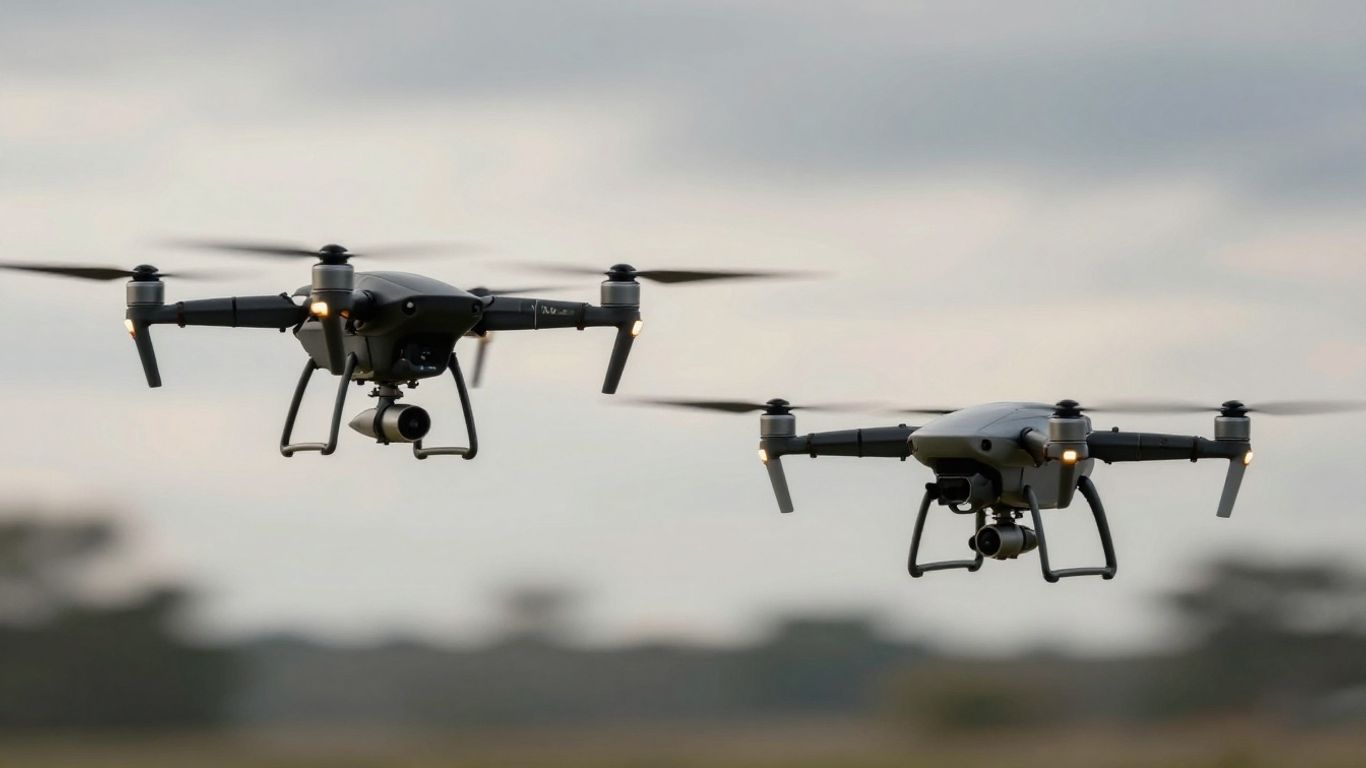
So, you’ve got drones flying around, and sometimes, you just don’t want them there. That’s where counter drone technology comes in. It’s all about detecting, identifying, and then dealing with those unwanted aerial visitors. Think of it as a security system for the sky. There’s a whole bunch of ways this works, from just listening for signals to more active measures.
Detection and Identification Methods
First things first, you have to know a drone is there before you can do anything about it. This is where how drone detection works gets interesting. It’s not just about looking up; there are several methods:
- Radio Frequency (RF) Detection: This is like tuning into a specific radio station. Drones communicate with their controllers using radio waves. These systems listen for those specific frequencies. They’re pretty good at spotting many common drones, especially hobbyist models, but can sometimes get fooled by other devices or miss drones that use encrypted or unusual signals.
- Radar: This is a more traditional method, bouncing radio waves off objects to see them. Modern radar systems can be quite sophisticated, tracking multiple targets and providing information on their speed and direction. They work day and night and in various weather conditions.
- Electro-Optical/Infrared (EO/IR): These are basically advanced cameras. EO cameras see visible light, like your eyes, while IR cameras detect heat. This is super useful for spotting drones, especially at night or in bad weather, as they can pick up the heat signature of the drone’s motors or electronics.
- Acoustic Sensors: Believe it or not, drones make noise. These sensors listen for the specific sound patterns of drone propellers. They can be a good supplementary tool, especially in environments where RF signals might be cluttered.
The goal is to get a clear picture of what’s in the sky and whether it’s a threat.
Jamming, Spoofing, and Kinetic Solutions
Once a drone is detected, the next step is to counter it. This is where the different types of anti drone systems explained really come into play:
- Jamming: This involves broadcasting signals on the same frequencies the drone is using to communicate with its controller. It essentially drowns out the drone’s signals, disrupting its control link and potentially causing it to return to its launch point or land. It’s a common non-kinetic approach.
- Spoofing: This is a bit more advanced. Instead of just blocking the signal, spoofing involves sending false signals to the drone’s navigation system. The idea is to trick the drone into thinking it’s somewhere else, or to make it fly in a direction you want it to go, away from a restricted area.
- Kinetic Solutions: These are the more direct, physical methods. This can include using nets fired from a projectile, employing another drone to physically intercept the target drone, or even using traditional projectiles or missiles for high-threat situations. It’s the ‘take it down’ approach.
- Directed Energy: Think lasers or high-powered microwaves. These systems can disable a drone’s electronics from a distance without necessarily destroying it physically. This is a growing area in drone defense technology overview.
Legal and Ethical Considerations
Dealing with unwanted drones isn’t as simple as just shooting them down. There are a lot of rules and ethical questions involved in countering unmanned aerial vehicles. For instance, jamming signals can interfere with legitimate communications, and kinetic measures could cause damage or injury on the ground. It’s a tricky balance.
The deployment of counter-UAS technology must carefully consider the potential for collateral interference with other radio communications and the safety of people and property below. Regulations often dictate where and how these systems can be used, especially in civilian airspace.
Many countries are still figuring out the best way to regulate this. You can’t just go around disabling any drone you see. There are specific rules about airspace, privacy, and what actions are permissible. Understanding these limitations is a key part of any understanding drone countermeasures strategy. For example, the use of certain technologies might be restricted to law enforcement or military personnel, and even then, only under specific circumstances. It’s a complex legal landscape that’s constantly evolving as drone technology itself advances. The development of counter-UAS systems is a direct response to these evolving challenges.
Security Challenges Posed by Drones
Unauthorized Drone Incursions
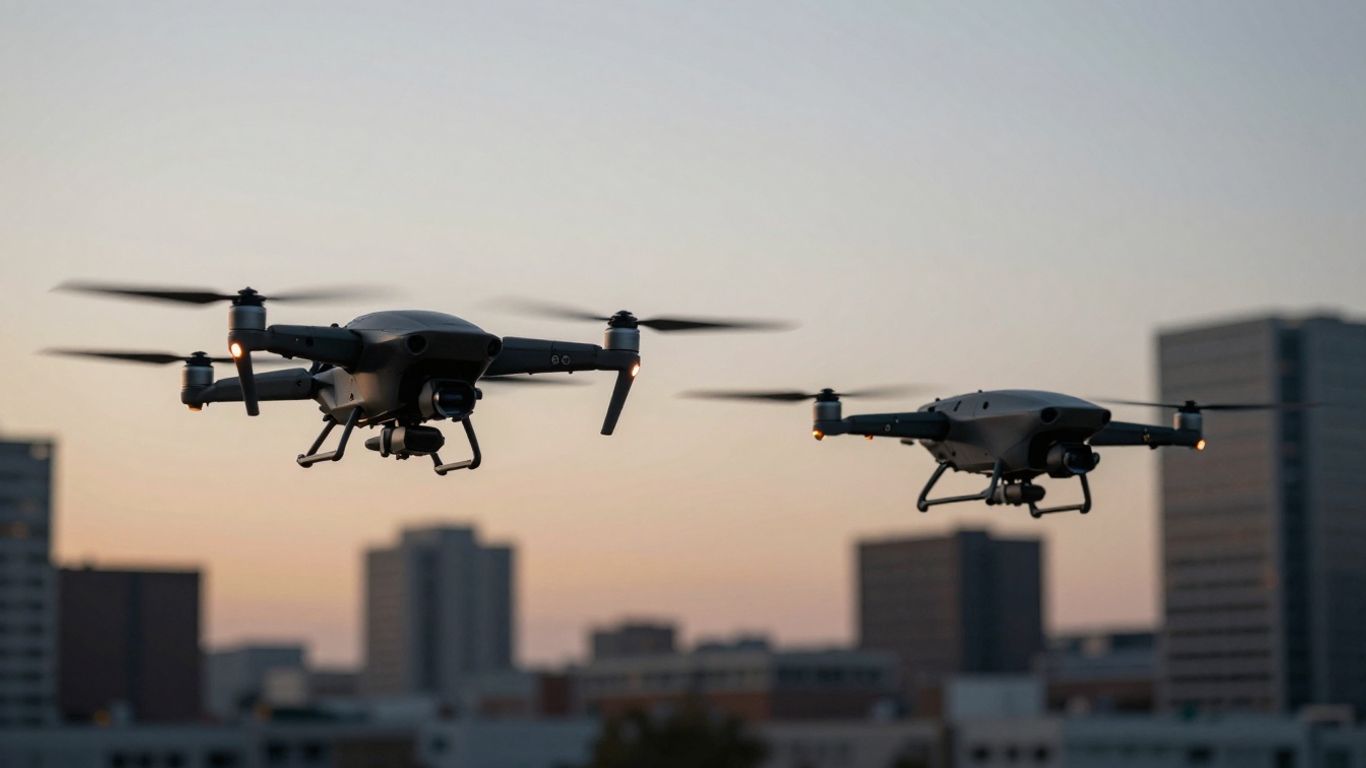
It’s not just about hobbyists flying where they shouldn’t. We’ve seen drones used to smuggle contraband into prisons, which is a pretty serious issue. Then there are the incidents where drones flying near airports have caused major disruptions, even leading to flight cancellations. Imagine being stuck on the tarmac because someone’s drone decided to take a joyride near the runway. It’s a real headache for air traffic control and a safety risk. Firefighting efforts have also been hampered by unauthorized drones, forcing officials to consider ways to disable them. This kind of interference can have dangerous consequences when every second counts.
Hacking and Control System Vulnerabilities
This is where things get a bit more technical, but it’s important. Some researchers have shown how surprisingly easy it can be to hack into commercial drones. We’re talking about hijacking video feeds or even taking full control of a drone in flight. Manufacturers are working on better security, like encrypting signals and adding password protection, but it’s an ongoing battle. The potential for malicious actors to exploit these vulnerabilities is a significant concern. Think about it: a drone could be turned into a spy device or worse, all because of a security flaw.
The Threat of Weaponized Drones
This is probably the most alarming aspect. Drones aren’t just toys or tools anymore; they can be modified to carry dangerous payloads. We’re not just talking about explosives, but potentially chemical or biological agents too. Even drones not designed to be weapons can be hacked and repurposed for malicious intent. This has led to the development of counter-drone technologies, which are designed to detect, track, and neutralize threats. It’s a complex cat-and-mouse game, with new challenges popping up all the time. The idea of drones being used in attacks is something security agencies are taking very seriously, and rightly so.
So, What’s the Takeaway?
Look, whether we call them drones, UAVs, or something else, these flying machines are here to stay. They’ve gone from being a niche military tool to something you see everywhere, from hobbyists in the park to police checking out a scene at night. We’ve talked about how they’re used, the tech behind them, and even the tricky business of how we talk about them. It’s clear that as this technology keeps changing, so will the rules and how we all feel about it. One thing’s for sure: understanding what these things are and what they can do is only going to get more important for all of us.
Frequently Asked Questions
Why do some people dislike the word ‘drone’?
Some people, especially those in the drone industry, prefer not to use the word ‘drone.’ They sometimes use terms like ‘UAV’ (Unmanned Aerial Vehicle) or ‘UAS’ (Unmanned Aerial System) instead. This is partly because ‘drone’ has been linked to military uses that some find controversial. They feel that ‘UAV’ or ‘UAS’ sound more technical and less alarming, helping to separate everyday drones from those used in conflict.
What’s the difference between a drone and a UAV/UAS?
Technically, ‘drone’ is a more general term. UAV stands for Unmanned Aerial Vehicle, meaning any aircraft that flies without a pilot. UAS, or Unmanned Aerial System, is broader and includes the vehicle, its controller on the ground, and the communication link connecting them. Many in the industry prefer UAV or UAS because they sound more professional and less negative than ‘drone.’
Can drones really be used for good things?
Absolutely! While drones have been used for military purposes, they have tons of positive uses. They help with things like taking amazing aerial photos and videos, exploring hard-to-reach places for science, helping police find people, and even delivering packages. The same technology can be used for many different jobs, from fun hobbies to important rescue missions.
How can I tell if a light in the night sky is a drone?
It can be tricky! Airplanes usually have lights spread out on their wings and tail and move smoothly. Drones often have lights clustered together and can move in ways airplanes can’t, like stopping suddenly or hovering. Helicopters have bright lights and a distinct thumping sound, while drones usually buzz. Satellites are just steady points of light moving in straight lines, and stars twinkle but don’t move like a drone.
Are there rules about flying drones, especially at night?
Yes, there are rules! Different countries and regions have specific regulations for flying drones. For example, in the EU, drones are given ‘class labels’ to show they meet safety standards. There are also rules about identifying drones, especially when they fly at night or near airports, to make sure they aren’t being used for anything harmful.
What are ‘counter drone’ technologies?
‘Counter drone’ technology refers to ways to detect, track, and stop unauthorized or dangerous drones. This can involve using radar or cameras to spot them, jamming their signals to make them lose control, or even using other drones or projectiles to take them down. It’s all about managing the risks that drones can pose.