How farmers use agricultural spray drones: applications, operation, and safety

Key Takeaways
Spray drones give farmers another way to apply crop inputs, especially where ground access is difficult or treatment can be confined to a smaller area. Their usefulness depends on careful planning, suitable conditions, and compliance with product labels and local rules.
- Spray drones can apply crop protection products and other liquid inputs.
- Farmers may use them on difficult terrain, specialty crops, and localized problem areas.
- Field mapping, calibration, flight planning, and recordkeeping shape an operation.
- Weather, drift risk, crop needs, payload, and battery limits affect decisions.
- Drone spraying requires attention to safety, regulations, and treatment results.
What agricultural spray drones do
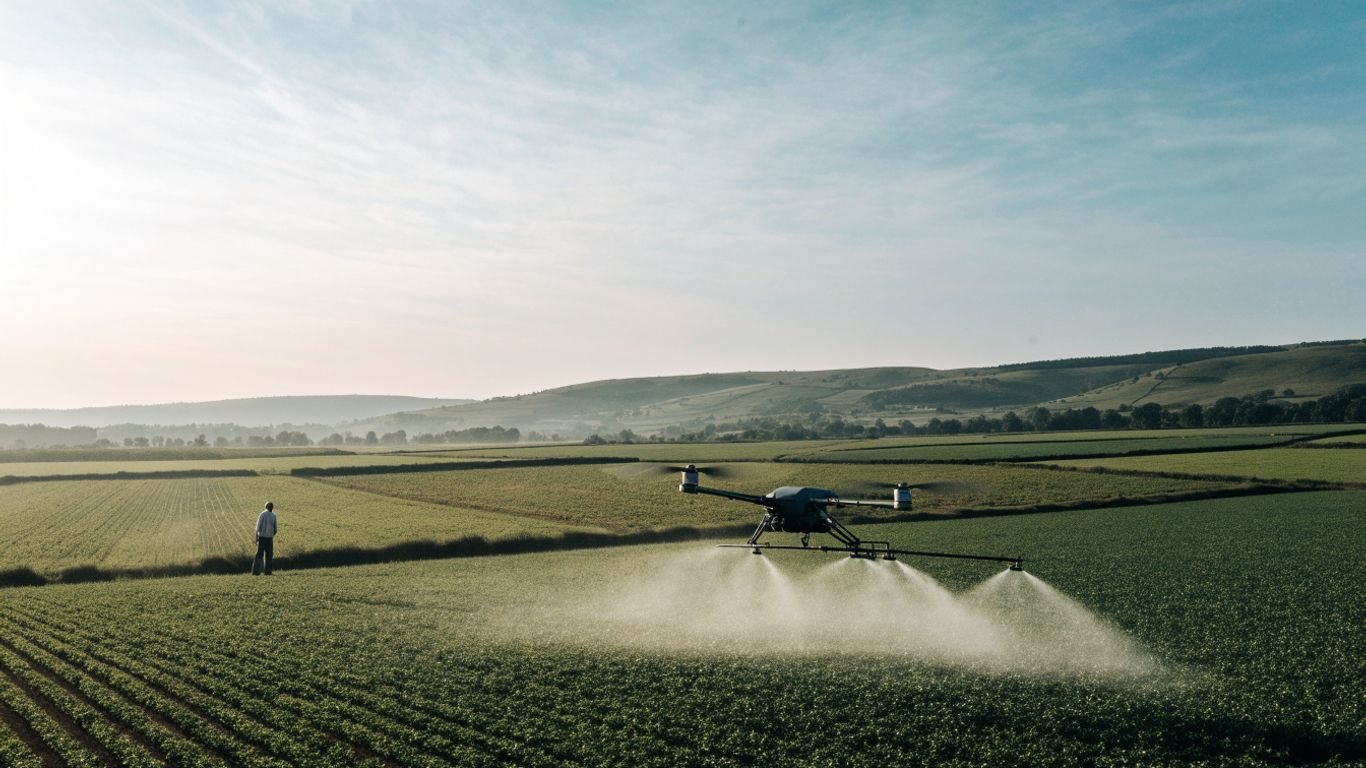
Agricultural spray drones carry and dispense liquid inputs over crops. Farmers use them as one option within a broader crop-management plan, rather than as a substitute for deciding what a field needs. The job may cover a whole block or a defined treatment zone, depending on the crop and the reason for spraying.
Apply pesticides, herbicides, and fungicides
A spray drone can carry crop protection products for application over a field or a selected area. The appropriate product, rate, and timing depend on the crop, the identified problem, and the product label. An aircraft is only the delivery platform; it does not determine whether a treatment is needed or appropriate.
Spread liquid fertilizers and other crop inputs
Some spray operations apply liquid fertilizer or other crop inputs, not just pesticides. Farmers need to check that the product and application plan suit the equipment and the crop. DJI Agriculture describes its intelligent solutions as supporting more efficient, precise farming, but farmers still need to assess whether a specific operation fits their field conditions.
Treat targeted areas instead of entire fields
A drone can be directed to a defined area when scouting or other field information points to a localized need. This may help avoid treating unaffected parts of a field, although the actual result depends on mapping, flight execution, and spray conditions. For a wider view of related practices, see aerial crop monitoring, which can help inform field management and targeted applications.
Where farmers use spray drones
Farmers may consider spray drones where a ground machine is difficult to use or where a field needs a more localized application. The terrain, crop layout, and access to the site all matter. The method is not automatically suitable for every field, and site-specific planning remains essential.
Reach steep, wet, or hard-to-access terrain
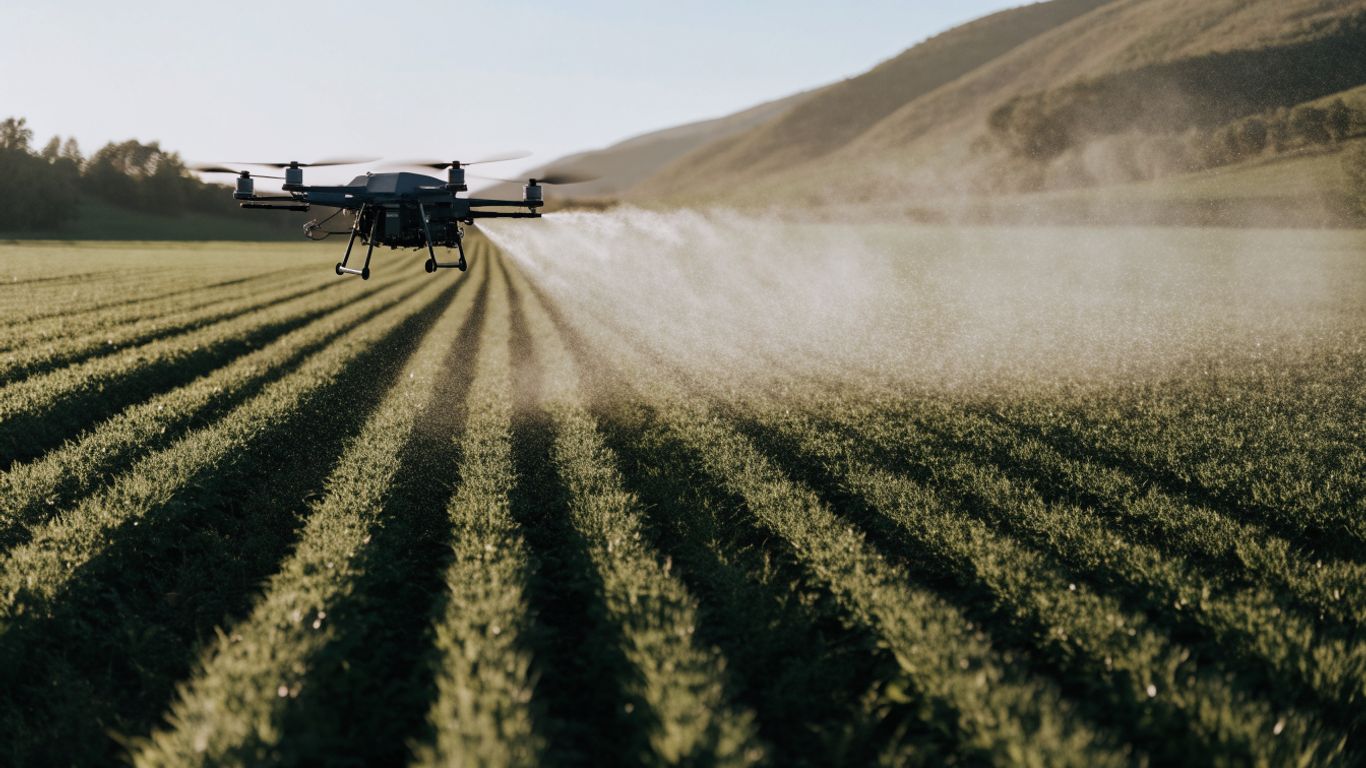
Slopes, soft ground, and narrow access routes can make it difficult to bring ground equipment into a field without disturbing soil or plants. A drone can reach areas from above, though the operator still needs a safe takeoff and landing location and a clear flight plan. In challenging terrain, it is especially important to account for obstacles, wind, and nearby people.
Apply inputs in orchards, vineyards, and other specialty crops
Orchards, vineyards, and other specialty crops can have row layouts and canopies that call for careful planning. The operator must consider how the crop is arranged and whether the planned spray setup can deliver the intended coverage. No single method or setting fits every planting system, so a small test area and careful observation can help reveal practical limitations.
Spray around field edges and localized problem areas
Field margins, isolated patches, and sections with a suspected pest or disease issue may call for a treatment that is narrower than a whole-field pass. Before flying, the operator can mark the intended boundary and check for neighboring crops, waterways, people, and other sensitive areas. Michigan State University researchers discuss the wider spread of agricultural drone use in agricultural drone adoption, including crop spraying and other farm applications.
How a drone spraying operation works
A spraying mission begins before the aircraft leaves the ground. The operator identifies where treatment is needed, confirms the application plan, and checks the location for hazards and constraints. A methodical setup helps keep the flight aligned with the intended treatment area and creates a record that can be reviewed afterward.
Map the field and identify treatment zones
Field boundaries and treatment zones give the operator a defined area to work within. Maps may be informed by scouting, field records, or other available information, but the boundaries should be checked against conditions on site. Where maps and the visible field differ, the operator should resolve that discrepancy before beginning the application.
Calibrate the drone for the product and application rate
Calibration connects the chosen product and target rate with the equipment settings used for the mission. Operators should use the product label and the aircraft’s instructions to establish an appropriate setup, then verify that the system is functioning as expected. A brief planning table can help keep the important checks together; it is not a substitute for label directions or the equipment manual.
| Check | What to confirm | Why it matters |
|---|---|---|
| Product | Crop, permitted use, and label directions | Confirms the intended use is appropriate |
| Rate | Planned application rate and treated area | Helps align the mission with the label |
| Equipment | Nozzle and spray system condition | Reduces the chance of an equipment problem |
| Test | Output and coverage in a controlled check | Helps identify setup issues before the mission |
After these checks, the operator can make adjustments before covering the planned area. Calibration should be revisited if the product, settings, or operating conditions change.
Plan flight paths, altitude, and spray settings
Flight paths should account for the field boundary, obstacles, terrain, and the planned treatment zone. The operator sets altitude and spray settings according to the aircraft instructions, product directions, and site conditions. In particular, wind and nearby sensitive areas can affect whether a planned pass is appropriate.
Monitor coverage and record application details
The operator should monitor the mission rather than assume that a completed flight means uniform coverage. Keeping notes on the treated area, product, timing, and operating conditions can help with follow-up and future planning. DJI Agras products are listed within DJI Agriculture’s farming resources, but the listing alone does not determine whether a particular product or aircraft is suitable for a given operation.
How farmers choose what and when to spray
A sound spray decision starts with the crop and the problem to be addressed, not with the availability of a drone. Farmers weigh the expected benefit of treatment against the risks of drift, poor timing, or unnecessary application. The plan also needs to fit the product label and the equipment being used.
Match the drone and nozzle setup to the crop
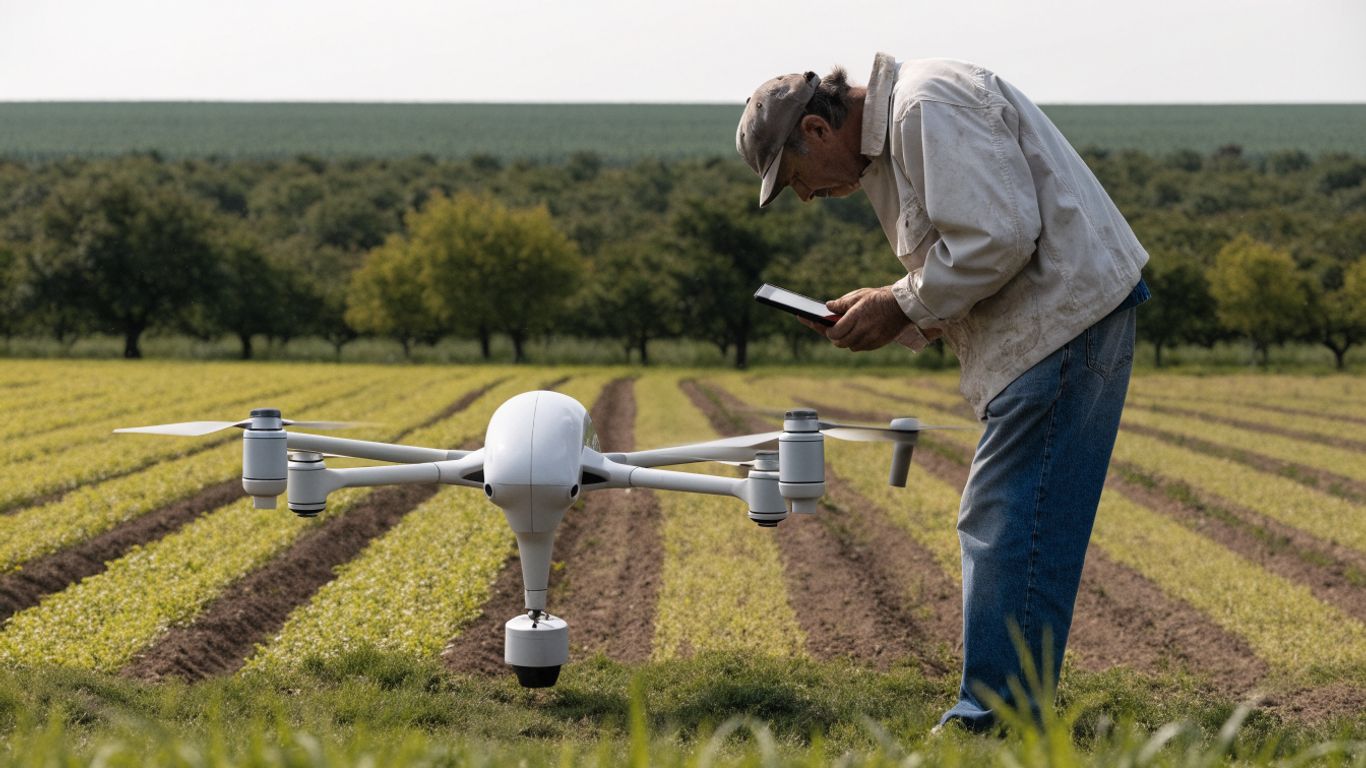
Crop height, row spacing, canopy structure, and the intended application all influence equipment choices. Farmers and operators should consult the aircraft instructions and product label rather than assume a setup will transfer unchanged from one crop to another. Testing the plan on a limited area can help identify coverage or operating concerns before a larger application.
Consider weather, drift risk, and label requirements
Conditions at the field can change quickly, and weather that is unsuitable for spraying can increase the chance of drift or reduce the intended coverage. The product label sets requirements that apply to the specific use, while local rules may add further obligations. If conditions or restrictions do not permit a responsible application, delaying the flight is the safer decision.
Use scouting data to guide targeted applications
Scouting helps farmers distinguish between a broad field issue and a problem concentrated in a few areas. Useful observations might include:
- Visible pest activity or crop symptoms
- Weed patches or uneven crop growth
- The location and approximate size of affected areas
- Nearby sensitive crops, people, or environmental features
These observations can help define where to investigate or treat, but they do not replace diagnosis or label directions. DJI Agriculture describes its solutions as supporting efficient workflows and precise farming; the choice of treatment still rests on field evidence and the operator’s assessment.
Benefits and trade-offs of drone spraying
Spray drones can change how a farmer reaches a crop, but they also bring operational limits. Their value depends on the field, the size and timing of the job, and the available equipment and crew. A practical comparison looks at both the benefits of access and the effort required to complete the mission.
Reduce soil compaction and crop damage
Because a drone does not drive across the field during application, it can avoid the wheel traffic associated with a ground pass. That may matter when soil is soft or crops are vulnerable to machinery movement. It does not mean that all crop damage or soil impacts disappear; takeoff, landing, loading, and other field activity still need consideration.
Improve access and application flexibility
Aerial application can make some hard-to-reach areas more accessible and can provide an option when ground equipment is impractical. It may also allow treatment of a marked zone rather than an entire field. DJI Agriculture describes its agricultural solutions as supporting more efficient, precise farming, though the practical advantage for any farm depends on its crops, operating conditions, and workflow.
Weigh productivity against battery and payload limits
A drone’s coverage rate is shaped by its payload, battery endurance, refill or recharging needs, and the time required to set up and move between areas. For a large job, repeated trips can add labor and delay. Farmers should estimate the full operation rather than judge productivity from flight time alone.
Compare operating costs with ground and aerial spraying
The cost comparison should include equipment and labor, preparation, travel, product handling, maintenance, and the time needed to complete the job. A drone may be useful for a small or difficult area even when another method is more practical for a large, accessible field. The best choice is the one that meets the agronomic need while fitting the farm’s costs and constraints.
Safety, regulations, and responsible use
Spraying combines aircraft operation with the handling and application of agricultural products. That means a responsible operation needs to meet both aviation and product-use requirements, which vary by location and circumstance. Operators should confirm the applicable rules before each job, not rely on a general assumption that a drone flight is permitted.
Follow pesticide labels and local aviation rules
The pesticide label specifies permitted uses and application directions, and operators must follow it. Aviation requirements also vary depending on where and how the aircraft is flown and what it carries. In the United States, consult the relevant FAA requirements for the operation; commercial and recreational drone rules provide a broader introduction to pilot, aircraft, and flight requirements.
Protect people, pollinators, and nearby crops from drift
Before spraying, identify people, pollinators, neighboring crops, and other sensitive areas that could be affected by drift. The operator should consider wind and the product’s directions, and keep the application within the intended boundary. If the site or conditions do not allow a safe separation, postpone the operation or choose another approach.
Maintain equipment and train drone operators
A trained operator should understand the aircraft, the spray system, emergency procedures, and the limits of the planned mission. Routine checks can catch worn parts, leaks, or other faults before they cause a problem in the field. Training should also cover responsible product handling and the rules that apply in the operating area.
Keep application records and check treatment results
Records of the product, rate, date, location, and operating conditions can support later review and future decisions. After treatment, inspect the crop and the treated area to determine whether the application addressed the identified problem. If the result is unclear, gather more information before deciding whether another treatment is warranted.
Conclusion
Farmers use agricultural spray drones to apply crop inputs where access, field conditions, or targeted treatment make aerial application worth considering. The most dependable operations begin with a clear agronomic need, follow product and aviation rules, and account for weather, equipment limits, and nearby sensitive areas. A drone can be a useful part of farm management, but sound judgment before and after the flight remains central.
Frequently Asked Questions
What can agricultural spray drones apply?
Depending on the product, equipment, and applicable label directions, agricultural spray drones may apply pesticides, herbicides, fungicides, liquid fertilizers, and other crop inputs.
Do spray drones treat an entire field?
They can be used for a whole-field application or directed to a defined treatment zone. The choice depends on the field need, application plan, equipment, and conditions.
Can farmers use spray drones in orchards and vineyards?
They may be used in specialty crops such as orchards and vineyards, but the crop layout and canopy affect planning. Operators should verify that the equipment and application plan suit the crop and product.
What conditions affect a drone spraying mission?
Weather, wind, terrain, obstacles, field access, battery capacity, and payload can all affect a mission. Product label directions and local rules also shape when and how it can be flown.
How do farmers decide where to spray?
Farmers can use scouting observations and field information to identify and mark areas that may need treatment. They should confirm the issue and follow label directions before applying a product.
Do spray drones eliminate crop damage and soil impacts?
They avoid driving through the field during application, which can reduce wheel traffic and some machinery-related crop disturbance. Other impacts and risks remain, including those related to setup, landing, drift, and handling products.
What records should an operator keep?
Useful records include the product and rate, application date and location, treated area, and relevant operating conditions. Operators should also check treatment results and follow any recordkeeping requirements that apply locally.