
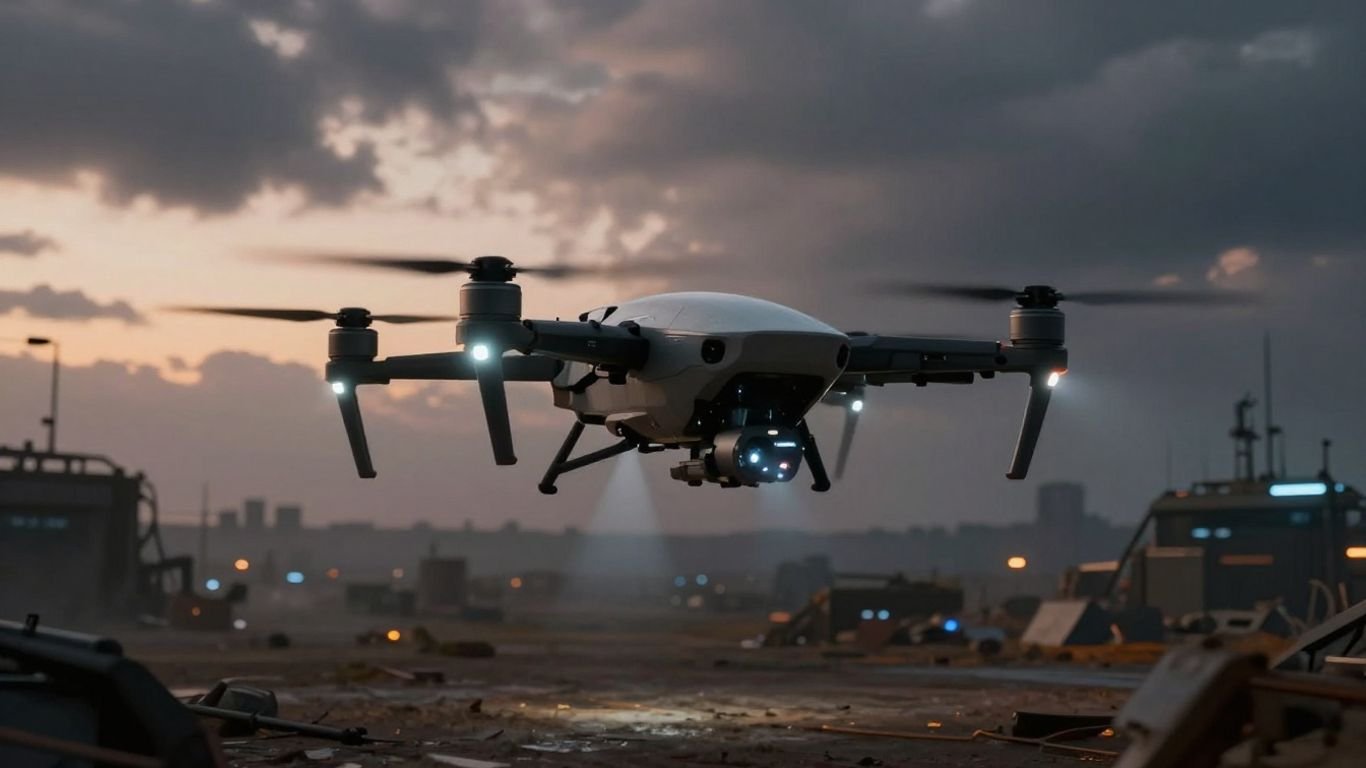
Nightmare FPV and Nokturnal AI: The future of tactical drone operations

Key Takeaways
Modern aerial drone operations are shifting rapidly toward autonomous frameworks that increase mission reliability under extreme conditions. The integration of specialized software provides a significant edge in complex combat theaters.
- Advanced terminal guidance allows drones to track targets without reliance on external navigation signals.
- Low-light AI processing ensures hardware remains effective during nocturnal tactical missions.
- Integration of software-defined architectures enables rapid adaptation to changing theater needs.
- Modular hardware designs streamline the process of refitting existing fleet components with AI modules.
- Scalable manufacturing processes are central to maintaining a consistent supply of attritable strike assets.
Understanding Nightmare FPV technology
The landscape of aerial warfare has shifted dramatically with the emergence of compact, agile systems. These platforms have demonstrated their operational effectiveness in contested environments by providing ground units with a capability previously reserved for much larger aircraft. This evolution is defined by a transition toward software-defined strike systems that emphasize simplicity and mission-specific deployment.
Evolution of FPV platforms in modern conflict
The Nightmare FPV system serves as an example of how combat-proven hardware can be adapted for broader operational utility. By focusing on rapid deployment within the Renegade UxS MANTRAS aerial network, these platforms link sensors and effectors into a singular kill chain. This design philosophy moves away from traditional, bulky airframes toward agile units that can be deployed at scale.
Key hardware components and frame configurations
Optimizing the physical frame is essential for meeting specific mission parameters regarding speed, payload capacity, and total flight endurance. These units typically utilize specialized motors, carbon fiber frames, and hardened electronics to survive high-impact maneuvers. The following table showcases typical performance metrics for varying configurations of these systems:
| Configuration | Payload Capacity | Max Speed | Flight Endurance |
|---|---|---|---|
| 6 Inch Frame | 1.2 kg | 120 mph | 35 Minutes |
| 10 Inch Frame | 2.5 kg | 105 mph | 40 Minutes |
| 15 Inch Frame | 6.0 kg | 100 mph | 50 Minutes |
These configurations are designed to meet diverse operational needs, ensuring that units maintain flight profiles suitable for their specific tactical objectives.
Signal transmission and latency challenges
Maintaining a stable data link remains a primary engineering hurdle in environments saturated with intentional interference. Utilizing digital encryption ensures that communications remain resilient against interception, while advanced phased-array radios allow for consistent performance even under heavy RF jamming. Developers prioritize low-latency feedback to ensure that operators maintain situational awareness during critical mission phases.
The role of Nokturnal AI in low-light environments

Visual data processing in nocturnal scenarios presents unique challenges due to limited light and high contrast. Advanced algorithms enable machines to perform object recognition and navigation under conditions that would otherwise render standard optical payloads ineffective. This progress marks a transition toward fully self-contained strike systems capable of executing complex maneuvers without operator intervention.
How AI enhances visual data processing
By leveraging sophisticated computer vision packages, Nokturnal AI enables platforms to maintain target locks in extreme darkness. This software filters noisy signal data through neural networks to produce a clear, usable image feed. This ensures the targeting process remains accurate even when ambient light is virtually nonexistent.
Reducing pilot cognitive load during night missions
Automated navigation systems allow human operators to focus on higher-level decision making rather than the mechanical minutiae of flight. This shift is critical during night sorties where sensory strain is high. Key benefits observed by operators include:
- Improved reaction speeds during high-velocity terminal guidance intercepts.
- Enhanced tracking consistency against moving subjects in complex terrain.
- Reduced manual correction requirements for flight stability.
- Stable streaming performance due to automated gain handling.
These advancements directly support the shift toward a new doctrine of autonomous strike operations.
Edge computing requirements for onboard AI
Running sophisticated detection models on a small footprint requires highly optimized edge computing hardware. These systems consume significant power, necessitated by the high thread counts required for real-time video processing. Efficient design balances the performance of onboard processors with the overall thermal constraints of the airframe.
Operational advantages of AI-integrated drones
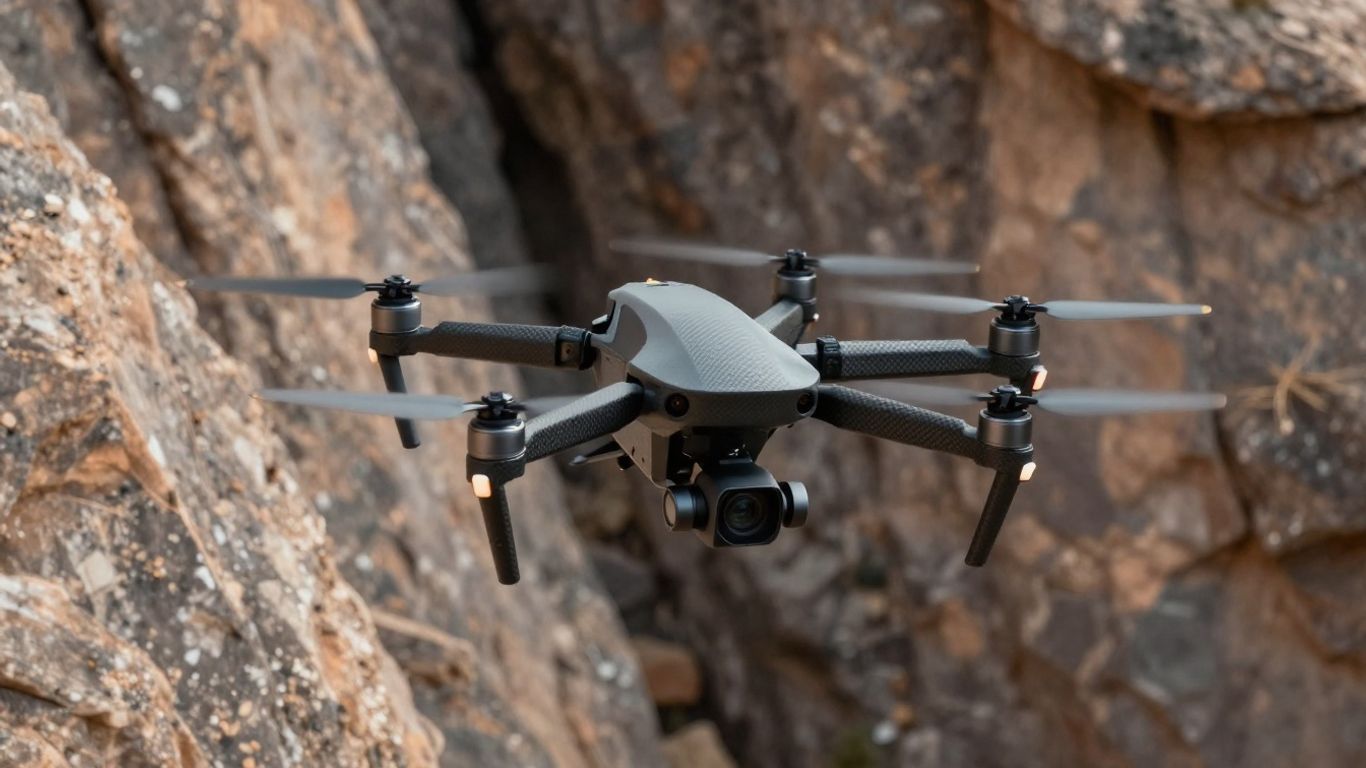
Integrating autonomous logic changes how units project influence over an area of operation. By automating navigation and targeting, these platforms achieve levels of precision that significantly exceed human-manual capabilities. The integration of the VOXL 2 Mini in systems similar to the ModalAI Stinger Vision FPV illustrates the trend toward compact, capable processing modules.
Precision targeting in adverse visibility
AI facilitates dynamic terminal guidance that follows moving assets until the final moment of impact. This functionality ensures high-value target acquisition even when weather or lighting conditions degrade visibility. Such autonomy allows the platform to adjust its trajectory in real-time, accounting for target evasion.
Autonomous navigation through complex terrain
Navigating through urban canyons or densely forested environments is a high-risk task that consumes significant operator bandwidth. Autonomous features allow drones to calculate obstacle-free paths in real-time, relying on visual odometry instead of fragile global positioning triggers. This capability makes Inspired Flight Technologies systems particularly useful for reaching objectives in difficult locations.
Countering electronic warfare with adaptive logic
When a drone is cut off from external guidance by electronic suppression, it utilizes internal logic to continue its trajectory. This adaptive behavior relies on pre-processed mapping and visual feature tracking, effectively rendering jamming attempts irrelevant for the duration of the flight. This resilience is a mandatory feature for any reliable modern strike platform.
Technical integration and system compatibility
Ensuring that new modules cooperate with existing fleets is vital for large-scale procurement and maintenance. The industry is trending toward a Modular Open Systems Architecture (MOSA), which allows teams to swap out sensors and compute blocks without re-engineering the entire platform. This flexibility is essential for maintaining agility in rapid-response environments.
Retrofitting existing FPV fleets with AI modules
Most existing platforms can be retrofitted if the physical space and power interfaces allow. The integration process usually involves upgrading flight controllers to support serial peripheral interfaces that talk to the AI module. This approach provides a stop-gap solution while teams transition toward natively autonomous airframes.
Balancing power consumption and flight time
Every watt consumed by processing hardware is a watt stolen from the motors, directly reducing battery life. Engineers optimize these systems by implementing selective processing, where the AI core stays in a low-power mode until specific target criteria are met. This maximizes the effective time on target while ensuring the system remains responsive when engagement is triggered.
Training datasets for nocturnal object detection
To ensure performance, models must be trained on diverse sets of spectral images. Labeling massive datasets for night-time object detection allows the platform to distinguish between innocuous objects and actual targets. This data-driven approach is what gives modern machines their distinct precision in the field.
Future of autonomous warfare and emerging trends
As the industry matures, the focus will broaden from simple platform performance to ecosystem interoperability and industrial-scale production. The current trajectory suggests a move toward highly collaborative networks where machines share localized situational awareness instantaneously.
Scaling manufacture for industrial-grade drone warfare
To meet high-volume tactical requirements, production must move toward automated, high-precision assembly lines. This is the only way to lower per-unit costs to levels that justify the intensive usage rates observed in modern conflicts. Reliable component pipelines are critical for this shift.
Regulatory and ethical considerations in combat
As systems become more autonomous, the role of the human-in-the-loop will evolve toward overseeing broad mission parameters. Developing clear protocols for target selection and machine failure ensures that operators can exercise control while benefiting from the speed of algorithmic execution.
Assessing the shift toward machine-led tactical decisions
We are observing a change where the machine handles the how, and the operator defines the why. This shift will likely define the tactical future, where speed of assessment becomes the primary indicator of mission success. Understanding these boundaries will be the challenge for next-generation defense strategy.
Conclusion
The integration of Nightmare FPV systems with advanced AI represents a pivotal shift in modern defense. By prioritizing autonomy and software-defined capabilities, these platforms offer unmatched precision and reliability that redefine operational expectations for small, distributed tactical units in complex, contested environments.
Frequently Asked Questions
How does AI-guided navigation work without satellites?
Autonomous navigation typically relies on onboard sensors like cameras and inertial measurement units to track the drone’s position relative to its environment through visual odometry and feature recognition.
Can these drones operate in heavy rain or fog?
While hardware ruggedization protects the internals, performance in severe weather depends on the type of imaging sensors used, with some thermal and infrared cameras capable of piercing through dense atmospheric interference.
Why is modular hardware design important for drones?
Modular design allows for the rapid replacement of faulty components or the upgrade of payloads without requiring the acquisition of a entirely new drone frame, extending the platform’s lifecycle.
What is the advantage of a software-defined architecture?
Systems built this way can be updated via firmware to improve performance, fix bugs, or add new capabilities in response to combat feedback, rather than requiring physical hardware modifications.
Do these drones always require a human operator?
While they can execute autonomous terminal maneuvers, existing protocols typically maintain a human-in-the-loop requirement to oversee launch, target identification, and mission abort procedures for ethical and safety reasons.
How do units manage drone batteries during long missions?
Battery management systems on modern drones monitor discharge states in real-time, often switching subsystems to low-power modes when their full capacity is not required to conserve energy for the final approach.
What makes a radio link resistant to electronic jamming?
Resilience is achieved through advanced frequency hopping, encrypted data packets, and purpose-built phased array antennas that isolate target signals from background frequency interference.