Drones: Our New Public Safety Buddies?

You know, those little flying cameras, drones, are starting to show up in places you might not expect. It turns out, police and fire departments are finding them pretty useful. They’re not just for taking cool aerial shots anymore; these public safety drones are becoming a real help in tricky situations. We’re talking about making things safer for officers and getting help to people faster. Let’s take a look at how these gadgets are changing the game for public safety.
Key Takeaways
- Public safety drones give officers a bird’s-eye view, helping them understand what’s happening before they go in, which is a big help in dangerous situations.
- These drones can get to emergencies faster than ground crews, sometimes arriving in just a couple of minutes, which can make a big difference.
- They’re useful for all sorts of things, like mapping out crime scenes, looking for missing people in big areas, or keeping an eye on crowds.
- Using drones can be a lot cheaper than using helicopters for aerial support, saving departments money.
- While drones offer many benefits, agencies need to think about public worries about privacy and make sure they follow all the rules.
Enhancing Officer Safety With Public Safety Drones
The increase in assaults on police has pushed agencies to rethink how to keep officers safer. More departments are using UAS for law enforcement—or police drones—to lower the risk when responding to dangerous calls. These drones are more than fancy gadgets; they’re becoming a part of how many teams handle risky, unpredictable work.
Reducing Risk in High-Risk Scenarios
Responding to incidents that involve armed suspects or unknown dangers has always meant taking on big risks. Deploying a drone before sending officers in offers an overhead look at the scene. This allows police to spot threats, weapons, or people hiding—details that are easy to miss from the ground. Below are some key ways drones reduce danger:
- Entering uncharted or potentially violent locations before officers
- Scanning rooftops, alleyways, and vehicles with thermal cameras for hidden suspects
- Providing real-time updates to teams waiting nearby
| Scenario | Traditional Approach Risk | Drone-Supported Risk |
|---|---|---|
| Hostage standoff | High—officers blind on entry | Lower—visual intel |
| Nighttime pursuit | Limited visibility | Thermal imaging |
| Unknown calls | Surprise threats possible | Drones scout first |
Drones allow officers to make decisions with more information, lowering the odds of walking into a trap.
Watching a live feed from above lets officers hang back just a little longer, think through their approach, and avoid unnecessary danger.
Improving Situational Awareness for Officers
Having more eyes on a scene changes everything. Drones equipped with cameras and thermal tech reveal what’s happening beyond corners or barriers. Even in complex situations where smoke or buildings block visibility, drones can fly overhead and relay live video back to incident command. This means no one has to guess—everyone can see the same thing in real time.
Benefits include:
- Immediate area mapping for safer entry and exit points
- Sharing drone video with all team members, which boosts coordination
- Quickly finding injured people or suspects using thermal sensors
Drones help teams communicate clearly and stay on the same page, especially during fast-paced calls. For more examples on drone impact, see how faster emergency response times boost officer safety.
Tactical Support for SWAT and Emergency Response
When SWAT is called, the stakes are sky-high. Drones are now standard for scouting buildings, checking multiple entryways, or tracking moving suspects. They can:
- Pinpoint the exact locations of threats and civilians
- Map safe routes or identify hazards (like barricades or fire)
- Act as active spotters during operations, sending instant updates
In emergencies like search and rescue, UAS for law enforcement speed up responses. They provide quick aerial surveys after natural disasters or during missing-persons cases, even when visibility is poor. Since drones can be deployed from almost anywhere and are cheaper than helicopters, they offer both flexibility and speed.
The trend is clear—public safety drones are not just an extra set of eyes; they’re a tool that saves time and protects lives.
Key Applications of Public Safety Drones
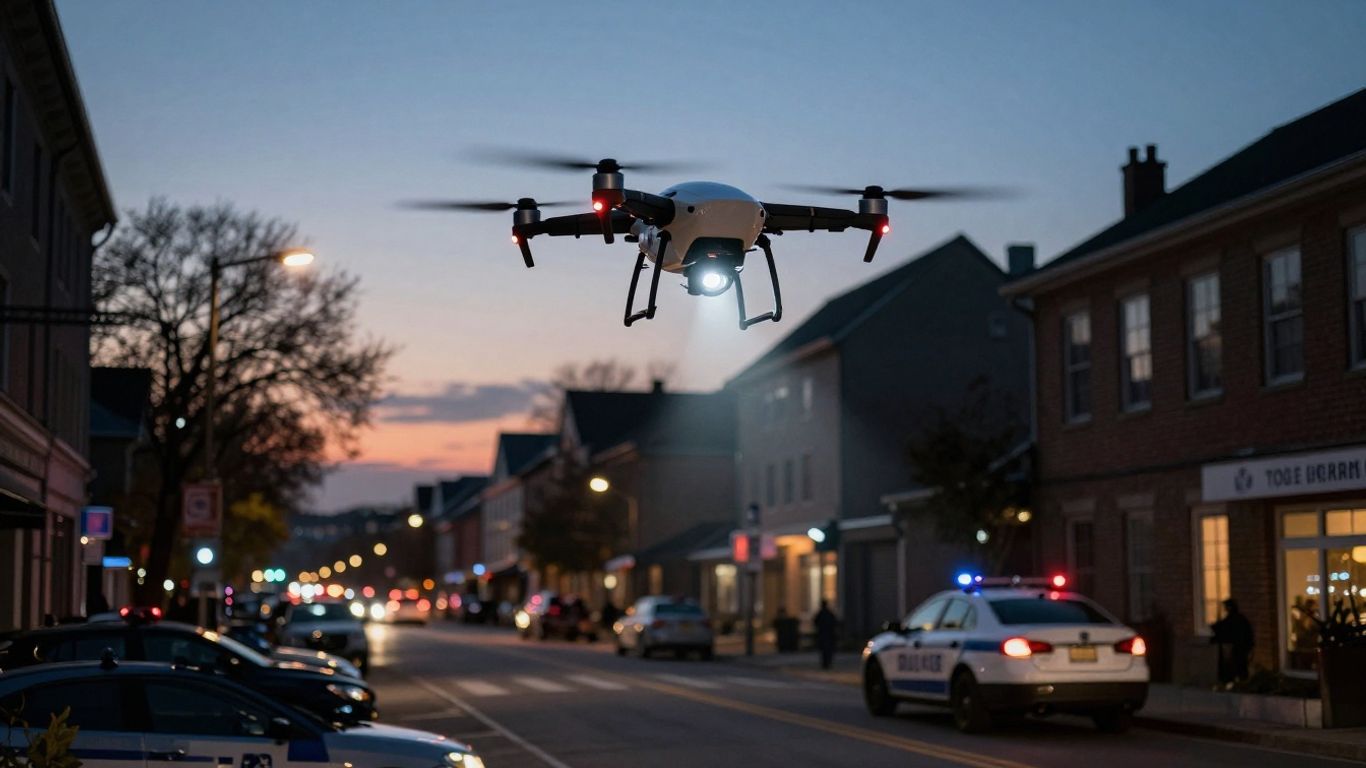
Public safety drones, often called unmanned aircraft systems (UAS), are becoming really useful tools for police departments and other emergency services. They offer a bird’s-eye view that ground crews just can’t get, making a big difference in how situations are handled. Think of them as an extra set of eyes in the sky, helping out in all sorts of ways.
Crime Scene Documentation and Evidence Collection
When something happens, documenting the scene accurately is super important for investigations. Drones can fly over and capture high-resolution images and videos of the entire area. This is way better than just relying on photos taken from the ground, especially for large or complex scenes. They can even create 3D models of accident sites, which helps investigators piece together exactly what happened. This kind of detailed record-keeping is a big step up for building solid cases.
Search and Rescue Operations
Finding people who are lost or in trouble is a major job for first responders. Drones can cover large areas much faster than search parties on foot. They can be equipped with thermal cameras, which are great for spotting people even in the dark or through thick brush. This ability to quickly scan vast or difficult terrain significantly speeds up the search process, potentially saving lives. It’s a game-changer for missing persons cases or disaster aftermaths.
Traffic and Crowd Monitoring
Keeping an eye on traffic flow and large gatherings is another area where drones shine. They can provide real-time aerial views of highways, helping to manage traffic during accidents or special events. For crowd monitoring, drones can help identify potential issues before they get out of hand, allowing for a more proactive approach to public safety. This kind of situational awareness helps keep large events running smoothly and safely.
Identifying and Tracking Suspects
When a crime occurs, drones can be incredibly helpful in locating and tracking suspects. They can follow fleeing individuals or vehicles from a safe distance, unaffected by traffic or obstacles on the ground. This real-time tracking information can be relayed to officers, improving the chances of a safe apprehension. Some police drone programs even integrate with other systems, like license plate readers, to automatically deploy drones when a vehicle of interest is detected. This makes for more effective unmanned aircraft for crime prevention.
The ability of drones to provide immediate aerial perspectives can significantly alter the dynamics of an incident. They offer a level of detail and scope that traditional methods struggle to match, thereby improving decision-making for all involved personnel. This technology is reshaping how public safety agencies operate on a daily basis.
Here’s a quick look at how drones are being used:
- Crime Scene Mapping: Creating detailed 3D models of accident sites.
- Search and Rescue: Using thermal imaging to find individuals in challenging environments.
- Event Management: Monitoring crowds and traffic for safety and efficiency.
- Suspect Pursuit: Providing real-time tracking of fleeing individuals or vehicles.
These applications show just how versatile these aerial tools are for public safety. They are becoming an indispensable part of modern policing, offering capabilities that were once only a dream. The integration of these systems into existing police drone programs is a clear sign of their growing importance.
Drone as First Responder: A New Era
Rapid Deployment for Emergency Calls
Imagine a world where help arrives not just quickly, but before traditional units even get the full picture. That’s the promise of the drone as first responder (DFR) model. These aren’t just flying cameras; they’re integrated tools designed to get eyes on a situation within seconds of a call. For instance, a drone can be launched from its automated dock and reach an incident scene in under two minutes. This rapid deployment is a game-changer, especially in areas with heavy traffic or complex terrain where getting ground units there quickly is a challenge. The ability to get aerial intelligence almost instantly means dispatchers and responding officers have a much clearer understanding of what’s happening before they even arrive. This is particularly useful for incidents on long stretches of highway where callers might not know their exact location.
Accelerating Response Times
When every second counts, drone technology in emergency response can shave off critical minutes. Think about a medical emergency or a traffic accident. While an ambulance or fire truck is en route, a drone can already be overhead, providing live video feeds to the command center and incoming units. This pre-arrival intelligence allows responders to better plan their approach, stage resources effectively, and even prepare necessary equipment. Some systems can reach incidents within a 4-mile radius with an average response time of just 85 seconds. This speed means officers can be kept safer and more available for other critical tasks, as the drone handles the initial scene assessment. It’s about making existing resources more efficient, not just adding more.
Improving Caller Location Accuracy
Pinpointing a caller’s exact location can be surprisingly difficult, especially in rural areas or during chaotic events. Drones equipped with advanced technology, like integration with services that use device GPS, can help significantly. They can fly to the general coordinates provided and then visually confirm the caller’s position, or even identify a specific vehicle involved in an incident. This accuracy is vital for search and rescue operations, where time spent searching can be the difference between life and death. For example, in large parks or wilderness areas, a drone can quickly scan terrain that would take ground teams much longer to cover. This capability is a huge step forward for public safety, making sure help gets to the right place, faster.
The integration of drones into the initial response phase is transforming how emergency services operate. It’s not about replacing human responders, but about giving them better tools and information from the very start of an incident. This proactive approach can lead to quicker resolutions and, most importantly, safer outcomes for everyone involved.
The Advantages of Public Safety Drones
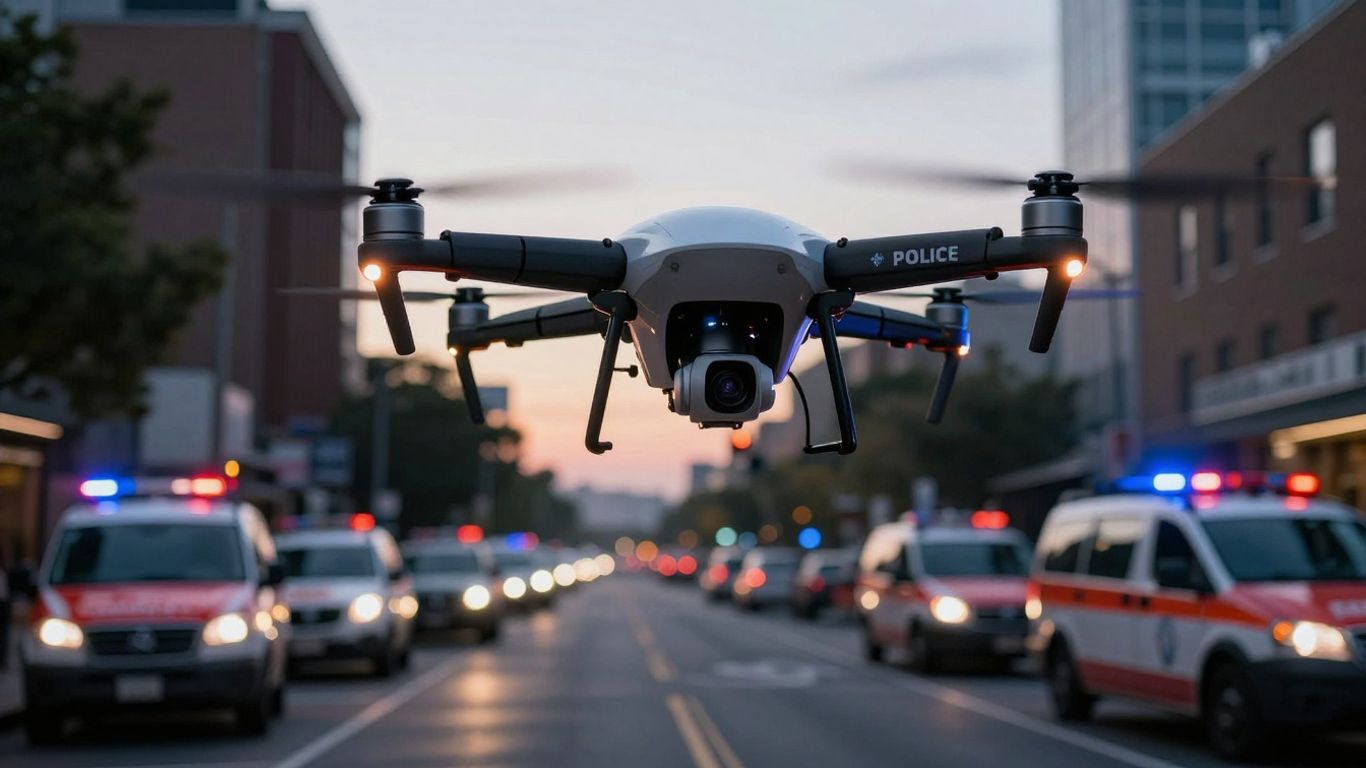
Cost-Effective Alternative to Helicopters
Let’s be real, helicopters are expensive. We’re talking millions of dollars a year when you factor in the aircraft, pilots, maintenance, and all that jazz. Drones, on the other hand, offer a much more budget-friendly way to get that aerial perspective. They can cover large areas for things like search and rescue or give you eyes in the sky during a tense situation without breaking the bank. Plus, they’re quieter and don’t pump out as many pollutants, which is a nice bonus for the environment and the community.
Promoting Proactive Policing Strategies
Drones aren’t just for reacting to things; they can help us be more proactive. Imagine integrating them with license plate readers. If a car linked to a crime is spotted, a drone can be dispatched to follow it, giving officers real-time updates on its location. This could mean catching suspects before they even commit another offense. It’s about using technology to get ahead of the curve.
Enhancing Multi-Agency Collaboration
When multiple agencies are involved in a big incident, communication can get messy. Drones can really help here. They provide a common, real-time aerial view that everyone can access. So, if a drone is tracking a suspect’s vehicle and it heads into another town, officers there can get that same live video feed. This makes responses quicker and coordination smoother, which is a big deal when seconds count. It helps create a more connected policing strategy across different departments.
Drones offer a significant financial benefit compared to traditional aerial surveillance methods like helicopters. Their lower acquisition and operational costs make advanced aerial capabilities accessible to more agencies, allowing for wider deployment and more frequent use in various public safety scenarios.
Navigating Challenges in Drone Adoption
So, you’ve seen how cool drones can be for public safety, right? But getting them into the hands of officers isn’t always a walk in the park. There are definitely some hurdles to jump over.
Addressing Public Perception and Privacy Concerns
This is a big one. People get nervous when they hear about drones flying around, and honestly, who can blame them? The thought of being watched can be unsettling. It’s super important for agencies to be upfront about how and why they’re using drones. Think clear policies, public meetings, and making sure everyone knows their rights. Transparency is key here. We need to build trust, not suspicion. It’s not about spying; it’s about safety. For instance, explaining that a drone is being used for search and rescue after a natural disaster, rather than just general surveillance, can make a world of difference in how people feel about it.
Overcoming Budget Constraints
Let’s be real, police departments often operate on tight budgets. Drones, while cheaper than helicopters, still cost money. There’s the initial purchase, training for pilots, maintenance, and software. It adds up. Many departments are looking into grants or partnerships to help fund these programs. It’s about finding creative ways to make it work without breaking the bank. Sometimes, starting small with a basic model and expanding later is a good strategy.
Ensuring FAA Compliance and Registration
Flying drones isn’t just a free-for-all. The Federal Aviation Administration (FAA) has rules, and law enforcement has to follow them too. This means registering the drones, getting proper certifications for pilots, and understanding airspace restrictions. It can feel like a lot of paperwork, but it’s necessary to keep the skies safe for everyone. Ignoring these rules can lead to serious trouble, and nobody wants that. You can find more information on FAA drone regulations.
Mitigating Internal Agency Limitations
Sometimes, the biggest challenge isn’t the tech itself, but the people using it. Some agencies are slower to adopt new tools, maybe due to tradition or a lack of technical know-how. Getting buy-in from everyone, from the chief down to the officers on the street, is vital. Proper training and showing the real-world benefits, like how drones can provide critical incident command views or help track suspects, can help overcome this resistance. It’s about integrating these new tools into existing workflows smoothly, not just handing them out and expecting magic to happen. Agencies are also grappling with how to integrate data from various sources, which is a challenge for modern technology adoption.
The Future of Public Safety Drones
Integrating Drones with Existing Technology
The next big step for public safety drones is making them work even better with the stuff police and fire departments already use. Think about it: a drone spots something important, like a suspect hiding or a fire spreading in a hard-to-see spot. Right now, that info might go to a dispatcher, then to an officer. But what if the drone could send that live video straight to the tablet in a responding officer’s hand, or even to the screen in the fire truck? That’s the goal – making that information flow faster and smoother. This means drones won’t just be flying cameras; they’ll be active participants in the response, sharing data in real-time. It’s about creating a more connected picture for everyone involved in an emergency.
The Role of Advanced Software and Hardware
We’re seeing some pretty cool tech advancements that will make drones even more useful. For starters, cameras are getting way better, especially thermal cameras. These can see heat signatures, which is a game-changer for finding people in the dark or spotting hidden fires. Then there’s the software side. Imagine a drone that can automatically scan a large area for missing persons during a search and rescue mission, or one that can track multiple vehicles at once. AI is playing a big part here, helping drones process information faster and make smarter decisions. This also means better data collection for things like crime scene documentation, creating detailed 3D models that are super accurate. The hardware is getting tougher too, able to handle rougher weather and fly for longer periods.
Expanding Drone Use Cases for Community Safety
Beyond the immediate emergency response, drones are starting to show their worth in other ways. For instance, they can be used for routine patrols in large areas, acting as an extra set of eyes. They can also help with traffic management during big events or accidents, giving incident commanders a bird’s-eye view to direct resources effectively. Think about monitoring large crowds or even helping with environmental monitoring after a disaster. The idea is to use these flying tools not just for putting out fires or catching bad guys, but for a broader sense of keeping communities safe and informed. It’s about using the technology proactively to prevent problems before they start. For example, drones are already proving useful in infrastructure inspections, like checking bridges or cell towers, which indirectly contributes to public safety by ensuring critical systems are working properly. This technology is rapidly evolving.
The integration of drones into public safety is moving beyond simple aerial observation. Future applications will likely involve sophisticated data analysis, predictive capabilities, and direct integration with emergency response systems, making them indispensable tools for modern law enforcement and emergency services.
So, Are Drones Our New Public Safety Pals?
It really looks like drones are becoming a regular part of how police and fire departments keep us safe. They can get to places fast, give a bird’s-eye view of tricky situations, and help find people who are lost or in trouble. While there are still questions about privacy and how much they cost, the benefits seem pretty clear. As the technology gets better and more departments start using them, these flying gadgets might just become a standard tool in the public safety toolbox, helping officers do their jobs more safely and effectively. It’s definitely a space worth watching as these ‘new buddies’ continue to prove their worth.
Frequently Asked Questions
How do drones help police officers stay safe?
Drones give police a bird’s-eye view of dangerous situations before officers get there. This helps them see what’s happening, like if someone has a weapon, so they can plan their next move without putting themselves in harm’s way. It’s like having a scout go in first.
What are some main ways police use drones?
Police use drones for lots of things! They can help document accident scenes or crime spots by taking pictures and videos from above. They’re also great for searching large areas for missing people or helping during big events to keep an eye on crowds and traffic.
What does ‘Drone as First Responder’ mean?
This means a drone can be sent out right away when someone calls 911, even before human officers arrive. The drone can quickly get to the scene, see what’s going on, and send that information back to the officers heading there. This helps them respond faster and be better prepared.
Are drones cheaper than helicopters for police?
Yes, drones are much cheaper than helicopters. Helicopters cost a lot to buy, run, and maintain, plus you need a pilot. Drones are more affordable, quieter, and better for the environment too.
What are the main worries people have about police using drones?
Some people worry about their privacy and if police might misuse drones to watch them unfairly. It’s important for police departments to be open about how they use drones and follow rules to protect everyone’s rights.
What’s next for drones in public safety?
In the future, drones will likely work even better with other police technology, like cameras and computers. We’ll probably see them used in even more ways to help keep communities safe, like finding people lost in the woods or helping manage emergencies more smoothly.