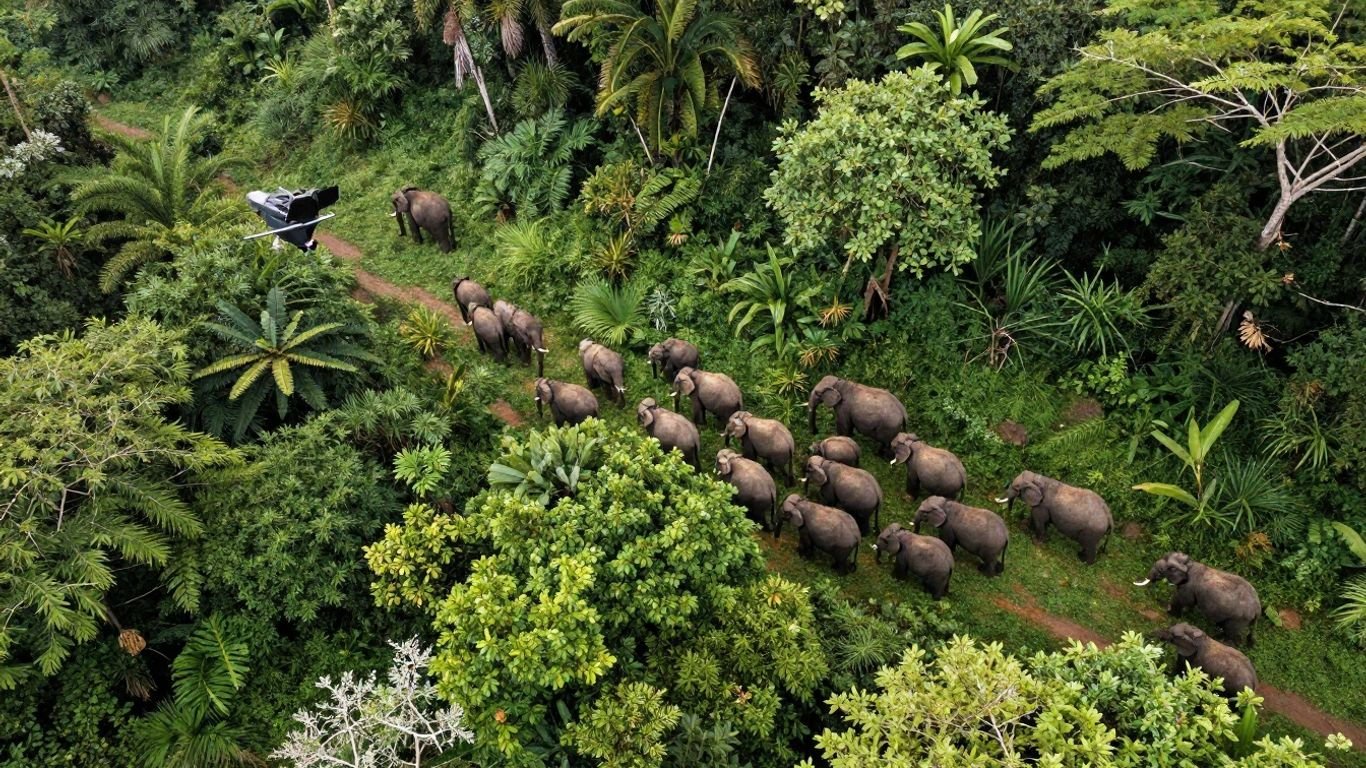
Unleash Your Inner David Attenborough: Mastering Wildlife Photography with Drones

Ever wanted to get those amazing shots of wildlife from above, like you see in nature documentaries? Well, you can! Using drones for wildlife photography opens up a whole new world of possibilities. It’s not just about pointing a camera in the sky; it’s about understanding how to use this tech responsibly and effectively. We’ll cover everything from picking the right drone to getting those perfect shots without disturbing the animals. Think of it as your guide to becoming a drone-savvy nature photographer.
Key Takeaways
- Drones offer unique aerial perspectives for capturing wildlife, but ethical use is paramount to avoid disturbing animals and their habitats.
- Selecting the correct drone and understanding its camera settings, light, and shadow are vital for getting good wildlife photos.
- Following airspace rules and maintaining safe distances are crucial for both drone operation safety and wildlife protection.
- Post-production editing is important for refining drone footage and telling a compelling story about the wildlife you’ve filmed.
- Advanced drones with specialized cameras and good battery management can significantly improve wildlife photography capabilities.
Capturing Wildlife with Drones: An Overview
So, you want to get some amazing shots of animals without getting too close? Drones are pretty neat for that. They let you see things from a whole new angle, kind of like a bird’s-eye view, but with a camera attached. This means you can observe wildlife without disturbing them, which is a big deal for conservation and just generally being a decent human.
Understanding Drone Capabilities for Nature
Drones have come a long way. They’re not just toys anymore. Many can fly for a decent amount of time, carry good cameras, and even hover really still. This stability is key when you’re trying to film a shy deer or a bird in flight. Some drones even have special cameras, like thermal ones, that can see animals hidden in the dark or behind foliage. It’s like having super-vision for nature.
Here’s a quick look at what some drones offer:
| Feature | Typical Range | Notes |
|---|---|---|
| Flight Time | 20-40 mins | Varies greatly by model and conditions |
| Camera Resolution | 1080p – 4K | Higher resolution means more detail |
| Gimbal Stability | 3-axis | Essential for smooth, shake-free footage |
| Max Range | 1-10 km | Depends on drone and signal strength |
Ethical Considerations in Drone Wildlife Photography
This is super important. Just because you can fly a drone near wildlife, doesn’t mean you should. You have to be mindful of the animals. Flying too low or too fast can scare them, disrupt their nesting, or even cause them to abandon their young. It’s all about being respectful. Think about it: would you like a noisy machine buzzing around your house all day? Probably not. So, we need to be extra careful.
- Never chase animals. Let them go about their business.
- Avoid nesting seasons. Give parents and babies some peace.
- Keep a safe distance. Use your drone’s zoom if needed.
- Be aware of local rules. Some places have specific drone bans.
The goal is to document nature, not to interfere with it. Our presence, even from the air, can have an impact. We must always prioritize the well-being of the animals and their environment above getting that perfect shot.
Choosing the Right Drone for Your Needs
Picking a drone can feel overwhelming. For wildlife, you’ll want something that’s stable and has a decent camera. If you’re just starting, a smaller, more affordable drone might be a good way to learn the ropes. For more serious work, you might look at drones with better cameras and longer battery life. It really depends on what you plan to film and your budget. Don’t forget to check out resources on drone mapping if you’re interested in surveying habitats too.
Mastering Aerial Perspectives
Getting that perfect shot from above requires more than just pointing your drone skyward. It’s about seeing the world from a new angle, one that can reveal behaviors and landscapes you’d never notice from the ground. The key is to think like a bird, but with a camera.
Achieving Stable Footage from Above
Nobody likes shaky video. For smooth, professional-looking shots, stability is everything. Most modern drones have built-in gimbals that do a lot of the heavy lifting, but you can help them out. Try to avoid abrupt movements. Think of your drone’s flight path as a gentle glide, not a sudden dart. When you’re starting out, practice hovering in one spot for a few minutes. This helps you get a feel for the controls and how the drone reacts to wind. If you’re looking for professional aerial services, companies offer state-of-the-art drones for stunning views.
Creative Angles for Wildlife Encounters
Don’t just fly straight up and look down. Experiment with different altitudes and angles. A low-angle shot, flying parallel to a river or a herd of animals, can create a sense of scale and movement. A high-angle shot, looking down, can reveal patterns in animal behavior or herd formations. Sometimes, a slightly tilted angle, not perfectly straight down or level, can add a dynamic feel to your footage. Think about what story you want to tell with your shot. Are you showing the vastness of the habitat, or the intimacy of a specific interaction?
Utilizing Drone Movement for Dynamic Shots
Static shots are fine, but movement adds life. Simple forward or backward movements can be effective, but don’t be afraid to get creative. Try a slow, sweeping arc around a subject, or a gentle rise or descent. A "reveal" shot, where the drone starts hidden behind an object and then moves to show the subject, can be very impactful. Remember, the goal is to complement the wildlife’s natural behavior, not to disturb it. Keep your movements smooth and predictable, especially around sensitive animals.
When you’re out in the field, always be aware of your surroundings. This includes not just the wildlife, but also the terrain, weather conditions, and any potential obstacles. Planning your flight path beforehand can save you a lot of trouble and help you capture better footage.
Essential Drone Photography Techniques
Getting those amazing aerial shots of wildlife isn’t just about pointing your drone and hitting record. You’ve got to think about how you’re actually shooting. Camera settings are your best friend here, and understanding them can make the difference between a blurry mess and a stunning image.
Camera Settings for Optimal Wildlife Shots
When you’re out in the field, the light can change fast, and so can your subject. You don’t want to miss that perfect moment because your camera was set wrong. For wildlife, you’ll want to prioritize a fast shutter speed to freeze motion. Think about what you’re shooting. A soaring eagle needs a much faster shutter than a slow-moving tortoise. Aperture is also key; a wider aperture (smaller f-number) will give you a shallower depth of field, blurring out distracting backgrounds and making your subject pop. However, if you’re trying to capture a herd, you might want a narrower aperture for more in-focus detail. ISO is your last resort for low light, but push it too high and you’ll get grainy footage. It’s a balancing act.
Here’s a quick rundown:
- Shutter Speed: Aim for at least 1/1000s for fast-moving animals. For slower subjects, 1/500s might suffice.
- Aperture: f/2.8 to f/5.6 is a good starting point for isolating subjects. Use f/8 or higher for wider scenes.
- ISO: Keep it as low as possible, ideally below 400, to avoid noise.
Understanding Light and Shadow from Above
Light is everything in photography, and from the air, it behaves differently. The sun’s angle dictates everything. Early morning and late afternoon light, often called the ‘golden hour’, casts long shadows and gives a warm, soft glow that’s fantastic for wildlife. Midday sun can be harsh, creating strong contrasts and blown-out highlights. Look for how the light plays on the landscape and your subject. Sometimes, shooting directly into the sun (with proper filters, of course) can create dramatic silhouettes. Pay attention to shadows too; they can add depth and texture, or they can hide your subject completely. Learning to read the light is a skill that comes with practice, and it’s a big part of taking breathtaking drone photos.
The way light falls on a landscape from above can completely change its appearance. What looks flat from the ground can reveal incredible patterns and textures when viewed from the sky. Use this to your advantage to highlight features or create mood in your shots.
Focusing on Animal Behavior with Drones
Your drone isn’t just a camera; it’s a tool to observe without disturbing. The real magic happens when you capture animals doing what they do naturally. This means patience. You might spend hours waiting for a specific behavior. Think about the animal’s routine. When are they most active? Where do they go to feed or rest? Your drone can help you get closer than ever before, but you still need to be mindful. Avoid hovering directly over them or making sudden movements that could scare them. Sometimes, the best shots are from a distance, using your drone to frame the animal within its environment. Observing their interactions, their hunting strategies, or their social dynamics from a unique aerial perspective is what makes drone wildlife photography so special. It’s about telling a story through their actions.
Navigating Regulations and Safety
Flying a drone around wildlife isn’t just about getting cool shots; it’s also about being responsible. There are rules, and honestly, they’re there for a good reason. We don’t want to disturb the animals or cause any trouble. Understanding and following these guidelines is key to ethical drone wildlife photography.
Airspace Rules for Drone Operation
Before you even think about lifting off, you need to know the rules of the sky. These aren’t just suggestions; they’re laws. Different countries and even different regions within countries have their own specific regulations. You’ll want to check with your local aviation authority. For instance, in the US, the FAA has a whole set of rules for recreational and commercial drone pilots. This includes things like keeping your drone within visual line of sight at all times and not flying over people or moving vehicles. It’s a good idea to familiarize yourself with resources like the FAA’s drone information page to stay updated.
Here’s a quick rundown of common airspace considerations:
- Altitude Limits: Most places have a maximum height you can fly your drone, often around 400 feet (120 meters).
- No-Fly Zones: Airports, military bases, national parks (sometimes), and critical infrastructure are usually off-limits.
- Registration: Depending on your drone’s weight and where you’re flying, you might need to register your drone.
- Remote ID: Newer regulations in some areas require drones to broadcast identification information.
Respecting Wildlife Habitats from the Air
This is where the ‘wildlife’ part of wildlife photography really comes into play. Animals are sensitive to their environment, and a buzzing drone can be a major disruption. Think about it from their perspective – a loud, unfamiliar object hovering overhead could cause stress, make them flee their nests, or abandon their young. It’s our job to be observers, not intruders.
- Avoid Nesting Areas: Steer clear of areas where animals are known to be nesting or raising young, especially during sensitive periods.
- Minimize Noise: Fly at a lower altitude where the drone’s sound might be less intrusive, or consider drones known for quieter operation.
- Observe from a Distance: If you see animals reacting negatively to your drone, back off immediately. Your footage isn’t worth stressing them out.
The goal is to capture the natural world without altering its natural course. This means being mindful of how our presence, even from the air, might impact the behavior and well-being of the creatures we’re there to document. Patience and observation are your best tools.
Maintaining Safe Distances with Drones
This ties directly into respecting habitats. You need to keep a safe distance from wildlife. What constitutes ‘safe’ can vary depending on the species. A large bird of prey might be more sensitive than a herd of deer, for example. The general rule of thumb is to maintain a distance that doesn’t cause the animal to change its behavior. If an animal looks up, stops feeding, or moves away because of your drone, you’re too close.
Here’s a simple table to give you an idea, though always use your best judgment:
| Animal Type | Recommended Minimum Distance |
|---|---|
| Birds (Nesting) | 100+ meters |
| Large Mammals | 50+ meters |
| Smaller Mammals | 30+ meters |
| Marine Life (Distant) | 75+ meters |
Remember, these are just guidelines. Always prioritize the animal’s comfort and safety over getting that perfect shot. If you’re unsure, err on the side of caution and fly further away. Responsible drone operation means being a good steward of the environment and its inhabitants.
Post-Production for Drone Wildlife Footage
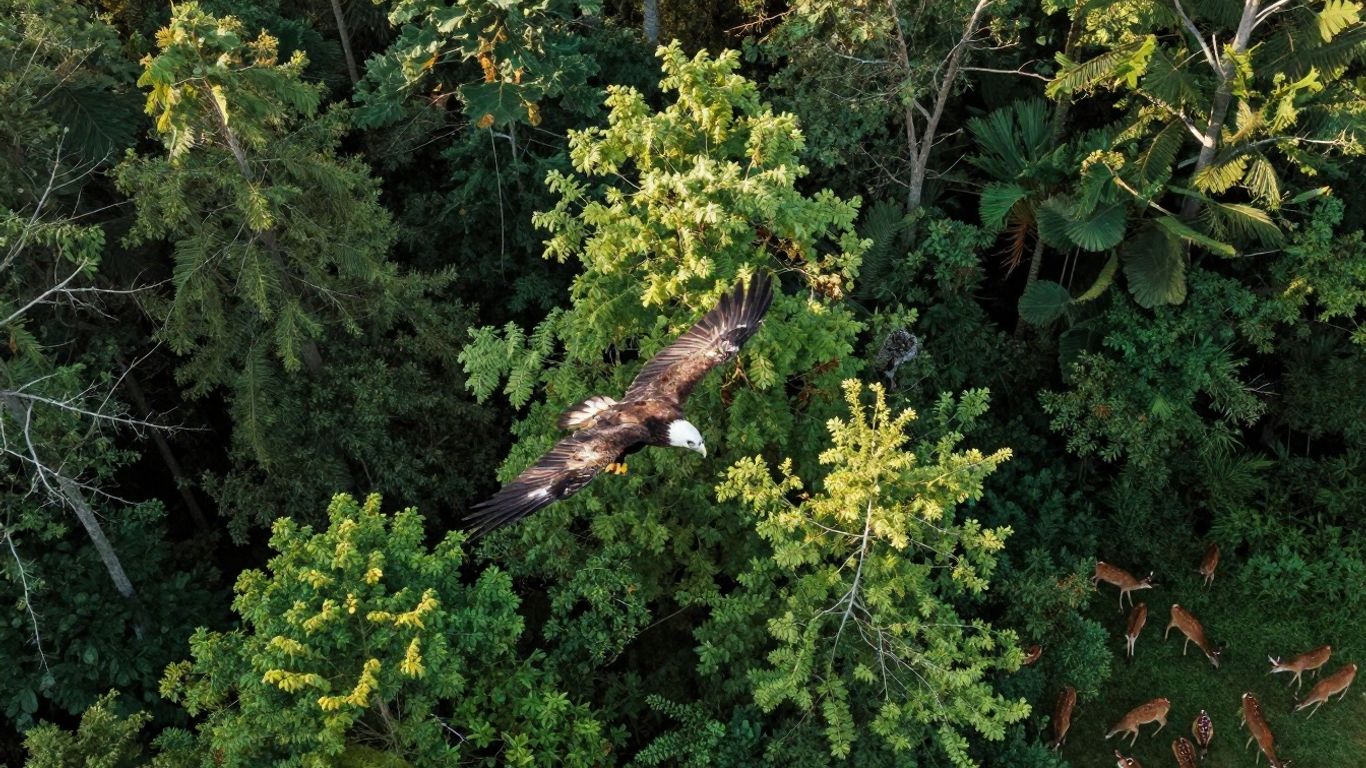
So, you’ve got all this amazing footage from your drone, soaring over landscapes and capturing wildlife in its natural habitat. That’s just the first part, though. Now comes the magic of making it all come together, turning those raw clips into something truly special. It’s where you get to tell the story you set out to capture.
Editing Software for Aerial Cinematography
First things first, you need the right tools. There are tons of editing programs out there, from simple ones for beginners to super complex professional suites. For drone footage, you’ll want something that can handle high-resolution video and offers good control over your timeline. Programs like DaVinci Resolve, Adobe Premiere Pro, or Final Cut Pro are popular choices. They let you piece together your clips, trim out the boring bits, and arrange everything in a way that makes sense. Think of it like putting together a puzzle, but with moving pictures. You’re building a narrative flow, making sure the viewer stays engaged from start to finish. It’s not just about cutting clips; it’s about pacing and rhythm.
Color Correction and Enhancing Natural Scenes
This is where your footage really starts to pop. Drones often shoot in flat color profiles to give you more flexibility later. That means your footage might look a bit washed out straight out of the camera. Color correction is all about fixing that. You’ll adjust things like brightness, contrast, and saturation to make the colors look natural and vibrant. Getting the colors right can make a huge difference in how viewers perceive the scene. You want those greens to look lush, the blues to be deep, and the wildlife to stand out without looking artificial. It’s a delicate balance, and there are some great resources to help you get started with color correction tips.
Storytelling with Your Drone Footage
This is the heart of it all. Your footage isn’t just pretty pictures; it’s a story waiting to be told. Think about what you want your audience to feel or understand. Are you highlighting the beauty of a particular animal? Showing the impact of environmental changes? Your editing choices will guide the viewer. This involves:
- Selecting the best shots: Not every clip needs to be in the final video. Pick the ones that are sharp, well-composed, and show interesting behavior or scenery.
- Adding music and sound: Sound design is huge. Natural sounds can immerse the viewer, while music can set the mood. Choose wisely!
- Structuring your narrative: Does your story have a beginning, middle, and end? Or is it more of a montage of amazing moments? Plan it out.
The goal is to create an emotional connection. You want people to care about the wildlife and the places you’re showing them. It’s about more than just showing what you saw; it’s about sharing an experience and perhaps inspiring action or appreciation for the natural world.
Remember, post-production is where your vision truly comes to life. Take your time, experiment, and don’t be afraid to try new things. It’s a creative process, and the more you practice, the better you’ll get at turning your drone footage into compelling wildlife stories.
Advanced Drones for Wildlife Photography
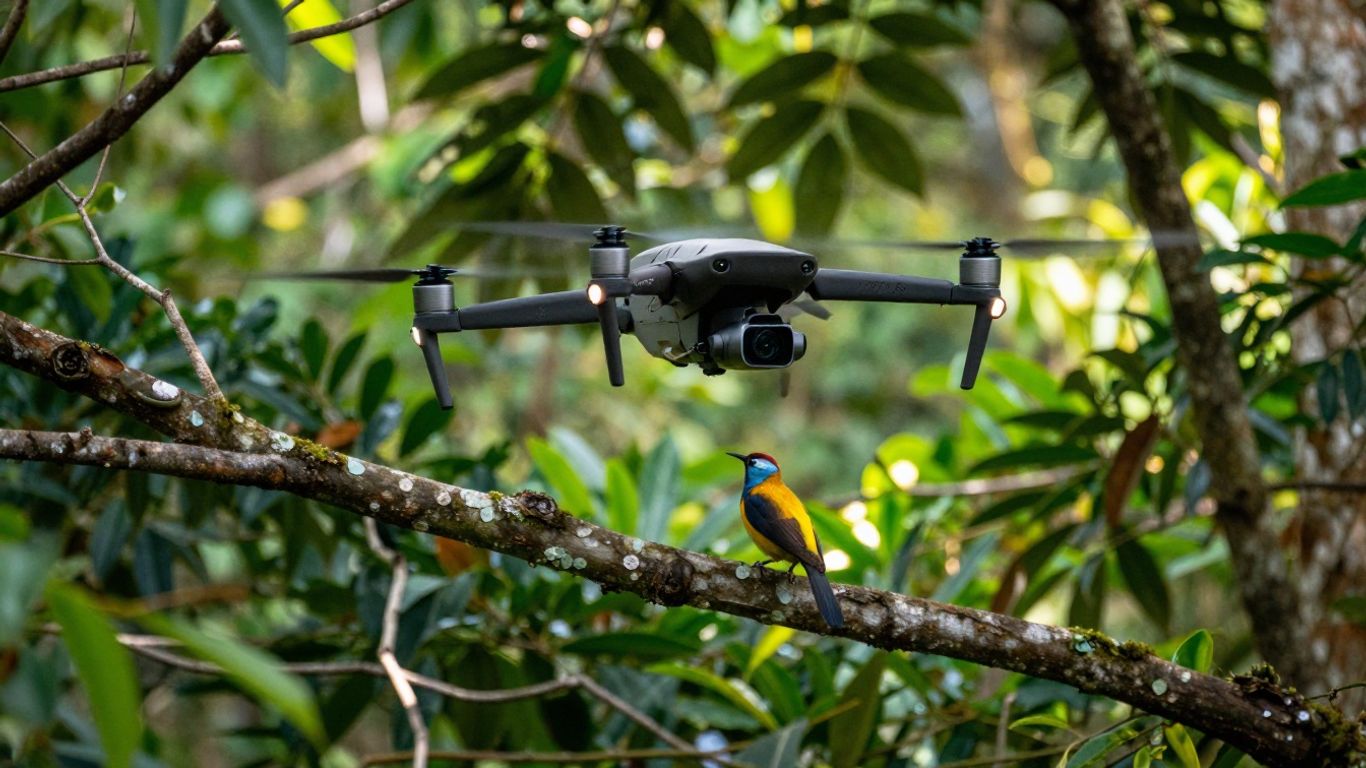
So, you’ve got the basics down, and you’re ready to take your wildlife footage to the next level. That’s where advanced drones come into play. These aren’t your average hobby drones; we’re talking about machines built for serious aerial cinematography, often equipped with features that can really make your footage stand out.
Exploring Drones with Advanced Camera Systems
When you start looking at higher-end drones, the cameras get a serious upgrade. Forget grainy footage; these often pack professional-grade sensors, similar to what you’d find in high-end mirrorless cameras. This means better low-light performance, wider dynamic range (so you don’t lose detail in bright skies or dark shadows), and the ability to record in higher resolutions like 4K or even 6K. Some even offer interchangeable lenses, giving you flexibility for different shooting scenarios, much like you’d have with a traditional camera setup. The quality of the sensor and optics directly impacts the detail and clarity of your wildlife shots.
Utilizing Thermal and Infrared Capabilities
This is where things get really interesting for wildlife. Drones equipped with thermal or infrared cameras can see heat signatures. This is a game-changer for spotting animals that are camouflaged or active at night. Imagine being able to see a fox hidden in dense undergrowth or a nocturnal creature emerging from its den – all without disturbing it. This technology is incredibly useful for observing animal behavior that would otherwise be impossible to capture. You can get a unique look at the natural world, seeing heat patterns that reveal animal presence even when they’re not visible to the naked eye. This capability is a significant step up for serious nature documentarians seeing animals using infrared technology.
Long-Range Flight and Battery Management
Getting those epic shots often means covering a lot of ground or staying airborne for extended periods. Advanced drones come with better battery technology and more efficient motors, allowing for longer flight times. This is crucial when you’re tracking a herd of animals across a vast landscape or waiting for that perfect moment. Good battery management is key; you’ll want to plan your flights, understand your drone’s limitations, and perhaps even carry spare batteries. Some professional setups even include systems for quick battery swaps or external power solutions to keep you flying longer.
Here’s a quick look at what to consider:
- Flight Time: How long can the drone stay in the air on a single charge?
- Range: How far can you fly the drone and still maintain a stable connection?
- Battery Type: Lithium-polymer (LiPo) batteries are common, but capacity and discharge rates vary.
- Charging Speed: How quickly can you recharge your batteries for the next flight?
Managing your drone’s power effectively is as important as mastering its flight controls. Running out of juice at the wrong moment means missing the shot, or worse, losing your drone. Always check weather conditions and plan your flight paths to maximize efficiency and safety.
Keep Exploring, Keep Filming
So, there you have it. Flying a drone to capture wildlife might seem a bit fancy, but really, it’s just another tool to tell amazing stories about the natural world. It’s not about having the most expensive gear; it’s about seeing things differently and sharing that perspective. Whether you’re just starting out or you’ve been at it for a while, remember to always be respectful of the animals and their homes. Keep practicing, keep learning, and who knows, maybe you’ll be the next David Attenborough of the skies, showing us all the incredible life out there.
Frequently Asked Questions
What makes drones good for filming wildlife?
Drones are like flying cameras! They can get really close to animals without scaring them. You can also get amazing shots from high up, showing the whole landscape where animals live. It’s like having a bird’s-eye view, but with a camera!
Is it okay to fly drones near animals?
It’s super important to be careful. You don’t want to bother the animals or mess up their homes. Always keep a safe distance, be quiet, and follow the rules so you don’t disturb them. Think of it as being a respectful visitor in their world.
What kind of drone should I get for filming nature?
You’ll want a drone that’s easy to fly and has a good camera. Some drones are better at staying steady in the wind, which is great for clear pictures. Look for one with a decent battery life so you can film for longer.
What are the rules for flying drones outside?
There are rules to keep everyone safe, like not flying too close to airports or people. You need to know where you’re allowed to fly. It’s best to check the local laws before you take off, so you don’t get into trouble.
How can I make my drone videos look professional?
After you film, you can use special computer programs to make your videos look even better. You can fix the colors, make the footage smoother, and put it all together to tell a cool story about the animals you filmed.
Can drones see in the dark or through things?
Some special drones have cameras that can see heat, like with a thermal camera. This is awesome for finding animals at night or when they’re hiding. It’s like having superhero vision for spotting wildlife!