Drone Safety and Tech: Clear Answers to Common Questions

Got a bunch of drone questions buzzing around in your head? You’re not alone. Lots of people are curious about these flying gadgets. Whether you’re just starting out or you’ve been flying for a while, there’s always something new to learn. We’re going to break down some common drone questions, covering everything from how to keep them flying safely to the cool tech inside them and how they’re used in different jobs. Let’s get these drone questions answered.
Key Takeaways
- Make sure your drone is ready to fly by doing a quick check before each flight. This helps catch small issues before they become big problems.
- Flying a drone safely means knowing how it handles, especially when you add things to it. Keep an eye on the center of gravity so it doesn’t get wobbly.
- New tech like SLAM LiDAR is changing what drones can do, especially in places where GPS doesn’t work well, like inside buildings or underground.
- Drones are used for all sorts of jobs, from checking cell towers to creating maps. Different tools, called payloads, help them do these specific tasks.
- Following the rules and being careful, especially with batteries and when flying at night, keeps everyone safe and your drone flying smoothly.
Understanding Drone Questions
There’s a whole lot of stuff people want to know about drones, and honestly, it makes sense. This technology is changing fast, and keeping up can feel like a full-time job. We get a ton of common drone inquiries, from folks just starting out to seasoned pilots looking to expand their skills. It’s all about demystifying the world of unmanned aerial vehicles and making sure everyone feels confident.
Your Drone Questions Answered Podcast
If you’ve got a burning question about drones, chances are someone else does too. That’s where the “Your Drone Questions. Answered.” podcast comes in. Each episode, they pull in industry experts to tackle those frequently asked about drones. It’s a great way to get quick, reliable answers without having to sift through endless forums. They cover everything from basic flying techniques and gear choices to the latest regulations and industry news. It’s a pretty neat way to stay informed, especially if you’re busy. You can even submit your own questions to be answered on a future show. It’s a fantastic resource for anyone curious about understanding drone technology.
Expert Insights for Drone Enthusiasts
Beyond the podcast, there are plenty of places to find expert insights. Many professionals share their experiences and knowledge, helping others learn the ropes. For instance, understanding the nuances of specific applications, like cell tower inspections, requires a deep dive into practical challenges and solutions.
Here’s a look at some common areas of interest:
- Preflight Checks: What absolutely needs to be done before every flight?
- Emergency Procedures: How do you handle unexpected issues mid-air?
- Payload Integration: What are the best practices for attaching and using different equipment?
The drone landscape is always shifting. Staying current with advancements and best practices is key to safe and effective operation. It’s not just about flying; it’s about understanding the whole system.
Navigating the World of Drones
Getting a handle on drone user queries means looking at the big picture. This includes everything from the technical specs of different models to the legalities of flying in various airspace. For example, knowing about American-made LiDAR ecosystems is becoming increasingly important as the industry matures. It’s about making informed decisions, whether you’re buying your first drone or planning a complex commercial operation. The goal is to make sure everyone feels equipped to handle their drone endeavors safely and effectively. You can find more industry news and updates at Drone News Network.
Essential Drone Operations
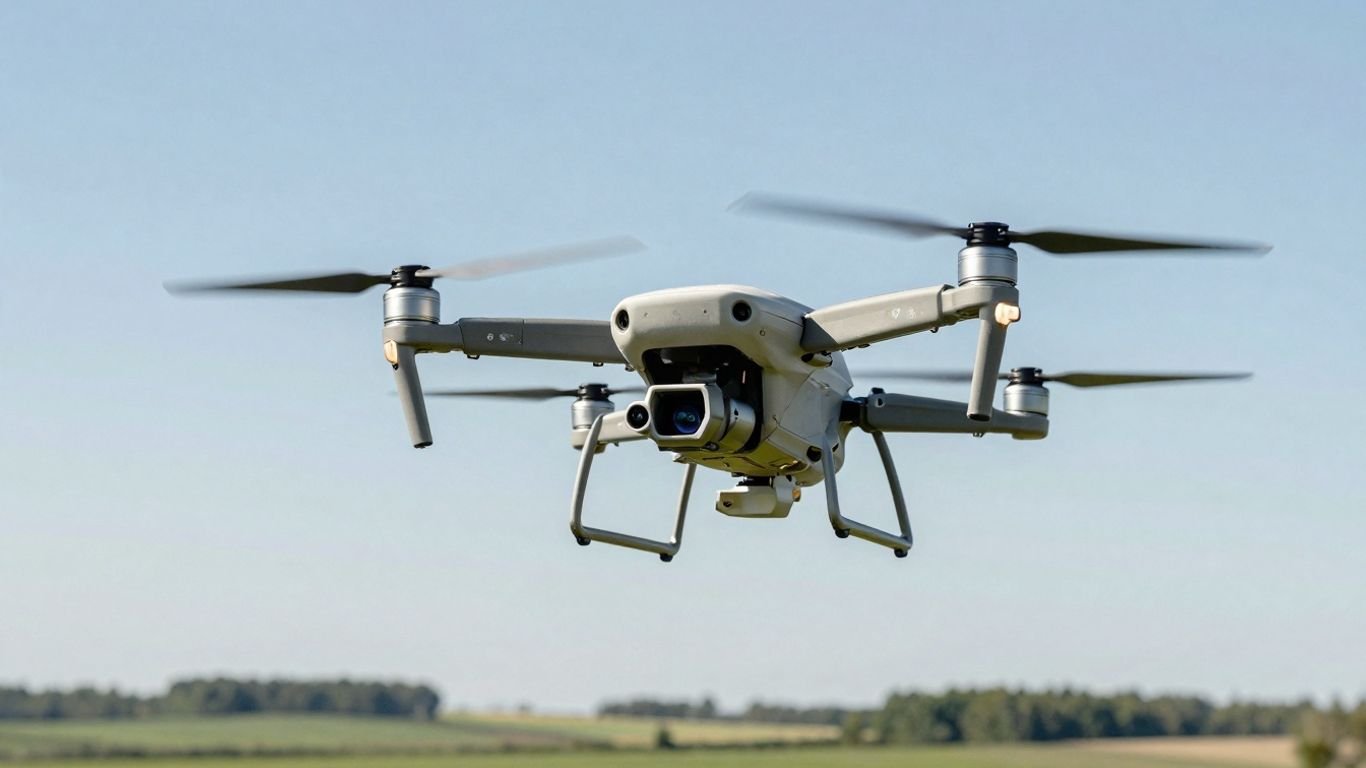
Getting your drone up in the air safely and effectively involves more than just pressing a button. It’s about following a set of procedures that keep your aircraft, yourself, and others out of harm’s way. This section covers some key drone operational guidance you’ll want to get familiar with.
Preflight Inspection Responsibilities
Before you even think about powering up, a thorough preflight check is your responsibility as the remote pilot-in-command. This isn’t just a suggestion; it’s a requirement to make sure your drone is airworthy. You’re the one who has to confirm everything is secure, all systems are working, and there’s enough battery power for your planned flight. Skipping this step is like driving a car without checking the tires – you’re just asking for trouble.
- Check the drone’s frame and propellers for any damage.
- Verify that the control links between your ground station and the drone are functioning correctly.
- Confirm that batteries are adequately charged and secure.
- Ensure any attached equipment is firmly fastened and won’t affect flight.
The FAA places the responsibility for ensuring the drone is safe to fly squarely on the remote pilot. This means you need to know your aircraft and its condition inside and out.
Preventing In-Flight Emergencies
Emergencies can happen, but a lot of them can be avoided with good planning and execution. One common area for concern is battery management. Lithium-based batteries, while powerful, need careful handling. Always follow the manufacturer’s guidelines for charging, storing, and using these batteries. Overcharging or charging in extreme temperatures can lead to serious issues. Also, keep an eye on battery temperature during charging; if it gets too hot, stop and investigate.
Another aspect is maintaining situational awareness. You need to constantly scan the sky, not just left to right, but also up and down. If you see another aircraft that doesn’t seem to be moving relative to you, it might be on a collision course. Don’t just rely on your peripheral vision; focus on potential threats.
Understanding Center of Gravity Limits
While not explicitly detailed in every basic guide, understanding your drone’s center of gravity (CG) is pretty important, especially when you start adding payloads. The CG is the point where the drone’s weight is balanced. If you attach cameras, sensors, or other gear, you can shift this balance point. If the CG moves too far forward, backward, or to the side, the drone can become unstable and difficult, or even impossible, to control. Always check your drone’s manual for its CG limits and how different payloads might affect it. Properly balancing your drone is key to stable and predictable flight.
Advanced Drone Technologies
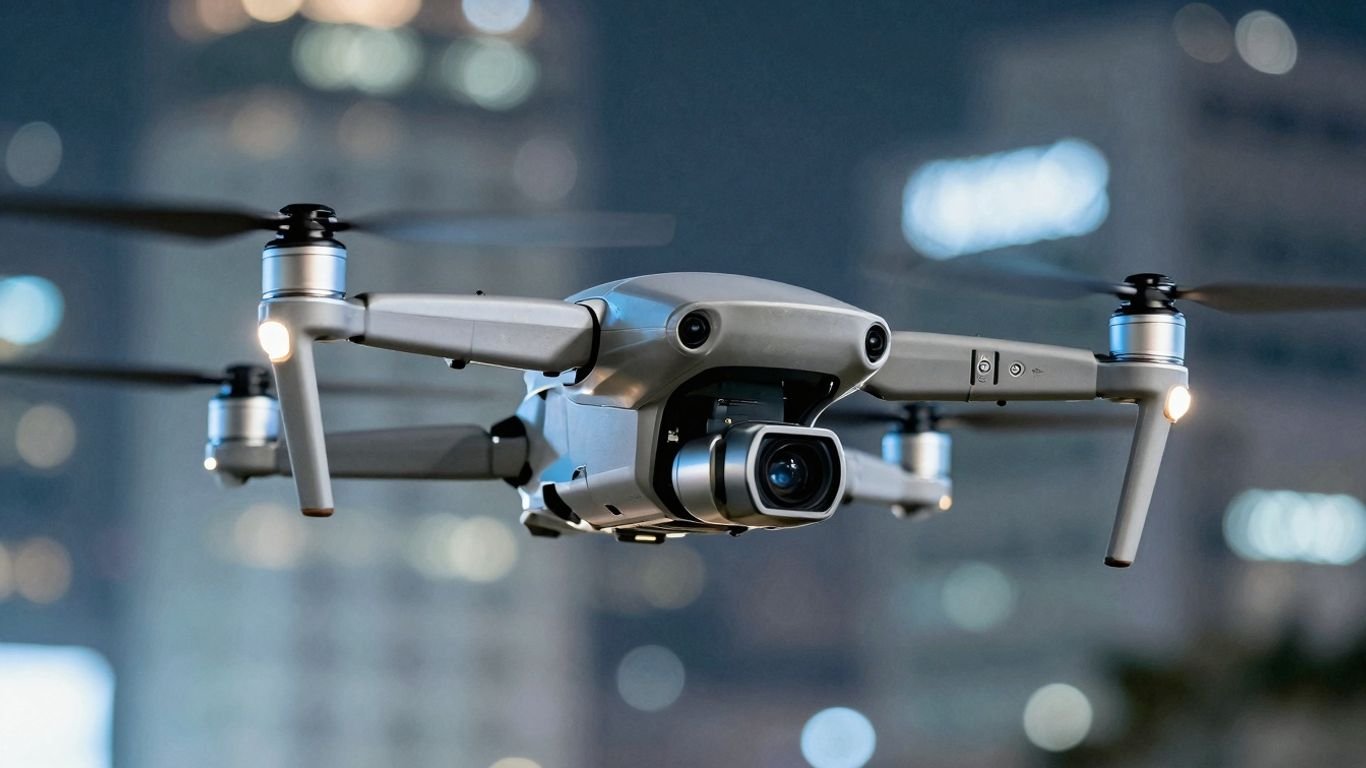
Drones aren’t just flying cameras anymore. The tech packed into these machines is getting seriously impressive, opening up all sorts of new possibilities. We’re talking about systems that can map environments in real-time, even without a GPS signal, and hardware that’s increasingly being made right here at home.
Exploring SLAM LiDAR for Drones
One of the big game-changers is SLAM, which stands for Simultaneous Localization and Mapping. Think of it like a drone building a map of its surroundings while figuring out exactly where it is on that map, all at the same time. This is especially useful in places where GPS signals are weak or non-existent, like inside buildings, underground, or in dense urban canyons. SLAM LiDAR systems combine laser scanning with this mapping capability. Unlike traditional LiDAR that relies on known starting points or GPS, SLAM can create a map from scratch.
- How it works: A LiDAR sensor spins, sending out laser beams that bounce off objects. The time it takes for the beams to return helps create a 3D point cloud of the environment. The SLAM algorithm then uses this data to track the drone’s movement and build a map simultaneously.
- Key benefits: Enables navigation and mapping in GPS-denied areas, creates detailed 3D models, and can be used for autonomous flight paths.
- Applications: Underground mining surveys, complex structural inspections (like bridges or industrial facilities), indoor mapping, and even search and rescue operations in challenging terrain.
This technology is rapidly changing how we can use drones for detailed surveying and navigation in previously inaccessible or difficult environments.
American-Made LiDAR Ecosystems
It’s not just about the technology itself, but also where it comes from. There’s a growing push to develop and manufacture drone technology, including LiDAR systems, within the United States. This helps build a domestic supply chain and supports American innovation. Having a complete ecosystem means everything from the sensors and software to the drone platforms and processing services are available from domestic sources. This can lead to quicker support, custom solutions, and a more secure supply chain for critical applications.
GNSS Post-Processing Services Explained
When drones use GNSS (Global Navigation Satellite System) for positioning, the raw data collected during a flight might not be perfectly accurate on its own. That’s where post-processing comes in. GNSS Post-Processing is a technique where you take the raw GNSS data collected by the drone and combine it with data from fixed ground-based reference stations (like Continuously Operating Reference Stations, or CORS). By comparing the drone’s data with the known, precise location of the reference station, you can correct for atmospheric delays and other errors. This significantly improves the accuracy of the drone’s recorded positions, which is vital for applications like high-precision mapping and surveying.
- Process: Collect raw GNSS data from the drone during flight. Obtain data from nearby CORS stations. Use specialized software to process both datasets together. The result is a much more accurate set of coordinates for the drone’s flight path and captured data.
- Accuracy Improvement: Raw GNSS can be accurate to several meters. Post-processing can often bring this down to centimeter-level accuracy.
- When it’s needed: For tasks requiring high positional accuracy, such as creating detailed topographic maps, land surveying, construction site monitoring, and agricultural precision mapping. It’s less critical for simple aerial photography where exact coordinates aren’t the main focus.
Relying solely on real-time GNSS can sometimes lead to positional inaccuracies that might not be obvious until later. Post-processing acts as a quality control step, refining the data to meet strict accuracy standards required for professional work. It’s like double-checking your work to make sure it’s spot on.
Specialized Drone Applications
Drones aren’t just for taking cool aerial photos anymore. They’ve really found their place in some pretty specific and important jobs. Think about it – getting close to things that are hard to reach or dangerous for people to inspect is where drones shine. This section looks at a couple of these specialized areas where drones are making a big difference.
Success in Cell Tower Inspections
Inspecting cell towers used to be a job for highly trained climbers, which is slow, expensive, and risky. Now, drones can do a lot of this work much more safely and efficiently. They can get detailed images and data from all angles of the tower, including the antennas (called rads) and other equipment. This helps identify any issues before they become big problems. The accuracy and quality of the images are super important here, as they need to be good enough to spot tiny cracks or wear. Companies are even using drone data to create digital twins of towers, which are basically 3D models that can be used for planning and maintenance.
- Data Collection: Drones capture high-resolution photos and videos.
- Analysis: Software helps analyze the data for damage or wear.
- Reporting: Detailed reports are generated for maintenance crews.
- Efficiency: Reduces the need for manual climbing and speeds up inspections.
Getting into cell tower inspections requires more than just a drone. You need to understand the specific equipment on the towers, the standards for data quality, and how to work safely around these tall structures. It’s a niche that demands attention to detail and specialized knowledge.
Utilizing Drone Payloads
What a drone can do really depends on what you attach to it – that’s the payload. It’s not just about the drone itself, but the tools it carries. For cell tower inspections, you might have a high-resolution camera and for mapping, it could be a specialized sensor. For other jobs, it might be something completely different.
Here are some common types of drone payloads:
- High-Resolution Cameras: For visual inspection and photography.
- LiDAR Sensors: For creating detailed 3D maps and models, especially useful in areas with complex structures or dense foliage.
- Thermal Cameras: To detect heat signatures, useful for inspecting solar panels or finding leaks.
- Gas Sensors: To detect leaks in pipelines or monitor air quality.
- Delivery Systems: For dropping small packages or supplies.
Mapping Missions with Drones
Drones have become a game-changer for mapping. They can quickly cover large areas and collect data that used to take days or weeks with traditional methods. Using sensors like cameras or LiDAR, drones can create highly accurate maps and 3D models of terrain, buildings, and infrastructure. This is useful for everything from construction site monitoring and land surveying to environmental studies and urban planning. The data collected can be processed to create orthomosaic maps, digital elevation models, and 3D point clouds, giving a really clear picture of the area.
- Surveying: Accurate land surveys for property boundaries and construction.
- Construction: Tracking progress on building sites and managing resources.
- Agriculture: Monitoring crop health and optimizing field management.
- Environmental: Assessing land changes, monitoring wildlife, and mapping disaster areas.
Drone Regulations and Safety
Flying a drone, or an unmanned aircraft system (UAS), isn’t just about having fun or getting cool shots. There are rules, and knowing them is super important. It’s like driving a car; you wouldn’t just hop in and speed off without knowing the traffic laws, right? Drones are no different. Staying on the right side of regulations keeps you out of trouble and, more importantly, keeps everyone around you safe.
Reporting Airspace Deviations
Sometimes, things don’t go exactly as planned when you’re up in the air. Maybe you had to climb higher than usual to avoid something, or perhaps a gust of wind pushed you off course. If your drone ends up in a situation where it deviates from the planned flight path or altitude, especially if it goes above the standard 400 feet AGL (Above Ground Level) or enters restricted airspace, you need to know what to do.
Generally, you’ll need to report significant deviations to the Federal Aviation Administration (FAA) upon their request. It’s not always an immediate “call 911” situation, but keeping records and being prepared to explain any unexpected maneuvers is key. The FAA wants to know about accidents that result in serious injury or significant property damage, and sometimes deviations that could have led to such events.
Battery Handling Precautions
Lithium-based batteries power most of our drones, and while they’re great, they can be a bit finicky. Mishandling them can lead to fires or other issues. Always, always follow the manufacturer’s instructions for charging, storing, and disposing of these batteries. Don’t try to charge a battery that’s already hot from a flight, and never store them in extreme temperatures. A good rule of thumb is to charge them in a fire-safe container or area, just in case. It might seem like overkill, but a battery fire is no joke.
Here are some basic battery safety tips:
- Inspect before flight: Look for any signs of damage, swelling, or leaks.
- Charge properly: Use the correct charger and avoid overcharging.
- Store safely: Keep batteries in a cool, dry place, away from flammable materials.
- Dispose responsibly: Don’t just toss them in the trash; look for battery recycling programs.
Night Flight Considerations
Flying after sunset used to be a big no-no for most recreational drone pilots. However, with the right training and equipment, night flying is now permitted under certain conditions. The biggest change is that your drone needs to have anti-collision lighting visible for at least 3 statute miles. This lighting is crucial for other aircraft, especially manned ones, to see your drone. While you might be tempted to dim them for aesthetic reasons or to avoid drawing attention, the regulations are pretty clear: these lights are for safety and visibility. You generally can’t reduce their intensity unless it’s truly in the interest of safety, which is a high bar to meet.
Understanding and adhering to these regulations isn’t just about avoiding fines; it’s about being a responsible operator. It ensures that the skies remain safe for everyone, whether they’re in a drone, a plane, or on the ground.
Drone Maintenance and Performance
Keeping your drone in top shape is pretty important, right? It’s not just about making sure it flies, but making sure it flies safely and reliably. Think of it like taking care of your car; regular check-ups and knowing how it works can prevent a lot of headaches down the road.
Establishing Scheduled Maintenance
So, when should you actually get serious about maintenance? If the manufacturer hasn’t given you a clear schedule, that’s your cue to step up. You can’t just assume everything will be fine forever. It’s better to have a plan to catch potential issues before they cause a crash. This means looking at what parts might wear out and setting times to check or replace them. It’s way cheaper to do this proactively than to deal with a broken drone later.
- Check the manufacturer’s recommendations first. Even if it’s basic, it’s a starting point.
- Look for common wear items like propellers, batteries, and motors.
- Keep a log of flights, maintenance performed, and any issues encountered.
Understanding Stall Conditions
Ever heard of a drone stalling? It’s not quite like a car engine sputtering out. For a drone’s wing, a stall happens when the air flowing over it gets disrupted. This causes the lift to drop off pretty fast. It’s not about going too fast, actually. It’s more about the angle of the wing relative to the airflow. If the wing hits a certain angle, called the critical angle of attack, the air can’t flow smoothly anymore, and that’s when you lose lift. This can happen during sharp turns or sudden movements, especially at lower speeds.
Stall conditions are primarily related to the wing’s angle of attack, not necessarily the speed of the aircraft. Exceeding this critical angle disrupts airflow, leading to a loss of lift.
Pilot’s Operating Handbook Importance
Your drone’s Pilot’s Operating Handbook (POH), or flight manual, is your best friend for understanding how your specific drone should perform and what its limits are. It’s not just a suggestion; it’s where you’ll find critical information about things like the center of gravity (CG) limits. Staying within these CG limits is vital for stability and control. The handbook will tell you how to load your drone and what the acceptable weight and balance ranges are. Unlike some manned aircraft manuals that might have complex calculations, drone manuals often focus on the practical limits for safe operation, especially since many drones can’t carry significant payloads that would drastically shift the CG.
Wrapping It Up
So, we’ve covered a lot of ground, haven’t we? Drones are pretty wild, and it’s easy to get lost in all the tech talk and rules. But really, it all comes down to learning and asking questions. Whether you’re just starting out or you’ve been flying for a while, there’s always something new to figure out. Keep those questions coming, and remember, the drone world is always changing, so staying curious is key. Thanks for joining us on this journey!
Frequently Asked Questions
What is SLAM and how can drones use it?
SLAM stands for Simultaneous Localization and Mapping. Think of it like a drone creating a map of its surroundings while figuring out where it is on that map at the same time, even without GPS! Drones can use SLAM with special sensors called LiDAR to explore places like mines or buildings where GPS signals can’t reach.
What are the key things to know for drone jobs inspecting cell towers?
To do well inspecting cell towers with drones, you need to understand the equipment, how to capture clear images and data, and the specific needs of the telecom industry. It’s a competitive field, but with the right skills and experience, new pilots can find opportunities.
Why is checking the drone’s center of gravity important?
The center of gravity (CG) is like the drone’s balance point. If it’s not within the limits set by the manufacturer, the drone might not fly stably, could become hard to control, or even crash. Always check your drone’s manual for these limits before adding any gear.
What should I do if my drone has an emergency and goes higher than allowed?
If your drone has an emergency and flies higher than the rules permit, you need to report this deviation. Depending on the situation and airspace, you might need to contact Air Traffic Control or the Federal Aviation Administration (FAA) to explain what happened.
What are the best practices for handling drone batteries?
Always follow the manufacturer’s instructions for handling drone batteries, especially lithium-based ones. This includes proper charging, storage, and being aware of temperature. Overheating or improper care can lead to dangerous situations.
When should a drone operator set up a regular maintenance plan?
A drone operator should create a scheduled maintenance plan if the manufacturer doesn’t provide one. This helps prevent problems before they happen, ensures the drone is safe to fly, and can avoid costly repairs or crashes down the line.
For official guidance on flying drones safely and legally, check both European and U.S. resources. European pilots can review EASA’s dedicated drone operator and pilot guidance, including categories, registration rules, and operational limits, at the EASA drone operators and pilots page: https://www.easa.europa.eu/en/light/topics/drone-operators-pilots. For commercial operators in the United States, the FAA explains Part 107 requirements, pilot certification, waivers, and registration on its Certificated Remote Pilots page: https://www.faa.gov/uas/commercial_operators.faa