
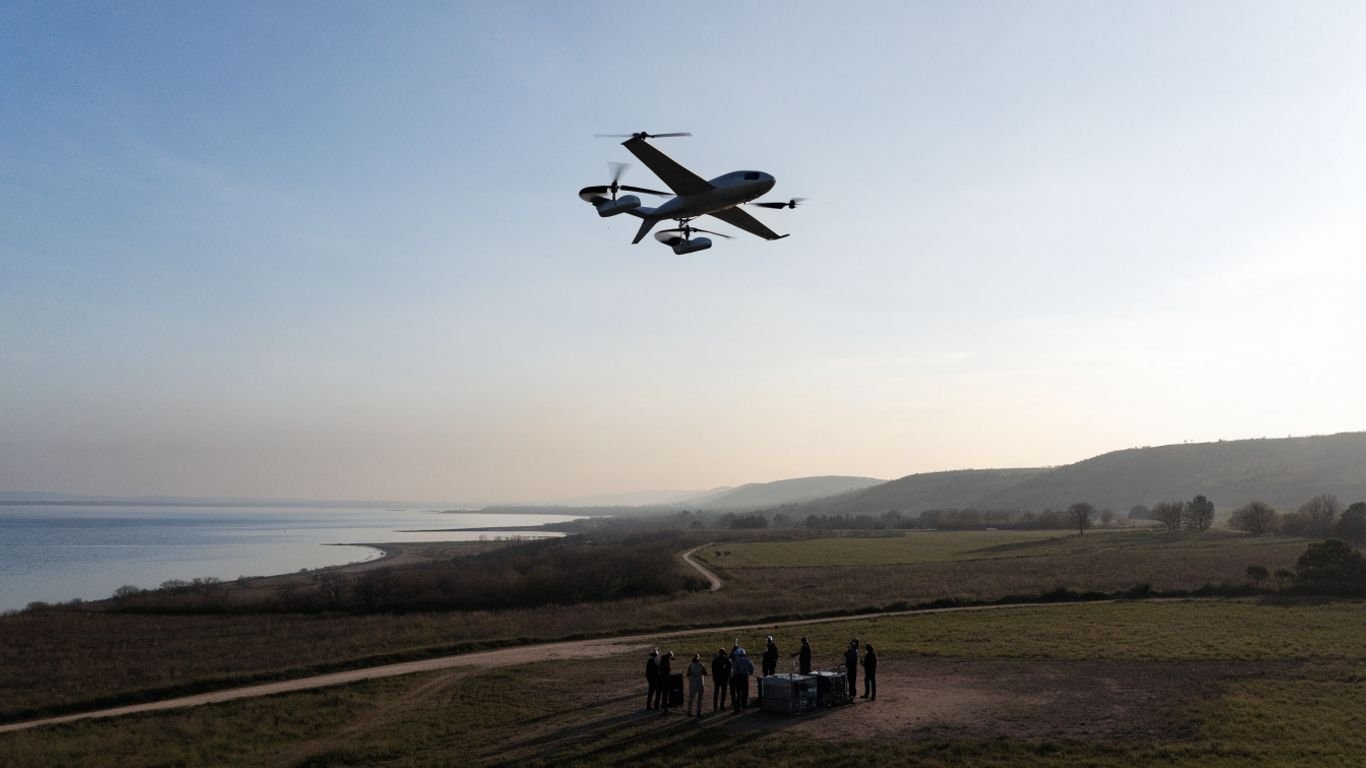
Jump 20 Tactical VTOL ISR: Capabilities, Operations, and Mission Planning

Key Takeaways
A tactical ISR aircraft is best understood as part of a collection-and-decision process, not as a sensor in isolation. Mission needs, operating conditions, and support arrangements all shape what it can contribute.
- VTOL can reduce dependence on prepared runways, while fixed-wing flight supports a different operating profile from a multirotor aircraft.
- ISR value depends on clear collection priorities and a workable path for imagery to reach the people who need it.
- Sensor choice, airspace coordination, weather, terrain, and communications belong in mission planning from the start.
- Endurance, payload, connectivity, and ground support involve trade-offs that should be assessed together.
- Procurement should test mission fit, interoperability, training, data handling, and sustainment against documented evidence.
What the JUMP 20 is designed to do
A tactical intelligence, surveillance, and reconnaissance aircraft is intended to collect information that helps people understand activity in an area of interest. Its usefulness depends on more than the air vehicle: sensors, communications, mission planning, and the way collected information is interpreted all matter. The Jump 20 Tactical VTOL ISR topic is therefore best approached as a system-level question, with careful attention to what is documented and what remains mission-dependent. The sections below describe the operating concept without treating any single configuration or outcome as universal.
Its role in tactical intelligence, surveillance, and reconnaissance
Tactical ISR supports awareness of changing conditions by collecting imagery or other sensor information for a defined task. The information may help supported teams monitor an area, verify observations, or decide what to investigate next; it does not make decisions on their behalf. Collection priorities and the people who will use the output should be agreed before a mission begins. That connection between tasking and interpretation is what turns a flight into an operationally useful effort.
How vertical takeoff and landing supports flexible deployment
Vertical takeoff and landing can reduce reliance on a conventional runway, which may give planners more options when selecting a launch and recovery location. It does not remove the need to identify a suitable site, manage hazards, or establish safe procedures. The JUMP® 20 is described as a runway-independent VTOL fixed-wing aircraft for land or sea deployment. Its deployment flexibility is a planning advantage, not a substitute for local assessment.
Typical mission environments and operating contexts
Tactical ISR can take place in varied settings, including land-based and maritime contexts, but the conditions at a particular site shape what is practical. Terrain, visibility, nearby activity, communications coverage, and the availability of trained personnel all influence the plan. A mission in one environment should not be assumed to translate directly to another. The public coverage at Drone News Network offers a broader look at drone and reconnaissance topics, while each aircraft’s documented capabilities still need to be checked individually.
Where it fits among uncrewed aircraft systems
A VTOL fixed-wing aircraft occupies a different place in the UAS landscape from a small multirotor or an aircraft that depends on a runway. The relevant distinction is not a simple ranking; it is whether the operating concept matches the task, deployment setting, and available support. A larger or more persistent system may be unnecessary for a short, local collection task, while a small aircraft may not suit a broader surveillance requirement. Comparing roles and constraints is more useful than comparing labels alone.
Air vehicle and operating concept
The operating concept combines vertical takeoff and landing with fixed-wing flight, so planning has to account for both the launch-and-recovery phase and the cruise portion of a mission. A clear division of responsibilities helps the crew manage those phases without losing sight of the collection objective. Deployment details also matter: a runway-independent aircraft still requires a prepared team, suitable equipment, and a safe operating area. The following overview stays at a high level rather than implying a particular procedure or configuration.
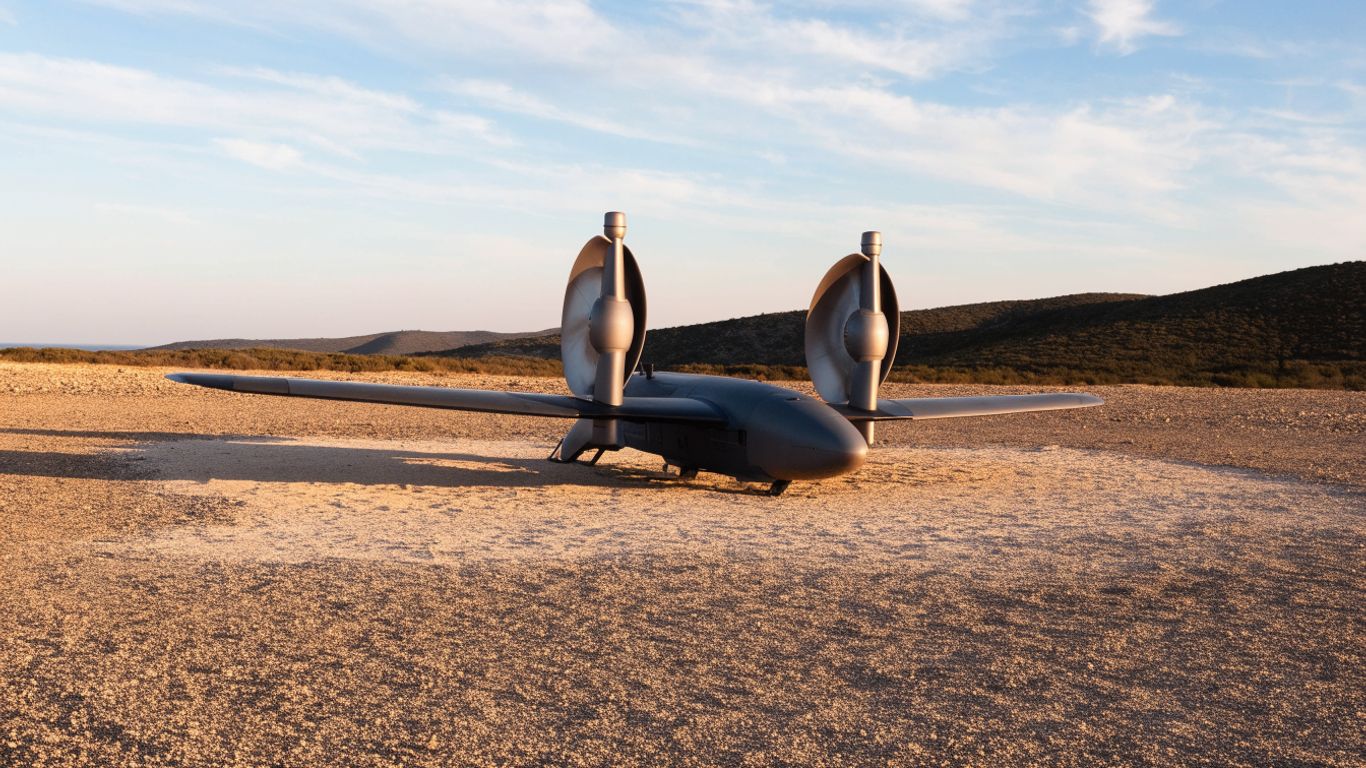
Fixed-wing cruise with vertical takeoff and landing
The basic concept pairs vertical takeoff and landing with fixed-wing cruise. Those modes address different parts of the mission: VTOL can ease the need for runway infrastructure, while fixed-wing flight provides the aircraft’s cruise mode. The combination may suit operations where a conventional runway is not available, but it does not make every location appropriate. Site conditions, safety rules, and the aircraft’s approved operating limits remain central.
Launch, transition, flight, and recovery at a high level
A mission can be thought of as a sequence: prepare and check the aircraft, launch, transition to cruise, conduct the planned flight, then recover and review the collected material. The precise procedures depend on the system, configuration, and operator guidance, so a general overview should not be mistaken for a checklist. Coordination across the sequence helps prevent a successful flight from becoming a disconnected collection effort. Recovery and post-flight handling are part of the mission, not an afterthought.
Ground control and crew responsibilities
A crew needs to manage the aircraft, the mission plan, communications, and the flow of information to supported personnel. Roles should be explicit, including who monitors the flight, who tracks collection priorities, and who communicates changes. This separation can reduce confusion when plans shift, though staffing models differ across organizations. Clear role ownership is a practical safeguard: it helps the team know who is responsible for each decision and update.
Deployment considerations for austere locations
Austere deployment calls for a realistic view of what must travel with the aircraft and what must be available at the site. Even without a runway, teams still need to consider setup space, power and communications arrangements, transport, environmental exposure, and recovery access. These factors affect the time and effort required to establish operations. The result is a deployment plan grounded in local conditions rather than the assumption that VTOL alone makes a site ready.
ISR payloads and information flow
An ISR payload is useful only when its collection purpose, integration, and information path are understood together. The sensor produces material; communications and ground processes determine how that material is delivered, reviewed, and shared. The system description for the JUMP 20 includes a modular payload capacity, but specific payload choices and outputs should be confirmed against the configuration under consideration. This section separates broad planning principles from claims about any individual sensor.
Electro-optical and infrared sensing
Electro-optical and infrared sensors are common categories in aerial observation, but the terms do not by themselves specify image quality, operating conditions, or suitability for a task. Planners should verify which sensor is actually integrated and what information it is designed to collect. They should also consider the conditions in which the sensor will be used and how an analyst or operator will interpret its output. A sensor name is a starting point for evaluation, not a complete capability statement.
Payload integration and mission-specific configuration
Payload configuration should follow the collection requirement rather than precede it. A mission may call for one sensing approach, while another may place greater weight on payload mass, integration, or communications needs. The JUMP 20 overview describes a modular payload capacity of 30 pounds; that figure does not, by itself, establish which equipment is included in a particular system or what performance a chosen configuration will deliver. Teams should request configuration-specific documentation and confirm compatibility before making assumptions.
Communications links and imagery delivery
Collected imagery has limited value if it cannot reach the intended users in a useful form and timeframe. Communications planning should clarify what is transmitted, who receives it, what happens if a link is interrupted, and how sensitive material is handled. The answers depend on system configuration and operating context, so a generic description cannot establish a specific link’s reach or security properties. A practical review maps the information path from collection through delivery and onward use.
Turning collected data into actionable intelligence
Useful intelligence requires interpretation, context, and a clear route back to the people making decisions. Teams should agree on what constitutes a relevant observation, how it will be recorded, and how uncertainty or gaps will be communicated. A sensor product should not be treated as self-explanatory: analysts need enough context to distinguish what is observed from what is inferred. This discipline supports better decisions without overstating what an image can prove.
Planning a tactical ISR mission
Mission planning begins with the decision or information need that the collection is meant to support. From there, a team can match the sensor, flight plan, communications, and operating arrangements to the task. Planning also needs room for uncertainty: weather, terrain, airspace constraints, and changing priorities can alter the original approach. A good plan makes those dependencies visible before the aircraft is in the air.

Defining collection objectives and priorities
Start by stating what the supported team needs to learn, how soon it needs the information, and what would make the collection useful. Then distinguish essential observations from lower-priority detail. That hierarchy helps crews make sensible adjustments if time, connectivity, or conditions constrain the plan. It also gives analysts a clear frame for reporting what was collected and what remains unknown.
Matching sensors and flight plans to the task
The flight plan should serve the collection objective, while the chosen sensor should be appropriate to the information sought. Before finalizing either, confirm that the equipment is actually part of the proposed configuration and that operating constraints are understood. A simple planning sequence can keep the decision grounded:
- Define the information need and the intended user.
- Confirm the sensor and configuration against that need.
- Set collection priorities and a plan for sharing results.
- Identify assumptions, limits, and conditions that could change the plan.
This sequence is not a substitute for approved procedures. It is a way to keep mission design tied to the reason for collecting in the first place.
Coordinating airspace, communications, and supported units
A collection plan must fit within the applicable airspace arrangements and local coordination procedures. The crew and supported units should also agree on communications channels, reporting expectations, and how changes will be passed along. These details are especially important when a mission involves multiple teams or a dynamic operating picture. The plan should make clear who can update priorities and how the crew will acknowledge those updates.
Preparing for weather, terrain, and changing conditions
Weather and terrain can affect launch and recovery options, the planned route, sensor use, and communications. Planners should identify relevant limits in the system documentation and establish decision points for delaying, adapting, or ending a mission. Conditions may change after launch, so the team needs a shared understanding of what triggers a revised plan. Flexibility works best when it is bounded by clear safety and mission criteria.
Performance, endurance, and operational trade-offs
Performance figures are useful only when their definitions and configuration assumptions are clear. Endurance, range, payload, communications, and support requirements interact, so a single headline number cannot answer whether a system suits a particular organization. Public information describes the JUMP 20 as offering 13-plus hours of endurance and a 185-kilometre range; these stated figures should be checked against current, configuration-specific documentation and the intended operating conditions. A careful comparison treats figures as inputs to planning, not promises about every mission.
Balancing time on station with payload and flight requirements
Longer endurance can create more opportunity for observation, but mission duration also depends on the payload, flight profile, conditions, and required reserve. Planners should assess the whole mission rather than assume that a published maximum equals usable time on station. The useful question is how much time remains for the collection task after accounting for the specific route and operating requirements. That estimate should be validated with authoritative system documentation.
Comparing VTOL flexibility with conventional runway operations
VTOL can reduce reliance on runway infrastructure, which may be useful when launch and recovery locations are constrained. The trade-off is that a VTOL operating concept still brings its own site, crew, safety, and support considerations. A runway-based approach may fit some organizations or locations better, depending on existing facilities and mission needs. The right comparison is between complete operating concepts, not merely between aircraft features.
Considering range, connectivity, and ground support
Range does not tell the whole story if the mission also depends on a communications path, a ground team, and timely delivery of information. To make the relationships easier to review, the table below separates planning questions that are often blended together.
| Planning factor | What to verify | Why it matters |
|---|---|---|
| Range | Definition, configuration, and operating assumptions | Helps determine whether the planned area is reachable |
| Connectivity | Available links, coverage, and interruption procedures | Shapes how and when information can be shared |
| Ground support | Personnel, equipment, setup, and recovery needs | Affects whether the operating concept is practical |
| Mission duration | Payload, route, conditions, and reserve requirements | Clarifies usable collection time for a specific plan |
These factors should be reviewed together. A nominal range or endurance figure cannot resolve a gap in communications or a shortage of ground support.
Understanding environmental and mission-dependent limits
Limits may arise from environmental conditions, the chosen payload, local procedures, or the specific task. Publicly available figures can provide a useful starting point, but they should not replace operating manuals, configuration records, or consultation with qualified personnel. Organizations should also distinguish a documented capability from an assumption based on a similar aircraft or a different configuration. That distinction keeps evaluations realistic and supports safer planning.
Evaluating the JUMP 20 for an organization
A procurement decision should begin with the organization’s actual missions, current operating arrangements, and the information its teams need. It should then test whether the proposed system can fit those requirements with acceptable training, integration, data-handling, and sustainment demands. Marketing descriptions and general figures are not a substitute for configuration-specific evidence. The review is strongest when operational users, technical staff, safety personnel, and information-security teams all have a voice.
Assessing mission fit and interoperability
Map the intended missions to the proposed aircraft configuration, sensor, communications path, and supported-unit workflow. Ask how information will move into existing systems and how users will receive and interpret it. The JUMP 20 description identifies a runway-independent VTOL fixed-wing role and modular payload capacity; organizations should validate how those documented attributes align with their own concept of operations. Interoperability should be demonstrated, not inferred from broad compatibility language.
Comparing training and support requirements
Training should cover the responsibilities people will actually perform, including mission preparation, safe operation, coordination, and information handling. Support planning should identify equipment, maintenance arrangements, technical assistance, and the personnel needed to sustain regular activity. Teams should ask what is included in a proposed package and what remains the organization’s responsibility. A system that fits the mission on paper may still require changes to staffing or procedures.
Reviewing data security and sustainment needs
Organizations should examine how imagery and mission data are stored, transmitted, accessed, retained, and disposed of. They should also identify applicable security policies and confirm that the proposed operating model can meet them. Sustainment review can cover documentation, maintenance responsibilities, parts availability, and support over the intended service period, as confirmed by the supplier. These are evaluation questions, not capabilities to assume from an aircraft description.
Questions to ask during procurement and capability assessment
A sound assessment keeps evidence tied to the decision at hand. It should distinguish verified system details from general guidance and from material that simply concerns another industry. For example, the Medical Research Future Fund, John Stevenson Photography, Spring Modulith, campaign workflow planning, and ApiSyn Healthcare address other fields and are not evidence about an aircraft; unrelated pages should not be used to substantiate aviation claims. For the aircraft review itself, request answers to practical questions such as:
- Which exact aircraft and payload configuration is being evaluated?
- Which performance figures apply to that configuration, and under what conditions?
- What training, support, and site requirements fall to the organization?
- How will data be secured, delivered, and integrated into existing workflows?
This approach makes the assessment more transparent and easier to revisit. It also gives decision-makers a clearer basis for comparing stated needs with documented evidence.
Conclusion
A tactical VTOL ISR capability is not defined by an airframe or a headline figure alone. Its value depends on how deployment, payloads, planning, communications, people, and support come together for a specific mission. A careful evaluation starts with the information need, verifies configuration-specific claims, and accounts for operational limits before committing resources. That is the clearest path to deciding whether the concept fits an organization’s real requirements.
Frequently Asked Questions
What does tactical ISR mean?
Tactical intelligence, surveillance, and reconnaissance refers to collecting and interpreting information to support awareness and decisions in an operational context. The collection task should be tied to a defined information need.
What is VTOL?
VTOL means vertical takeoff and landing. It describes an aircraft’s ability to take off and land vertically, though the operating requirements vary by aircraft and location.
How is a VTOL fixed-wing aircraft different from a multirotor?
A VTOL fixed-wing aircraft combines vertical takeoff and landing with fixed-wing flight. A multirotor uses rotating lift throughout its flight; which design fits better depends on the mission and operating constraints.
Why does payload configuration matter?
Payload configuration determines which equipment is installed and can affect mission planning, integration, and performance. A general payload capacity does not identify the specific sensor or its results.
What should be included in a tactical ISR mission plan?
A plan should define collection objectives, sensor requirements, flight and recovery considerations, airspace coordination, communications, supported-unit needs, and decision points for changing conditions.
What can affect useful time on station?
Useful collection time can depend on route, payload, weather, operating requirements, and reserve planning. A published endurance figure should not automatically be treated as time available for observation.
What should an organization verify before adopting a UAS?
It should verify mission fit, configuration-specific performance, interoperability, training and support needs, data-security arrangements, and sustainment responsibilities using authoritative documentation.