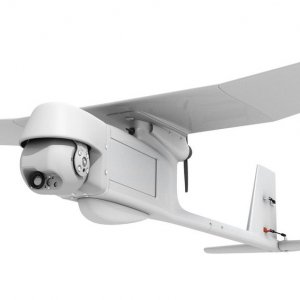
The Raven: Tiny Drone, Big Eyes

So, you’ve probably seen those tiny drones buzzing around, right? They look like fancy model airplanes, but they’re actually pretty serious pieces of tech. We’re talking about the RQ-11 Raven, a small, hand-launched spy plane that’s been around for a while. It’s designed to give soldiers a bird’s-eye view of the battlefield, but like anything, it has its good points and its not-so-good points. Let’s break down what this little guy is all about.
Key Takeaways
- The RQ-11 Raven is a small, hand-launched drone used for intelligence, surveillance, and reconnaissance (ISR).
- First used by Marines in Iraq, early experiences showed it was easier to fly than older models but had issues with durability and battery life.
- It works best for short-range ‘over the next hill’ missions, but struggled in busy cities due to signal interference and weather.
- While not a replacement for larger drones, it proved useful for tasks like monitoring elections or as a psychological tool against enemies.
- Upgrades have added better cameras and communication links, and the Raven has been adopted by many countries worldwide.
The RQ-11 Raven: A Small Hand-Launched ISR Platform
Origins and Development of the Raven
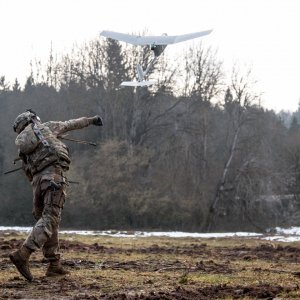
The RQ-11 Raven is a pretty neat piece of tech, really. It’s a small, hand-launched surveillance drone that’s become a go-to for military units needing eyes in the sky without a big fuss. Developed by AeroVironment, it really got going in the early 2000s, evolving from earlier designs. The goal was simple: create a portable intelligence gathering system that could be deployed quickly by small units. It’s essentially a miniature reconnaissance aircraft, designed to be thrown like a model airplane and then fly itself back home. Over 19,000 of these airframes have been built, showing just how popular this compact aerial observation platform became.
Key Specifications and Capabilities
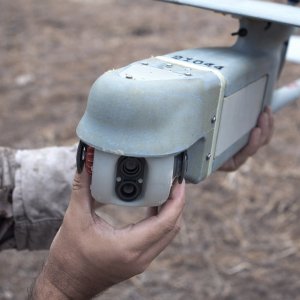
So, what makes this tactical unmanned aerial vehicle tick? Well, it’s not exactly a fighter jet, but it gets the job done. It weighs in at about 4.2 pounds and has a wingspan of roughly 4.5 feet. The electric motor allows it to fly for about an hour to 90 minutes, covering a range of about 6.2 miles. It can cruise at speeds around 30 km/h. The standard payload usually includes a color video camera and an infrared camera for night operations. It can fly autonomously using GPS waypoints or be controlled directly. Pretty handy, right?
Here’s a quick look at some of its specs:
- Weight: ~1.9 kg (4.2 lb)
- Wingspan: ~1.37 m (4.5 ft)
- Endurance: 60-90 minutes
- Range: ~10 km (6.2 miles)
- Payload: Day/Night cameras
Operational Deployment by Military Forces
This little drone has seen action all over the place. The U.S. Army started using it at the company level, and the Marines and Air Force weren’t far behind. It’s also been adopted by military forces in many other countries. Its ability to be launched by hand and its relatively simple operation make it ideal for units that don’t have the infrastructure for larger, more complex drones.
It’s a real workhorse for getting that immediate tactical picture, whether you’re looking over the next hill or trying to get a sense of a wider area. For extended operations, systems like tethered drones offer continuous flight times, which is a different kind of capability This article provides a comprehensive guide to tethered drones.
The Raven’s design prioritizes ease of use and rapid deployment, making it a valuable asset for ground troops who need real-time aerial intelligence without extensive training or support.
Early Marine Corps Experiences in Iraq
When the Marines first started using the RQ-11 Raven drone in Iraq around 2008, it felt like a pretty good idea. The war there was spread out, a lot of smaller conflicts happening all at once. So, having a way for platoon and company leaders to get an eye in the sky over their immediate area made a lot of sense. It was supposed to be a step up from the older Dragon Eye drone, and in some ways, it was. It was definitely easier to fly and seemed a bit tougher, which is saying something.
Initial Deployment and Expectations
Marines were hoping the Raven would give them a real edge, a constant overhead view of their surroundings. The idea was to see what was happening “over the next hill,” so to speak, and react quickly. This small, hand-launched drone, weighing about four pounds with a wingspan under five feet, looked like a big model airplane. It could send back pictures from a decent distance, which seemed perfect for the kind of localized fighting they were doing.
Durability and Battery Life Concerns
But, as often happens, reality didn’t quite match the plan. Some Marines were so worried about losing the expensive drone that they didn’t use it as much as they could have. The study found that battery life was a big issue, often not lasting long enough for what they really needed. This meant they couldn’t really do longer-term observations, like watching patterns of activity over time. It was a bit of a letdown when you wanted to keep an eye on an area for a while.
Tactical and Psychological Applications
Despite the limitations, the Raven did find some useful spots. It was used to check out crowd sizes at local elections, giving commanders a better idea of voter turnout. It also had some interesting psychological uses. For instance, flying it over areas where insurgents were known to set up rockets seemed to discourage them from using those spots. It was a way to let the enemy know they were being watched, even if it was just a small drone.
The report noted that some units tried to use the Raven for more continuous surveillance, a role it wasn’t really built for. They seemed to want it to act like a much larger, more expensive drone that could stay airborne for hours on end.
Here’s a quick look at some of the issues:
- Battery Life: Often too short for sustained observation.
- Urban Interference: Buildings and signals in cities messed with its operation.
- Fear of Loss: Marines sometimes held back from using it due to the risk of losing the drone.
Ultimately, the Raven was seen as a useful tool, especially for quick, tactical reconnaissance. It wasn’t a game-changer, but it was a step forward. The Marines saw its potential, and with better training and maybe some upgrades, it could become even more valuable for small unit reconnaissance. It proved to be a supplementary device, good for specific tasks rather than constant, long-duration surveillance.
Operational Strengths and Limitations
So, the Raven drone. It’s a neat little thing, right? Easy to launch by hand, and for certain jobs, it really shines. But like anything, it’s got its good points and its not-so-good points. Let’s break it down.
Effectiveness in Urban Environments
In built-up areas, the Raven can be a bit of a mixed bag. On one hand, its small size and ability to fly relatively low make it good for peeking around corners or over buildings. It can give troops a quick look at what’s happening down a street or in a courtyard without putting anyone at risk. This immediate, localized intelligence is where it really proves its worth.
However, those same urban environments can also be a nightmare for its signals. Tall buildings and all sorts of electronic noise can mess with the drone’s connection to its operator, sometimes making it hard to control or even get a clear video feed. It’s like trying to have a phone conversation in a tunnel – sometimes the signal just drops.
Challenges with Weather and Signal Interference
Speaking of signals, that’s a big one. Beyond just city buildings, bad weather can really ground the Raven. Strong winds can make it tough to fly, and heavy rain or snow can obscure its cameras and potentially damage the electronics. The report mentioned weather patterns messing with it, but the specifics are kept under wraps. It’s not designed to be a storm chaser, that’s for sure. Then there’s signal interference.
Think about all the radios, cell phones, and other wireless devices buzzing around. These can all create a noisy environment that makes it harder for the Raven’s control signals to get through clearly. It’s a constant battle to maintain a clean link, especially when you’re trying to get eyes on a target that might be moving.
Use for Election Monitoring and Counter-Insurgency
Despite its limitations, the Raven found some interesting uses. For instance, during elections in places like Haditha, units used it to get a sense of turnout by flying over polling places. It gave them a quick, aerial view of crowd sizes and general activity. In counter-insurgency operations, commanders got creative. They’d fly the Raven over known spots where insurgents might launch rockets, not to attack, but just to make them think twice about using the area.
It’s a bit of psychological warfare, showing them they’re being watched. It’s also been used for general surveillance, like spotting large gatherings or demonstrations, giving commanders a heads-up on potential trouble. The Canadian Armed Forces, for example, have found various applications for this type of drone technology.
The Raven’s strength lies in its accessibility and immediate tactical advantage. It’s not meant to replace larger, more persistent surveillance platforms, but rather to supplement them at the lowest tactical levels. Its limitations in endurance and susceptibility to environmental factors mean commanders need to be smart about when and where they deploy it, understanding its role as a short-duration, close-range reconnaissance tool.
Raven’s Role in Intelligence, Surveillance, and Reconnaissance
The RQ-11 Raven, while a capable little drone, often found itself in a bit of a role-playing game. It was designed for quick, close-in reconnaissance – think “over the next hill” missions. But sometimes, units tried to make it do the job of a much bigger, more expensive spy plane, like the Predator. This wasn’t really what the Raven was built for, and it led to some frustration.
Beyond ‘Over the Next Hill’ Missions
When units were in quieter periods, they sometimes pushed the Raven to act as a persistent ISR asset. This meant trying to use it for continuous surveillance over an area, which its limited battery life and flight endurance just couldn’t support. It’s like asking a bicycle to do the job of a delivery truck; it’s just not equipped for that kind of haul.
Misapplication as a Persistent ISR Asset
This misapplication was a recurring theme. Commanders and operators, perhaps wanting more eyes in the sky, would try to keep the Raven airborne for extended periods. However, the drone’s typical flight time is around 60-110 minutes, depending on conditions and payload. This simply isn’t enough for true persistent surveillance, which often requires assets that can stay aloft for many hours. Trying to force the Raven into this role meant it wasn’t being used to its best advantage, and often, units still had to rely on larger, more capable assets for longer observation tasks.
Supplementary Tactical Reconnaissance Device
Where the Raven really shone was as a supplementary tactical reconnaissance device. It was perfect for those immediate needs: checking out a potential ambush site, getting a quick look at a road ahead, or monitoring a specific building. Its ease of deployment meant it could be launched quickly by a small team, providing immediate, localized intelligence. This is where its true value lay, offering a tactical advantage that larger, more complex systems couldn’t match in terms of speed and accessibility.
For many units, it became an indispensable tool for immediate situational awareness, a sort of “eyes up” capability for the ground troop. It was also found useful for tasks like monitoring election polling places or observing crowd gatherings, giving commanders a better sense of local conditions. The ability to fly it over known insurgent positions was even used as a psychological deterrent. The RQ-11 Raven proved its worth in these specific, tactical scenarios, even if it wasn’t suited for the persistent surveillance role.
Technological Advancements and Upgrades
Small Secure Data Link Integration
Even though the RQ-11 Raven is a small drone, its capabilities have been significantly boosted over time. One big step was integrating the Small Secure Data Link, or SSDL. This little radio device, which attaches right to the Raven’s nose, lets the drone talk beyond what the operator can see. Before this, only much bigger drones could do this. The SSDL is small and light, fitting easily onto the Raven. This upgrade lets the Raven act as a communication hub for soldiers on the ground, extending their reach. It’s a pretty neat way to make a small platform do more.
Enhanced Gimbal Camera Systems
Remember how the original Raven had a camera that was just fixed in place? You had to physically move the whole drone to look around. Well, that changed. Newer versions got a fancy gimbal camera. This means the camera can spin around, giving a full 360-degree view without you having to fly the drone in circles. Plus, you can switch between day and night vision modes while it’s still flying. No more landing to swap out sensors. This makes keeping an eye on things much smoother and more efficient.
Solar Power Augmentation for Extended Endurance
Battery life has always been a bit of a sticking point for small drones like the Raven. To tackle this, there have been experiments and upgrades focusing on extending flight times. One promising area is solar power. While not a complete replacement for batteries, adding solar panels can help keep the drone aloft for longer periods. This is especially useful for missions that require continuous observation over an area. Think about keeping watch for extended periods without needing to land and swap batteries as often. It’s all about getting more eyes in the sky for longer durations, which is a big deal for reconnaissance.
Global Adoption and Variants
International Military Users
The RQ-11 Raven isn’t just a US military thing; nope, it’s spread out all over the globe. It’s pretty wild to think about how many countries have gotten their hands on this little drone. We’re talking about places like Australia, Austria, Belgium, Bulgaria, Canada, Colombia, and all the way to Yemen. It’s become a go-to for a lot of different armed forces.
Here’s a look at some of the countries that use the Raven:
- Australia
- Austria
- Belgium
- Bulgaria
- Canada
- Colombia
- Costa Rica
- Czech Republic
- Estonia
- Hungary
- Iraq
- Italy
- Kenya
- Lebanon
- Lithuania
- Luxembourg
- North Macedonia
- Netherlands
- Norway
- Pakistan
- Philippines
- Portugal
- Romania
- Saudi Arabia
- Slovakia
- Spain
- Thailand
- Uganda
- Ukraine
- United Kingdom
- United States
- Uzbekistan
- Yemen
It’s safe to say the Raven has become a truly international platform. By early 2012, over 19,000 of these airframes had already been shipped out, making it one of the most widely used unmanned aerial vehicle systems in the world. That’s a lot of little eyes in the sky.
Canadian Armed Forces Version
Canada also got in on the Raven action. They use it under their own designation system. While the US uses designations like RQ-11, Canada has its own way of naming aircraft. For unmanned systems, they use the ‘CU’ prefix. So, you might see it referred to differently within their forces, but it’s still the same reliable little drone doing its job. It’s just a small example of how different militaries adapt and integrate technology into their existing structures. You can find more about Canadian aircraft designations here.
Evolution of the Raven Platform
The Raven hasn’t stayed the same since it first came out. Like most tech, it’s seen its share of upgrades and tweaks. AeroVironment, the company behind it, has worked on improving things like the data link to make it more secure and harder to jam. They’ve also fiddled with the camera systems to get better images, which is pretty important when you’re trying to spot something specific from way up high. There have even been ideas and attempts to make it fly longer, like using solar power, though that’s more of an experimental thing for extended missions. It’s a constant process of making a good thing even better, adapting to new challenges and needs on the battlefield.
So, What’s the Verdict on the Raven?
Looking back, the Raven drone was kind of a mixed bag. It gave soldiers a new way to see what was happening around them, which was pretty neat, especially for checking out election crowds or just keeping an eye on things. But it wasn’t perfect. The battery didn’t last long enough for some jobs, and it struggled in busy cities.
Some folks wished it was more like the bigger drones, while others were just worried about losing it. It seems like the Raven was a useful tool, but maybe not the game-changer some hoped for. It definitely showed that even small drones can be helpful, but also highlighted what people really want: longer flight times and maybe a bit more toughness. It’s a good reminder that technology is always evolving, and what works today might get an upgrade tomorrow.
Frequently Asked Questions
What is the Raven drone?
The Raven is a small, remote-controlled airplane, kind of like a big model plane, that the military uses for spying. It’s launched by hand and can fly for about an hour, sending back pictures from its cameras.
How big is the Raven drone?
It’s pretty small, weighing about 4 pounds and having a wingspan of less than 5 feet. It’s designed to be easy to carry and launch by just one or two people.
What can the Raven drone do?
It’s mainly used for looking over areas to see what’s happening, like checking out what’s happening over the next hill or watching a specific spot. It has cameras that can see in the dark, too.
What are the problems with the Raven drone?
Sometimes it’s hard to fly in cities because of signals from buildings. Its battery doesn’t last super long, so it can’t stay in the air for many hours. Also, some soldiers worried too much about losing it, so they didn’t use it as much.
Has the Raven drone been improved?
Yes, there have been upgrades. They’ve added better cameras that can spin around to see more, and ways to send information more securely. They even tried adding solar panels to make it fly longer.
Who uses the Raven drone?
The U.S. military uses it a lot, and many other countries have bought it too. It’s used by different branches of the military for various spying and observation tasks.