Paladin Zone 5 Technologies: Capabilities, applications, and the Kongsberg connection

Key Takeaways
Paladin Zone 5 Technologies describes a defense-focused unmanned aircraft effort that brings autonomy, mission flexibility, and counter-UAS applications into one discussion.
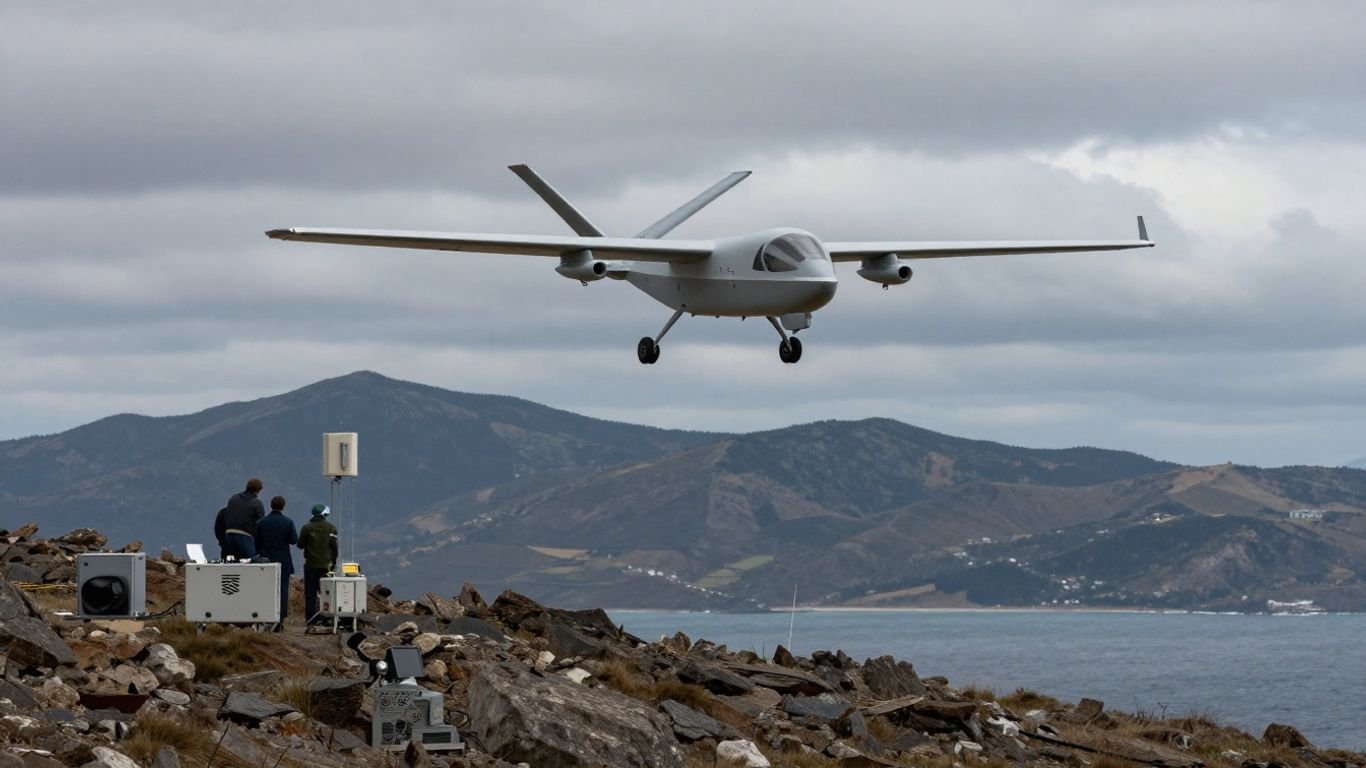
- Paladin is a TAK-integrated, multi-mission unmanned aircraft system.
- The aircraft is described as a fully autonomous wingman for selected warfighter missions.
- Zone 5 Technologies develops Paladin alongside other digitally engineered defense products.
- The Kongsberg acquisition places the company within a larger defense portfolio.
- Buyers should assess autonomy, cybersecurity, safety, interoperability, and deployment readiness together.
What Paladin Zone 5 Technologies refers to
The phrase Paladin Zone 5 Technologies usually joins the name of the aircraft with the company that develops it. That distinction matters because the aircraft is one product within a broader defense portfolio, rather than a standalone software label. The discussion is therefore about a specific unmanned aircraft system and the organization behind it.
The relationship between Paladin and Zone 5 Technologies
Zone 5 Technologies is described in its public materials as a developer of advanced unmanned aircraft systems and weapon solutions. Paladin is presented as a TAK-integrated, multi-mission UAS within that portfolio. Keeping the company and aircraft separate makes it easier to discuss documented capabilities without implying that every capability belongs to every product.
Zone 5 Technologies’ role in unmanned aircraft systems
The company’s role extends beyond the aircraft itself. Its portfolio includes digitally engineered missile and counter-UAS work, while Paladin is the unmanned aircraft system most directly associated with autonomous wingman missions. That broader context helps explain why conversations about the platform often include interception, payloads, and defense operations rather than only flight performance.
How Bavovna AI fits into the Paladin platform
Bavovna AI selected Paladin for integration, according to the available product material. The same material describes Paladin as integrated with WinTAK and ATAK and capable of providing real-time situational awareness. Those details point to an emphasis on fitting the aircraft into existing tactical workflows, not treating autonomy as a replacement for command-and-control systems.
Why the technology matters for defense and security
Unmanned aircraft can place sensing or effectors closer to a problem without putting an operator in the aircraft. In defense settings, the practical question is whether the system can remain useful when navigation, communications, time, and attention are all constrained. That is why autonomy, payload flexibility, and human supervision need to be evaluated as one operational problem.
Core technologies behind the platform
An autonomous aircraft system is more than an airframe and a remote control. It depends on software that interprets a mission, navigation that supports flight, sensors that provide usable information, and communications that connect the aircraft with operators. The following technologies are best understood as interacting layers rather than isolated features.
Artificial intelligence for mission planning
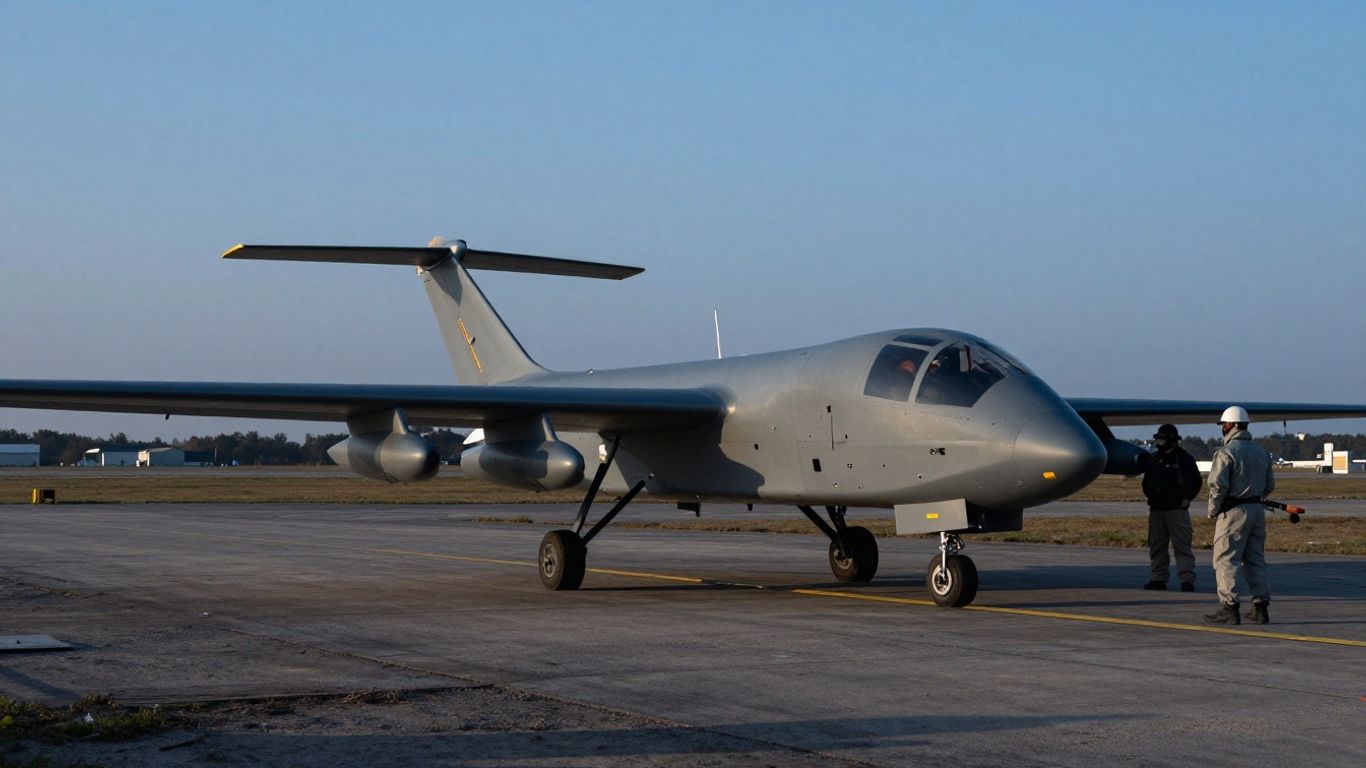
AI-assisted mission planning can help organize routes, priorities, and responses before an aircraft leaves the ground. The value is not simply speed; it is the ability to make planning more repeatable when a mission changes. Any serious assessment should still ask which decisions are automated, which remain operator-controlled, and how the system handles incomplete information.
Autonomous navigation and flight control
Autonomous navigation refers to the aircraft’s ability to follow a mission and manage flight without constant manual input. Public product material describes Paladin as GPS-denied capable with alternative navigation systems, a claim that is especially relevant to environments where dependable positioning cannot be assumed. The operational meaning depends on testing conditions, fallback behavior, and the quality of operator alerts.
Sensor integration and real-time data processing
Sensors are useful only when their data can be processed quickly enough to support a decision. A platform may combine onboard observations with information from command systems, allowing an operator to see a changing situation rather than a disconnected stream of raw feeds. This is where usable situational awareness matters more than a long list of sensor specifications.
Communications, connectivity, and operational resilience
Connectivity determines how well an autonomous aircraft can share status, receive revised instructions, and fit into a wider tactical network. Paladin is described as TAK integrated, with WinTAK and ATAK integration identified in related product material. That kind of connection can reduce friction for users already working in those environments, although resilience still has to be demonstrated under realistic interference and disruption.
A useful way to frame the technology stack is to ask what each layer contributes and what happens when it is degraded:
- Mission software should preserve clear priorities when plans change.
- Navigation should offer a defined response when positioning signals are unavailable.
- Sensors should turn observations into information an operator can act on.
- Communications should support graceful degradation rather than assume perfect connectivity.
The list is also a reminder that autonomy is a system property. Strong performance in one layer cannot compensate indefinitely for weaknesses in another.
Key capabilities and use cases
The platform’s stated uses span surveillance, counter-UAS work, and other warfighter missions. That range makes the word “multi-mission” meaningful, but it also creates a need for careful role definition. The same aircraft may be configured differently depending on whether the priority is observation, interception, communication, or a physical payload.
Intelligence, surveillance, and reconnaissance missions
ISR missions generally require an aircraft to observe an area, communicate relevant information, and support decisions over time. Related material describes real-time situational awareness for base, border, and infrastructure operations. In practice, mission planners would need to match the aircraft’s sensors, endurance, communications plan, and recovery process to the area being monitored.
Contested-environment operations
Contested environments complicate every assumption behind a normal flight: signals may be disrupted, routes may change, and an aircraft may need to continue with less operator input. The relevant discussion is not whether autonomy makes a platform invulnerable. It is whether the system has tested behaviors for degraded navigation and communications, along with a clear way to return control or terminate a mission safely.
Defense against unmanned aircraft threats
Paladin is described as supporting counter-UAS drone interception. That places it within a layered defense problem in which detection, identification, decision-making, and engagement must work together. Readers can compare that role with broader reporting on a counter-drone turret, while remembering that different systems may operate at different points in the defensive chain.
Support for military and government users
The intended audience includes military and government users who need systems that can be deployed, trained, maintained, and governed in real conditions. Product material identifies Paladin as being on the DIU Blue UAS List and describes NDAA compliance, cybersecurity, and an authorization to operate for DoD operators. Those are procurement-relevant signals, but they do not remove the need for local testing and approval.
How Paladin may improve unmanned operations
Autonomy can change the operator’s job from continuous flight control to supervision, mission management, and exception handling. That shift may improve the use of limited personnel, but only when the interface communicates clearly and the system behaves predictably. Benefits should therefore be measured through workflows, not through the word “autonomous” alone.
Reducing operator workload
A system that handles routine navigation can leave operators more time to interpret information and manage unexpected events. The workload does not disappear; it moves toward planning, monitoring, and intervention. Training should reflect that new responsibility rather than assume that fewer control inputs automatically mean a simpler mission.
Increasing mission speed and flexibility
Digital mission changes can be valuable when conditions shift faster than a team can recover and relaunch an aircraft. Flexibility may involve changing a route, adjusting priorities, or selecting a different payload-supported task. The practical benefit depends on how quickly those changes can be authorized, communicated, and understood by everyone involved.
Coordinating multiple autonomous systems
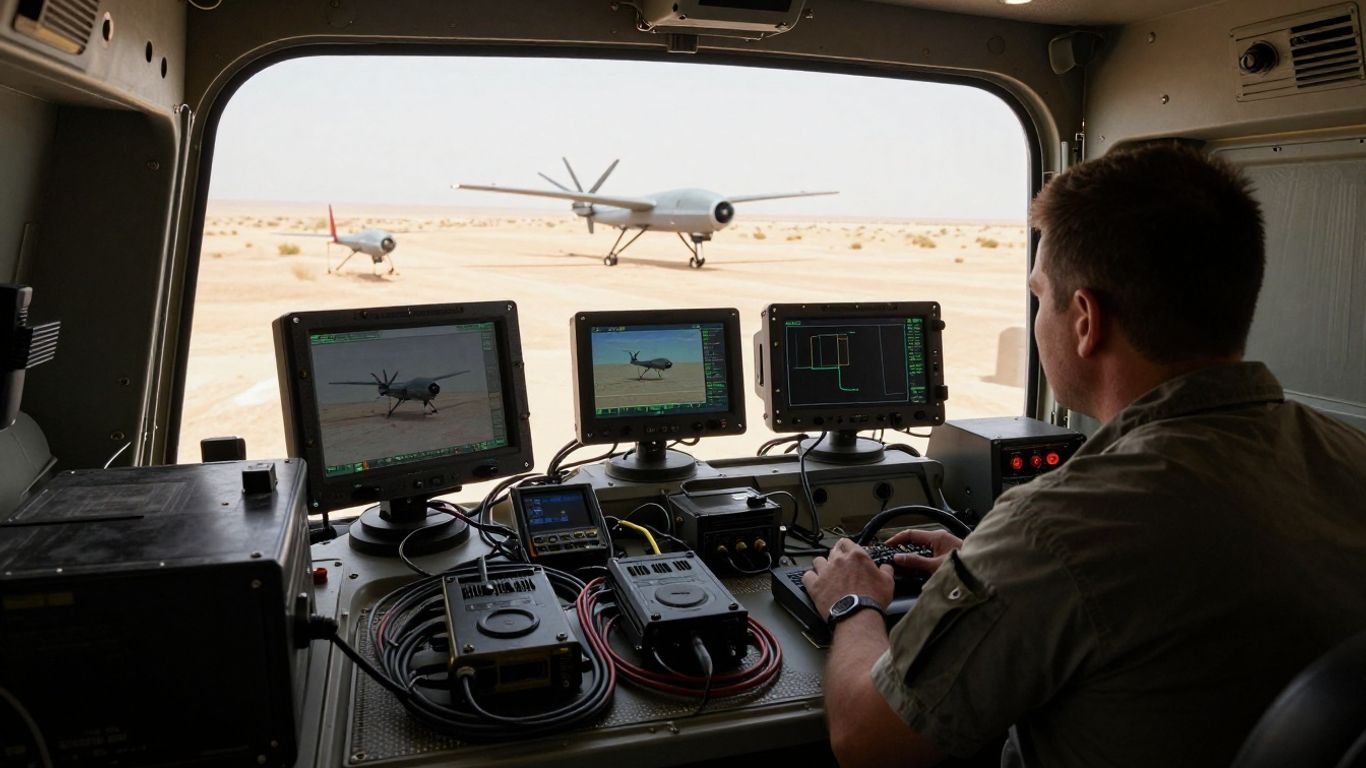
Multiple aircraft introduce coordination problems that a single vehicle does not. Operators need a shared picture of location, tasking, status, and potential conflicts. Systems such as K1000ULE autonomous aircraft illustrate why endurance and communications are often discussed alongside autonomy, even though each platform has its own documented design and mission scope.
Balancing autonomy with human oversight
Human oversight should be designed into the mission from the beginning. Operators need to know what the aircraft is doing, why it is doing it, and which actions require approval. A short public video about the program, the AFWERX success story, can provide background context, but it cannot substitute for independent operational evidence.
Zone 5 Technologies and the Kongsberg acquisition
The acquisition connects a smaller defense technology company with a major aerospace and defense organization. Public coverage says Zone 5 Technologies became a majority-owned subsidiary of Kongsberg Defence & Aerospace. The long-term significance will depend less on the announcement itself than on how products, teams, programs, and customer commitments are managed afterward.
What the acquisition means for the company
An acquisition can provide access to broader resources, established defense relationships, and larger production or engineering structures. It can also introduce new approval processes and priorities. For this company, the stated portfolio fit centers on affordable digitally engineered missiles, counter-UAS systems, and related defense work.
Potential effects on product development
Additional resources may support testing, manufacturing, certification, and sustainment. They may also encourage products to align with a wider family of defense capabilities. Those are possibilities rather than guaranteed outcomes, so readers should distinguish announced ownership from confirmed changes to Paladin’s roadmap.
Integration with Kongsberg Defence & Aerospace capabilities
The reported strategic rationale includes strengthening a strike missile portfolio and full-spectrum air defense capabilities. That context could create opportunities for systems developed by the subsidiary to connect with broader defense offerings. It does not, by itself, establish a particular technical integration, customer deployment, or performance improvement.
Implications for customers and industry partners
Customers and partners will likely watch continuity closely: points of contact, contracting arrangements, delivery schedules, support obligations, and product documentation all matter. Smaller suppliers may also want clarity on intellectual property, interface standards, and qualification requirements. A well-managed transition should make those practical details easier to understand, not less visible.
Evaluating Paladin Zone 5 Technologies
A responsible evaluation separates documented facts from expectations about future capability. Buyers should examine demonstrations, test conditions, approvals, sustainment plans, and integration requirements together. The same discipline used for any safety-sensitive technology also applies here, even when public descriptions are compelling.
Technology maturity and deployment readiness
Maturity is shown through repeatable testing and field-relevant evidence, not a prototype demonstration alone. Reviewers should ask whether the aircraft has been tested with its intended payloads, communications architecture, navigation assumptions, and operating personnel. Deployment readiness also includes spares, maintenance, training, software updates, and recovery procedures.
Cybersecurity and data-protection considerations
Cybersecurity includes the aircraft, ground equipment, applications, data links, update process, and stored mission data. A procurement team should verify how access is controlled, how data is protected in transit and at rest, and how incidents are handled. Compliance listings can be useful, but they should be read alongside the buyer’s own security requirements.
Regulatory, ethical, and safety requirements
Autonomous flight raises questions about airspace permissions, accountability, human control, privacy, and the use of force. Rules vary by mission and jurisdiction, while defense operations add their own legal and policy constraints. Clear operating boundaries are as important as technical performance because they define when a system may be used and who remains responsible.
Questions for defense and aerospace buyers
Before comparing systems, a buyer can organize diligence around a few practical categories. This keeps the review grounded in evidence instead of promotional language:
| Evaluation area | Useful question | Why it matters |
|---|---|---|
| Mission fit | Which documented missions and payloads match the requirement? | Prevents scope assumptions |
| Integration | Which command, control, and data systems are supported? | Reveals implementation work |
| Resilience | What happens when GPS or communications are degraded? | Tests operational continuity |
| Sustainment | What training, maintenance, and support are included? | Estimates lifecycle burden |
The answers should be recorded with test dates, conditions, and responsible parties. A broader review of AI-powered marketing automation, for example, may concern a completely different industry, but it illustrates the same general lesson: claims about intelligent systems need to be tied to a defined workflow and measurable requirement. Other due-diligence topics, such as a London loft conversion guide, asbestos abatement process, Mobile App Privacy Policy, or lighting project ROI, likewise show why scope and documentation matter, even though they are unrelated to aircraft procurement.
The future of autonomous aircraft systems
Autonomous aircraft are moving toward more connected, software-defined operations. The direction is visible in work on navigation, onboard processing, modular payloads, and digital command systems. Progress will be uneven, however, because an aircraft must satisfy technical, regulatory, industrial, and human requirements at the same time.
Trends shaping AI-enabled aviation
AI-enabled aviation is likely to focus on better perception, adaptive planning, edge processing, and more useful operator interfaces. These developments may reduce repetitive control tasks and help aircraft respond to changing conditions. They also increase the importance of validation, because a system that adapts must still behave within understood limits.
Interoperability across defense platforms
Interoperability allows an aircraft to share information and receive direction without forcing users to rebuild their entire operating picture. Open interfaces, common data formats, and compatible command applications can make that easier. Integration should be tested in the actual network environment, since a claim of compatibility may cover only a narrow technical connection.
Scaling from prototypes to operational deployments
Scaling requires more than producing additional airframes. Manufacturers must establish repeatable quality control, supply chains, maintenance processes, operator training, and software support. Operational users also need confidence that a platform can be repaired, updated, and governed over the length of a program.
Challenges that could limit adoption
Adoption may slow when autonomy is difficult to explain, communications are unreliable, or regulatory approval takes longer than expected. Cost and sustainment can matter as much as flight performance, especially for organizations planning larger fleets. The strongest systems will be those that make their limits visible and give operators practical ways to manage them.
Conclusion
Paladin Zone 5 Technologies is best understood as a focused discussion of a multi-mission unmanned aircraft system, the company behind it, and the wider defense context shaped by its acquisition. Its potential rests on how autonomy, navigation, payloads, connectivity, and human oversight work together in tested operations. For readers and buyers, careful evidence remains the clearest way to separate an interesting platform from a dependable capability.
Frequently Asked Questions
What is an autonomous aircraft system?
It is an unmanned aircraft system that can perform some navigation, mission, or flight-control tasks with limited continuous manual input. The exact level of autonomy varies by platform and configuration.
How does autonomy affect aircraft operators?
Autonomy can shift operators away from constant flight control toward mission planning, monitoring, interpretation, and intervention. That usually changes training needs rather than eliminating the operator’s role.
Why are GPS-denied conditions challenging?
Without dependable positioning signals, an aircraft must use alternative navigation methods and maintain a safe understanding of its location. Performance depends on sensors, software, environmental conditions, and tested fallback behavior.
What does counter-UAS mean?
Counter-UAS refers to methods used to detect, identify, track, disrupt, or defeat unwanted unmanned aircraft. A particular system may address only one or several of those functions.
Why does interoperability matter?
Interoperability allows systems to exchange information and operate within established command-and-control workflows. It can reduce duplicated equipment and training, but the specific interfaces still need verification.
What should buyers ask about cybersecurity?
They should ask how access, mission data, communications, software updates, and incident response are managed. They should also compare supplier evidence with their own security and compliance requirements.
Can autonomous aircraft operate without human oversight?
Technical autonomy does not remove the need for appropriate human authority, supervision, and accountability. The permitted level of independence depends on the mission, rules, system design, and operating environment.