How drone delivery works in the United States: From order to doorstep

Key Takeaways
Drone delivery is a coordinated process involving order screening, route planning, aircraft operations, and a handoff designed for the delivery location. Its availability and procedures depend on the operator, the site, and FAA authorization.
- Orders are screened for location, package, and operating eligibility before a flight is scheduled.
- Drones use navigation systems and onboard equipment, with remote oversight and procedures for route changes.
- Packages may be lowered, dropped, or delivered using another operator-approved method.
- Commercial package delivery operates within FAA rules, including requirements that may involve Part 135 certification and beyond-visual-line-of-sight authorization.
- Service areas remain limited by local approvals, aircraft capabilities, weather, and practical delivery conditions.
1. From customer order to drone launch
The path from checkout to takeoff starts well before a drone leaves its launch site. An operator checks whether the order, address, package, and conditions fit the service’s operating limits. The details vary, but the aim is consistent: match each delivery with an aircraft and a route that can be completed safely. That makes last-mile logistics a matter of coordinating people, software, inventory, and airspace, not simply swapping a van for a drone.
How retailers select eligible orders
An order can be excluded from drone delivery if the destination is outside the service area or the item does not meet the operator’s handling and payload rules. The address also needs a suitable delivery spot, and current operating conditions may affect whether a flight can be scheduled. Eligibility is therefore specific to both the order and the intended destination.
A simple way to think about the screening is to separate the main checks:
| Check | What it determines | Why it matters |
|---|---|---|
| Service area | Whether the address is covered | The aircraft must be able to reach the destination |
| Package | Whether the item fits operating limits | Load and handling affect flight planning |
| Delivery spot | Whether a handoff can be made | The location needs to suit the delivery method |
| Flight conditions | Whether the trip can operate now | Weather or airspace limits can delay launch |
These checks narrow the available orders before dispatch. A product being in stock does not by itself make it eligible for drone delivery.
How software plans a delivery route
Once an order passes screening, route-planning systems can account for the launch point, destination, permitted operating area, and relevant restrictions. They help establish a planned path and timing, while the operator remains responsible for ensuring the flight fits its authorization and procedures. In practice, route planning is also part of a broader effort to make drone flight basics understandable: navigation depends on the aircraft, the mission, and the environment around it.
The route is not simply the shortest line on a map. A delivery may need to avoid restricted airspace, keep within approved operating boundaries, or use a designated delivery location. Those constraints shape which addresses are practical to serve.
Where packages are prepared and loaded
The retail or logistics team prepares the order at a launch site or another location set up for the operation. Staff secure the package according to the aircraft’s approved loading method, then confirm that the aircraft is ready for the planned trip. The exact workflow varies, but a correctly secured load is central to a predictable flight.
Preparation also creates a final chance to catch mismatches between the order and the aircraft. If an item is unsuitable or the package cannot be attached as intended, the operator may need to use another delivery method rather than launch.
How local demand shapes launch schedules
Demand affects how an operator organizes its work, but it does not remove flight-by-flight constraints. A launch site may group eligible orders or adjust staffing and operating hours around local activity, subject to its approvals and procedures. The result is a service that can feel quick to customers while still depending on careful preparation behind the scenes.
2. How delivery drones navigate
A delivery flight combines route guidance with the aircraft’s own ability to maintain controlled flight. The exact equipment and operating model differ by aircraft and operator, so there is no single navigation setup for every service. What remains constant is the need to keep the vehicle within its planned operating limits and respond when conditions change. Navigation systems support that work; they do not make airspace rules or operational oversight disappear.
GPS, onboard sensors, and route guidance
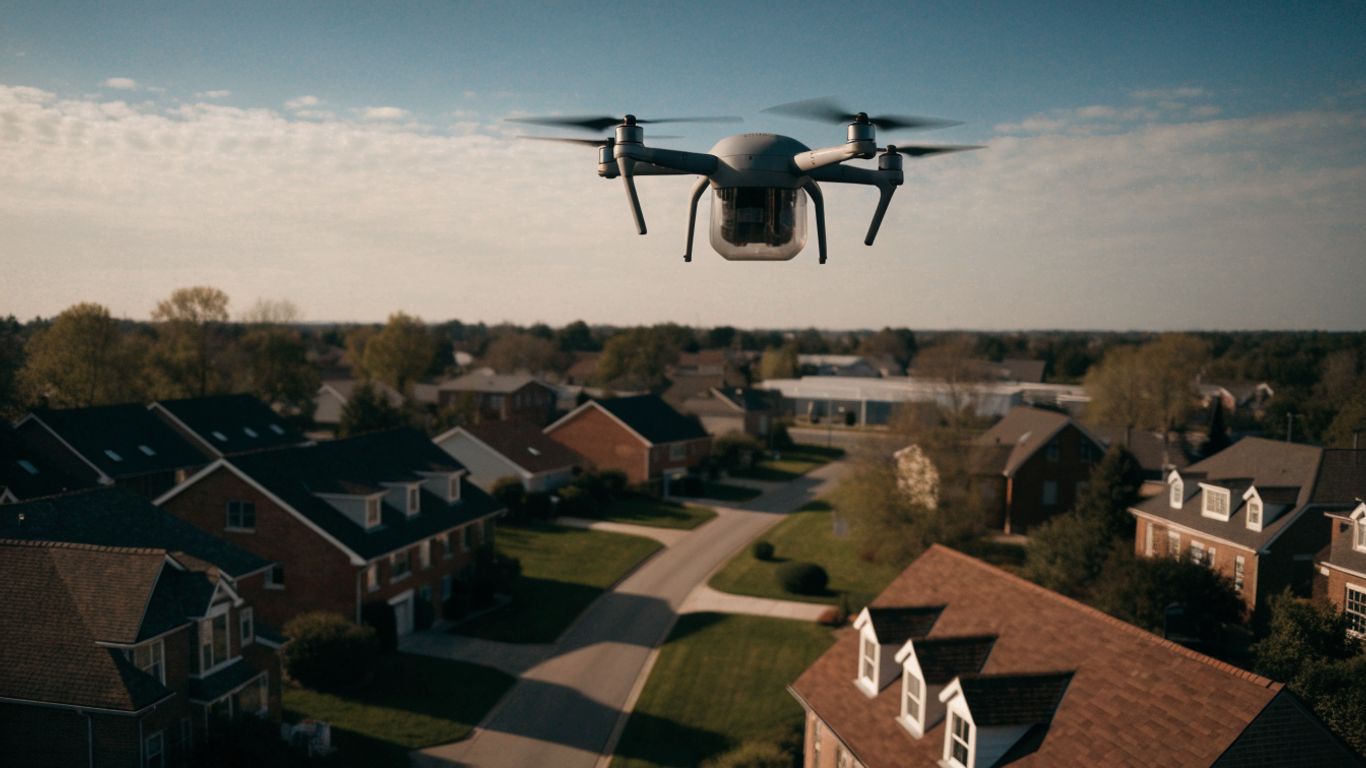
Satellite navigation can help an aircraft estimate its position and follow a planned route. Onboard sensors and flight-control systems contribute information about the aircraft’s movement and operating state, helping it remain stable and respond to control inputs. Their roles depend on the specific system, and a general description should not be mistaken for a specification of every delivery drone.
For an accessible overview of the parts that contribute to stable flight, see the guide to how drones maintain flight. In a delivery operation, navigation is one element of a larger system that includes the mission plan, communications, aircraft checks, and contingency procedures.
How drones avoid obstacles and other aircraft
Obstacle awareness can involve sensors, system alerts, route design, operating limits, and human oversight. The exact method varies, and no system makes every hazard disappear. Other aircraft are a separate concern: operators must plan and conduct flights within applicable airspace rules and use procedures appropriate to their authorization.
A drone’s ability to detect an obstacle should not be treated as permission to fly anywhere. The operating area, aircraft design, visibility, and regulatory conditions all affect what the system can safely do.
The role of remote pilots and automated systems
Many delivery tasks can be automated, including following a programmed route, but commercial operations still require accountable human oversight under the applicable rules. The responsibilities assigned to remote pilots and other personnel depend on the operator’s approvals and procedures. Automation can reduce routine manual input without making the flight independent of its operating framework.
That distinction matters when readers hear that a drone flies autonomously. The term describes how some flight functions are performed; it does not mean that no people are involved in planning, monitoring, or managing the operation.
What happens when a route needs to change
A route may need adjustment if a planned path becomes unsuitable or a flight condition changes. Operators rely on established procedures to decide whether the aircraft can continue, should use an alternate route, or must end the delivery and return or land safely. The choice depends on the situation and on what the operation is authorized to do.
A contingency plan is designed before the aircraft takes off, not improvised after a problem appears. That preparation is one reason route planning and remote oversight remain important even when a flight follows a programmed path.
3. How packages reach customers
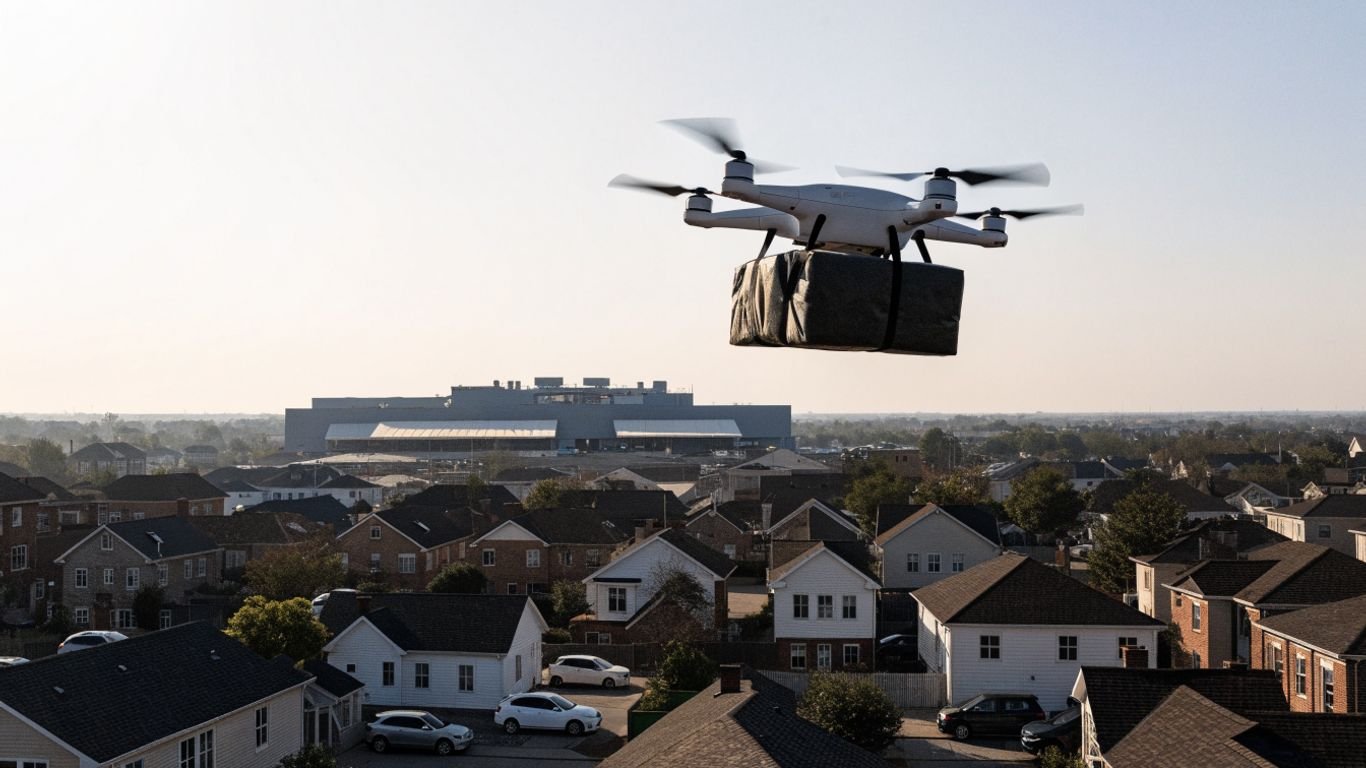
The final handoff is designed around the aircraft, package, and delivery site. Some operators use a landing or a controlled lowering method; others may use a different procedure approved for their operation. Customers may be asked to prepare a suitable spot and follow instructions so the package can be received without approaching the aircraft. The process is less like a conventional doorstep drop and more like a carefully defined handoff.
Delivery by landing, lowering, or dropping a package
A drone may deliver by setting down at an appropriate location, lowering a package on a tether, or releasing it using a method designed for the operation. The available approach depends on the aircraft and the operator’s procedures. A customer should follow the instructions provided for that specific delivery rather than assume every service uses the same technique.
The delivery method also affects where a package can be left. A clear, suitable spot helps keep the handoff predictable, while an unsuitable surface or an unexpected obstacle may require the drone to abort the attempt.
How customers receive delivery instructions
Customers typically need to know where to stand or place the package, when to expect the aircraft, and what to do after the item is delivered. The directions can vary with the service and its delivery method. For example, the published Wing delivery process describes shopping with local partners, choosing a delivery spot, and receiving the drone delivery.
Clear instructions matter because the customer is part of the final handoff, even if they never control the aircraft. Following the designated process helps avoid confusion around the arrival area and the package itself.
Package size, weight, and placement limits
An aircraft has limits on the load it can carry and the way that load can be attached or released. The service may therefore restrict item size, weight, packaging, or the selected delivery spot. Those limits are operator- and aircraft-specific; there is no single package allowance that applies to every US drone service.
The practical result is that a small order may qualify while a larger order from the same retailer does not. Even a package within the aircraft’s capacity may be unsuitable if it cannot be secured or delivered using the approved method.
What happens if a delivery cannot be completed
If the aircraft cannot safely reach or use the planned delivery location, the delivery may be delayed, returned, or marked for another attempt or delivery method. The outcome depends on the operator’s procedures and the circumstances. Customers should use the service’s own updates rather than assume a failed handoff means the package has been left nearby.
A successful flight is not defined only by reaching the address. The package also has to be handed off in a way that follows the operation’s safety plan.
4. The FAA rules behind US drone delivery
Commercial package flights operate within a regulatory framework that addresses the aircraft, operator, airspace, and people on the ground. The details depend on the type of operation and the authorizations in place. That means a service available in one community may not be able to begin in another simply by moving the same aircraft there. For readers who want a deeper look at the delivery-specific framework, this FAA Part 135 overview explains the certification context.
Why commercial operators need FAA authorization
A business carrying packages by air for compensation must meet the FAA requirements that apply to its operation. Commercial drone rules can involve pilot qualifications, aircraft and operating limits, airspace permissions, and additional approvals where a proposed flight goes beyond standard rules. The relevant path depends on what the operator plans to do.
Authorization is not a blanket permission for every route or neighborhood. Operators must stay within the scope of their certificates, waivers, or other applicable approvals, and those conditions shape the service customers can actually use.
How Part 135 certification applies to delivery
Part 135 is the FAA framework used for certain air carrier operations, and it applies to drone package delivery services operating under that model. Certification involves requirements for the carrier and its operating procedures; it is not simply a label applied to an aircraft. The particular permissions and limits still depend on an operator’s approved operation.
This distinction helps explain why a commercial drone flight is not automatically equivalent to a delivery flight. The rules depend on the service being offered, the type of aircraft operation, and the authority under which it is conducted.
What beyond visual line of sight means
Beyond visual line of sight, or BVLOS, means the aircraft is operating outside the unaided sight of the remote pilot or visual observer, as defined by the applicable rules. A delivery route may cover more ground than a person can directly watch from one location, which is why BVLOS authority is an important issue for some operations. It is not a universal permission; operators need the applicable regulatory basis to conduct those flights.
The FAA’s requirements and any conditions attached to an approval determine how a route can be operated. A service’s use of automated flight functions does not, by itself, establish BVLOS authorization.
How airspace restrictions affect delivery routes
Airspace restrictions can limit where and when a drone may fly. Routes may need to account for controlled airspace, airports, temporary restrictions, and other operating constraints, with permissions required where applicable. The route that looks simplest on a map may therefore be unsuitable for an authorized flight.
These limits also help explain why coverage tends to be local rather than nationwide. A delivery zone has to fit the aircraft’s capabilities, the service’s approvals, and the airspace environment around its launch and destination points.
5. Where drone delivery is available
Drone delivery is not yet a universal option across the United States. Services are introduced in specific communities where operators can establish a launch site, meet applicable requirements, and serve addresses within their operating range. Local geography and delivery locations matter as much as broad regional demand. Availability can change over time as programs expand or adjust.
Why services launch in specific neighborhoods
A neighborhood may be a suitable starting point if homes and businesses fall within a workable range of a launch site and the operation can meet its safety and regulatory requirements. Operators also need a way to prepare orders and coordinate the handoff. These factors help explain why a service can be available on one side of a city but not across the entire metro area.
Local launch decisions are practical, not just promotional. The operating area has to work for aircraft, people, infrastructure, and the authorized flight plan.
How population density and distance affect coverage
Distance from the launch site affects how much of a flight is spent reaching the customer and returning, while neighborhood layout influences where packages can be delivered. Population density can create more nearby potential customers, but it can also mean more buildings, people, and other considerations along a route. Operators weigh these factors within their specific approvals and capabilities.
Coverage is therefore more precise than a city name on a service map. The eligible address, package, delivery spot, and current conditions may all affect whether a particular order can be flown.
What companies such as Amazon and Wing contribute
Companies bring different aircraft, operating procedures, retail partnerships, and approaches to customer handoff. Amazon Prime Air, for example, says it plans to expand to nearly 500 US cities and towns by the end of 2026; that is a stated plan, not a guarantee that every address in those places will be eligible. The Wing delivery information describes a partner-based shopping flow and lets customers check whether their address is served.
Those examples illustrate why the operating details belong to each service. A company’s plans or published process should not be treated as a description of every drone-delivery operation in the country.
How availability varies by location and operator
An operator’s service map is the most useful starting point for checking coverage, but an eligible location does not guarantee every item or flight time will be available. Each service sets its own delivery area, package rules, operating schedule, and customer process. Those details can also change as a program develops.
For customers, the practical check is straightforward: enter the address, review which orders qualify, and read the delivery instructions before choosing the option. For observers, the broader point is that drone delivery grows one approved operating area at a time.
6. Safety, weather, privacy, and practical limits
A delivery drone works within real-world conditions that can change from one flight to the next. Operators plan for equipment issues, unsuitable weather, and delivery problems, while local communities may have questions about noise and privacy. The technology is useful for some routes and packages, but it is not a universal replacement for existing delivery networks. Its value depends on whether the mission fits the aircraft and the operating environment.
How operators manage equipment failures
Operators use aircraft checks, maintenance processes, monitoring, and contingency procedures to reduce risk and respond to problems. The specific protections vary by aircraft and approval, so it is not accurate to assume that every service uses identical systems. If a fault or abnormal condition arises, the operator’s procedures guide whether the flight can continue or needs to end safely.
Planning for a failure is part of operating an aircraft, not evidence that every failure can be prevented. The goal is to identify issues and manage the flight in a way that protects people and property.
When wind, rain, or heat can ground flights
Weather can affect flight stability, visibility, batteries, and the safe use of a delivery site. An operator may delay or cancel a trip when conditions exceed its limits, even if the weather appears manageable from the ground. The thresholds depend on the aircraft and approved procedures, so a general forecast alone cannot predict whether a particular delivery will fly.
A drone service may therefore be less predictable during changing conditions than a customer expects from a scheduled parcel route. A hold or cancellation is a routine way to keep a flight within its operating limits.
How operators address noise and privacy concerns
Aircraft noise can be noticeable, especially when flights pass repeatedly over the same area. Operators may consider route design, operating hours, and community feedback as they manage local operations, though the available measures vary. Privacy concerns can arise when residents see an aircraft overhead, even when a delivery flight is not intended to observe private activity.
Residents can distinguish what is known from what is assumed by checking the operator’s published information and local rules. Responsible operations depend on clear communication as well as technical safeguards and compliance.
Why drones cannot replace every delivery method
Drones are best suited to orders and routes that fit their payload, range, weather, and regulatory limits. Larger or heavier shipments, distant destinations, and unsuitable handoff locations may still require a vehicle or another delivery method. A drone can add an option to a logistics network without making the rest of that network unnecessary.
That is the realistic frame for how drone delivery works in the united states: as a specialized service for eligible trips, supported by aircraft technology and bounded by practical and regulatory constraints.
Conclusion
Drone delivery brings together retail fulfillment, flight planning, aircraft navigation, customer handoff, and FAA oversight in a single local operation. It can offer a different way to move certain packages, but eligibility depends on the order, location, weather, and operator’s authorization. Understanding those limits makes it easier to see both what the service can do and why its reach remains selective.
Frequently Asked Questions
How does drone delivery work in the United States?
A retailer or delivery service screens an order, prepares and loads it, plans an authorized flight, and uses an operator-approved method to hand the package to the customer. The details vary by service and location.
How long does drone delivery take?
Timing depends on the service, distance, order preparation, weather, and operational availability. A published delivery estimate applies to that operator’s stated service, not all drone deliveries.
Can any package be delivered by drone?
No. Operators set limits based on aircraft capacity, package handling, service rules, and delivery location. An item may be available from a retailer but ineligible for the drone option.
Do delivery drones fly without human involvement?
Some flight functions may be automated, but commercial operations still have human responsibilities for planning, oversight, and responding to issues under applicable rules. The operating model varies.
Do drone deliveries require FAA approval?
Commercial package delivery must follow the FAA rules that apply to the operation. Requirements can include operator certification, airspace permissions, or additional authority for particular kinds of flights.
What happens if weather prevents a drone flight?
The operator may delay, cancel, or reschedule the delivery, or use another delivery method. The decision depends on the weather limits and procedures for that specific operation.
Is drone delivery available everywhere in the United States?
No. Services operate in defined areas, and availability can depend on the address, package, delivery spot, operator, and current conditions. Customers should check the service’s coverage information for their location.