
How counter drone technology used at airports detects, tracks, and responds to threats

Key Takeaways
Airport drone incidents are managed through a sequence of detection, assessment, communication, and response—not through sensors alone. Effective plans account for both the limits of technology and the authority required to intervene.
- Unauthorized drones can prompt flight holds, diversions, or other operational changes.
- Radar, radio-frequency sensors, cameras, and acoustic sensors each offer different kinds of information.
- Combining sensor reports can help teams assess whether an alert is credible and where a drone may be.
- Airport responses depend on coordination among operations teams, security, air traffic personnel, and law enforcement.
- Mitigation is legally and operationally constrained, especially near aircraft and crowds.
Why airports need counter-drone technology
A drone near an airport can create an immediate question for people responsible for safe operations: what is in the air, where is it, and what should happen next? Counter drone technology used at airports can help teams detect and assess possible incursions, but it is only one part of a broader safety process. The response must account for aircraft movements, the location of people, and the uncertainty that can accompany an early alert. That is why planning and coordination matter as much as the equipment.
How unauthorized drones disrupt airport operations
An unapproved drone in or near an airport’s operating area may lead staff to pause or adjust activity while they assess the situation. Depending on the reported location and circumstances, aircraft may be held, rerouted, or diverted, and ground operations may also need to adapt. Even when an alert is unconfirmed, the time spent checking it can affect schedules and require coordination across several teams. Coverage of airport drone detection explores how sensors and operational decisions intersect in this setting.
Risks to aircraft, passengers, and airport infrastructure
A drone’s proximity to aircraft creates a potential safety concern, particularly during arrival and departure, when aircraft are operating close to the ground. Airports also have people, vehicles, buildings, and sensitive equipment spread across large areas, so a report cannot be assessed in isolation from its surroundings. The specific risk depends on factors such as the drone’s observed position, movement, and relation to active operations; an alert alone does not establish intent or prove that a collision is imminent. A measured assessment helps teams avoid both complacency and unnecessary escalation.
How airports assess drone threats and operational impact
Threat assessment begins with the quality of the report: where the object was seen, when it was observed, and whether other sources support the observation. Teams can then consider the possible effect on nearby flights and airport activity, while keeping uncertainty explicit. A useful assessment separates confirmed observations from assumptions and identifies what additional information is needed. This makes it easier to choose a proportionate operational response rather than treating every alert as the same kind of event.
How airport systems detect drones
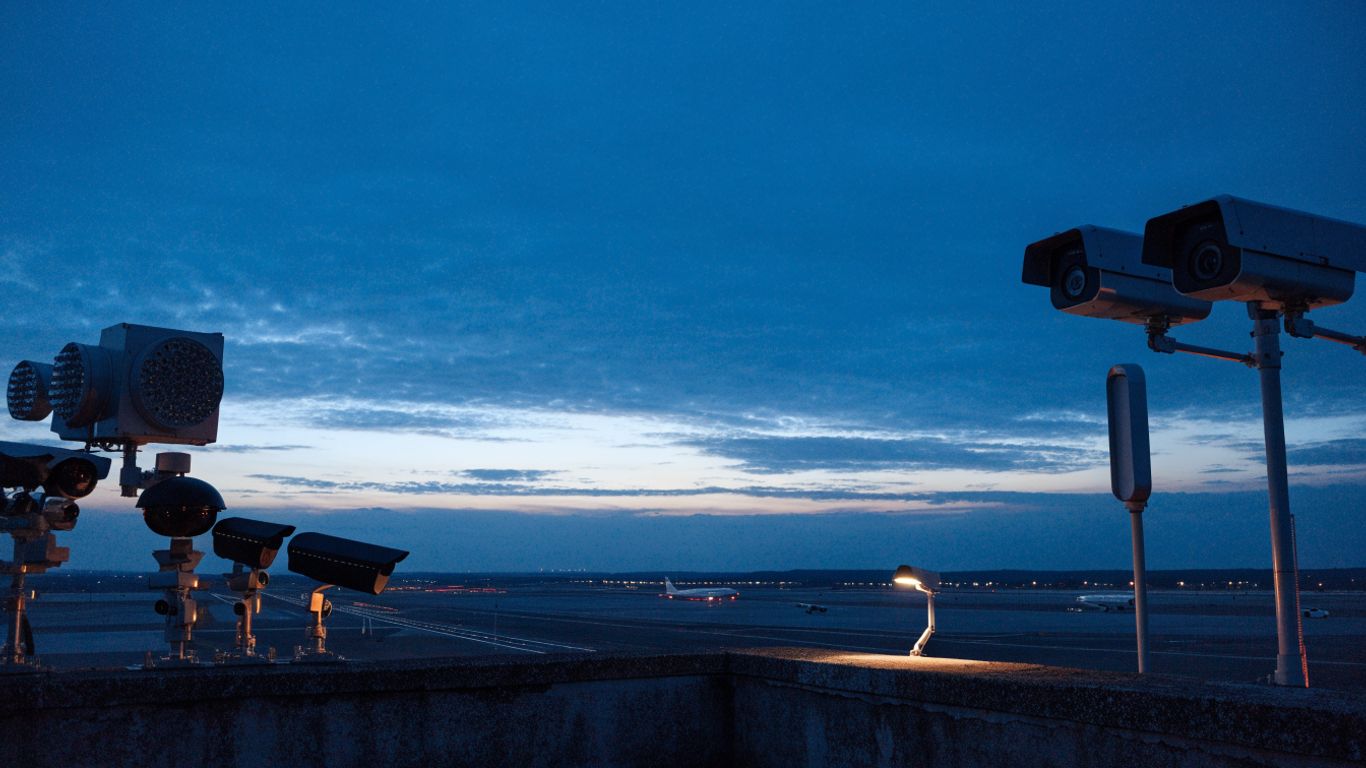
Detection systems look for different clues, and no single sensor is suited to every condition around an airport. Radar may detect and track aerial targets, while radio-frequency equipment can monitor for signals associated with a drone. Cameras and acoustic sensors can add other forms of evidence, each with its own limits. Understanding these differences helps explain why airports may use more than one sensor type.
Radar for detecting and tracking aerial targets
Radar can scan airspace for objects and provide information about their position and movement, though performance depends on the system and environment. Small targets, low flight paths, nearby structures, and other sources of clutter can complicate detection and classification. Specialized processing can help separate possible drone returns from other signals; this is one subject covered in radar signal processing. A radar report is useful evidence, but it may need another sensor or human review before an object can be confidently identified.
Radio-frequency sensors for identifying drone signals
Radio-frequency sensors monitor portions of the spectrum for transmissions associated with drones or their control links. When a drone is emitting detectable signals, RF information may help teams assess its presence and, depending on the system, support identification or location estimates. A quiet or non-transmitting aircraft may not provide the same signal evidence, and radio conditions around a busy airport can be complex. RF data is therefore best understood as one source of information rather than a complete account of every drone activity.
Cameras and thermal imaging for visual confirmation
Visible-light cameras can provide imagery for an operator to review, while thermal cameras detect heat contrasts that may help reveal an object under suitable conditions. Their usefulness depends on factors such as distance, viewing angle, weather, lighting, and obstructions. A camera may help confirm that something is present, but seeing an object does not always establish its type or intent. Operators may need to compare imagery with sensor tracks and observations from people on the ground.
Acoustic sensors and their environmental limitations
Acoustic sensors listen for sound patterns that may be associated with drone motors. They can contribute another clue, but airports are noisy environments: aircraft, ground vehicles, construction, and weather can mask or resemble the sounds being assessed. Microphones also have a limited listening area compared with sensors that monitor wider stretches of airspace. For these reasons, acoustic reports are generally more informative when interpreted alongside other available evidence.
How sensors help identify and track a drone
An alert is more useful when airport teams can connect it to a coherent account of an object’s location and movement. Sensor systems may provide different observations, and operators need to interpret them without assuming that every report describes the same target. The goal is to build a timely picture that can support operational decisions while preserving uncertainty where evidence remains incomplete. This is a human and technical process, not simply a matter of collecting more data.
Combining data from multiple sensor types
Different sensors can contribute different kinds of evidence, so combining their reports may help staff assess an alert more fully. The table below summarizes common roles and limitations without implying that every airport uses the same equipment or configuration.
| Sensor type | Potential contribution | Important limitation |
|---|---|---|
| Radar | Detects and tracks aerial targets | Clutter and small targets can complicate interpretation |
| Radio-frequency | Detects or analyzes emitted signals | A non-transmitting drone may not provide RF evidence |
| Camera or thermal imager | Offers visual information for review | Visibility and line of sight can limit the view |
| Acoustic sensor | Adds sound-based observations | Ambient noise can mask or confuse signals |
No single row is a complete answer to an alert. When reports agree, confidence may increase; when they differ, operators should treat the discrepancy as a reason to investigate rather than force a match.
Distinguishing drones from birds and other targets
A moving object in the sky is not automatically a drone. Birds, aircraft, weather effects, and other objects can produce observations that initially look similar, particularly when a sensor has limited detail or the target is far away. Operators can compare movement, signal characteristics, visual evidence, and the circumstances of the report, while recognizing that each clue has limits. Careful classification reduces the risk of treating an uncertain detection as a confirmed incursion.
Tracking a drone across airport areas
Following a target across a large airport requires teams to maintain a shared understanding of its reported position and the time of each observation. Sensors may have gaps in coverage, and an object can move beyond one sensor’s view before another source picks it up. Clear timestamps and consistent descriptions help operators determine whether successive reports plausibly refer to the same object. That continuity can support a more useful operational picture, though it does not remove uncertainty about the target’s identity.
Sharing alerts with security and air traffic teams
An alert needs to reach the people who can assess its operational relevance. Security staff may focus on the reported object and its location, while air traffic personnel consider the relationship to aircraft activity; airport operations teams may need to coordinate changes on the ground. Sharing concise, time-stamped information helps these groups work from the same account. The message should distinguish what has been observed from what is still being inferred.
How airports respond to drone incidents
A response plan gives airport teams a way to move from a sensor alert to a coordinated decision. The details will vary with the airport, the reported location, and applicable rules, but a useful process keeps verification, communication, and safety in view. Staff should know who assesses an alert and who is responsible for communicating with outside agencies. Clear procedures make it less likely that important information is lost during a fast-moving event.

Verifying an alert before escalating
Before an alert triggers a wider response, staff can check its time, location, and supporting evidence. A second sensor observation, a visual review, or a credible report from personnel may help clarify what was detected, though none should be treated as infallible. Verification is not a reason to delay urgent protective action when circumstances warrant it; rather, it helps teams make decisions using the best information available. Recording what remains unknown is part of an accurate assessment.
Coordinating with airport operations and law enforcement
Once an incident is assessed, coordination helps align the response across airport functions and public authorities. A practical incident workflow often includes these elements:
- Share the alert’s time, reported location, and confidence level with relevant teams.
- Identify who is coordinating airport operational decisions and external communications.
- Update the assessment as additional sensor or eyewitness information arrives.
- Preserve incident records and pass relevant details to authorized investigators.
The specific roles and channels should be set in advance, rather than improvised during an incident. Coordination also helps ensure that operational decisions and any law-enforcement response are based on a consistent account.
Applying procedures to protect aircraft and people
Airport procedures may include operational adjustments intended to protect aircraft and people while the report is assessed. The appropriate action depends on the location of the possible drone, current aviation activity, and instructions from responsible authorities. Staff should avoid assuming that a particular technical countermeasure is automatically safe or lawful in the airport environment. A response plan should prioritize controlled, authorized decisions over ad hoc action.
Recording incident details for follow-up and investigation
An incident record can preserve the information needed to review what happened and improve future procedures. Useful details may include when and where the alert originated, what sensors or witnesses reported, which teams were notified, and what operational decisions followed. Records should distinguish direct observations from interpretations and note important gaps in the evidence. This creates a clearer basis for follow-up without overstating what the response team knew at the time.
What drone mitigation can and cannot do
Detection and mitigation are different functions. Detection provides information about a possible drone; mitigation refers to actions intended to affect the drone or its operation. Such actions can carry safety, legal, and operational consequences, particularly around aviation infrastructure. Airports therefore need to understand not only what a system can detect, but also who is authorized to act and under what conditions.
The difference between detection and mitigation
A detection system reports information that can help staff identify and assess a possible target. A mitigation measure attempts to influence or stop the activity, which introduces a different set of risks and permissions. Detecting an object does not automatically mean it can be safely or lawfully intercepted. Keeping the two functions separate helps teams avoid treating a sensor alert as authorization to take action.
Signal disruption and its legal restrictions
Some mitigation approaches involve interfering with radio communications or navigation signals. Around an airport, unintended interference could affect communications or other systems, so the legality and safety of any such action cannot be assumed. Rules and authority vary by jurisdiction and circumstance; airports should consult the relevant regulators and authorized agencies. The FAA guidance on UAS systems describes issues operators should assess, including legal considerations and potential interference with aviation equipment.
Physical interception risks near aircraft and crowds
Physical interception can create hazards of its own. An intercepted drone or any equipment used to stop it could fall, move unpredictably, or create danger near aircraft, passengers, staff, and vehicles. The built environment and the location of people matter, as does the possibility that an intervention could complicate an already active incident. These risks are why physical methods require careful assessment and appropriate authority, rather than improvised use.
Why authorized agencies must oversee mitigation
The power to use countermeasures is not the same as the technical ability to do so. Applicable authority can depend on national and local law, the type of action, and the agencies involved. Airport personnel should follow established procedures and involve the relevant authorized bodies rather than assume that ownership of detection equipment confers permission to mitigate. This boundary is central to safe incident management.
How airports choose and deploy counter-drone systems
Choosing a system begins with the airport’s operational needs, physical layout, and existing response arrangements. A sensor that performs well in one setting may not provide the same coverage or quality of information in another. Airports also need to consider how alerts will reach staff and how performance will be assessed over time. Deployment is therefore a continuing operational task, not simply a purchase decision.
Matching sensor coverage to airport size and layout
Airport boundaries, buildings, terrain, nearby activity, and areas of operational importance all shape sensor placement and coverage needs. Teams can map where reliable observation matters most and identify areas where structures or environmental conditions may create gaps. Different sensor types may complement one another, but adding equipment does not guarantee that every blind spot disappears. A realistic coverage plan describes both what the system is expected to observe and where uncertainty may remain.
Integrating alerts with existing security operations
An alert is useful only if the right people can receive, understand, and act on it. Airports should define how reports move from a sensor operator to security, operations, and air traffic personnel, along with who owns each decision. Integration also means agreeing on terminology and making sure an alert contains enough context to support assessment. Good procedures reduce the chance that separate teams interpret the same report in incompatible ways.
Testing performance in real airport conditions
Testing should consider the conditions in which the system will actually be used, including changing weather, background activity, buildings, and routine airport operations. Teams can review whether alerts are timely and understandable, whether sensor reports can be reconciled, and how often staff need additional verification. Tests should also examine how the system behaves when information is incomplete or conflicting. Results can reveal where procedures, coverage, or staff expectations need adjustment.
Training staff and reviewing response procedures
People using the system need practice interpreting alerts without overstating what a sensor can establish. Training can cover communication roles, escalation thresholds, documentation, and the distinction between detection and authorized mitigation. Procedures should be revisited after exercises or incidents, especially when staff identify a confusing handoff or information gap. Regular review keeps the response grounded in the airport’s actual operating conditions.
Conclusion
Counter drone technology used at airports is most useful as part of a wider safety process: sensors provide evidence, people assess it, and authorized teams coordinate an appropriate response. Understanding the limits of detection and mitigation helps airports make careful decisions while protecting aircraft operations and the people on the ground.
Frequently Asked Questions
What is counter-drone technology used for at airports?
It helps detect and assess possible unauthorized drone activity near airport operations. Depending on the equipment, systems may provide radar, radio-frequency, visual, or acoustic information for staff to review.
How do airports detect drones?
Airports may use radar, radio-frequency sensors, cameras, thermal imaging, or acoustic sensors. Each method has strengths and environmental limitations, so reports may be interpreted together.
Can radar identify every drone?
No. Radar performance can be affected by target size, clutter, structures, and other conditions. A radar detection may need additional evidence before operators can identify an object confidently.
Why use more than one type of sensor?
Sensors provide different kinds of information. Comparing reports can help teams assess an alert, while differences between reports can reveal where further verification is needed.
Does detecting a drone mean an airport can stop it?
No. Detection and mitigation are separate functions. Any action intended to disrupt or intercept a drone may involve legal restrictions and safety risks, and must be handled by authorized parties.
What happens when a drone is reported near an airport?
Teams assess the report, share relevant information, and follow procedures suited to the location and operational circumstances. Depending on the situation, airport activity may be adjusted while the alert is investigated.
What should airports consider when selecting a system?
They should consider airport layout, sensor coverage, alert handling, environmental conditions, staff training, and applicable legal authority. Testing and procedure reviews can help determine whether the system works as intended in local conditions.