
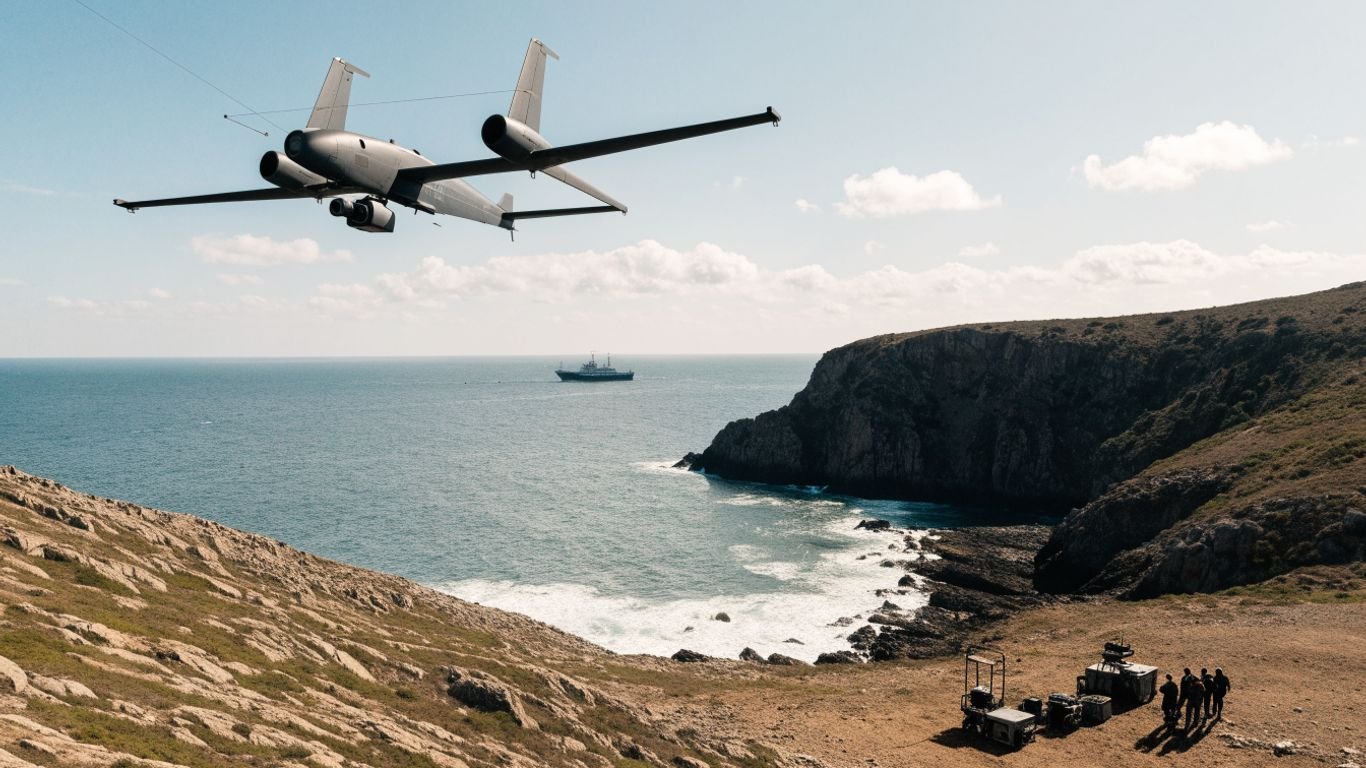
RQ-21 Blackjack tactical ISR: capabilities, missions, and limitations

Key Takeaways
The RQ-21 Blackjack is a small tactical uncrewed aircraft system designed to provide reconnaissance support from land or sea. Its practical value depends not only on the aircraft, but also on the people, equipment, communications, and mission planning around it.
- The RQ-21A is designed for tactical intelligence, surveillance, and reconnaissance missions.
- Its system includes an aircraft, ground control station, and supporting launch and recovery equipment.
- Electro-optical and infrared sensors can help crews observe conditions in the field.
- A catapult launch and SkyHook recovery allow runway-independent operations.
- Weather, endurance, communications, and personnel requirements shape what a mission can accomplish.
What the RQ-21 Blackjack is
The RQ-21 Blackjack is a small tactical unmanned aircraft system developed for operations on land and at sea. It is used to gather observations that can help military units understand activity in an area. The aircraft is one part of a larger system, rather than a self-contained tool that works without crews and support equipment. Its compact, expeditionary design is a defining part of its role.
Its role as a small tactical unmanned aircraft system
A small tactical unmanned aircraft system gives units an aerial observation option without requiring an onboard pilot. The RQ-21 is intended to support reconnaissance and surveillance, providing information that can inform a unit’s understanding of its surroundings. That does not make it a substitute for every other source of intelligence; its contribution depends on what it can observe and communicate during a particular sortie.
The term “tactical” points to how the system is used: as a supporting capability for operational units, rather than as a stand-alone answer to every intelligence question. Crews plan and operate the aircraft, then interpret and share what it collects. The result is most useful when it answers a specific question for people who can act on the information.
How the RQ-21A fits into the Blackjack family
RQ-21A is the model designation commonly associated with the Blackjack. The aircraft is also known by the name Integrator, and public descriptions connect the platform to Navy and Marine Corps small tactical unmanned aircraft requirements. For a concise overview of its development and service background, see this account of the RQ-21A Blackjack.
The name is less important in practice than the complete system and the mission it supports. Public descriptions identify the aircraft as a small tactical uncrewed system intended to operate from land and sea; they also describe transportability and customizable payload options. Those details frame the platform’s role without suggesting that every payload or operating configuration is present on every aircraft.
The aircraft, ground control station, and supporting equipment
The aircraft needs a ground control station and launch-and-recovery equipment to become an operational capability. Supporting equipment matters because the system is designed for runway-independent use: crews need a way to launch it, monitor the sortie, and recover it at the end. Procurement descriptions likewise list aircraft, ground control stations, and launch-and-recovery equipment as parts of a system.
Thinking about the Blackjack as a set of connected components helps clarify what a unit must bring and operate. The RQ-21 system overview offers another description of the platform’s configuration and use. At a high level, the components have distinct jobs:
| Component | General role |
|---|---|
| Air vehicle | Carries the mission payload and flies the planned sortie |
| Ground control station | Supports crew control and mission monitoring |
| Launch equipment | Sends the aircraft into flight without a runway |
| Recovery equipment | Helps crews retrieve the aircraft after its sortie |
This division of work is a reminder that aircraft performance alone does not determine mission value. The crew, equipment, and operating environment all shape whether the system can deliver useful observations.
How the RQ-21 supports tactical ISR
Tactical ISR—intelligence, surveillance, and reconnaissance—combines observation with the work of making information useful to people in the field. An uncrewed aircraft can provide a view from above, but a sortie still has to be planned around a question, a location, and the needs of the unit. The RQ-21 is one way to support that process. Its usefulness is tied to how well its observations fit into a broader operational picture.
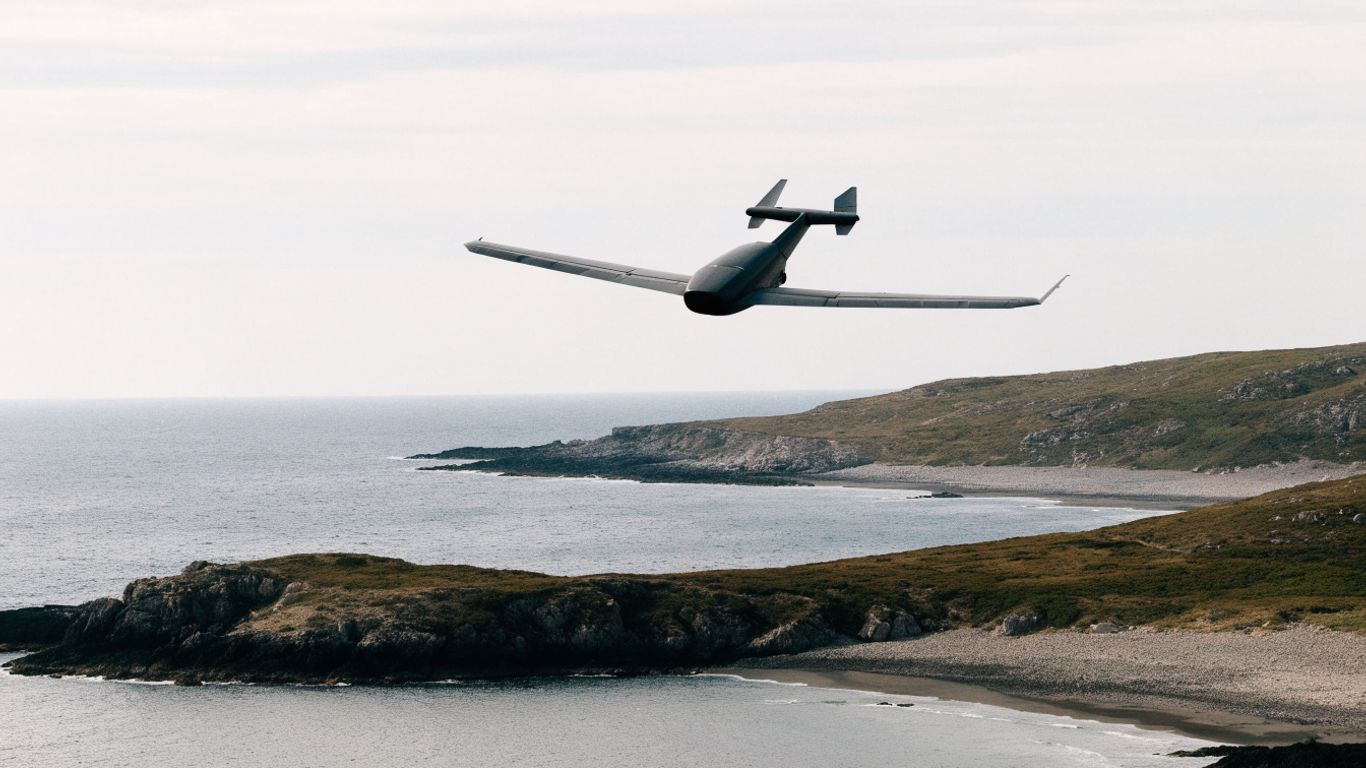
Persistent observation for units in the field
An aircraft that can remain airborne for a planned period may give crews time to observe an area rather than rely on a single brief look. “Persistent” should not be read as continuous coverage without interruption: sorties have limits, and aircraft availability, weather, and mission priorities affect how long observation can be sustained.
For units in the field, the benefit is the possibility of receiving an aerial perspective that complements what people can see from the ground. Crews can focus observation on an assigned area, while commanders and other personnel decide how the information fits with what they already know. That distinction keeps the aircraft’s role grounded: it provides observations, not automatic certainty.
Gathering and sharing intelligence, surveillance, and reconnaissance data
Sensors collect observations, while the system’s communications links support the transmission of information. Public descriptions of the RQ-21A identify an encrypted command-and-control datalink and customizable payload options. The exact information available to a user depends on the fitted equipment and operating setup, so a general description should not be mistaken for a guarantee about every mission configuration.
Sharing observations also involves people and procedures. A crew must keep track of what is being collected, communicate relevant information, and avoid treating an image or sensor reading as self-explanatory. A useful comparison within tactical aviation is the RQ-7B Shadow, another system discussed in relation to imaging, ground-unit support, and the conditions that shape a mission. Different platforms have their own configurations and limits, so their details should not be conflated.
Supporting situational awareness without replacing crewed aircraft
An uncrewed aircraft can add a perspective to situational awareness, but it does not replace every role performed by crewed aircraft or other intelligence sources. Its contribution is narrower: provide observations from its sensors and share them through the system’s available communications. Other assets, analysts, and personnel on the ground may contribute different information or context.
This distinction matters because a sensor view can be incomplete. Terrain, weather, visibility, and the timing of a collection all influence what can be seen. Good operational practice treats aerial observations as one input among several, then considers their limitations before acting on them.
Key aircraft and sensor capabilities
The RQ-21 combines an aircraft with mission equipment intended to support observation and communications. Public descriptions identify electro-optical and infrared imaging among the system’s sensor options, along with customizable payload choices. Capabilities should be understood in relation to the aircraft’s configuration and the sortie being planned, not as a promise that every available function will be fitted at once.
Endurance, range, and operating flexibility
Endurance and range affect how far an aircraft can operate and how much time it can spend on a task, but the practical answer depends on configuration and operating conditions. The manufacturer’s public description gives a line-of-sight operating radius beyond 50 nautical miles for the encrypted command-and-control datalink. That figure describes the stated link capability, not a guarantee that every sortie will reach that distance or remain connected throughout.
The system’s stated ability to operate from land and sea also contributes to its flexibility. Transportability supports moving equipment between locations, while the launch-and-recovery arrangement avoids the need for a conventional runway. These features can be useful in expeditionary settings, though they do not remove the need for suitable space, trained crews, and mission-specific planning.
Electro-optical and infrared sensing
Electro-optical and infrared sensors give crews different ways to observe an area. In broad terms, electro-optical imagery captures visible-light scenes, while infrared sensing can provide information based on heat. The precise results depend on the sensor payload, conditions, and crew interpretation; a sensor does not independently explain everything in an image.
For a mission planner, the central question is whether the available sensor suits the observation task. Sensor options may help crews gather relevant information, but the environment can still limit what is visible or distinguishable. Data also needs context: crews and users need to understand when and where it was collected before relying on it.
Communications and data links for transmitting observations
Communications support both aircraft control and the sharing of information. The RQ-21A’s public product description identifies an encrypted command-and-control datalink, with a stated line-of-sight operating radius beyond 50 nautical miles. Actual performance depends on the mission environment, link conditions, and system configuration. A stated range should therefore be treated as a planning reference, not as proof of uninterrupted connectivity in every setting.
When links are available, observations can support a more current picture for the unit. When they are not, crews may have to adjust plans and users may need to make decisions with less timely information. Clear procedures for handling, interpreting, and sharing collected data are part of the capability, not an afterthought.
Launch, recovery, and mission operations
Launch and recovery are central to how the Blackjack operates in places without a runway. The system uses a mobile catapult-style launcher and a recovery method known as SkyHook, allowing operations from land or sea as described in public material. These methods change the equipment and space a unit needs, but they do not make operations independent of the surrounding environment. Mission planning still has to account for crew readiness, location, and conditions at both ends of a sortie.
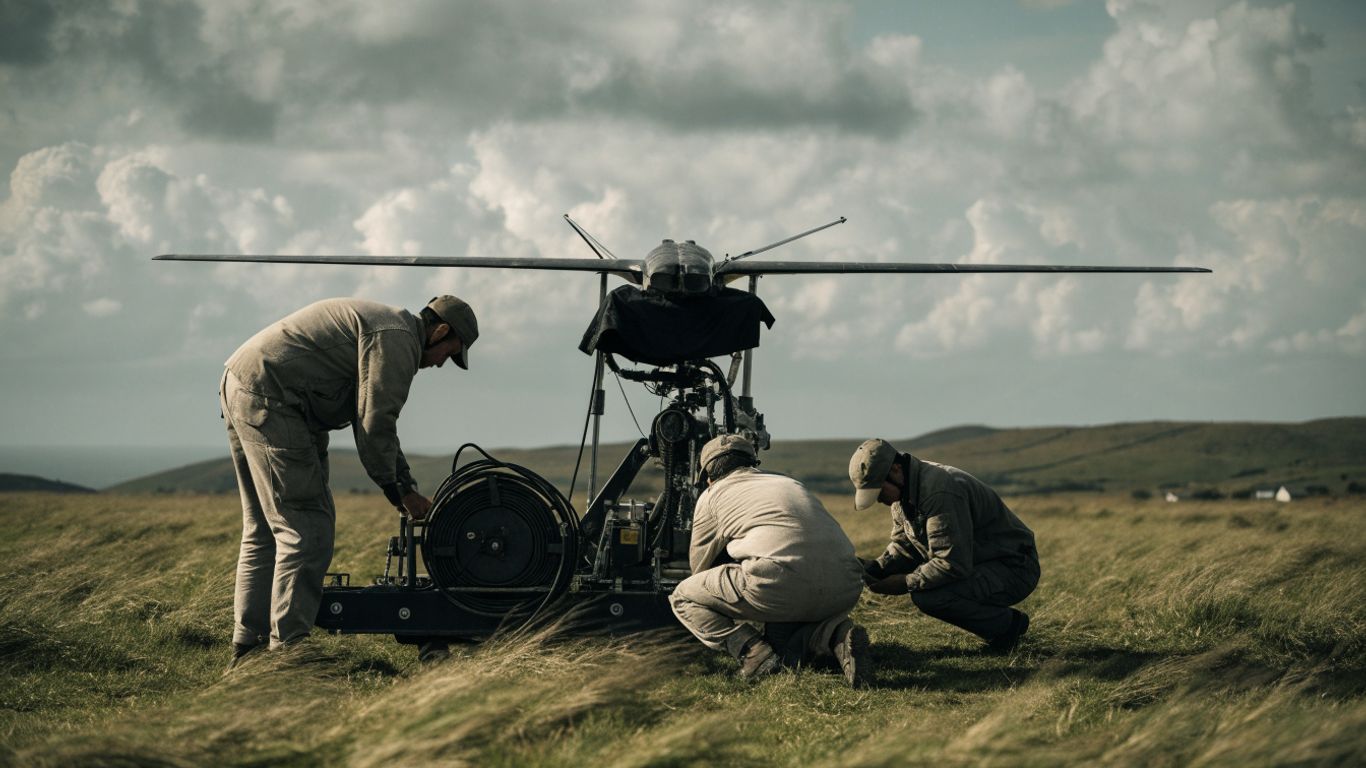
Using a mobile catapult launch system
A catapult launch sends the aircraft into flight from a prepared launch position, rather than from a runway. This makes the arrangement suitable for locations where a conventional airstrip is unavailable or impractical. The launcher is still part of the operational footprint: crews need to transport, set up, and use it in a space appropriate to the mission.
Preparation is more than placing the aircraft on the launcher. The team must coordinate the aircraft, supporting equipment, and sortie plan before launch. The runway-independent approach expands where the system can be used, while making sound site preparation and crew coordination especially important.
Recovering the aircraft with the SkyHook system
SkyHook is the named recovery system associated with the Blackjack. In broad terms, the recovery approach allows the aircraft to be retrieved without a runway, supporting operations from land or at sea. A recovery system is not simply an ending to the flight: it is a planned part of the sortie, with crews and equipment positioned to carry it out.
The method can affect where and how a unit operates, so a recovery location and procedure need to be considered before launch. That is particularly relevant in expeditionary settings, where space, terrain, and the movement of equipment may constrain the options available to the crew.
Planning sorties around weather, terrain, and unit needs
A mission plan should connect the observation task to the conditions crews will actually face. Weather and terrain can affect operations, while the unit’s information needs determine where and when an aircraft might be useful. A compact planning sequence can keep those factors in view:
- Define the observation question and the area of interest.
- Check weather, terrain, and launch and recovery locations.
- Confirm the crew, equipment, payload, and communications plan.
- Decide how observations will be shared and interpreted.
This sequence does not remove uncertainty, but it helps connect the sortie to a practical purpose. Adjustments may still be needed if conditions change or the aircraft cannot operate as planned. The best plan is one that leaves room for crews to reassess rather than treating the initial route as fixed.
Where the Blackjack is used
The Blackjack is described as a system developed for Navy and Marine Corps requirements and designed to operate from both land and sea. That operating concept suits missions where runway access is limited or a unit needs a transportable aircraft system. Its role is to support reconnaissance and surveillance, with the precise task shaped by the unit and the equipment available. Public accounts of its service and system configuration provide context, but do not establish that every unit uses it in the same way.
Supporting Marine Corps and naval operations
Public descriptions connect the RQ-21 to U.S. Navy and Marine Corps operations. Its ability to operate from land and sea is relevant to naval settings, where aircraft may need to work from locations other than a conventional airfield. The aircraft’s observations can support situational awareness, while the crew and command structure determine how that information is used.
Operational context matters. The needs of a unit operating from a ship may differ from those of a unit on land, even when using the same general system. A description of the platform’s service history is available in this overview of the Boeing Insitu RQ-21.
Conducting reconnaissance in expeditionary environments
Expeditionary operations often require equipment that can be transported and used without extensive fixed infrastructure. Public information describes the RQ-21A as transportable by several kinds of military transport and suitable for land- and sea-based operations. That flexibility can help a unit bring an aerial observation capability closer to where it is needed, though transportability does not mean the system is effortless to deploy.
Crews still need time, space, and supporting equipment to prepare for a sortie. The environment may restrict launch or recovery choices, and operations remain subject to weather and communications conditions. The value of an expeditionary system rests on whether its practical footprint fits the mission.
Coordinating with ground forces and other assets
The aircraft’s observations are most useful when they reach people who can put them in context. Ground personnel may be able to compare an aerial view with information from their location, while other assets may contribute different perspectives. Coordination helps avoid treating one sensor feed as a complete picture of events.
That means roles and communication procedures matter as much as collection. Crews need to know what information is relevant to share, and receiving teams need a way to interpret it. The aircraft supports the information flow; it does not replace the judgment of the people using it.
Limitations and operational considerations
The RQ-21’s runway-independent launch and recovery methods and its sensor options are useful features, but no aircraft system works apart from its environment. A mission can be constrained by weather, payload configuration, available endurance, communications, and the crew’s ability to deploy and maintain equipment. Those considerations belong in a realistic assessment alongside the platform’s intended role. Describing limits clearly is part of understanding what an aerial system can—and cannot—contribute.
Weather, payload, and endurance constraints
Weather can affect whether a sortie is practical, while payload choices shape what the aircraft is configured to collect. Endurance also sets a boundary on how long an aircraft can support a task before it must be recovered. These factors interact: a mission plan needs to match the observation task to the equipment and conditions rather than assume a single configuration will fit every need.
There is no universal answer to how much coverage a particular sortie can provide. Planners have to work from the aircraft and payload configuration, expected conditions, and the priorities of the unit. Building in realistic margins helps prevent a nominal capability from being mistaken for a guaranteed outcome.
Data-link availability and information management
A data link can support control and transmission, but its availability should not be assumed in every location or throughout every sortie. The operating environment and configuration matter. If a link is interrupted or information arrives later than expected, the unit may have to adjust how it uses the observations and communicate that uncertainty to decision-makers.
Information management matters even when a connection is working. Users need to know what data they have, when it was collected, and what limitations apply. The discipline of separating an estimate from a verified condition also appears in unrelated practical resources, such as guidance on a Zillow Zestimate, a roof inspection report, and IT support. In each case the subject differs, but understanding the scope and limits of the information helps people use it responsibly.
Training, maintenance, and integration requirements
The system’s operational value depends on trained crews and equipment that is ready to use. Personnel must be able to prepare the aircraft, operate the ground control station, coordinate launch and recovery, and handle collected information. Maintenance and logistics also matter: a system that cannot be deployed or kept serviceable cannot support a planned sortie.
Integration with unit procedures is another practical requirement. Teams need a shared understanding of who requests a mission, who operates the aircraft, and who receives the observations. These fundamentals apply across very different activities, from NFL DFS planning to tandem paragliding, though the tasks themselves are not comparable. In military operations, clear responsibilities and preparation help turn equipment into a useful capability.
Conclusion
The RQ-21 Blackjack is best understood as a complete tactical system: aircraft, sensors, ground control, launch and recovery equipment, crews, and procedures working together. Its land- and sea-based operating concept can support reconnaissance where runway access is limited, but the value of each sortie depends on conditions, configuration, communications, and the needs of the unit. A clear view of both capability and constraint makes for a more grounded understanding of tactical ISR.
Frequently Asked Questions
What does tactical ISR mean?
Tactical ISR refers to intelligence, surveillance, and reconnaissance activities that support operational units. It involves collecting observations and making relevant information available to people who need it.
Why use an uncrewed aircraft for reconnaissance?
An uncrewed aircraft can provide an aerial perspective without placing a pilot onboard. Its observations can complement information from personnel on the ground and other sources.
What is the difference between electro-optical and infrared sensing?
Electro-optical sensors capture visible-light imagery, while infrared sensors detect energy associated with heat. The information they provide depends on the sensor, conditions, and how users interpret the data.
Why do some tactical aircraft use catapult launches?
A catapult launch can allow an aircraft to take off from a prepared site without a runway. It still requires suitable equipment, space, and trained personnel.
What affects the usefulness of aerial observations?
Weather, terrain, sensor configuration, timing, and communications can all affect what an aircraft observes and how quickly that information reaches users. Context is also needed to interpret what a sensor collects.
Why does recovery need to be planned before a sortie?
Recovery is a required part of operating an aircraft, not an optional step after its mission. Planning for it helps crews choose suitable locations and coordinate the necessary equipment and personnel.
Can one aerial system provide a complete picture of an area?
No single sensor or aircraft should be assumed to provide a complete picture. Observations are more useful when considered alongside other information and the experience of people who understand the situation.