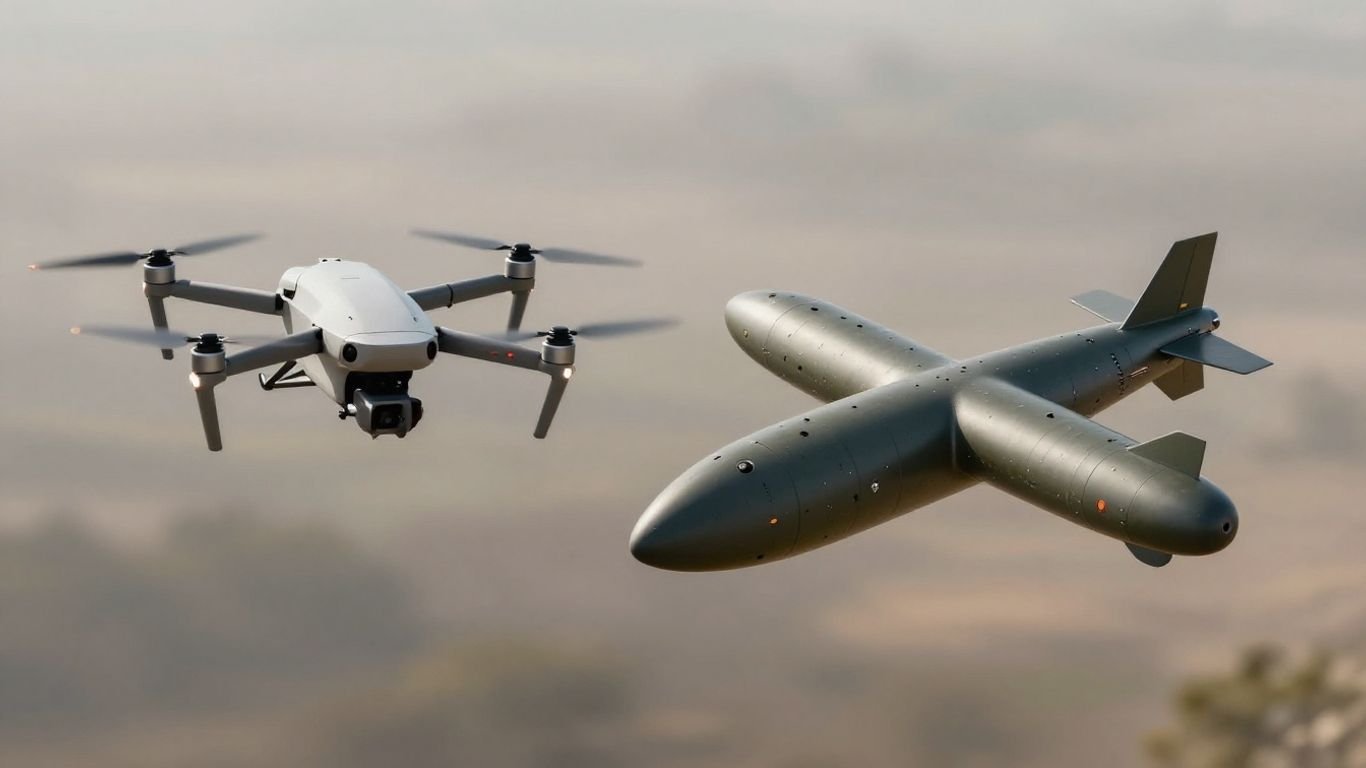
Loitering Munitions vs. Drones: What’s the Diff?

When looking at military tech, it’s easy to mix up drones and loitering munitions. But they have some big differences in what they do and how they work. Here are the main things to remember:
Key Takeaways
- Drones are reusable flying machines used for many tasks like watching, gathering intel, or attacking. They can fly for a long time.
- Loitering munitions are like one-shot weapons. They fly around, wait for a target, and then crash into it to explode.
- Drones are designed for flexibility and can be used again and again, making them good for long-term observation or repeated missions.
- Loitering munitions are made for quick, precise attacks on specific targets and are used up in one go.
- While drones are versatile tools, loitering munitions are specialized for decisive, single strikes, often in situations where other attacks are too risky.
Understanding The Core Differences
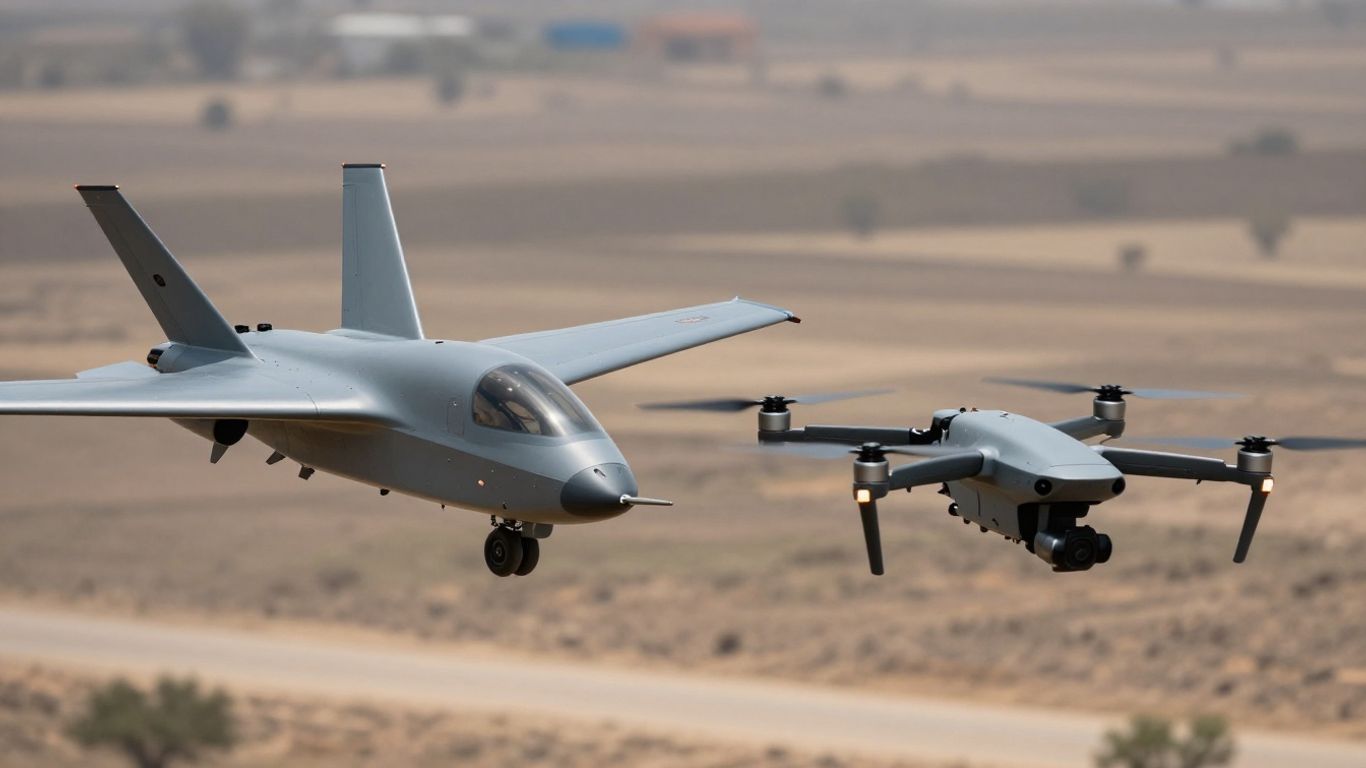
When you first look at them, drones and loitering munitions might seem pretty similar. They’re both flying things that don’t have a pilot on board, and they’re definitely changing how militaries operate. But dig a little deeper, and you’ll find they’re built for pretty different jobs. It’s not just a matter of semantics; their design, purpose, and how they’re used in the field are distinct.
Defining Drones: Versatile Unmanned Aerial Vehicles
Drones, or Unmanned Aerial Vehicles (UAVs), are the more general category here. Think of them as the Swiss Army knives of the sky. They’re designed to be reusable and can be outfitted with a variety of equipment. Their main jobs often involve gathering information – things like surveillance, reconnaissance, and general intelligence gathering. But they can also carry out other tasks, from carrying small packages to even dropping munitions. Because they’re reusable, they’re a long-term investment for military forces, providing persistent observation over large areas for hours, sometimes even days. They can be controlled remotely or fly on pre-programmed routes, offering flexibility for many different scenarios. Some advanced drones even use fiber optic connections for high-speed data transfer, which is great for real-time video feeds.
Defining Loitering Munitions: Precision Strike Systems
Loitering munitions, on the other hand, are more specialized. You might have heard them called "kamikaze drones" or "suicide drones," and that gives you a clue about their primary function. These are essentially flying bombs. They’re designed to fly to a specific area, hang around – or "loiter" – for a while, and then dive onto a target to detonate. Their main purpose is a one-time, precision strike. Unlike a regular drone that comes back to base, a loitering munition is expendable; it destroys itself upon impact. This makes them ideal for quickly taking out specific, high-value targets without needing to call in larger, more complex air support. They combine the ability to survey an area with the capacity to deliver a lethal blow.
Key Distinctions in Purpose and Design
The core difference really boils down to reusability and primary function. Drones are built to be used again and again, focusing on information gathering and multi-role capabilities. Their design emphasizes endurance and adaptability. Loitering munitions are designed for a single, decisive strike. Their design prioritizes a warhead and the ability to find and hit a target with precision. Think of it this way:
- Drones: Gather intel, observe, support operations, and can sometimes attack. They are reusable assets.
- Loitering Munitions: Find a target and destroy it. They are expendable, single-use systems.
This fundamental difference in design and purpose dictates how they are employed on the battlefield. While both are unmanned aerial systems, their roles are quite distinct, and militaries need to understand these differences to effectively integrate them into their strategies. For instance, drone detection radar is vital for spotting incoming threats, whether they are for reconnaissance or attack.
The choice between deploying a drone or a loitering munition depends entirely on the mission’s objective. If the goal is sustained observation or a flexible response, a drone is the logical choice. If the objective is a swift, targeted elimination of a specific threat, a loitering munition is the tool for the job.
Operational Contrasts In The Field
Reusability: Drones Versus Expendable Munitions
The biggest difference you’ll see right away is that drones are generally built to be used over and over. Think of them like a reusable tool in your toolbox. You can fly a drone out, have it do its job – maybe some surveillance or a quick recon mission – and then bring it back to be prepped for its next flight. This reusability is a huge deal for long-term operations and keeping costs down over time. Loitering munitions, on the other hand, are pretty much a one-shot deal. They’re designed to fly out, find their target, and then boom – they detonate. They’re built for a specific, destructive purpose and aren’t meant to come back. This makes them different from traditional drones, which are often used for intelligence gathering and can be recovered.
Endurance and Flight Profiles
When we talk about how long these things can stay in the air, there’s a big gap. Drones, especially larger ones, can often stay airborne for many hours, sometimes even a couple of days. This allows them to cover vast areas or keep an eye on a location for extended periods. Loitering munitions usually have a much shorter flight time. They need enough fuel or battery to get to the target area, hang around for a bit (that’s the ‘loitering’ part), and then make their final attack run. They aren’t designed for day-long surveillance missions. Their flight profile is more about getting into position for a quick, decisive strike.
Control Systems and Autonomy Levels
How these systems are controlled also sets them apart. Many drones are remotely piloted, with a human operator actively flying them, or they can operate semi-autonomously, following pre-programmed routes or responding to certain conditions. Loitering munitions, however, often operate with a higher degree of autonomy, especially during the final attack phase. While they might be directed to a general area, their ability to identify and engage a target can be automated. This allows for rapid engagement once a target is confirmed, without needing constant human input for the strike itself. This difference is key when you think about how quickly a situation can change on the battlefield and the need for immediate action. For example, advanced drone technology is revolutionizing firefighting, but in a combat scenario, that speed of engagement is what loitering munitions are built for [1eef].
The core operational contrast boils down to reusability versus single-use, extended endurance versus mission-specific flight times, and varying levels of human control versus automated strike execution. These distinctions dictate where and how each system is most effectively employed.
Here’s a quick rundown:
- Drones: Reusable, long endurance, typically remotely piloted or semi-autonomous, adaptable payloads.
- Loitering Munitions: Expendable, limited endurance, often autonomous during attack, integrated explosive warhead.
It’s interesting to see how commercial drone technology is making advanced capabilities more accessible, which could eventually impact the development and deployment of systems like loitering munitions [57e8].
Payloads And Their Tactical Implications
Drones: Adaptable Payloads for Diverse Missions
Drones, being versatile platforms, can carry a wide array of payloads. Think of them like a Swiss Army knife for the sky. They’re often equipped with advanced cameras and sensors for intelligence, surveillance, and reconnaissance (ISR) missions. This allows them to provide real-time visual or electronic data from a safe distance. But they aren’t just for watching; many drones can also be fitted with precision-guided munitions or even electronic warfare systems. This adaptability means a single drone type can be reconfigured for different tasks, making them a flexible asset in any operation. They can even be used for things like search and rescue or delivering supplies.
Loitering Munitions: Integrated Explosive Warheads
Loitering munitions, on the other hand, are built with a singular, destructive purpose. Their primary payload is an integrated explosive warhead. Unlike drones that can swap out gear, these systems are designed for a one-way trip. They carry their explosive charge from launch to impact. This means their payload is fixed and optimized for a specific type of strike. They’re essentially a flying bomb that can wait for the right moment to hit. This design focuses on delivering a precise, immediate punch to a target.
Impact of Payload on Mission Effectiveness
The type of payload dramatically shapes how each system is used and what it can achieve. Drones with ISR payloads are invaluable for situational awareness, helping commanders understand the battlefield before committing forces. When armed, they can conduct targeted strikes, but their reusability means they can often return after a mission. Loitering munitions, with their built-in warheads, are all about decisive action. They excel in situations where a quick, precise strike is needed against a specific target, especially in contested airspace where other assets might be too vulnerable.
Here’s a quick look at how payloads differ:
| System | Primary Payload Type(s) | Tactical Role |
|---|---|---|
| Drone (UAV) | Cameras, sensors, EW equipment, precision munitions | ISR, communication, multi-role strike support |
| Loitering Munition | Integrated explosive warhead | Direct, one-time precision attack |
The choice between a drone with a flexible payload and a loitering munition with a dedicated warhead often comes down to the mission’s specific needs: information gathering versus immediate destruction.
This difference in payload means they serve distinct, though sometimes complementary, roles. A drone might spot a target, and then a loitering munition could be sent in to take it out. It’s a bit like having a scout and then a sniper, each with their own specialized tool for the job. The ability to adapt payloads makes drones incredibly useful for a wide range of tasks, from gathering intel to providing direct fire support. You can find more about different types of unmanned aerial vehicles here.
Military Applications And Use Cases
Drones in Intelligence, Surveillance, and Reconnaissance
Drones have really changed the game when it comes to keeping an eye on things. They can fly for a long time, way longer than a person could stay out there, and they can see a lot. Think of them as the ultimate scouts. They’re used for everything from watching borders to checking out enemy positions without putting anyone in danger. The ability to get real-time video and data back to base is a huge deal for making smart decisions on the battlefield. It’s like having eyes everywhere, all the time. This kind of persistent observation is something that was just a dream not too long ago.
Loitering Munitions for Decisive Strikes
Now, loitering munitions are a different beast. Their main job is to go in and take out a specific target. They can hang around an area, waiting for the perfect moment to strike. This makes them super useful for hitting high-value targets that might be hard to get otherwise. Unlike a regular missile that you fire and forget, a loitering munition gives you that chance to confirm the target before it commits. It’s a precision tool for when you need to make sure something is dealt with, and dealt with decisively. They’re often designed to be expendable, meaning they’re used up in the strike, which simplifies their design for that specific purpose.
Synergies Between Drones and Loitering Munitions
What’s really interesting is how these two systems can work together. You can use a regular drone to scout out an area and identify targets. Once a target is confirmed, you could then send in a loitering munition to take it out. This combination gives you both the persistent surveillance of a drone and the precise strike capability of a loitering munition. It’s a pretty smart way to use technology to your advantage. Think of it like this: the drone is the spotter, and the loitering munition is the sniper. They complement each other really well, making the whole operation more effective. This kind of teamwork between different unmanned systems is becoming more and more common in modern military planning. It’s all about using the right tool for the right job, and sometimes, the best approach is to use two tools together. You can find out more about how these systems are being developed for border security.
The integration of drones and loitering munitions allows for a more dynamic and responsive battlefield presence. This synergy enables forces to not only gather intelligence over extended periods but also to act on that intelligence with immediate, targeted strikes, reducing the window of opportunity for adversaries.
Technical Specifications Compared
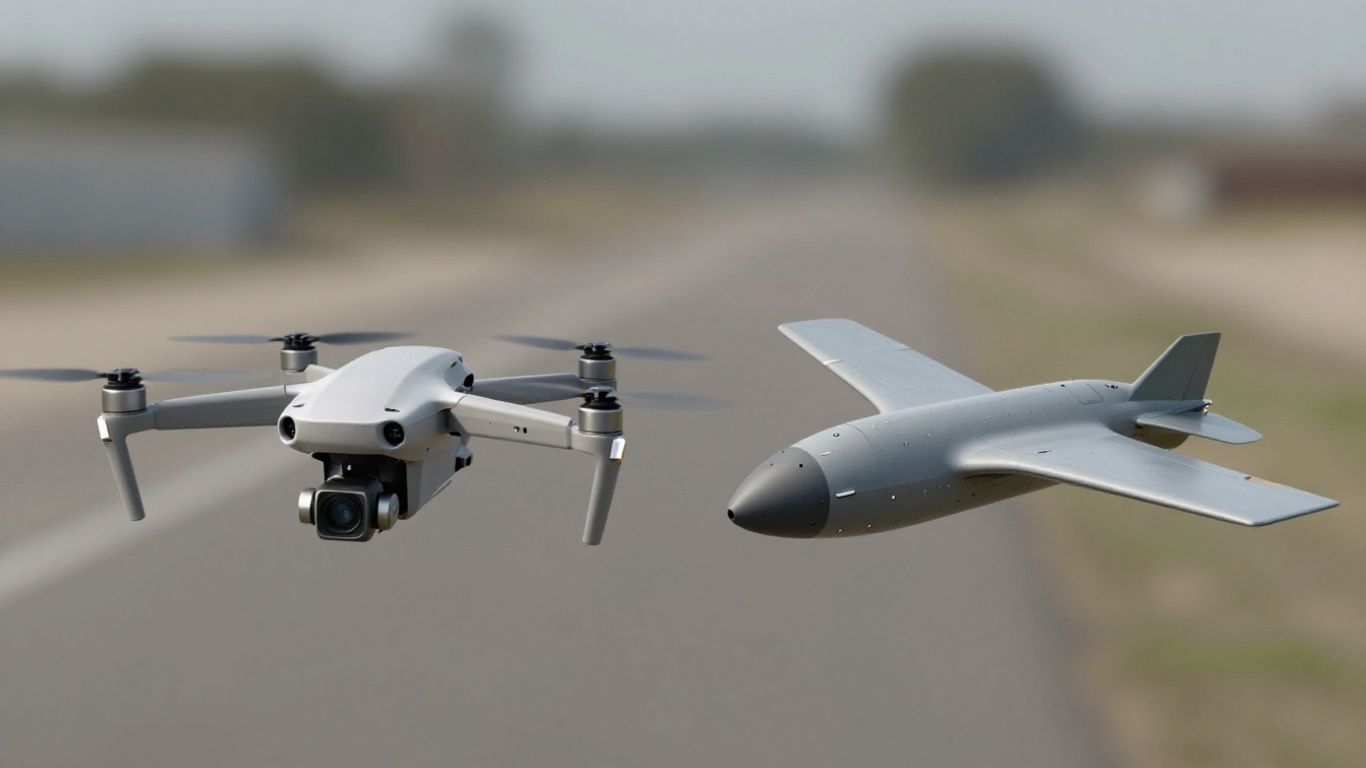
When we look at the nuts and bolts of these systems, some pretty clear differences pop up. It’s not just about what they do, but how they’re built to do it.
Comparing Autonomy and Control
This is a big one. Drones, especially the ones you see for, say, aerial photography or mapping, often have sophisticated flight control systems. They can be piloted remotely, follow pre-programmed routes, or even use advanced tech like SLAM (Simultaneous Localization and Mapping) to figure out where they are without GPS. This makes them super adaptable for tasks where you need constant oversight or the ability to change plans on the fly. Think of a drone doing search and rescue – it needs to be able to react to new information.
Loitering munitions, on the other hand, are designed to be more self-sufficient during their final attack phase. While they might be guided to a general area, once they’ve identified a target, they often take over. This autonomy is key for their mission profile: find, fix, and finish the target without constant human input, especially in contested airspace where communication might be tricky.
Payload Variety and Integration
Here’s where the purpose really shines through. Drones are built to be versatile. You can swap out their payloads pretty easily. One minute it’s a high-res camera for surveillance, the next it’s a small package for delivery, or even a weapon system for a strike. This modularity means a single drone platform can be used for many different jobs.
Loitering munitions are different. Their payload is almost always an integrated explosive warhead. They aren’t designed to carry cameras or sensors for extended periods; their primary job is to deliver that explosive punch. This makes them a single-purpose tool, optimized for that one decisive action.
Cost-Effectiveness: Per Unit Versus Lifecycle
This is where things get interesting. On a per-unit basis, a loitering munition is often cheaper than a sophisticated, reusable drone. You’re not paying for complex recovery systems or the ability to fly hundreds of missions. They’re built to be expendable.
However, when you look at the lifecycle cost, it’s a bit more complex. A reusable drone, even with a higher initial price tag, can perform thousands of hours of service over its lifespan. It can be repaired, upgraded, and used for various missions repeatedly. So, while a loitering munition might be cheaper to buy for a single mission, a drone might be more economical over the long haul for tasks that don’t require immediate, self-destructing strikes.
| Feature | Drone (UAV) | Loitering Munition |
|---|---|---|
| Reusability | Reusable | Disposable (one-time use) |
| Primary Purpose | Surveillance, communication, multi-role | Precision attack and target destruction |
| Payload | Customizable (camera, sensors, weapons) | Fixed explosive warhead |
| Autonomy | Remotely controlled or semi-autonomous | Autonomous during attack phase |
| Endurance | Hours to days | Minutes to hours (depending on mission) |
| Cost per unit | Higher | Lower |
| Lifecycle Cost | Potentially lower for multi-mission use | Higher if used for many individual tasks |
Loitering Munition vs Drone: Strategic Impact
Enabling Rapid, Precise Engagements
Loitering munitions, sometimes called "suicide drones," really change the game when it comes to quick, accurate strikes. Unlike a traditional drone that might need a pilot to guide a weapon, these systems can fly around an area, wait for the right moment, and then dive in to hit a specific target. This is a big deal for situations where you need to take out a threat fast, like a mobile enemy position or a piece of equipment that’s about to do damage. They offer a way to hit targets with a guided missile vs drone approach, but with the added benefit of being able to wait for the perfect shot. This capability means commanders can react much faster to changing battlefield conditions.
Enhancing Situational Awareness
While loitering munitions are built to strike, they also contribute to knowing what’s going on. Because they can stay airborne for a while, they act like eyes in the sky, giving troops on the ground a better picture of the area. This is a key part of the overall drone warfare differences; while some drones are purely for watching, loitering munitions can do both – watch and then act. This dual role means you don’t necessarily need a separate system just for reconnaissance if you’re deploying these. The ability to gather intel and then immediately act on it is a significant advantage. It’s a step up from just getting information and then having to wait for another asset to do something about it. This is part of the broader military drone technology explained.
Adapting to Evolving Battlefield Dynamics
One of the biggest strategic impacts is how these systems help forces adapt. The battlefield is always changing, and having tools that can keep up is vital. Loitering munitions, with their ability to loiter and then strike autonomously, are perfect for this. They can be sent towards an area where threats are suspected, and if the situation changes, they can be redirected or wait for a new target. This flexibility is a huge plus. It means you’re not locked into a single plan. The comparison between a reusable unmanned aerial vehicle comparison and a single-use munition highlights this adaptability. While drones are great for long-term observation, loitering munitions provide that immediate, on-demand strike capability that can be crucial in fast-moving conflicts. The development of these systems is a clear sign of how military tech is moving towards more responsive and precise capabilities, making them a critical component for modern defense strategies. For more on how these systems are integrated, you might look into setting up email accounts.
Conclusion
So, while both drones and loitering munitions fly, they’re built for very different jobs. Drones are like the versatile Swiss Army knives of the sky, great for watching, gathering info, or even carrying out missions over and over. Loitering munitions, on the other hand, are more like precision guided missiles that can wait around for the perfect moment to strike. Knowing the difference helps us see how each plays a unique role in how wars are fought today and will be fought tomorrow. They’re both important tools, but for totally different reasons.
Frequently Asked Questions
Are loitering munitions just a type of drone?
You could say that. Loitering munitions are a kind of drone, but they’re built for one main job: to find a target and then blow up on it. Regular drones are usually made to be used many times for different things, like taking pictures or carrying supplies.
Can a drone carry a loitering munition?
Yes, that’s possible. Think of it like a bigger drone carrying a smaller, explosive drone. This lets the larger drone drop off the loitering munition to go finish a specific mission.
Which one is cheaper to use, a drone or a loitering munition?
It depends on how you look at it. Drones cost more upfront because you can use them over and over. Loitering munitions are cheaper to make for a single use, but you have to buy a new one every time you use it. So, for lots of missions, drones are cheaper in the long run.
What’s the main difference in how they fly?
Drones can often fly for a really long time, sometimes hours or even days. Loitering munitions are designed to fly for a shorter time, just long enough to find their target and then attack. They don’t usually come back.
Can loitering munitions decide on their own who to attack?
Some advanced ones can. They can fly around and, based on what they see, pick a target and attack without a person telling them to at the last second. This is something people talk about a lot because it involves machines making life-or-death choices.
When would you use a loitering munition instead of a drone?
You’d use a loitering munition when you need a quick, precise strike on a specific target, especially if it’s hard to hit or dangerous to get close to. Drones are better for watching an area for a long time or for missions where you need to bring something back.