FPV Drones: The New Battlefield Buzz

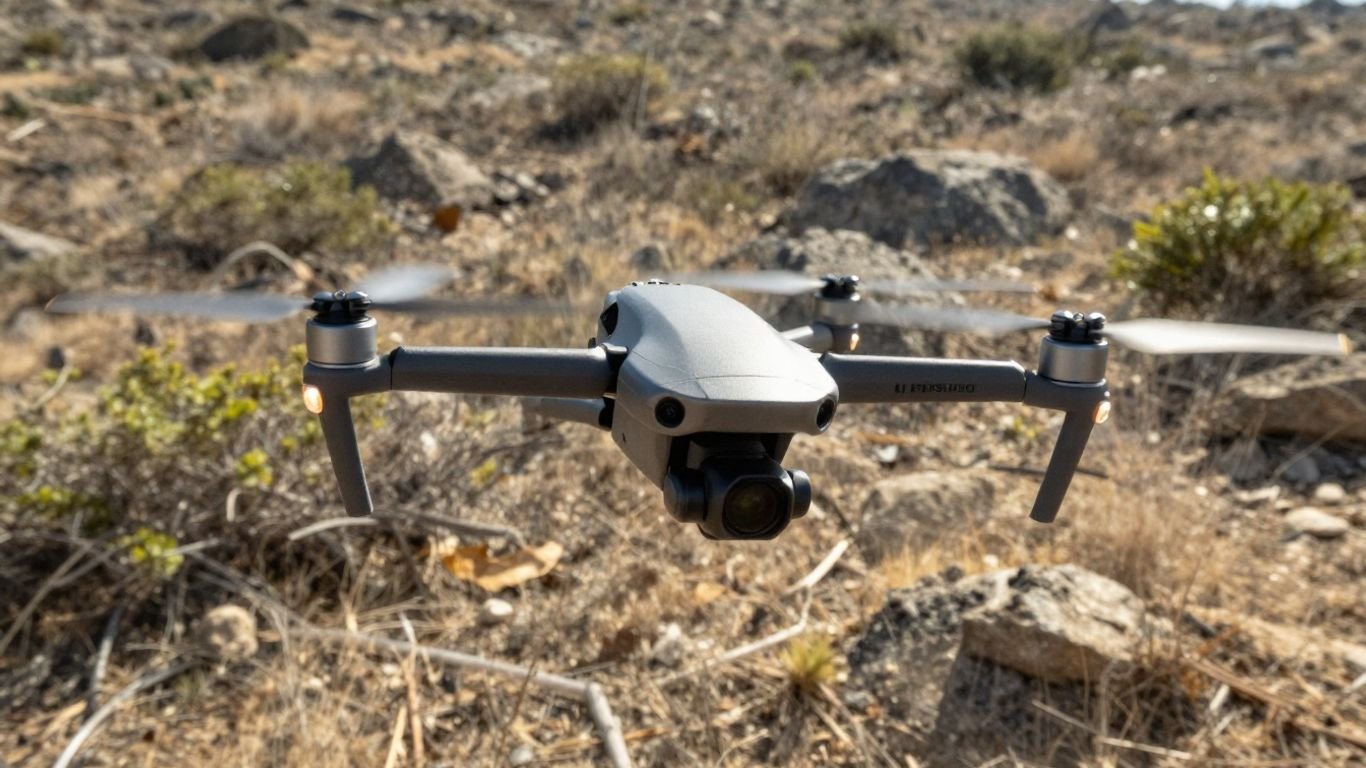
FPV drones are making a huge splash in how wars are fought today. Here are the main things to remember about them.
Key Takeaways
- FPV drones are small, cheap, and very fast, making them great for surprise attacks.
- They let smaller groups fight bigger armies more effectively, changing the balance of power.
- These drones can fly into buildings and tight spots, making them useful for clearing areas.
- Fighting against FPV drones is hard, needing new ways like electronic jamming and quick reactions.
- The spread of FPV drones brings up big questions about ethics, control, and who gets to wage war.
The Evolving Battlefield: FPV Drones In Modern Warfare
FPV Drones: Tactical Knights Of The Modern Chessboard
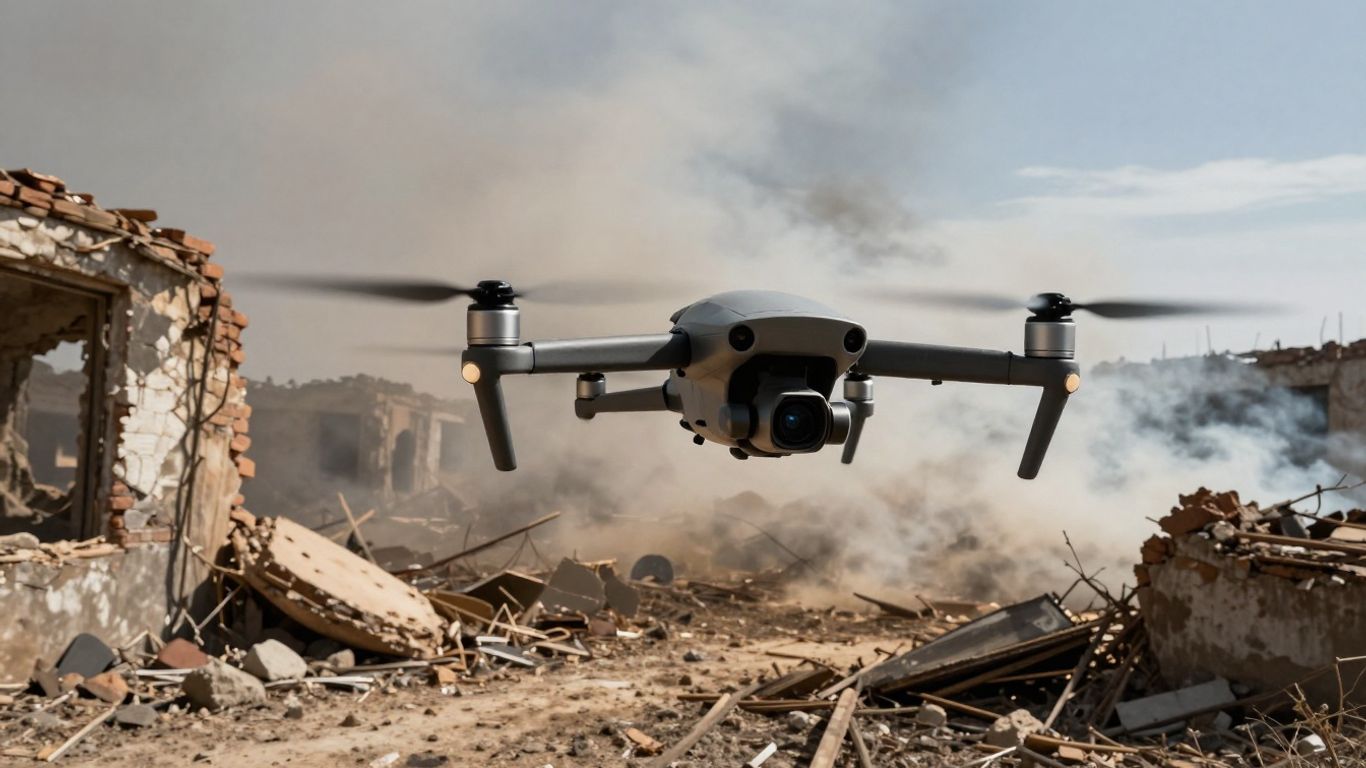
Warfare has always been a strategic game, and FPV drones are the new players making some seriously interesting moves. Think of them as the knights on a modern chessboard – agile, unpredictable, and capable of striking from unexpected angles. Their ability to zip around and get into tight spots means they’re changing how battles are fought. It’s not just about big, expensive machines anymore; these smaller, remote piloted aircraft are making a real impact. They’ve become a go-to for reconnaissance, letting units see what’s happening without putting people in harm’s way. This technology is really reshaping military strategies and tactics.
Democratizing Asymmetric Warfare
One of the biggest shifts FPV drones bring is how they level the playing field. Smaller groups or less-funded militaries can now challenge much larger, more established forces in ways they couldn’t before. It’s like giving a slingshot to someone facing a giant. These drones are relatively cheap to build and operate, making advanced capabilities accessible. This means conflicts can become more complex, with threats emerging from many directions. It’s a real game-changer for asymmetric warfare, where ingenuity often trumps sheer firepower. The battlefield is becoming a lot more unpredictable because of this.
The Intersection Of Ingenuity And Necessity
FPV drones really show what happens when people need to get creative. When you’re in a tough spot, you find ways to adapt, and these drones are a perfect example. They started as a hobby, but necessity turned them into vital tools for modern conflict. Their speed and ability to get into places other vehicles can’t make them incredibly useful for both scouting and direct action. The combination of readily available technology and urgent battlefield needs has created a powerful new tool. It’s fascinating to see how quickly these unmanned aerial vehicles battlefield applications have developed, proving that innovation often comes from the most challenging circumstances. The future of warfare is definitely being influenced by these developments in tactical drone technology warfare.
FPV Drones: A New Era Of Precision And Agility
Cheaper, Immersive, And Precise Strikes
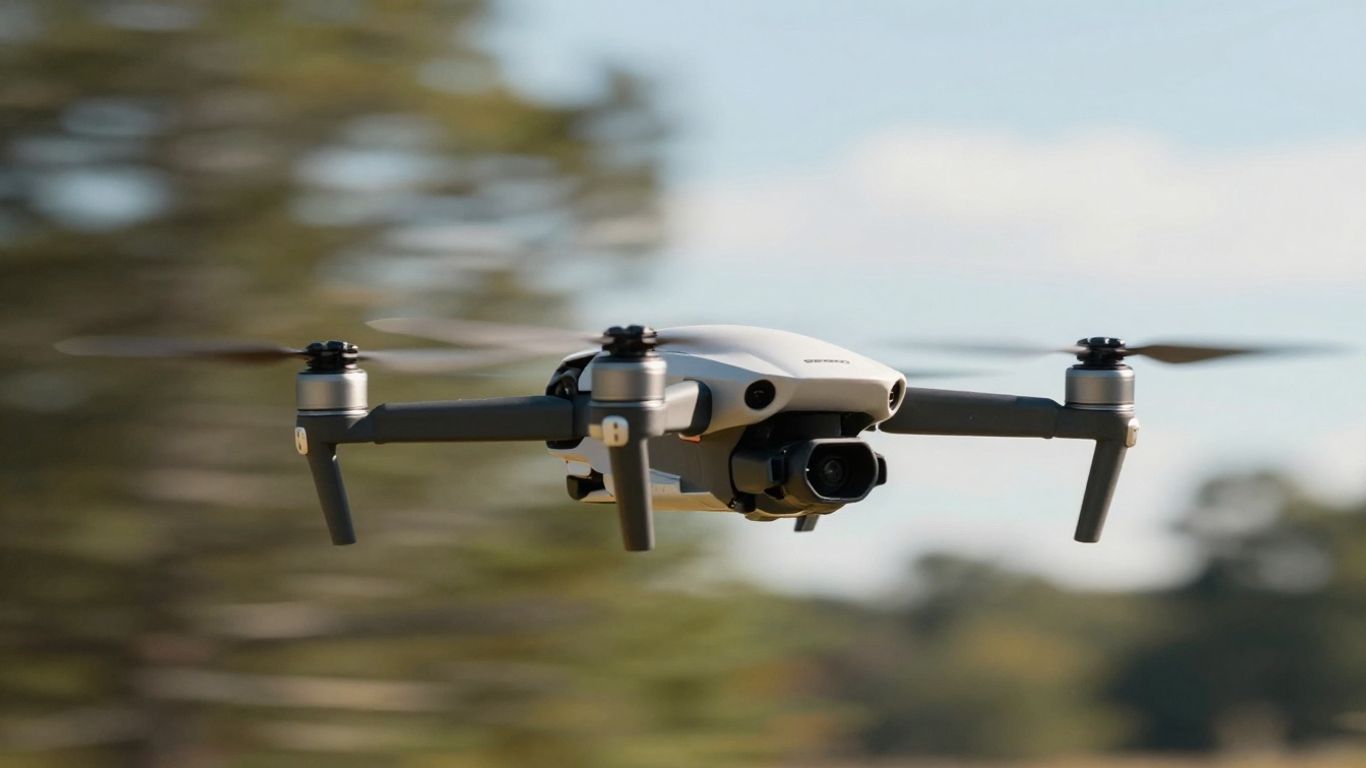
FPV drones are changing the game because they’re way cheaper than a lot of other military gear. Think about it, you can get a pretty decent FPV drone setup for a few hundred bucks, maybe a thousand if you go fancy. That’s a drop in the bucket compared to, say, a missile system. This low cost means even smaller units or groups can have a real precision strike capability right in their hands. It’s like giving everyone a sniper rifle, but for the air. The pilot feels like they’re actually in the drone, thanks to the goggles, which makes aiming super precise. You can really get a feel for the target and make sure you hit what you’re aiming for, which is a big deal when you don’t want to waste ammo or cause unwanted damage. This accessibility is a huge shift in how warfare can be conducted, making advanced tactics available to more people.
Small Weapons, Big Targets
These little drones might seem insignificant, but they can take on some pretty big targets. We’re talking about things like armored vehicles, supply trucks, or even command posts. The trick is that they can get in close and hit weak spots that bigger, more expensive weapons might miss or struggle to reach. Because they fly low and fast, they’re also harder to spot and shoot down. It’s a classic David and Goliath situation, where a small, agile drone can take down a much larger, more expensive piece of military hardware. This changes the math for military planners, forcing them to think about how to protect even their biggest assets from these tiny threats. It’s a real game-changer for asymmetric warfare.
The Advantage Of Speed And Secrecy
One of the biggest perks of FPV drones is how fast they can be deployed and how quiet they are. You don’t need a massive launchpad or a long preparation time. You can literally pull one out of a backpack, get it in the air in minutes, and be on target before the enemy even knows what’s happening. This speed is critical. It means you can react to changing situations on the battlefield almost instantly. Plus, they’re pretty stealthy. They don’t make a lot of noise compared to larger aircraft, and their small size makes them hard to detect on radar. This combination of speed and secrecy means you can hit targets with a real element of surprise, which is a massive advantage. It’s about getting the job done quickly and without giving away your position, a tactic that has been proven effective in recent conflicts.
The ability to deploy precision strikes rapidly and with minimal notice fundamentally alters the tempo of operations. This agility allows forces to exploit fleeting opportunities and disrupt enemy plans before they can fully materialize, creating a significant tactical edge.
Asymmetry In Action: Guerilla And Grey Zone Tactics
Empowering Smaller Forces Against Larger Militaries
FPV drones have really changed the game for smaller groups going up against bigger, more established armies. It’s like they’ve given the underdog a serious edge. Think about it: you don’t need a massive budget or a huge team to make a real impact anymore. These drones are relatively cheap and can be put together with some ingenuity. They let smaller units take on targets that would normally require much heavier firepower, like armored vehicles or supply convoys. It’s a classic David and Goliath scenario, but with a drone as David’s slingshot. This shift means that traditional military might isn’t the only factor anymore; clever use of accessible tech can level the playing field.
Turning Chaos Into Tactical Opportunity
War is messy, and FPV drones are brilliant at exploiting that chaos. They can pop up from unexpected angles, making it hard for defenders to keep track of everything. This creates a situation where the defender is always reacting, always a step behind. It’s a bit like playing chess, but the board is constantly shifting and your opponent can suddenly appear from anywhere. This ability to disrupt and disorient is a huge advantage, especially in complex environments. It forces the enemy to spread their attention thin, creating openings that can be exploited. The key is using these drones to create confusion and then hitting hard when the enemy is least prepared.
The Slingshot To Today’s Goliaths
We’re seeing FPV drones used in ways that really highlight how they empower smaller forces. In conflicts like the one in Ukraine, these drones have been used to disable expensive military hardware with surprisingly low-cost solutions. It’s not about having the most advanced tech, but about using what you have smartly. This approach is a direct challenge to conventional military thinking. It shows that innovation and resourcefulness can overcome sheer numbers or budget. The ability to conduct precision strikes without risking large numbers of personnel is a game-changer. It’s a new kind of warfare where agility and smart tactics can really make a difference, changing the dynamics of power.
Here’s a look at how FPV drones shift the balance:
- Cost-Effectiveness: Significantly cheaper than traditional munitions or larger drones.
- Accessibility: Easier to acquire, assemble, and operate.
- Precision: Capable of hitting specific targets with accuracy.
- Psychological Impact: Creates constant tension and uncertainty for the enemy.
In grey zone conflicts, FPV drones are used to assert presence and create friction without outright escalation. A drone buzzing near a naval vessel, for instance, sends a clear message of surveillance and potential threat, forcing a reaction without a direct attack. This ambiguity is a hallmark of modern asymmetric tactics.
Navigating The Urban Maze: Indoor Operations With FPV Drones
21st Century Trench Clearing
Forget about dusty trenches; the new battlegrounds are often inside buildings. FPV drones are changing how we think about clearing structures, room by room. They can zip through hallways, peek around corners, and get into places soldiers would find really tough to reach. This makes them perfect for urban combat where every doorway and stairwell can be a death trap. Think of it like a super-agile scout that can go where humans can’t, or shouldn’t, without risking lives immediately. They don’t need stairs, and the sixteenth floor is just as easy to get to as the ground floor. It’s a whole new way to approach clearing buildings, making it faster and, hopefully, safer.
Overcoming Signal Loss In Dense Environments
One of the biggest headaches with FPV drones, especially indoors, is keeping a solid connection. All those concrete walls and metal structures can really mess with radio signals. It’s a problem that hasn’t been fully cracked yet. Some units are using fiber-optic cables attached to the drones, which gives a super reliable link but limits how far they can go. Others are experimenting with mesh networks, where each drone acts as a relay point. This way, the operator only needs to connect to the nearest drone, not all the way back to base. It’s a clever workaround, but it adds complexity. For now, signal loss is a real challenge that operators have to deal with, often by staying closer to their targets or using specialized gear. It’s a constant battle against physics in these tight spots.
Precision Targeting In Enclosed Spaces
FPV drones aren’t just for scouting; they can also deliver a punch, even inside a building. Small drones can carry surprisingly potent payloads. There are videos showing FPVs locating enemy fighters inside houses and then taking them out. But it’s not just about destruction. There are also recorded instances where FPV drone operators have helped enemy soldiers surrender. In one case, a drone operator found an injured enemy fighter who wanted to give up, and the drone actually guided him out to friendly forces. This shows a level of discrimination that’s hard to achieve with traditional artillery. It’s about hitting the right target with minimal collateral damage, a tricky balance in close-quarters fighting. The ability to precisely target or even facilitate surrender in confined areas is a game-changer for urban warfare tactics.
Here’s a quick look at some indoor FPV drone tactics:
- Breaching: Using one drone to blast a hole in a wall or window, allowing a second drone to fly through.
- Reconnaissance: Mapping out entire buildings, identifying enemy positions, and spotting hidden rooms.
- Direct Engagement: Delivering small munitions directly to enemy fighters within structures.
- Surrender Facilitation: Guiding surrendering enemy combatants out of dangerous areas.
The challenge in urban combat has always been clearing structures without massive casualties. FPV drones offer a way to get eyes and even a weapon into every nook and cranny of a building before soldiers have to enter. This capability, while still evolving, fundamentally changes the risk calculus for clearing enemy-held territory. It’s about using technology to gain an advantage in the most complex and dangerous environments. The development of SLAM technology is also helping drones build detailed maps of these indoor spaces, further improving their effectiveness.
Countering The Swarm: Defending Against FPV Drones
Electronic Warfare And Its Limitations
So, FPV drones are everywhere, and figuring out how to stop them is a big deal. One of the first things folks try is electronic warfare, or EW. This means messing with the drone’s signals – jamming their controls, cutting off their video feed, or even trying to take over the drone itself. It sounds pretty high-tech, and sometimes it works. We saw this a bit in conflicts like the Karabakh War, where jamming definitely made things harder for drone operators. But here’s the catch: these drones are getting smarter. Many are becoming more autonomous, meaning they don’t need constant signals from a pilot. This makes traditional jamming less effective. It’s like trying to stop a car by cutting its radio cord – it might annoy the driver, but the car keeps going.
The Need For Dynamic Countermeasures
Because FPV drones are so adaptable, we can’t just rely on one or two tricks. We need a whole toolbox of ways to fight back. Think about it: these drones are cheap, they’re fast, and they can get into places you wouldn’t expect. So, what can we do?
- Physical Interception: This could be anything from using nets to snag them out of the air to more advanced systems like C-RAM, which are basically anti-missile systems that can be retasked for drones. Lasers are also being talked about, zapping them mid-flight.
- Detection and Tracking: You can’t stop what you can’t see. Better radar and other aerial surveillance systems combat are key. The faster you spot a drone, the more time you have to react.
- Human Ingenuity: Sometimes, the old ways are the best, or at least the most creative. People have even tried using trained birds of prey or simple decoys to confuse drone operators. It shows you have to think outside the box.
Adapting To Evolving Drone Capabilities
Honestly, it feels like a constant game of cat and mouse. The drone tech keeps improving, and the defenses have to play catch-up. It’s not just about building better anti-drone gear; it’s about being smart and quick. We need systems that can learn and adapt on the fly, maybe using AI to spot patterns or predict where a drone might go. The Gnat Storm 1 is an example of a system designed to simulate these evolving threats, pushing the boundaries of defensive training. It’s a tough problem, and it means we all need to keep thinking about new ways to stay ahead of the curve. The battlefield is changing fast, and standing still means falling behind.
Ethical Dilemmas And The Future Of Warfare
FPV drones are changing how wars are fought, and honestly, it’s a bit unsettling. We’re seeing these incredibly cheap, agile machines used by all sorts of groups, not just big armies. This accessibility means that the power to cause disruption is spreading, and that brings up some serious questions about right and wrong.
The Detachment Of Remote Operations
One of the biggest issues is how far away the operator is from the action. When you’re sitting behind a screen, miles from where the drone is flying, it’s easy to lose sight of the real-world consequences. This distance can make it harder to feel the weight of your decisions. It’s like playing a video game, but with actual lives on the line. This detachment is something military planners and ethicists are really wrestling with. How do we make sure people operating these drones still feel that human connection and responsibility?
Accountability In Autonomous Warfare
Then there’s the whole issue of what happens when drones start making their own decisions. As these machines get smarter, they’ll be able to do more without direct human control. This is where accountability gets really tricky. If an autonomous drone makes a mistake, who’s to blame? The programmer? The commander who deployed it? The drone itself? It’s a legal and ethical minefield. We’re talking about a future where warfare could become increasingly automated, and we need clear rules before that happens.
The Democratization Of Destruction
It’s pretty wild how FPV drones have leveled the playing field. Smaller groups or even individuals can now do damage that used to require a whole military. This ‘democratization of destruction,’ as some call it, means that the tools of war are getting into more hands. While this can be seen as empowering for those who feel they have no other options, it also means more potential for conflict and less control over who is fighting whom and why. It’s a tough balance to strike between giving people options and preventing widespread chaos. We’re seeing this play out in real-time, and it’s forcing us to rethink how we approach security and conflict resolution globally. The challenge is to manage this new reality without stifling innovation that could be used for good, like in disaster response or infrastructure monitoring.
The Future Of FPV Drones: Redefining Power And Influence
Advancements In Autonomy And Swarming
The story of FPV drones is far from over; in many ways, it is only beginning. As these machines continue to evolve, their role in shaping the future of warfare, security, and geopolitics will be transformative. We’re seeing a big push towards more autonomous capabilities. Think swarms of drones that can coordinate complex missions with minimal human input. This isn’t just about one drone doing a job; it’s about multiple units working together, making decisions on the fly. This level of coordination could overwhelm traditional defenses and execute missions with a speed and scale we haven’t seen before. It’s a bit like watching a flock of birds, but with a military objective.
- AI-driven decision-making: Drones will increasingly rely on artificial intelligence to identify targets and adapt to changing battlefield conditions.
- Coordinated swarming: Multiple drones will operate as a single unit, sharing data and executing synchronized maneuvers.
- Reduced human oversight: Missions will require less direct human control, allowing for faster reaction times.
This shift brings up some serious questions, though. How do we assign responsibility when an autonomous system makes a mistake? It’s a tricky ethical and legal puzzle we’re only just starting to grapple with. The potential for these advanced systems to fall into the wrong hands is also a major concern.
Geopolitical Shifts And Power Asymmetries
FPV drones are continuing to level the playing field. Smaller nations and even non-state actors can now challenge larger, more established powers with relatively low-cost, high-impact technology. This democratization of military capability means that influence isn’t solely about having the biggest army or the most advanced traditional hardware anymore. It’s about ingenuity, adaptability, and the smart application of accessible tools. This can reshape traditional power structures, creating a more dynamic and unpredictable global landscape. However, it also lowers the barrier to entry for conflict, potentially leading to more frequent and prolonged engagements. It’s a double-edged sword, offering new avenues for defense but also increasing the risk of widespread instability. The ability to conduct targeted sabotage operations, for instance, without the need for a full-scale military intervention, is a game-changer for regional security.
The Human Element In Drone Warfare
Despite all the talk of AI and autonomy, the human element remains central. The effectiveness of any drone, FPV or otherwise, still hinges on the strategy, training, and judgment of the people operating them. While technology advances, the ultimate decisions – when to act, what targets to prioritize, and how to manage the consequences – rest with humans. This is where the real challenge lies: balancing technological potential with human responsibility. We need to think carefully about how these tools are developed and deployed, ensuring they serve purposes that align with our values. The future of drone warfare isn’t just about building smarter machines; it’s about cultivating wiser operators and establishing clear ethical guidelines. It forces us to consider the psychological impact of remote operations and the accountability frameworks needed for increasingly automated systems. Ultimately, the tool is only as wise as the hand that wields it, and that hand is still human.
The accessibility of FPV drones means that the threshold for engaging in conflict is lowering. This democratization of destruction, while empowering for some, presents a significant challenge to global stability and requires careful consideration of regulatory frameworks and ethical deployment strategies.
Conclusion
FPV drones have undeniably changed the face of modern warfare. They’ve shrunk the battlefield, made war more accessible, and forced everyone to rethink strategy. It’s not just about the technology itself, but how people use it. As these drones get smarter and more common, we’ll see even bigger shifts. The real question now is how we manage this new power. Will it lead to more precise, less destructive conflicts, or will it just make fighting easier and more widespread? Only time will tell, but one thing is for sure: the buzz of FPV drones is here to stay, shaping how wars are fought and who gets to fight them.
Frequently Asked Questions
What exactly are FPV drones?
FPV stands for First Person View. These are small drones that pilots control using special goggles. It feels like you’re actually flying the drone yourself, giving a really clear view of what’s ahead.
How are FPV drones used in war?
In wars, they’re used for scouting, but mostly for attacking. They can carry small bombs or explosives and hit targets like vehicles or buildings with great accuracy. They’re like tiny, fast kamikaze planes.
Why are FPV drones a big deal for smaller armies?
Because FPV drones are not very expensive, smaller armies or groups can use them to fight against much bigger, better-equipped forces. It helps them level the playing field and surprise their enemies.
Are FPV drones hard to shoot down?
Yes, they can be tricky. They fly very fast and can change direction quickly. Plus, they can fly in places like inside buildings where it’s hard for soldiers to aim. People are trying new ways to stop them, like jamming their signals.
Can FPV drones be used inside buildings?
Absolutely. Their small size and agility make them perfect for flying through doorways, hallways, and rooms. This is useful for finding hidden enemies or clearing out areas without sending soldiers into dangerous spots first.
Are there rules about using these drones in war?
That’s a complicated question. Since these drones are becoming easier to get, it raises concerns about who is using them and how. There are ongoing discussions about making sure they are used responsibly and ethically, but it’s a new area that’s still being figured out.