
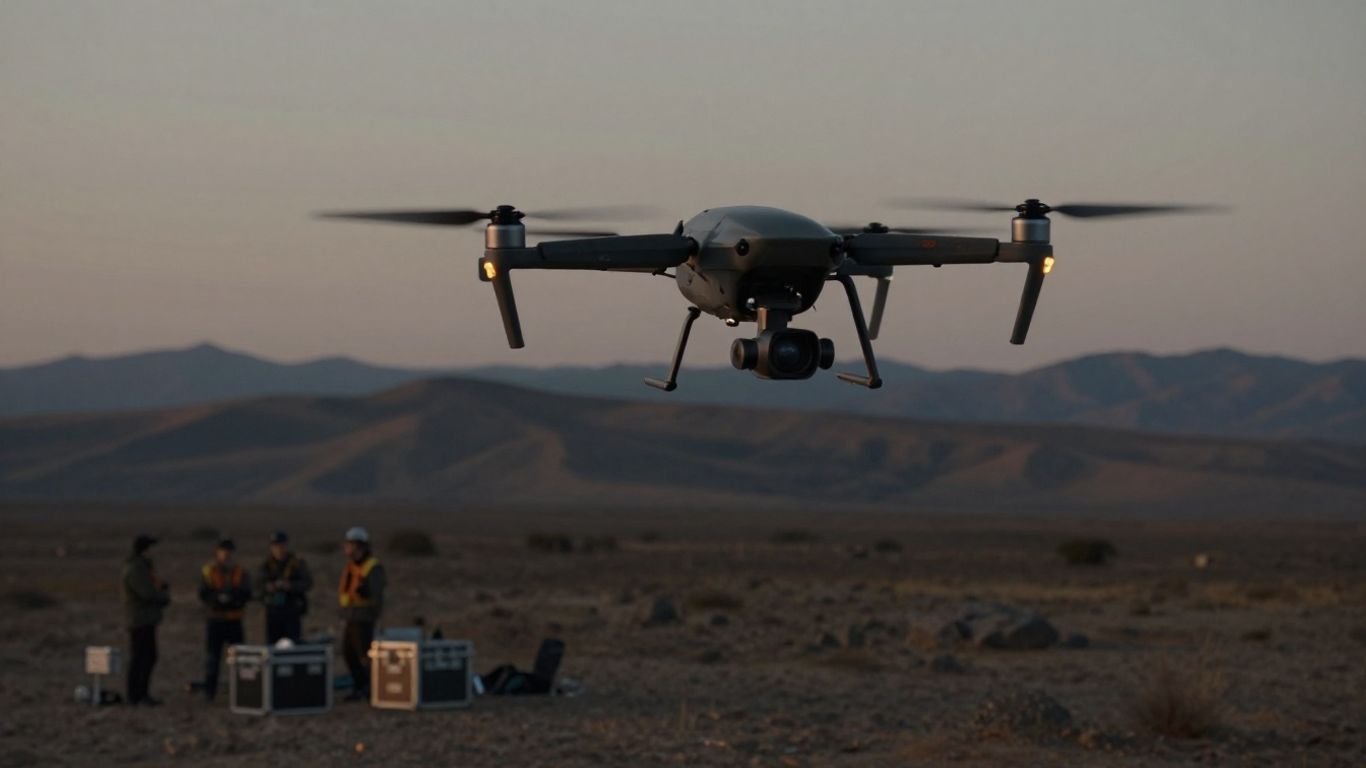
Vesper Vantage Robotics: A practical guide to the ISR drone, capabilities, operation, and use cases

Key Takeaways
Vesper is best understood as a portable ISR platform whose value depends on the mission, payload, operating environment, and crew using it.
- Vesper is presented as an American-made ISR drone for field operators.
- Published material highlights extended flight time, low-light performance, and a 3-axis stabilized tri-sensor payload.
- The Vision GCS is the operator-facing ground control environment described for the Vesper UAS.
- Mission planning should account for airspace, privacy, communications, weather, and data handling.
- Procurement decisions should weigh the complete operating system, not only the aircraft.
What Vesper Vantage Robotics is and where it fits
Vesper Vantage Robotics sits in the small, field-oriented end of the unmanned aircraft market. The available product descriptions frame it as an American-made ISR drone intended to give operators an aerial view during mission-critical work. That positioning makes portability, deployment speed, and practical control central to the evaluation. It is less useful to treat any aircraft as a universal answer than to ask whether its operating concept matches the job.
The relationship between Vesper and Vantage Robotics
Vantage Robotics is identified in the available material as the developer of the Vesper ISR drone. The product is also described as having been developed for the United States, originally for the US Army, before becoming available to commercial customers in December 2020. Those details describe the platform’s background, but they do not by themselves establish suitability for a particular agency or operating unit. A buyer still needs to verify the current configuration, support arrangements, and approved use conditions.
The broader product story can be read alongside this Vesper drone overview, while the more specific product description identifies a three-axis stabilized gimbal with two night-vision 4K color cameras and an industrial-grade thermal camera. Product configurations and documentation should be checked directly before a purchase decision.
The role of Vesper as an ISR drone
An ISR drone supports intelligence, surveillance, and reconnaissance by putting an aerial sensor over an area of interest. In the published descriptions, Vesper is presented as a system for field operators, with extended flight time, low-light performance, and a stabilized tri-sensor payload. That combination points toward observation and information gathering rather than a claim of autonomous decision-making or a particular tactical outcome.
The useful question is what the collected imagery and associated flight information enable the team to do next. A clear handoff to a command post, a documented chain of custody, and disciplined interpretation can matter as much as the aircraft’s view. For a neutral background on airborne reconnaissance systems, readers may also consult this ISR drone capabilities resource.
Mission profiles the platform is designed to support
The source material describes Vesper in broad terms for aerial reconnaissance and mission-critical field operations. That leaves room for different operating concepts, but it does not justify promising a specific result in every setting. Teams should define the area, observation period, sensor need, communications plan, and decision they expect the flight to support.
A sound mission brief normally identifies who controls the aircraft, who watches the feed, who records information, and who authorizes changes. It also sets boundaries for collection so that routine observation does not become unnecessary surveillance. This is where a simple, repeatable process is more valuable than an impressive feature list.
How Vesper compares with larger unmanned aircraft systems
A small field-deployable aircraft is generally assessed differently from a larger unmanned aircraft system. The comparison should focus on deployment burden, crew size, payload needs, communications infrastructure, and the level of persistence required. Vesper’s public positioning as light, rugged, and backpack-ready supports a portability discussion, but the available sources do not provide a complete specification comparison with larger systems.
That distinction matters in procurement. A compact aircraft may suit a team that needs to move with its equipment, while a larger system may be selected when the program requires a different scale of payload, endurance, or support. The right comparison is therefore mission-to-mission, not simply small-versus-large.
Vesper’s airframe, sensors, and core capabilities
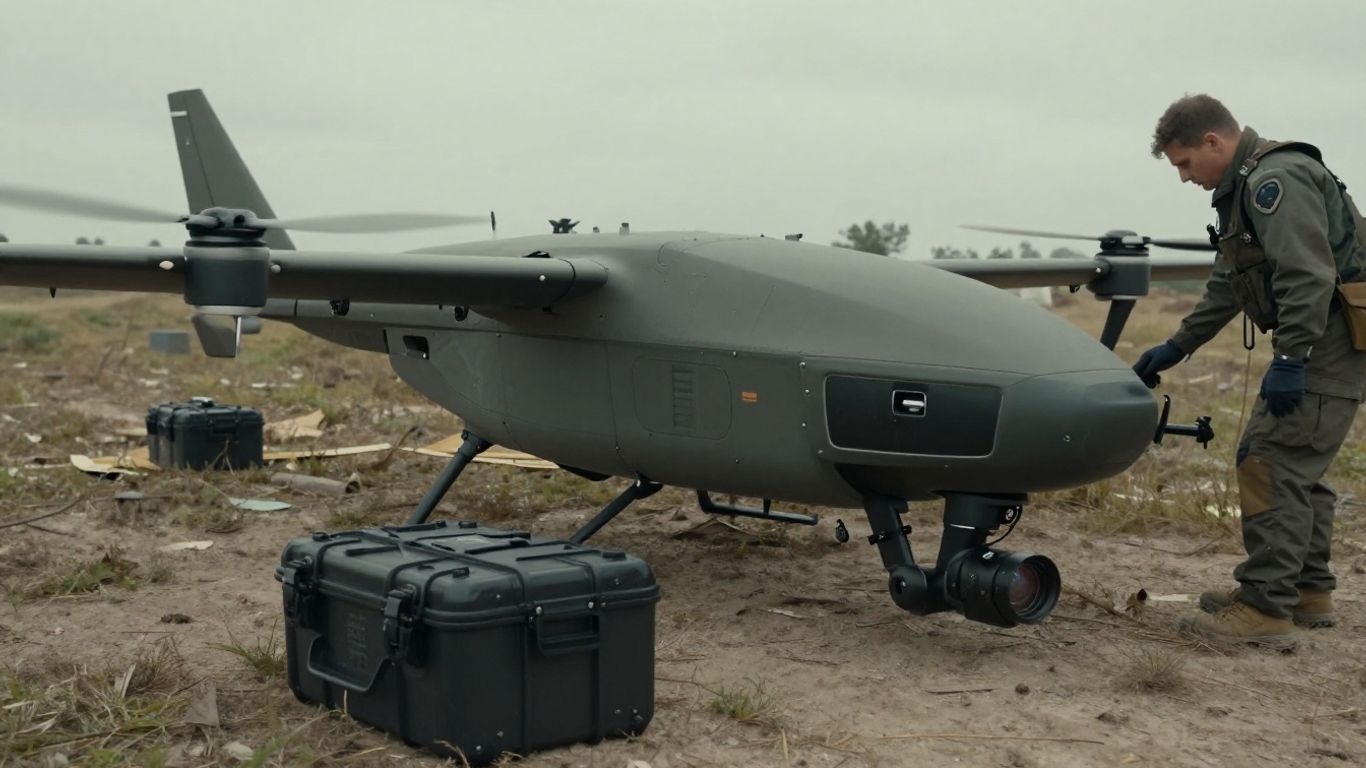
The aircraft’s physical design and sensor package should be considered together. Published descriptions characterize Vesper as light, rugged, portable, and backpack-ready, and they also refer to extended flight time and low-light performance. They further describe a 3-axis stabilized tri-sensor payload, while another product description specifies two night-vision 4K color cameras and an industrial-grade thermal camera. These are useful starting points, but a program should confirm the exact configuration being offered.
Flight design and operational priorities
For a field crew, an aircraft’s design is experienced through packing, transport, setup, launch, recovery, and repeat use. The available material supports describing Vesper as light, rugged, portable, and backpack-ready. It also says the system has been tested with thousands of hours of flight, which provides context about development and use but is not a guarantee of performance in every environment.
A practical review should ask how many people are needed to move and operate the system, what equipment must travel with it, and how quickly the team can become ready. Operational simplicity matters when the aircraft is one part of a larger response. The answers should be recorded as program requirements rather than assumed from the product’s size.
Imaging and surveillance payload considerations
The payload is the part of the system that turns flight into usable observation. Source descriptions refer to a stabilized tri-sensor payload and, more specifically, a three-axis stabilized gimbal carrying two night-vision 4K color cameras and an industrial-grade thermal camera. The descriptions also highlight low-light performance. Together, these details support evaluation of visible and thermal observation across changing conditions, without implying a particular detection range or identification result.
Before deployment, operators should define the imagery needed for the decision at hand. They should also clarify how footage is stored, who may view it, and how long it is retained. A payload can be technically capable yet poorly matched if the team lacks a way to interpret, protect, or share the resulting material.
Communications, control, and data links
Control and communications deserve their own acceptance criteria. The available Vesper material identifies the Vision GCS as the operating environment, but it does not provide a complete public specification for link range, encryption, bandwidth, or operation in every contested communications condition. Those points should therefore be confirmed in current technical documentation rather than filled in with assumptions.
A useful test plan can include loss-of-link behavior, control handoff, video continuity, telemetry recovery, and the process for exporting recorded data. It should also examine how the team works when the live view is interrupted. Reliable procedures reduce dependence on a single screen or a single operator’s memory.
Endurance, range, and environmental operating factors
Extended flight time is a recurring part of the public product description, but the material provided here does not state a single endurance figure or operating range. Weather, payload configuration, battery condition, launch elevation, and flight profile can all affect practical results. Buyers should request test conditions and determine whether published values reflect their intended mission.
Environmental review should cover wind, rain, temperature, visibility, landing surfaces, and transport conditions. It should also include battery storage and charging arrangements. The goal is not to turn a brochure value into a promise, but to understand the margin available during ordinary operations.
How the Vesper UAS is operated
Operating an ISR aircraft is a workflow, not just a stick-and-screen exercise. The crew must plan the flight, confirm authority, prepare the aircraft, manage the mission, and preserve useful data afterward. The available sources identify the Vesper UAS Vision GCS as the ground control environment and provide an operator manual as a documentation resource. The details below therefore focus on sound operating practice without assigning undocumented functions to the system.
Preflight planning and mission setup
Preflight begins with the mission objective and the area of operation. The crew should identify the launch and recovery locations, airspace restrictions, weather conditions, communications plan, emergency actions, and people responsible for each task. Sensor selection and recording settings should be chosen before launch so that the aircraft is not being configured casually during a time-sensitive flight.
A written brief can cover:
- The purpose and boundaries of the flight.
- The responsible remote pilot and supporting crew.
- Airspace, weather, terrain, and communications checks.
- Sensor, recording, battery, and recovery requirements.
This short list is valuable because it turns preparation into a repeatable gate. It also gives supervisors a clear basis for pausing a mission when conditions change.
Launch, flight control, and recovery workflow
Launch and recovery should be treated as distinct phases with their own checks. The remote pilot confirms the aircraft’s status, establishes the intended flight area, and maintains awareness of people, obstacles, and changing conditions. During flight, the team should keep the mission objective in view while remaining ready to shorten or end the operation.
Recovery deserves the same attention as launch. The crew should confirm the landing area, battery margin, communications status, and post-flight actions before beginning the return. A calm, rehearsed recovery process is especially useful when attention has been absorbed by an event on the ground.
Using the Vantage Robotics ground control system
The available material names the Vantage Robotics ground control environment as the Vesper UAS Vision GCS. The Vesper UAS Vision GCS manual is the appropriate reference for the system’s documented operating instructions and technical details. Operators should use the current manual and approved training materials rather than relying on screenshots, informal notes, or a procedure remembered from another aircraft.
Training should connect each control action to a flight consequence. New operators need time to practice ordinary navigation, mission changes, abnormal indications, and recovery without the pressure of a live incident. That approach makes the interface easier to use while preserving the discipline required for safe operation.
Managing live video, telemetry, and recorded data
Live video can support immediate decisions, while telemetry helps the crew understand the aircraft’s flight state. Recorded data may later support reporting, review, or evidence handling. Those streams should be assigned to named roles where staffing allows, so that the person flying is not also expected to interpret every image and maintain every record.
The program should define file naming, transfer, retention, access, and deletion practices. Privacy controls belong in the same conversation, particularly when routine flights may capture people, homes, vehicles, or unrelated activity. Good data handling begins before the first recording and continues after the aircraft is packed away.
Vesper’s software and operator experience
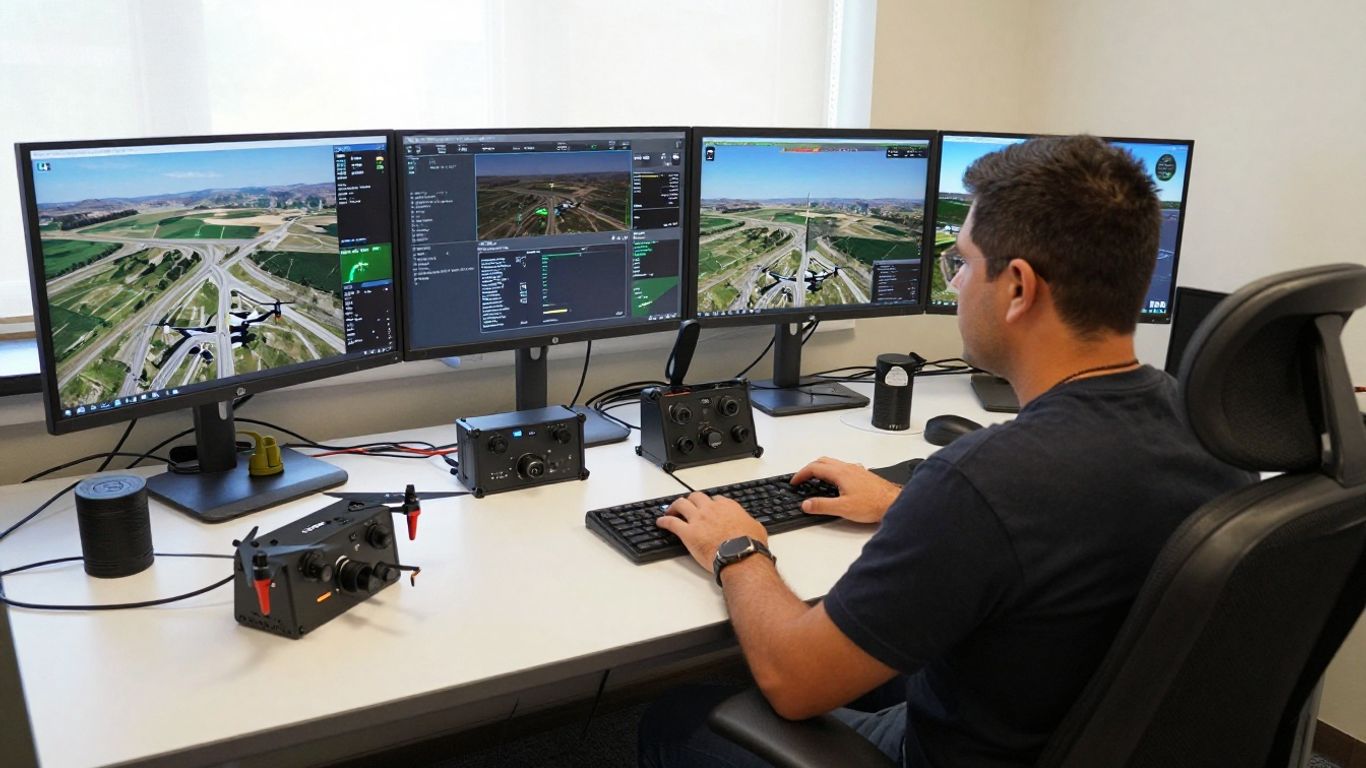
Software affects how much attention a crew can devote to the scene rather than to the equipment. The public material identifies Vision GCS as the ground control system associated with the Vesper UAS, while the operator manual is presented as a source of instructions and technical details. Beyond those documented points, software should be assessed through hands-on trials. The best interface is the one the intended crew can use accurately under realistic conditions.
Key functions in the Vesper UAS Vision GCS
The documented role of the Vision GCS is to support operation and management of the Vesper UAS. A product evaluation should verify the functions that matter to the mission, including aircraft control, mission setup, camera operation, telemetry display, alerts, and data handling. Those categories are evaluation questions here, not claims that each function is present in every configuration.
A useful demonstration follows a complete mission from preparation through recovery. Observers can record how many steps are needed, where decisions are unclear, and whether the system communicates status in language the crew understands. Small moments of confusion often become large workload problems during an incident.
Map views, waypoints, and mission automation
Map displays and waypoint planning can help a crew describe an area and maintain a consistent route, but their value depends on the quality of the map, positioning information, and operator judgment. Mission automation should be tested against the actual operating environment, including changes to the plan and the need for immediate human control.
Teams should ask what happens when the route must be altered, when positioning becomes unreliable, or when the aircraft needs to return early. They should also define who approves an automated mission and who monitors it. Automation is most useful when its boundaries are understood by everyone on the crew.
Monitoring aircraft health and flight status
Aircraft health monitoring gives operators a way to notice changing conditions before they become a recovery problem. The exact displayed values and alerts should be confirmed in the current Vision GCS documentation and during training. A checklist should connect each warning to an action, such as reducing the mission, returning, landing, or seeking technical support.
Status information is only helpful when it is visible at the right time. Programs should test whether the pilot can recognize important indications while also maintaining visual and operational awareness. They should then repeat the exercise with realistic distractions rather than treating a quiet demonstration as sufficient evidence.
Operator training and workload considerations
Training should cover more than normal flight. It should include planning, payload use, communications interruptions, weather changes, data procedures, and recovery decisions. Crews also need a shared vocabulary so that the pilot, sensor operator, and incident lead can communicate without ambiguity.
Workload can be assessed by observing a complete scenario and asking the operator to explain what they are watching, what they expect next, and what would make them stop. That kind of review exposes hidden assumptions. It also helps managers determine whether staffing, refresher training, or a different operating rhythm is needed.
Vesper use cases across security and reconnaissance
An ISR aircraft can support many kinds of observation, but a use case should be framed around a decision rather than a vague desire for more visibility. The available product descriptions speak broadly about field operations, aerial reconnaissance, and mission-critical work. They do not establish a guaranteed result for every border, rescue, emergency, or tactical mission. The following applications are therefore planning lenses for evaluating fit.
Border, perimeter, and infrastructure monitoring
Perimeter and infrastructure teams may use an aerial view to understand conditions across an area that is difficult or time-consuming to inspect from the ground. A responsible concept of operations defines patrol boundaries, collection times, escalation procedures, and privacy safeguards. It should also distinguish routine monitoring from an event-driven flight.
The environment determines what matters most. Vegetation, structures, terrain, darkness, weather, and communications coverage can change the usefulness of imagery from one site to another. A field demonstration should test those conditions rather than relying only on a clear-day flight.
Search and rescue support
Search and rescue planning benefits from clear tasking and close coordination with teams on the ground. An aircraft may provide an additional view of a search area, but the crew must understand the limits of its sensors, the time available, and how observations will reach rescuers. The aircraft should complement established search procedures rather than replace local knowledge or safety judgment.
Before a deployment, teams can define the search grid, reporting format, handoff points, and rules for recording information about bystanders. The same discipline helps when a search changes quickly. Every observation should be assessed for how it affects the next safe action.
Public safety and emergency response
Emergency response introduces pressure, uncertainty, and changing airspace conditions. A flight plan may need to adapt as responders, vehicles, utilities, or members of the public move through the area. The operating team should establish who has authority to launch, who coordinates with other aircraft, and how imagery is shared with the incident structure.
Documentation is part of the response. Agencies should record the reason for collection, the operational period, the people who accessed the material, and the retention decision. The same care applied to personnel welfare can be informed by a workplace mental health training guide, especially when crews repeatedly handle stressful incidents.
Tactical intelligence, surveillance, and reconnaissance missions
Tactical ISR requires a precise relationship between the aircraft, the ground team, and the decision-maker. The mission brief should specify the area of interest, collection purpose, reporting cadence, and limits on action. It should not assume that an aerial view alone resolves uncertainty.
Teams may also need to consider transport and movement between sites. A corporate travel logistics guide is not a flight manual, but its practical focus on transportation planning, centralized coordination, and traveler needs illustrates the same administrative principle: field capability depends on the surrounding logistics. For other background reading, a drone technology guide can provide wider context without replacing product-specific documentation.
Evaluating Vesper for a real-world program
A procurement decision should begin with the job, not the aircraft name. The public descriptions provide useful points to investigate, including portability, ruggedness, extended flight time, low-light performance, and the stabilized tri-sensor payload. They do not answer every operational, regulatory, or commercial question. A disciplined evaluation turns those open questions into demonstrations, documents, and acceptance criteria.
Payload and mission requirements to define first
Start by describing the information the team must collect and the decision that information will support. Specify the required viewing conditions, operating period, area, staffing, recording needs, and handoff process. Then ask the supplier to map each requirement to a documented system element or to identify what remains unverified.
A simple requirements matrix can keep the discussion concrete:
| Requirement area | Question to answer | Evidence to request |
|---|---|---|
| Mission purpose | What decision will the flight support? | Written concept of operations |
| Sensor needs | What imagery and conditions are required? | Payload description and demonstration |
| Operations | Who plans, flies, observes, and recovers? | Staffing model and training plan |
| Data | How is information recorded and protected? | Data workflow and retention policy |
| Support | How will the fleet be maintained? | Service, spares, and response terms |
The matrix does not replace a field trial. It gives the trial a purpose and makes it easier to distinguish a confirmed capability from a desirable future feature.
Regulatory, airspace, and privacy considerations
Every program must account for the aviation rules and authorizations that apply to its location and mission. The responsible authority, pilot requirements, operating area, visibility conditions, and coordination with other airspace users should be documented before routine deployment. Public safety and security uses also require a clear privacy policy for incidental collection.
The policy should explain when collection is allowed, how access is controlled, how long material is retained, and when it is deleted. Facility design can affect human performance as well; teams reviewing a control room may find a surveillance room layout guide useful as a general planning reference. It should be treated as workplace guidance, not as aircraft documentation.
Logistics, maintenance, and fleet support
A fleet is only available when batteries, spares, software, records, transport, and trained people are available too. Procurement teams should ask how routine inspections are documented, how faults are reported, and how equipment is returned to service. They should also plan for storage, charging, firmware or software updates, and the management of equipment across multiple locations.
Support planning should fit the organization’s actual movement and staffing patterns. A baby store buying guide is unrelated to aviation, but its focus on returns, post-sale support, logistics, and product durability reflects a general purchasing lesson: the transaction is not finished when the item arrives. In a professional program, after-sales support and usable documentation are part of the capability.
Costs, limitations, and questions for procurement teams
The full cost of an ISR program includes more than the aircraft. Training, payload configuration, batteries, transport, software, maintenance, connectivity, insurance, compliance work, and data management may all affect the operating budget. The available material does not provide a price, so buyers should request a configuration-specific total-cost view.
Procurement conversations should also cover limitations plainly. Ask which conditions are outside the recommended envelope, what happens after a component failure, how quickly support responds, and which features require additional equipment or approvals. A social media influencer agency link has no bearing on aviation procurement, but its emphasis on measurable outcomes offers a transferable reminder: define success criteria before selecting a supplier, rather than measuring activity after the fact.
Finally, run a realistic acceptance exercise. Use the intended crew, a representative location, ordinary communications constraints, and the data workflow that will exist after purchase. The result should be a written decision about fit, open risks, and the conditions required for responsible deployment.
Conclusion
Vesper is presented as a portable, American-made ISR drone for field operators, with public descriptions centered on extended flight time, low-light performance, and a stabilized tri-sensor payload. A sound evaluation still requires more than those headline attributes: define the mission, test the workflow, confirm the current configuration, and plan for airspace, privacy, training, maintenance, and data. That practical discipline is what turns an aircraft into a dependable part of an operational program.
Frequently Asked Questions
What does ISR mean in the context of drones?
ISR stands for intelligence, surveillance, and reconnaissance. It describes missions in which an unmanned aircraft collects information to help people understand an area, event, or changing condition.
What should a team define before buying an ISR drone?
The team should define its mission decisions, sensor needs, operating area, flight duration, staffing, communications, data workflow, regulatory requirements, and support expectations before comparing systems.
Why does low-light performance matter?
Low-light performance can affect how useful imagery remains when daylight changes or visibility is reduced. Its practical value depends on the sensor, environment, operator, and task being performed.
How many people are needed to operate a drone?
Staffing varies by aircraft, mission, local rules, and organizational policy. A program should identify who is responsible for flight control, observation, safety, communications, and data handling.
What is the difference between live video and recorded data?
Live video supports decisions during a flight, while recorded data can be reviewed, reported, retained, or shared later. Both require clear access, security, and retention procedures.
What environmental factors affect drone operations?
Wind, rain, temperature, visibility, terrain, battery condition, launch location, and communications coverage can all influence a flight. These factors should be tested in conditions close to the intended mission.
Why is operator training more than learning the controls?
Operators must also understand planning, airspace, sensor use, abnormal conditions, recovery, teamwork, and data handling. Scenario-based practice helps them make sound decisions when conditions change.