
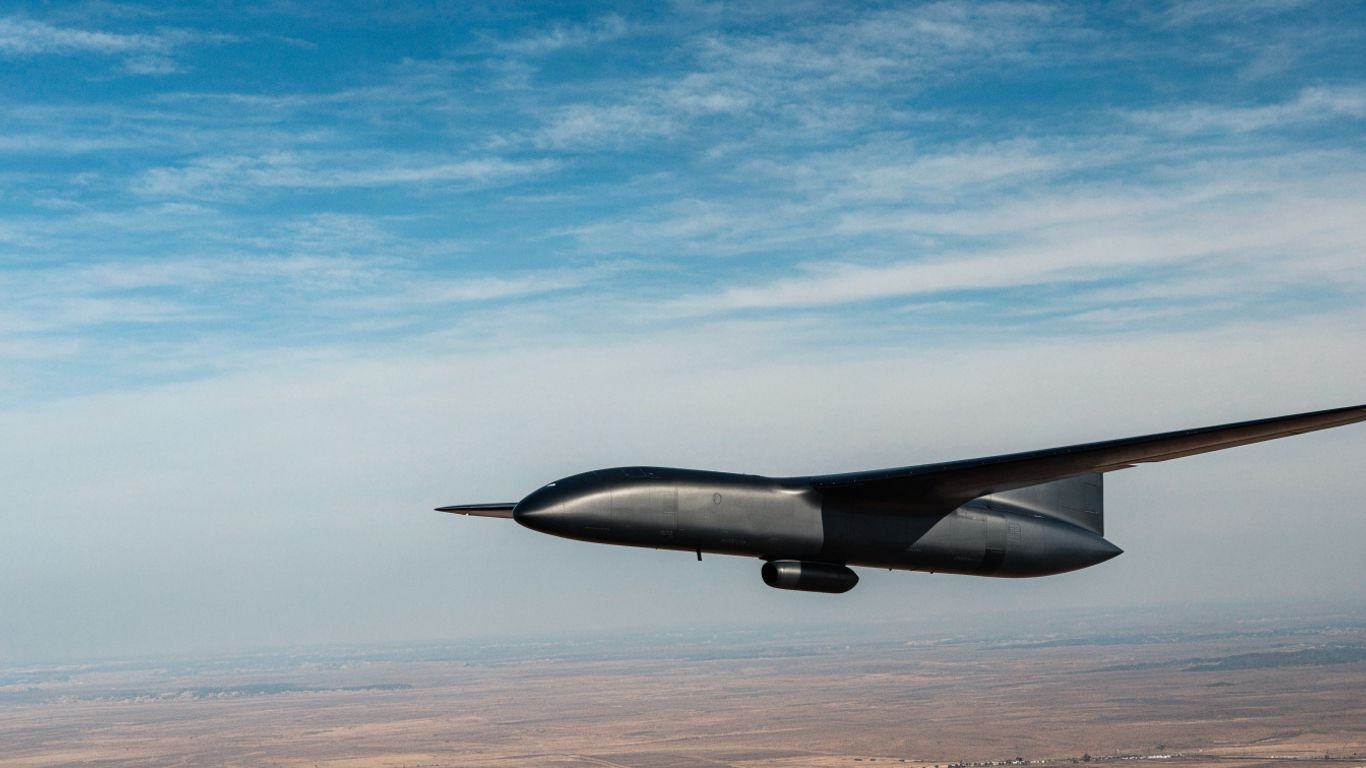
MQ-1C Gray Eagle Armed/ISR MALE: capabilities, missions, and role

Key Takeaways
The MQ-1C Gray Eagle combines long-endurance flight with surveillance and armed mission options. Its usefulness depends not just on the aircraft, but on its payload, crew, communications, and operating environment.
- The Gray Eagle is a U.S. Army medium-altitude, long-endurance unmanned aircraft system developed from the Predator.
- Published specifications list up to 25 hours of endurance, a 29,000-foot operating altitude, and a 1,075-pound payload capacity.
- Its listed payload options include electro-optical/infrared sensors, synthetic aperture radar, and communications relay equipment.
- The aircraft can carry weapons, but armed operations depend on mission needs, authorization, and conditions in the airspace.
- The Gray Eagle Extended Range and GE-25M are related developments; their precise configuration should be checked against current authoritative information.
What the MQ-1C Gray Eagle is
The MQ-1C Gray Eagle is an unmanned aircraft system developed for the U.S. Army. It is designed for persistent intelligence, surveillance, and reconnaissance (ISR), and can also perform armed missions. Its defining feature is the combination of time aloft and multiple mission options, rather than a single sensor or weapon.
Its place in the MALE aircraft category
MALE stands for medium altitude, long endurance. The category describes aircraft intended to operate at medium altitudes while remaining aloft for extended periods, giving crews time to observe an area and pass information to other users. The term is a broad classification, not a guarantee of a particular sensor, range, or mission result. In that sense, the MQ-1C Gray Eagle Armed/ISR MALE role joins persistent observation with the option of armed support.
How the Gray Eagle developed from earlier designs
The Gray Eagle was developed from the MQ-1 Predator design for Army requirements. Its development reflects a move toward an aircraft system intended to support a wider mix of sustained reconnaissance and strike tasks. An overview of the MQ-1C Gray Eagle traces its development and service, while a comparison of the MQ-1 Predator and Gray Eagle offers context on their relationship. The family resemblance is useful background, but each aircraft’s documented configuration matters more than the name alone.
The Army’s role in operating the aircraft
The U.S. Army is the service associated with the Gray Eagle, and the aircraft is intended to support Army operations. That relationship matters because its mission value is not measured only by flight performance: collected information needs to reach people who can interpret and act on it. The Gray Eagle is therefore best understood as part of a broader system of aircraft, remote crews, communications, and supported units.
Airframe and flight characteristics
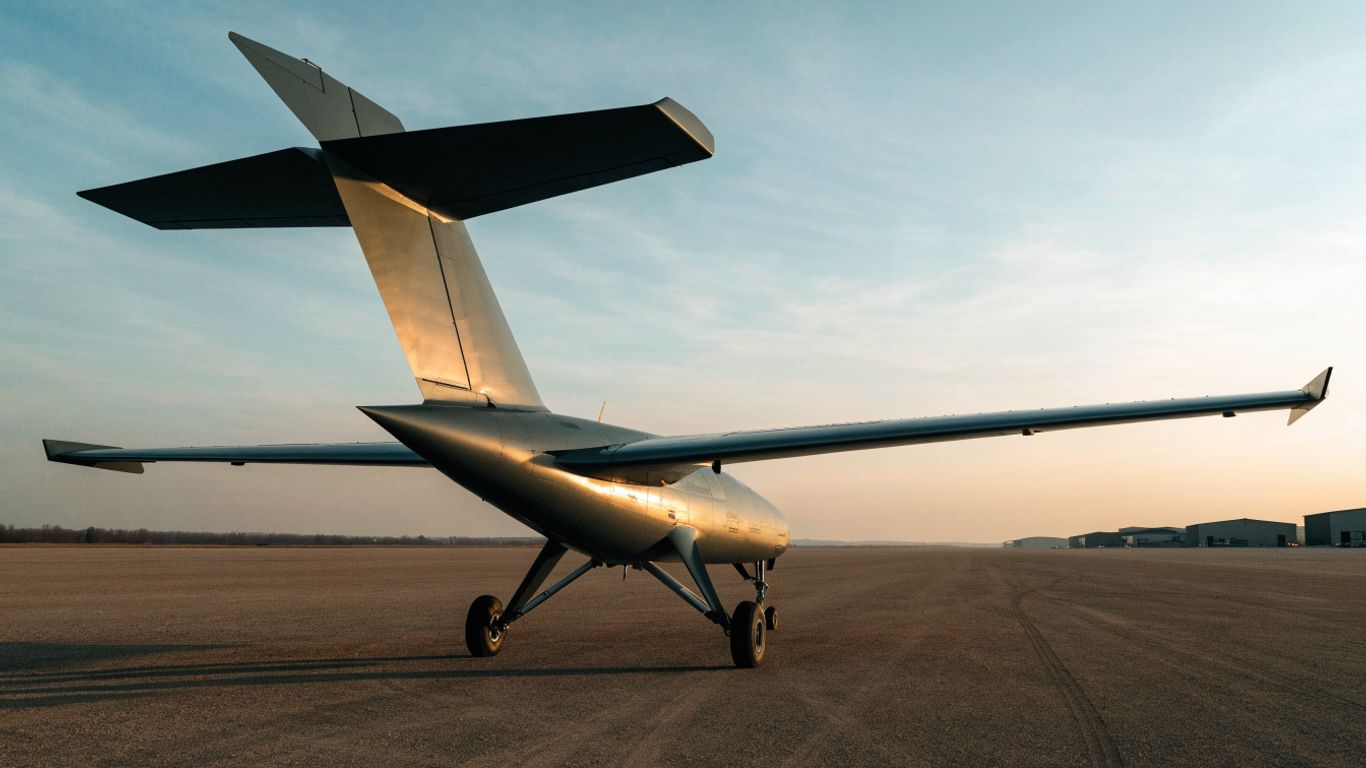
The Gray Eagle is a fixed-wing unmanned aircraft built for sustained flight rather than brief, close-range sorties. Its published specifications help convey the scale of its operating envelope, though actual mission performance depends on configuration and conditions. A single figure cannot describe every loadout or flight profile.
Endurance, altitude, and operating range
Published figures for the standard Gray Eagle include up to 25 hours of endurance, operation up to 29,000 feet, and speeds up to 167 knots true airspeed. These figures describe distinct aspects of performance; they should not be treated as simultaneous guarantees for every mission. Payload, weather, operating procedures, and other factors can affect the practical profile. The reference figures provide a useful baseline:
| Measure | Published figure | What it describes |
|---|---|---|
| Endurance | Up to 25 hours | Maximum stated time aloft |
| Operating altitude | Up to 29,000 feet | Stated altitude ceiling |
| Speed | Up to 167 knots true airspeed | Published maximum speed |
| Payload capacity | 1,075 pounds | Combined internal and external payload capacity |
These numbers are reported in the manufacturer’s Gray Eagle overview. They are reference specifications, not a promise that every aircraft will achieve every maximum during the same sortie.
Payload capacity and modular design
A central design consideration is the ability to carry different payloads for different mission needs. Published options include electro-optical/infrared sensors, synthetic aperture radar, communications relay equipment, and weapons. This variety does not mean every aircraft carries all options at once; a mission configuration involves choices about what the aircraft needs to do and what it can carry. The mission-specific payload mix helps explain why two flights by the same aircraft type may look quite different from an operational perspective.
How the MQ-1C differs from the Gray Eagle Extended Range
The Gray Eagle Extended Range is a related variant, but its name alone is not enough to establish how a particular aircraft is configured. Published material also refers to a GE-25M variant. Details can vary across configurations and upgrades, so comparisons should identify the version and the date of the specifications being used. When precision matters, consult current official documentation rather than assuming that figures for one model apply unchanged to another.
Intelligence, surveillance, and reconnaissance capabilities
ISR describes a process: collecting information, making sense of it, and sharing it with the people who need it. The Gray Eagle can carry different sensors and equipment to support that work, but the platform does not interpret every scene automatically or remove the need for trained analysts. Its practical value depends on both what it can observe and how useful the resulting information is to a mission.
Electro-optical and infrared sensors
Electro-optical and infrared (EO/IR) payloads support visual observation in different conditions. The manufacturer lists EO/IR equipment with laser designation among the aircraft’s payload options. The exact sensor configuration and the conditions for useful observation depend on the aircraft and task. Images or video still need context: operators must understand what they are seeing and communicate relevant findings clearly.
Radar and other surveillance payloads
Radar provides another way to collect information, and synthetic aperture radar (SAR) is among the listed payload options. The Gray Eagle’s documented payload choices also include equipment for communications relay, broadening its potential role beyond direct observation. These options are easier to compare when grouped by their stated purpose:
- EO/IR payloads support visual and infrared observation.
- SAR is a listed radar payload option.
- Communications relay equipment can support the transfer of communications.
- Weapons are a separate payload option for armed missions.
The list describes categories of equipment, not a claim that all are carried simultaneously. A mission plan has to account for the task, the selected configuration, and the information or support required by users on the ground.
Collecting, processing, and sharing information
Sensor collection is only one stage of ISR. Information must be transmitted, reviewed, and placed in context before it can inform a decision. That work involves crews and supported units as well as the aircraft, and the time required can shape how quickly information becomes useful. For a related example of tactical aerial observation supporting ground forces, see this guide to the RQ-7B Shadow, whose role and operating limits differ from those of the Gray Eagle.
Armed mission capabilities
The Gray Eagle is described as an armed/ISR aircraft because it can combine reconnaissance with the option of carrying weapons. This combination may allow observation and armed support to occur within a broader mission plan. It does not mean every flight is armed, or that a sensor view alone is enough to justify a strike.
Weapons integration and employment
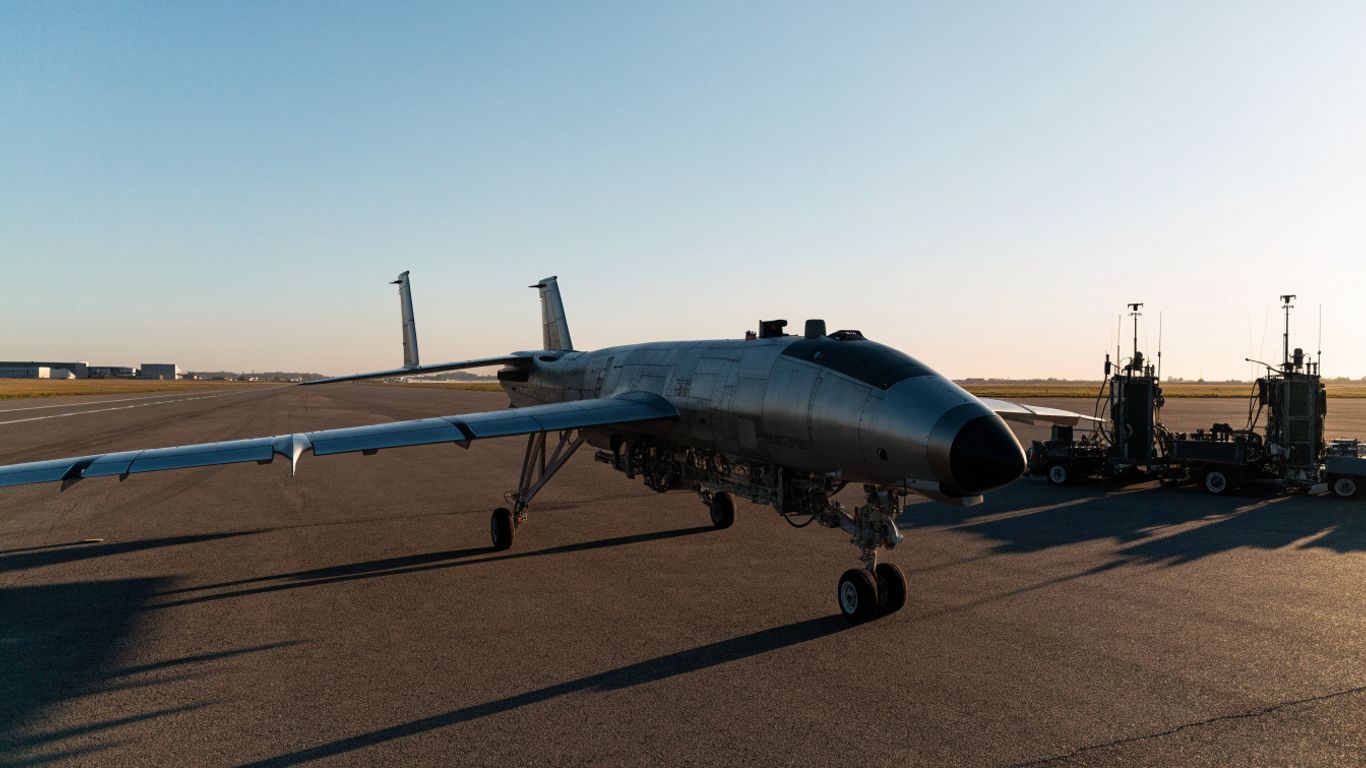
Published information lists the ability to carry four Hellfire missiles among the Gray Eagle’s payload options. That capacity is a specification, not a statement about how weapons are used in every mission. Employment depends on the specific aircraft configuration, the task, relevant authorization, and operational conditions. The distinction matters: a platform’s available equipment does not by itself describe the rules or decisions that govern its use.
Combining surveillance with precision strikes
When an aircraft can collect information and carry weapons, observation and armed support may be planned as related activities. The surveillance portion can provide information for a broader decision process, while a strike remains subject to its own requirements and approvals. Describing the aircraft as capable of both roles should not blur the difference between identifying activity, assessing what it means, and deciding whether force is authorized. The sequence and division of responsibilities depend on the mission.
Constraints that shape armed operations
Armed operations take place within limits set by the aircraft, its payload, its communications, and the conditions of the operating environment. Weather, airspace coordination, mission duration, and the availability of reliable information can all affect what is practical. Public specifications do not answer every operational question, and a stated weapons capacity is not a complete account of how a mission is conducted. A short overview of the aircraft’s history and armament is also available in this MQ-1C Gray Eagle guide.
Control, communications, and mission integration
An unmanned aircraft is not an independent observer; it relies on people and systems to plan, control, and use its mission. Remote crews manage the aircraft and its tasks, while communications enable information to move between the aircraft and other participants. Those connections help determine how well the platform fits into a larger operation.
Ground control stations and remote crews
Remote operation separates the crew from the aircraft, but it does not remove the need for skilled human judgment. Crews plan and monitor flights, manage mission tasks, and work with information returned by the aircraft. The aircraft is part of a system that includes its control equipment and support personnel, rather than a self-contained sensor that simply produces answers. The specific organization of crews and stations can depend on the unit and mission.
Data links and beyond-line-of-sight operations
Communications links carry control information and mission data, and the manufacturer lists communications relay as a possible payload. Beyond-line-of-sight operation depends on the systems and arrangements available for a given mission; it should not be inferred solely from the aircraft’s endurance or altitude. Link availability and the timely delivery of information are operational considerations, not just technical details. Public summaries do not establish every network configuration or the conditions under which it is used.
Coordination with Army units and other aircraft
The Gray Eagle’s information is most useful when it reaches the units that can apply it. Coordination can involve sharing observations, aligning timing, and accounting for other activity in the airspace. This is a general feature of military aviation: aircraft capabilities have to fit into a larger plan. The specific relationships and procedures vary by operation and should not be assumed from a platform description alone.
Operational uses and considerations
The Gray Eagle’s long endurance supports missions that benefit from sustained aerial presence, including reconnaissance and monitoring. Its potential uses also include support to ground forces and communications relay. What it can contribute on a given day depends on the selected payload, the task, and the conditions in which it operates.
Reconnaissance and persistent monitoring
Long endurance can give crews an opportunity to observe an area over an extended period, rather than relying on a brief pass. Persistent monitoring may help build a clearer picture of activity and change, but it does not make observation complete or infallible. Analysts need to account for gaps, uncertainty, and the limits of the available sensors. The quality of a conclusion depends on interpretation as well as collection.
Support for ground forces
The aircraft is intended to support Army missions, including tasks where aerial observation can inform ground operations. Its listed mission options include reconnaissance, surveillance, target acquisition, and attack, alongside communications relay. The kind of support provided depends on the mission plan and on how information is shared with the people who need it. Aerial observation is one source of context, not a replacement for judgment on the ground.
Risks, vulnerabilities, and contested environments
Operating conditions can constrain any unmanned aircraft. Communications, weather, airspace coordination, and the availability of support all shape what can be accomplished; contested environments can add further uncertainty. Public performance figures do not tell the whole story about survivability or mission effectiveness in a specific setting. A careful assessment separates documented capabilities from assumptions about how an aircraft will perform under conditions not described in those sources.
Variants, upgrades, and future development
The Gray Eagle family includes variants and ongoing modernization efforts, so public descriptions can refer to different versions. A model name is a starting point, not a complete account of its equipment. For readers comparing specifications, checking the variant and the date of the source helps avoid treating a newer feature as standard across the whole fleet.
MQ-1C Gray Eagle improvements
The Gray Eagle was developed as an improvement over the Predator for Army requirements, and its later variants continue to reflect changing needs. Public reporting identifies the Gray Eagle Extended Range and GE-25M, but details should be tied to the specific configuration being discussed. It is safer to compare documented attributes than to assume that every new label implies the same set of changes. Improvements may involve different aspects of an aircraft system, and those details need a current source.
Electronic intelligence and mission-system upgrades
Public reporting describes an effort to add an electronic intelligence (ELINT) sensor to Gray Eagle Extended Range aircraft. That reported upgrade concerns a particular variant and should not be treated as a feature of every MQ-1C. The exact equipment and its availability can change as programs develop. The distinction between a planned or reported upgrade and an installed operational capability is worth keeping clear.
How changing requirements may affect its role
Requirements change as operational priorities, available technology, and the wider force evolve. A platform’s place in that mix can shift as payloads or mission systems change, but predictions about its future role should be treated cautiously. What remains clear from public descriptions is the aircraft’s combination of long-endurance flight, surveillance options, and armed mission capability. How those features are used will depend on future requirements and documented configurations.
Conclusion
The MQ-1C Gray Eagle is a long-endurance Army unmanned aircraft system with surveillance, communications-relay, and armed mission options. Its specifications help describe what the aircraft can carry and how it can fly, but mission value depends on the people, systems, and conditions around it. Keeping variants and documented capabilities distinct makes its role easier to understand without overstating what any single aircraft or payload can do.
Frequently Asked Questions
What does MALE mean in aviation?
MALE means medium altitude, long endurance. It describes a broad class of unmanned aircraft built to operate at medium altitudes and remain airborne for extended periods.
What is an unmanned aircraft system?
An unmanned aircraft system includes the aircraft and the equipment and people needed to operate it. The term therefore covers more than the vehicle alone.
What is the difference between ISR and reconnaissance?
Reconnaissance is one activity within the broader intelligence, surveillance, and reconnaissance process. ISR includes collecting information, interpreting it, and sharing it for use.
Why do unmanned aircraft carry different payloads?
Payloads are selected to match mission needs. Sensors, communications equipment, and other equipment serve different purposes, and an aircraft may not carry every option on every flight.
Does long endurance mean an aircraft can stay on station indefinitely?
No. Endurance is limited, and practical time in a particular area depends on mission planning, aircraft configuration, conditions, and other operational factors.
What factors can affect aerial observation?
Weather, sensor configuration, visibility, communications, and the quality of interpretation can all affect what observers learn. No single sensor provides a complete picture in every situation.
Why can published specifications vary between aircraft variants?
Different variants may have different equipment or design changes, and published figures may refer to different configurations. Checking the model and the date of a source helps make comparisons more reliable.