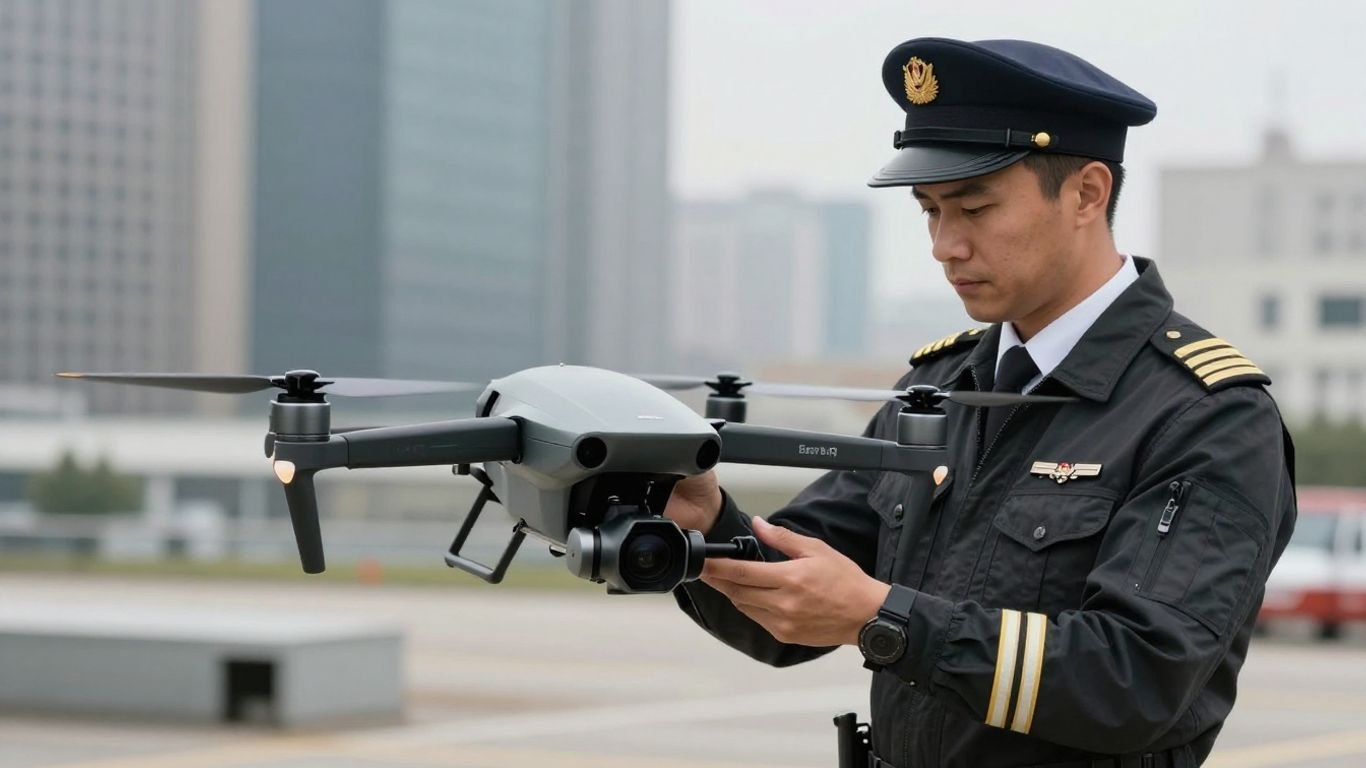
Beyond DJI: Drone Options for Pro Pilots

Moving beyond DJI means looking at drones that fit your specific job. Here are the main things to remember when you’re shopping around.
Key Takeaways
- Figure out what you need the drone for before you start looking.
- Consider how much you can spend, as prices vary a lot.
- Check camera quality, flight time, and how well it handles wind.
- Make sure the drone meets any legal rules, like NDAA compliance.
- Look into what kind of support the company offers after you buy.
Exploring Top DJI Alternatives for Commercial Pilots
DJI has long been the go-to for many drone pilots, but the landscape is shifting. It’s smart to look beyond just one manufacturer, especially for professional work. Exploring commercial drone options beyond DJI isn’t just about having a backup; it’s about finding the best tool for the job. Whether you’re concerned about regulations, need specialized features, or simply want to diversify your fleet, there are some really solid alternative drone manufacturers for business use out there.
Understanding Your Specific Use Case
Before you even start looking at brands, take a good, hard look at what you actually need the drone to do. Are you doing detailed mapping for construction sites? Maybe you need a drone that can carry a heavy LiDAR payload for surveying. Or perhaps you’re a filmmaker looking for incredibly smooth cinematic shots and advanced tracking. The specific task dictates the drone’s requirements.
- Mapping & Surveying: Look for drones with high-resolution cameras, RTK capabilities, and long flight times. Payload capacity for sensors is key here.
- Inspection: Drones with excellent obstacle avoidance, zoom capabilities, and the ability to fly in tight spaces are important. Thermal cameras might also be a requirement.
- Cinematography: Smooth flight, advanced stabilization, and high-quality video recording (like 4K or 8K) are paramount. Subject tracking features are also a big plus.
- Public Safety: Ruggedness, reliability in various weather conditions, and quick deployment are critical. Drones with spotlights or thermal imaging are often needed.
Budget Considerations for Professional Drones
Let’s be real, professional gear isn’t cheap. While DJI has options across various price points, many alternative manufacturers focus on the higher end for enterprise solutions. However, there are definitely some great options that offer a lot of bang for your buck.
| Drone Category | Price Range (Approx.) | Key Features |
|---|---|---|
| Entry-Level Pro | $1,000 – $3,000 | Good camera, decent flight time, basic autonomy |
| Mid-Range Enterprise | $3,000 – $10,000 | Advanced sensors, better wind resistance, RTK |
| High-End Specialized | $10,000+ | Heavy lift, advanced LiDAR, custom payloads |
It’s important to remember that the initial purchase price is only part of the equation. Factor in the cost of accessories, software, training, and potential repairs.
Key Features to Prioritize in Non-DJI Drones
When you’re looking at commercial drone options beyond DJI, a few features really stand out. Reliability and performance in tough conditions are often what separate the pros from the hobbyists. Think about wind resistance – a drone that can handle a 20 mph wind is way more useful than one that grounds itself in a light breeze. Also, consider the transmission range. If you’re working over large areas, you need a stable connection that won’t drop out. Many pilots are also looking for advanced obstacle avoidance systems that go beyond simple forward-facing sensors. Multi-directional sensing provides a much greater safety net, especially when you’re flying in complex environments. For those needing to fly in sensitive areas or for government contracts, NDAA compliance is a non-negotiable requirement. It’s worth checking out drone options that meet NDAA requirements if this applies to your work.
When evaluating alternative drone manufacturers for business use, don’t get caught up solely on the camera specs. While image quality is important, the drone’s ability to fly safely and reliably in your specific operating environment, coupled with its data security features, will ultimately determine its suitability for professional tasks. Think about the entire ecosystem – from flight planning software to data management.
Advanced Camera Systems Beyond DJI
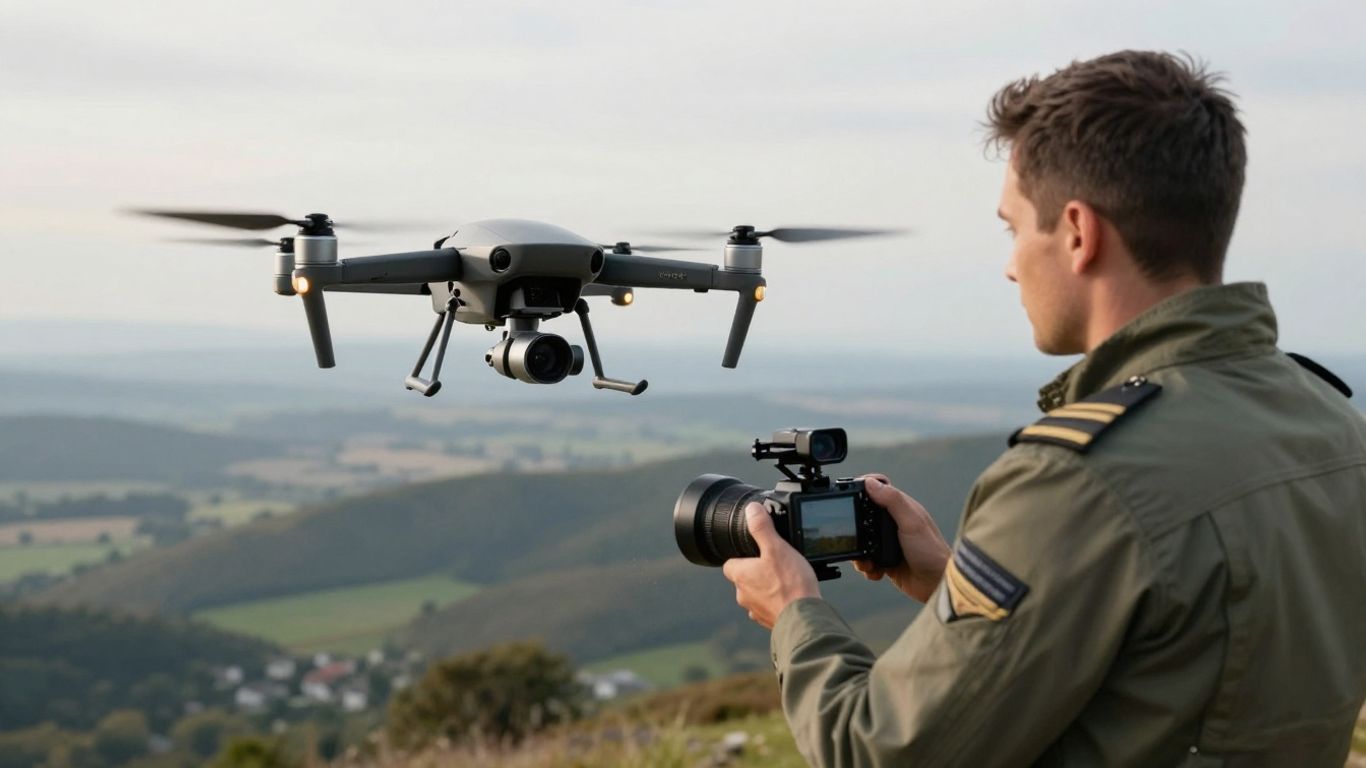
When you’re looking beyond DJI for professional drone cameras for inspection work, the camera system is often the biggest differentiator. It’s not just about megapixels anymore; it’s about how the sensor, optics, and stabilization work together to capture usable data in tough conditions.
Sensor Size and Resolution for Aerial Imaging
Larger sensors generally mean better image quality, especially in less-than-ideal lighting. Think of it like a bigger bucket catching more rain – a bigger sensor captures more light. This translates to less noise in your images and more detail, which is pretty important when you’re trying to spot a hairline crack on a bridge or a faulty connection on a wind turbine.
- Full-frame or larger APS-C sensors are becoming more common in high-end drones, offering DSLR-like image quality.
- Micro Four Thirds (MFT) sensors provide a good balance of size and performance for many professional tasks.
- Smaller sensors (like those found in many consumer drones) can still be capable, but they often struggle more in low light.
Resolution, measured in megapixels, is also key. Higher resolution allows you to zoom in digitally without losing too much quality, which is a lifesaver for detailed inspections. Some drones offer interchangeable lenses, giving you flexibility for different focal lengths and fields of view.
Stabilization Technologies for Smooth Footage
Nobody likes shaky video. Drones use gimbals and electronic stabilization to keep your footage smooth, even when the drone is moving or encountering turbulence. Most professional drones have at least a 3-axis mechanical gimbal, which is excellent for counteracting roll, pitch, and yaw. Some also incorporate electronic image stabilization (EIS) for an extra layer of smoothness. This is especially important for tasks like mapping or creating detailed visual records where clarity is paramount. You’ll want to look for systems that can handle wind and rapid movements without introducing jitter.
Specialized Camera Payloads for Industry Needs
Beyond standard RGB cameras, many non-DJI drones can be equipped with specialized payloads tailored for specific industries. This is where things get really interesting for professional applications.
- Thermal Cameras: Essential for detecting heat signatures, these are invaluable for building inspections (finding insulation gaps), electrical fault detection, and search and rescue operations. Radiometric thermal cameras provide temperature data, not just visual heat maps.
- Zoom Cameras: High-magnification zoom lenses allow you to get close-up views of distant objects without physically flying closer, which is great for inspecting infrastructure like cell towers or power lines from a safe distance. Some offer impressive optical and digital zoom capabilities.
- LiDAR Payloads: For highly accurate 3D mapping and surveying, LiDAR sensors are the gold standard. They use lasers to measure distances, creating detailed point clouds of environments, even in areas with limited visual features. This is a significant step up for surveying and construction.
- Multispectral/Hyperspectral Cameras: Used in agriculture and environmental monitoring, these cameras capture data across different light spectrums to analyze crop health, soil conditions, or water quality.
The choice of camera payload often dictates the drone’s primary function. For instance, a drone designed for public safety might prioritize a high-resolution thermal camera, while one for surveying will likely feature LiDAR. Understanding your specific mission requirements is the first step in selecting the right imaging system. For those working in areas with potential GPS interference, drones designed for GPS-denied environments are becoming increasingly important.
When considering advanced camera systems, it’s also worth noting that some platforms are designed to operate in challenging conditions, like high winds. For example, the Wispr Ranger Pro boasts impressive wind resistance, which is a significant advantage for coastal or offshore inspections. This capability is crucial for maintaining operational integrity.
Flight Performance and Reliability in Challenging Conditions
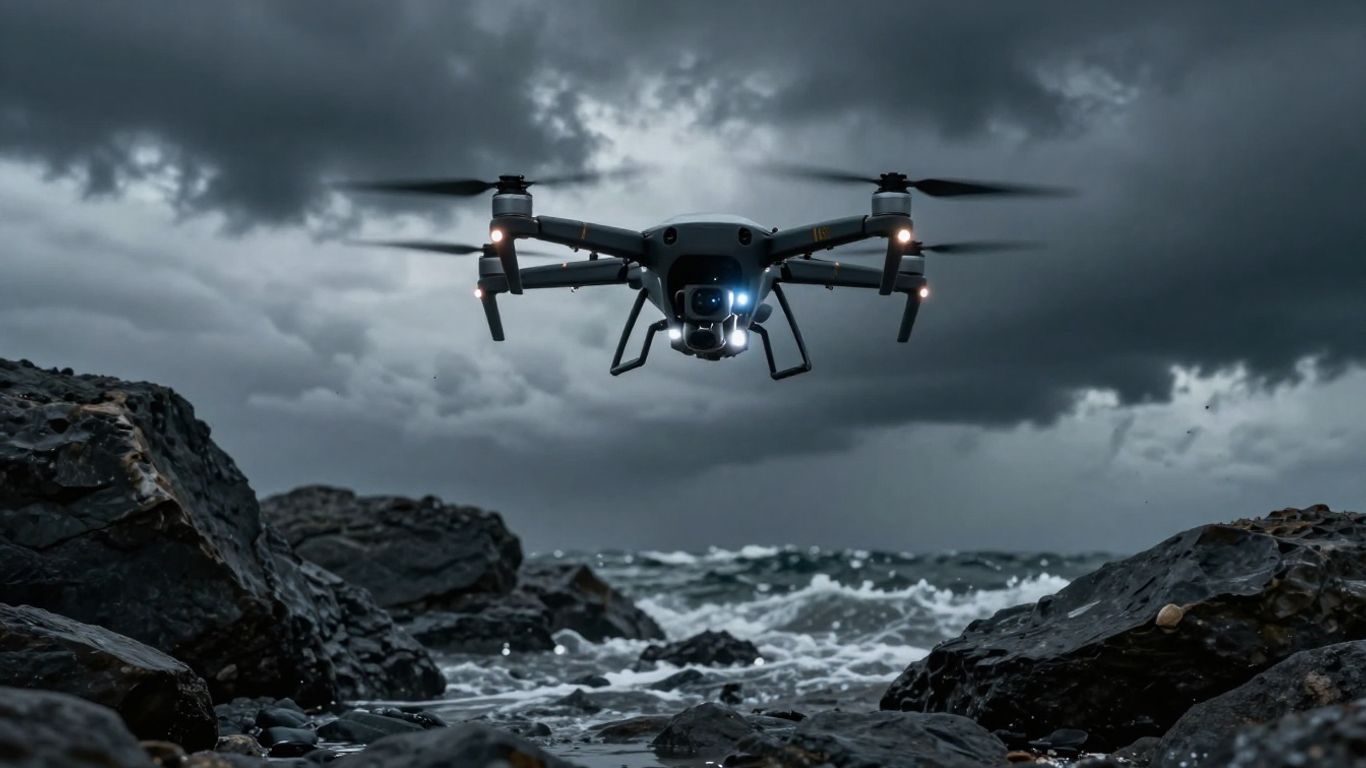
When you’re out in the field, especially for commercial work, your drone needs to be more than just a camera in the sky. It has to perform when conditions aren’t ideal. We’re talking about wind, distance, and just general toughness. Reliability isn’t a luxury; it’s a requirement.
Maximizing Air Time with Extended Flight Durations
Nobody likes being tethered to a charging station. For professional use, longer flight times mean more work done per trip. This translates directly to cost savings and efficiency. Look for drones that offer a solid 30 minutes or more in the air, especially when carrying payloads. Some newer models are pushing past the 40-minute mark, which can make a huge difference on large sites or complex inspections. It’s not just about the advertised time, though; consider how payload weight affects that duration. A drone rated for 50 minutes might only get 30 with your specific camera setup.
Robust Wind Resistance for Diverse Environments
Wind is the enemy of stable flight and good footage. If you’re working near coastlines, in mountainous areas, or even just on a blustery day, your drone needs to handle it. Some drones are rated for specific wind speeds, often measured in knots or feet per second. For instance, a drone with a wind resistance rating of 20 knots is going to handle breezy conditions much better than one rated for only 10 knots. The Wispr Ranger Pro boasts an impressive 73.3 ft/s wind resistance, which is significantly higher than many competitors and makes it a strong contender for operations in very windy locations.
Here’s a quick look at how some drones stack up:
| Drone Name | Max Wind Resistance | Notes |
|---|---|---|
| Wispr Ranger Pro | 73.3 ft/s | Excellent for high-wind environments |
| Harris Aerial H6 | 36 ft/s | Strong performance in windy conditions |
| Freefly Alta X Gen2 | 32.8 ft/s | Capable of handling significant gusts |
| Parrot ANAFI USA Gov | 15 m/s (33.5 ft/s) | Decent for moderate wind |
Long-Range Transmission Systems for Extended Operations
Getting your drone far away from the pilot is often necessary for large-scale mapping or surveying. This means you need a reliable video and control link that won’t drop out. Look for systems that use advanced frequencies or proprietary transmission technologies designed for distance and signal penetration. Some manufacturers offer options for extended range, sometimes requiring specific antennas or boosters. A stable, long-range connection is key to maintaining situational awareness and control, especially when flying beyond visual line of sight (BVLOS) operations, which are becoming more common for certain types of work. Planning for these longer flights often involves understanding the regulatory landscape, so it’s worth looking into FAA guidelines for BVLOS if that’s part of your future plans.
Data Security and Regulatory Compliance
When you’re looking beyond the usual suspects, data security and following the rules become even more important. It’s not just about flying; it’s about operating responsibly and legally, especially when dealing with sensitive information or working for government clients. Making sure your drone and its data are secure and compliant is non-negotiable.
NDAA Compliance for Government and Sensitive Operations
If your work involves government contracts or sensitive infrastructure, you’ll quickly run into the National Defense Authorization Act (NDAA). Basically, it means the hardware you’re using can’t have components from certain foreign countries. For many federal agencies and contractors, this is a hard requirement. It’s worth checking if a drone is NDAA-compliant right from the start. Some platforms also carry the Blue UAS certification, which means they’ve been vetted by the Department of Defense for cybersecurity and supply chain safety. It’s a good idea to look for both if you’re in this space. You can find lists of approved drones, sometimes called the Blue UAS Cleared List, which helps narrow down your options.
Understanding Drone Weight and Registration Requirements
Beyond security, there are practical rules about the drones themselves. The Federal Aviation Administration (FAA) has specific rules based on drone weight. For instance, drones weighing over 0.55 pounds (about 250 grams) need to be registered. This is a pretty straightforward process, usually done online. It helps the FAA track aircraft and ensures operators are accountable. Always check the latest FAA guidelines, as these rules can change. Knowing your drone’s weight is key to staying on the right side of the law. You can find more details on FAA drone regulations.
Built-in Security Features and Data Encryption
Security isn’t just about where the drone is made; it’s also about how it operates. For professional use, especially in fields like energy or critical infrastructure, you need to know your data is protected. Look for drones that offer on-device processing, meaning sensitive data doesn’t automatically get sent to the cloud. Features like digitally signed firmware and encrypted communication links are also big pluses. Some platforms are designed with these security measures from the ground up, making them a safer bet for sensitive operations. The TSA’s proposed security measures also highlight the growing focus on drone security across the board.
Operating a drone involves more than just piloting skills. Understanding and adhering to regulatory frameworks, like NDAA compliance and FAA registration, is just as vital as the drone’s technical capabilities. Prioritizing these aspects from the outset prevents potential legal issues and ensures your operations are both secure and legitimate.
Brand Reputation and Ongoing Support
When you’re looking beyond the big names, checking out the company behind the drone is just as important as the drone itself. Think about it: who are you going to call when something goes wrong? A strong brand reputation often goes hand-in-hand with reliable customer service and a commitment to keeping their products up-to-date. It’s not just about the initial purchase; it’s about the long haul.
Assessing Customer Service and Technical Support
This is where things can get tricky with some manufacturers. While DJI has a massive presence, getting personalized help can sometimes feel like a chore. With other brands, especially those focusing on the professional market, you might find more direct access to support teams. This could mean talking to actual engineers or technicians who know the product inside and out. It’s worth looking into how quickly they respond and what kind of troubleshooting assistance they provide. Some companies, like Drone Doctor, even have dedicated repair services that can be a lifesaver.
The Value of Active User Communities and Forums
Beyond official support channels, a vibrant user community can be an incredible asset. These are the folks who are out there flying these drones every day, pushing them to their limits, and figuring out all sorts of workarounds and best practices. Online forums, Facebook groups, or even local meetups can provide a wealth of information that you just won’t find in a manual. You can learn about common issues, get tips on advanced techniques, and even find out about potential drone pilot job opportunities that others have discovered.
Firmware Updates and Product Longevity
No one wants to buy a piece of tech that becomes obsolete in a year. Manufacturers who regularly release firmware updates are showing they care about their product’s performance and security. These updates can fix bugs, improve flight stability, and sometimes even add new features. It’s a good sign that the company is invested in the long-term viability of their drones. Keeping your drone’s software current is a simple step that can make a big difference in how well it performs over time.
Investing in a drone is a significant financial decision for any professional. While the initial capabilities of the hardware are important, the ongoing support structure and community surrounding the product can significantly impact its overall value and lifespan. Don’t underestimate the power of a company that stands behind its products with consistent updates and accessible help.
Enterprise-Grade Drones for Specialized Tasks
When your work goes beyond simple aerial photography, you need drones built for the job. We’re talking about specialized tasks that demand more power, precision, and specific capabilities. This is where enterprise-grade drones really shine, offering solutions that DJI’s more general-purpose models just can’t match. Think about complex industrial inspections, detailed mapping for large-scale projects, or even public safety operations where every second counts. These machines are designed from the ground up for demanding professional use.
Autonomous Inspection and Public Safety Platforms
For tasks like inspecting bridges, wind turbines, or power lines, autonomy is key. Drones that can fly themselves, avoiding obstacles and following pre-programmed paths, save time and reduce risk. Public safety agencies are also finding huge benefits. Imagine a drone that can fly into a dangerous building to assess the situation or locate a missing person in difficult terrain. These platforms often come with advanced sensors, like thermal cameras, and robust communication systems. The Skydio X10, for instance, is known for its AI-driven obstacle avoidance, making it a top choice for complex inspection jobs and defense applications. For first responders, the BRINC Responder drone offers features like two-way audio for crisis negotiation, making it a vital tool in emergency situations.
Heavy-Lift Drones for Cinematography and LiDAR
If your work involves carrying heavy equipment, like high-end cinema cameras for film production or sophisticated LiDAR scanners for detailed 3D mapping, you need a drone with serious lifting power. These heavy-lift drones are the workhorses for applications like creating the best drones for professional aerial surveys or complex infrastructure mapping. The Freefly Alta X is a prime example, capable of carrying substantial payloads for cinematic shoots or advanced sensor integration. Similarly, the Inspired Flight IF1200A is a US-manufactured option built for heavy-duty tasks, replacing DJI’s Matrice series in many professional mapping and inspection fleets. These drones are built for stability and precision, even when carrying significant weight.
US-Manufactured Options for Supply Chain Security
For many government and sensitive commercial operations, the origin of the drone matters. Concerns about data security and supply chain reliability have led to a growing demand for drones manufactured in the United States. These platforms often meet strict compliance standards like NDAA (National Defense Authorization Act), which is important for government contracts. Brands like Inspired Flight and Watts Innovations are producing high-quality, US-made drones that offer robust performance for various enterprise drone solutions for surveying and other critical tasks. Choosing a US-manufactured drone can provide peace of mind regarding data security and long-term support, especially when building a fleet for critical operations.
Software and Ecosystem Integration
Moving beyond DJI hardware means you’ll also need to look at the software side of things. It’s not just about the drone itself; it’s about how you plan missions, control the aircraft, and manage the data it collects. DJI has its own suite of apps for flight planning, camera control, and fleet management, but these are locked to their hardware. So, what are the alternatives when you’re building a mixed fleet or going entirely non-DJI?
Platform-Agnostic Flight Planning Software
This is probably the biggest area where you’ll see a difference. DJI’s Pilot 2 app is great, but it only works with DJI drones. If you’re using drones from companies like Inspired Flight, Freefly, or even building your own with ArduPilot or PX4, you need a flight planner that can handle them all. This is where software like UgCS really shines. It lets you plan missions for over 100 different drone platforms, including DJI, from a single interface. Think about it: your pilots use the same workflows whether they’re flying a DJI Matrice 350 or an Inspired Flight IF1200A. This consistency is a huge win for training and operational efficiency. It supports advanced features like terrain following using custom elevation data and specialized tools for LiDAR and photogrammetry missions. Plus, it works fully offline, which is a lifesaver in remote areas.
Alternatives to DJI’s Proprietary Flight Apps
Beyond mission planning, you’ll need apps for controlling the camera and managing your fleet. For basic flight and camera control on non-DJI drones, manufacturers usually provide their own apps. Autel has Autel Explorer, Parrot has FreeFlight 7, and Skydio has its Flight Deck. These apps are designed to work with their specific hardware. For content editing, which DJI Mimo handles for its consumer line, you’ll look at standard video editing software like CapCut or LumaFusion. These are independent of the drone brand. When it comes to fleet management, DJI’s FlightHub 2 is an option for DJI-only fleets. However, for mixed or non-DJI operations, platforms like AirData UAV offer robust, platform-agnostic flight logging and fleet health tracking. For more advanced coordination and live streaming across multiple drones, UgCS Enterprise is a strong contender.
Integrating Mixed Fleets Seamlessly
Running a mix of DJI and non-DJI drones isn’t as complicated as it sounds, especially with the right software. The key is standardization. Using a platform-agnostic flight planner like UgCS means your pilots don’t need to learn a new app for every drone type. This drastically reduces training time and potential errors. You can plan a mission in UgCS, and it works whether the drone is DJI or something else. This approach allows you to gradually transition your fleet or run parallel operations, comparing performance and data quality without disrupting your workflow. It’s about making sure your hardware choices don’t force you into software chaos. The goal is to have your software work for your entire fleet, not the other way around.
When you’re looking at non-DJI options, think about the entire software ecosystem. A good flight planning tool that supports multiple drone types is essential for managing a mixed fleet. Don’t forget about fleet management and data logging solutions that can handle data from various sources. This integrated approach makes managing your drone operations much smoother.
Here’s a quick look at how some software stacks compare:
| Feature | DJI Software | Non-DJI Alternatives (Examples) | Notes |
|---|---|---|---|
| Survey-Grade Planning | DJI Pilot 2 (DJI only) | UgCS (100+ platforms) | UgCS offers LiDAR, terrain following, and advanced survey tools. |
| Basic Flight Planning | DJI Pilot 2 | QGroundControl (free) | QGroundControl is good for basic waypoint missions on ArduPilot/PX4. |
| Fleet Management | DJI FlightHub 2 | AirData UAV, UgCS Enterprise | AirData is platform-agnostic; UgCS Enterprise offers advanced features. |
| Content Editing | DJI Mimo | CapCut, LumaFusion | Standard video editors work with any drone footage. |
Conclusion
DJI makes some good drones, sure, but they aren’t the only game in town. There are lots of other companies making cool alternatives that can do just as much, if not more, than DJI’s best models. When you’re looking for something different, start by thinking about what you actually need the drone to do. Once you know that, and you’ve thought about how much you can spend, you can look at the options we talked about. Finding the right drone is all about matching it to your job and your skills.
Frequently Asked Questions
What’s a good alternative to DJI’s flight planning software?
If you need to plan flights for drones that aren’t DJI, a program called UgCS is a really good option. It works with lots of different drone brands. For simpler flights on certain drones, QGroundControl is a free program you can use too.
Are there apps better than DJI Fly for controlling drones?
DJI Fly is for their regular consumer drones. Each drone maker has its own app, like Autel Explorer for Autel drones. For serious work like mapping, UgCS is way more powerful than any single brand’s app.
Can I use third-party apps with my DJI drone?
Yes, you can! Apps like UgCS can connect to DJI drones. This means you can plan your flight in UgCS and then send it to your DJI controller. It’s handy if you use different types of drones.
What’s the best heavy-lift drone that follows NDAA rules?
For carrying the most weight, the Freefly Alta X Gen2 is great. If you want a good mix of carrying power, long flight time, and good support, the Inspired Flight IF1200A is a solid choice and is approved for government use.
Which drone can fly the longest without needing a recharge?
The Inspired Flight IF800 Tomcat can fly for about 54 minutes without any extra gear. Even with a small camera attached, you can still get around 40 minutes of flight time, which is pretty impressive.
Are there any drones that can handle strong winds better than DJI?
Yes, some drones are built tougher for wind. The Wispr Ranger Pro is designed to handle really high winds, much more than DJI’s M350 RTK. The Harris Aerial H6 is another strong option for windy conditions.