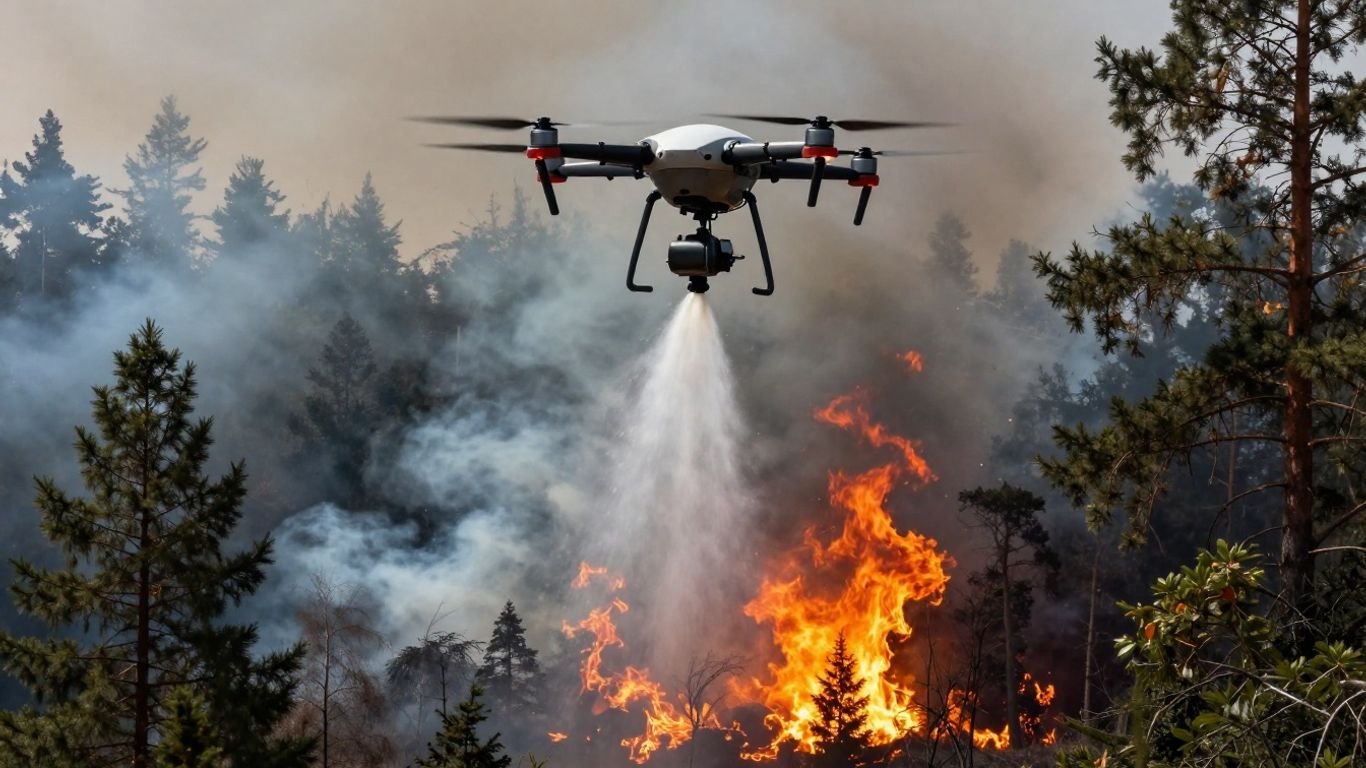
Drones: The New Firefighters?

When you think about firefighters, you probably imagine big red trucks and brave people running into burning buildings. But these days, something else is joining the team: firefighting drones. These flying gadgets are changing how crews handle emergencies. They can go places too risky for people, send back live video, and even drop water on flames. Fire departments everywhere are starting to use them, and it’s making a real difference. Let’s look at how firefighting drones are becoming an important tool for battling blazes and keeping people safe.
Key Takeaways
- Firefighting drones give real-time views from above, helping crews see what’s really happening at a fire scene.
- Thermal cameras on drones spot hidden hotspots and people, even through thick smoke.
- Some drones can map wildfires and drop water or fire retardant right where it’s needed most.
- Using drones can lower the risk for firefighters by letting them check dangerous areas before sending in people.
- Drones are getting smarter and faster, and will likely become a regular part of firefighting in the near future.
Revolutionizing Firefighting With Drones
It feels like just yesterday we were seeing drones as fancy toys, but now? They’re becoming serious tools for firefighters. This isn’t science fiction anymore; it’s about making dangerous jobs safer and quicker. Think about it: instead of sending a person into a smoky building right away, a drone can go first. It’s a game-changer for how we tackle fires, especially the big ones.
Real-Time Surveillance and Data Collection
When a fire breaks out, every second counts. Drones can get up in the air fast, giving firefighters a bird’s-eye view of what’s happening. They can stream live video, showing exactly where the fire is spreading and how intense it is. This kind of information is gold. It helps commanders make better decisions about where to send their crews and what resources are needed. This immediate, aerial perspective drastically cuts down on guesswork. It’s like having an extra set of eyes that can see through smoke and over obstacles, providing a clearer picture of the entire scene. This helps in planning the best approach, whether it’s for a wildfire or a structure fire.
Infrared and Thermal Imaging Capabilities
Fires don’t always show themselves clearly, especially at night or when hidden by smoke. That’s where thermal cameras on drones come in. These cameras can detect heat signatures, making it possible to spot hidden flames, hot spots that could reignite, or even people trapped inside a building. This ability to see heat is incredibly useful for search and rescue operations and for making sure a fire is truly out. It’s a step beyond just seeing; it’s about sensing the heat of the situation. This technology is also great for post-fire assessments, identifying areas that might still be smoldering beneath the surface.
Situational Awareness Enhancement
Putting all this together – the live video, the thermal imaging, the quick deployment – leads to much better situational awareness. Firefighters on the ground get a constant update on the fire’s behavior and the surrounding environment. This means they can avoid dangerous areas, find the best routes in and out, and coordinate their efforts more effectively. It’s about giving everyone involved the most accurate, up-to-the-minute information possible. This improved awareness can mean the difference between a controlled situation and one that gets out of hand, ultimately protecting both lives and property. The integration of drones with command centers is a big step forward for emergency response.
The ability of drones to provide real-time data from above, especially in hazardous conditions, fundamentally changes how fire incidents are managed. This technology allows for proactive rather than reactive strategies, leading to more efficient and safer outcomes for everyone involved.
Advanced Drone Technology For Firefighting
When fires rage, especially out in the wildlands or in tough-to-reach urban spots, getting a good look at what’s happening is tough. That’s where advanced drone technology comes in. We’re talking about more than just flying cameras; these are specialized tools designed for some seriously challenging situations. These unmanned aerial vehicles for hazardous environments are changing the game for how we tackle fires.
Autonomous Drones for Wildfire Mapping
Imagine a wildfire spreading fast, creating a wall of smoke that makes it impossible for pilots to see. Researchers have developed drones that can actually fly through that smoke. They use special sensors to map the fire’s edges and hot spots in real-time. This kind of mapping is a huge deal for wildfire control. It gives incident commanders a clear picture, even when visibility is zero on the ground. This helps them figure out the best way to fight the fire and keep people safe. It’s a big step up from relying solely on ground crews or helicopters that might not be able to fly in those conditions. This technology is a prime example of how drone technology in emergency response is evolving.
Water-Dropping Drones for Direct Engagement
Some drones aren’t just for looking; they’re for doing. There are now drones designed to carry and drop water or fire retardant directly onto specific hot spots. Think of it as a precision strike against a small, but dangerous, part of the fire. This isn’t meant to replace large-scale aerial tankers, but it’s incredibly useful for hitting those hard-to-reach flames or flare-ups that could reignite the main fire. These aerial fire suppression systems can make a difference in the early stages of a fire or in tricky terrain. It’s a targeted approach that complements traditional firefighting methods.
Drone Swarms for Coordinated Responses
What if you could have multiple drones working together, like a team? That’s the idea behind drone swarms. For large incidents, a coordinated group of drones can cover more ground faster. One drone might be mapping the overall fire perimeter, while others are focusing on specific areas, relaying information back to a central command. This allows for a much more dynamic and responsive strategy. They can also act as communication relays in areas where radio signals might be blocked by the fire itself. This kind of synchronized operation is key for managing complex emergencies and improving overall situational awareness.
The ability of these advanced drones to operate in conditions previously thought impossible, like heavy smoke, is a significant leap forward. They provide data that simply wasn’t available before, allowing for more informed and safer decisions during critical moments of a fire incident.
Key Applications of Firefighting Drones
Wildfire Mapping and Monitoring
When a wildfire breaks out, getting a clear picture of its size and where it’s heading is job number one. Drones are fantastic for this. They can fly over the flames, even through smoke, and use special cameras to map out the fire’s perimeter. This kind of remote sensing for fire mapping gives commanders a much better idea of what they’re up against. They can see how fast the fire is spreading and where it might go next, which helps them decide where to send their crews. It’s like having an eye in the sky that can see through the chaos. This information is vital for planning and making sure everyone stays safe. You can find more about how drones are used in real-world fire scenarios here.
Structure Fire Assessment
Fires in buildings present a different set of challenges. Drones can get up close to a burning structure, providing live video feeds to the incident commander. This means they can see things from an angle that ground crews just can’t reach. They can spot potential hazards, like weakened roofs or areas where the fire might be spreading unseen. Thermal cameras are a big help here too, showing hot spots that aren’t visible to the naked eye. This helps firefighters figure out the best way to tackle the blaze and where to focus their efforts. It also helps them assess the damage after the fire is out.
Post-Disaster Damage Evaluation
After a fire, whether it’s a wildfire that’s scorched acres or a building fire, drones are useful for checking the aftermath. They can fly over the affected area and take detailed pictures and videos. This documentation is important for figuring out the full extent of the damage. It helps with insurance claims and planning for rebuilding. For structural fires, drones can inspect buildings for safety issues, like if a wall is about to collapse. This kind of assessment helps everyone understand the situation better and plan the next steps.
Drones offer a way to gather critical information quickly and safely, especially in dangerous or hard-to-reach places. This helps fire departments make smarter decisions and respond more effectively to all sorts of emergencies.
Benefits of Firefighting Drones
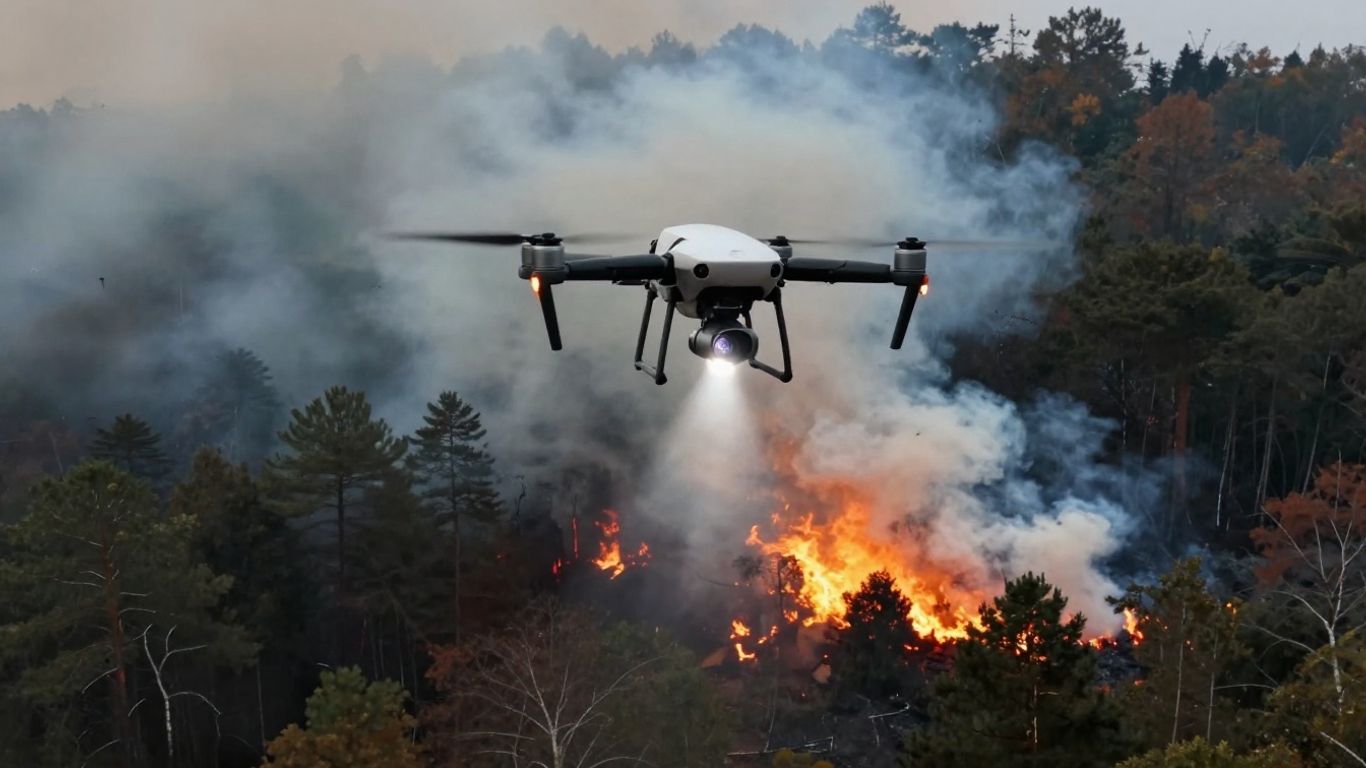
Firefighting is inherently risky business. We’re talking about dangerous conditions, smoke, unstable structures, and the sheer heat of a blaze. The numbers show that firefighters get hurt – a lot. Over a five-year span, tens of thousands of injuries were reported, with overexertion and exposure to hazards being the main culprits. This is precisely where drones step in, offering a way to get eyes on a situation without putting a person directly in harm’s way.
Reducing Firefighter Injuries and Risks
Drones provide a remote perspective, significantly cutting down the need for firefighters to enter immediately hazardous zones. Think about it: instead of a crew rushing into a burning building to get a quick look, a drone can fly in first. It can stream live video, showing the extent of the fire, potential collapse points, or if anyone is trapped inside. This pre-assessment means incident commanders can make smarter decisions about where and how to deploy their teams, minimizing exposure to the most dangerous elements. Thermal cameras are a game-changer here, spotting hidden heat sources that could cause flare-ups or indicate structural weaknesses invisible to the naked eye. This kind of information is gold for keeping everyone safe.
Improving Response Times and Efficiency
When every second counts, drones can speed things up considerably. They can get airborne much faster than traditional methods for aerial assessment, like helicopters. This means quicker information for commanders, leading to faster decisions and more efficient resource allocation. Instead of guessing where the fire is spreading, they have real-time data. This is true for both sprawling wildfires, where mapping out containment lines is key, and for structure fires, where understanding the fire’s path through a building is vital. The ability to quickly map out a scene, even through smoke, helps direct efforts precisely where they’re needed most. This kind of rapid data collection is a big step up from older methods, allowing for better situational awareness on the ground.
Cost-Effectiveness Compared to Traditional Methods
While the initial investment in drone technology might seem significant, the long-term savings can be substantial. Drones can reduce the need for multiple personnel or expensive equipment like helicopters for certain tasks. For instance, mapping a large wildfire area can be done more affordedly and quickly with drones than with traditional ground crews or aircraft. The data gathered can also improve planning and resource management, preventing costly over-deployment or missed opportunities. Over time, this translates to more efficient use of taxpayer money and a better allocation of departmental budgets. It’s about getting more bang for your buck while also improving safety and effectiveness.
The integration of drones into firefighting operations isn’t just about new gadgets; it’s about fundamentally changing how we approach dangerous situations. By providing critical data from a safe distance, these machines help protect the people who protect us, making response efforts smarter and more effective.
The Future of Firefighting Drones
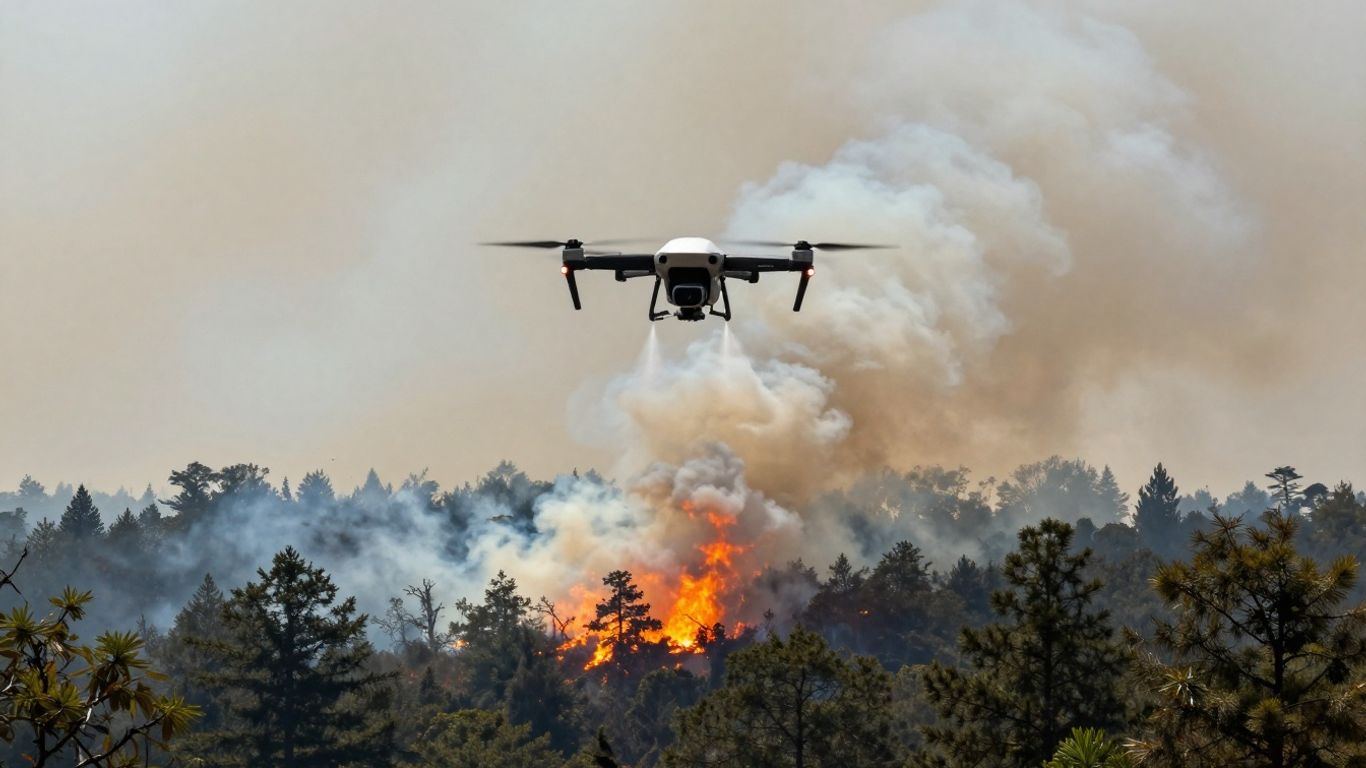
The way we think about fighting fires is changing, and drones are right at the center of it. It’s not just about having a bird’s-eye view anymore; we’re talking about drones that can act on their own and work together. This isn’t science fiction; it’s happening now and will only become more common.
Drone as First Responder (DFR) Programs
Think about getting help even faster. Drone as First Responder, or DFR, programs are starting to pop up, and they’re a big deal. Instead of waiting for a truck, a drone can be sent out immediately to the scene of an emergency. This is especially useful for things like structure fires where getting eyes on the situation quickly can make a huge difference. Fremont, California, has a program where drones respond to both police and fire calls, showing how these systems can improve response times and give firefighters a better picture of what’s going on. This proactive approach means help is on the way the moment an incident is reported.
Enhanced Communication and Coordination Tools
Getting everyone on the same page during a fire is tough. Drones are becoming better at sharing information in real-time. Imagine a drone flying over a wildfire, not just showing video, but also sending back data about heat signatures and fire spread. This information can be shared instantly with incident commanders and crews on the ground, helping them make smarter decisions. It’s like giving everyone a live map and status update, all at once. This kind of coordination is key to tackling large incidents more effectively.
Evolving Onboard Technologies
What’s inside the drone is just as important as what it can do. We’re seeing drones with better cameras, including advanced thermal imaging that can see through smoke and darkness. Some are being developed to carry small payloads, like water or fire retardant, to tackle small hotspots directly. Others can map out dangerous areas or even help assess damage after a fire is out. The technology is constantly improving, making these drones more capable and versatile tools for firefighters. The goal is to have drones that can handle more complex tasks, reducing risks for human firefighters and improving overall outcomes. The potential for drones to significantly reduce wildfire response times, potentially by up to 30% [34b6], is a major driver for this innovation.
The Future is Flying High
So, are drones the new firefighters? Not exactly, but they’re definitely becoming a super helpful tool in the toolbox. From giving firefighters a bird’s-eye view of a raging wildfire to spotting hidden hot spots in a burning building, these flying gadgets are changing the game. They help crews make smarter decisions faster, which is a big deal when seconds count. While they won’t be replacing human firefighters anytime soon, it’s clear that drones are here to stay, making dangerous jobs a little safer and a lot more effective. It’s pretty exciting to think about what’s next as this technology keeps getting better.
Frequently Asked Questions
What exactly is a firefighting drone?
A firefighting drone is basically a small, flying robot that firefighters use to help them do their jobs. Think of it as a tool that can fly, see things from above, and even carry special equipment to a fire scene.
How do these drones help firefighters see through smoke or at night?
Many firefighting drones have special cameras, like thermal or infrared ones. These cameras can see heat, which is super helpful for spotting hot spots hidden by smoke or in the dark. It’s like having night-vision goggles for firefighters, but from the sky.
Can drones actually help put out fires?
Some drones are being developed to help fight fires directly. They can be equipped to drop water or fire retardant on specific hot spots, especially in places that are hard for regular fire trucks to reach.
Are drones faster than fire trucks?
Drones can often get to an emergency scene faster because they can fly directly over traffic and obstacles. This means they can give firefighters a quick look at the situation before the ground crews even arrive.
Do drones make firefighting safer for people?
Yes, they can! Drones help by giving firefighters a better view of dangerous situations from a safe distance. This means firefighters don’t have to rush into unknown dangers as much, which can lower the chances of them getting hurt.
What’s the future of drones in firefighting?
The future looks bright! We’ll likely see more drones acting as ‘first responders,’ getting to scenes even quicker. They’ll also get smarter with better cameras and tools, and maybe even work together in groups, like a swarm, to tackle big fires more effectively.