Unleash Stunning Aerials: Top 4K Camera Drones for Every Creator

Thinking about getting a drone to film cool stuff from up high? You’re in luck. There are a bunch of great 4K camera drones out there now that make it pretty easy to get awesome shots. Whether you’re just starting out or you’ve been flying for a while, there’s probably something on this list for you. We’ve checked out some of the top options that give you really clear video and are generally easy to use. Let’s see what’s out there.
Key Takeaways
- The DJI Mavic 2 Pro was a big deal for aerial imaging, with a good camera and steady video.
- Autel Robotics makes some solid drones, like the Evo Lite, that offer good value.
- DJI’s Mavic 3 Pro is a top choice for really cinematic footage, thanks to its multiple cameras.
- For travel and vlogging, the DJI Air 3 is a good pick because it’s portable and has a dual-camera setup.
- If you’re new to drones, the DJI Mini 4 Pro is a user-friendly option that still shoots in 4K.
1. DJI Mavic 2 Pro
The DJI Mavic 2 Pro was a big deal when it came out, and honestly, it still holds up pretty well for a lot of creators. It was one of the first drones to really pack a serious camera, thanks to that Hasselblad partnership. We’re talking about a 1-inch CMOS sensor here, which is pretty substantial for a drone this size. This means it can grab 20-megapixel stills and 4K video at 30 frames per second, and the quality is noticeably better than a lot of what came before it, especially in tricky lighting.
One of the coolest things is the adjustable aperture on the lens, going from f/2.8 to f/11. This gives you a lot more control over how your shots look, whether you need a shallow depth of field or want everything sharp. Plus, the three-axis gimbal keeps everything super steady, even if you’re flying around a bit. It’s got some neat shooting modes like Hyperlapse, which can add a professional touch to your footage without a ton of effort.
Here’s a quick look at some of its key specs:
- Camera: 1-inch CMOS sensor, 20MP stills, 4K video @ 30fps
- Aperture: f/2.8 – f/11 adjustable
- Flight Time: Up to 31 minutes
- Stabilization: 3-axis gimbal
- Portability: Foldable design
While newer models have come out with more cameras or longer flight times, the Mavic 2 Pro still offers a fantastic balance of image quality and user-friendly features. It’s a solid choice if you’re looking for professional-looking aerial shots without getting into the super high-end, complex systems. It really set a benchmark for what a prosumer drone could do. For anyone looking to get into professional aerial photography, this drone is a great starting point, offering impressive results that can rival some professional drone services.
It’s also pretty easy to pack up and take with you, which is always a plus. If you’re not chasing the absolute latest tech but want reliable, high-quality 4K footage, the Mavic 2 Pro is definitely worth considering.
2. Autel Robotics Evo Lite
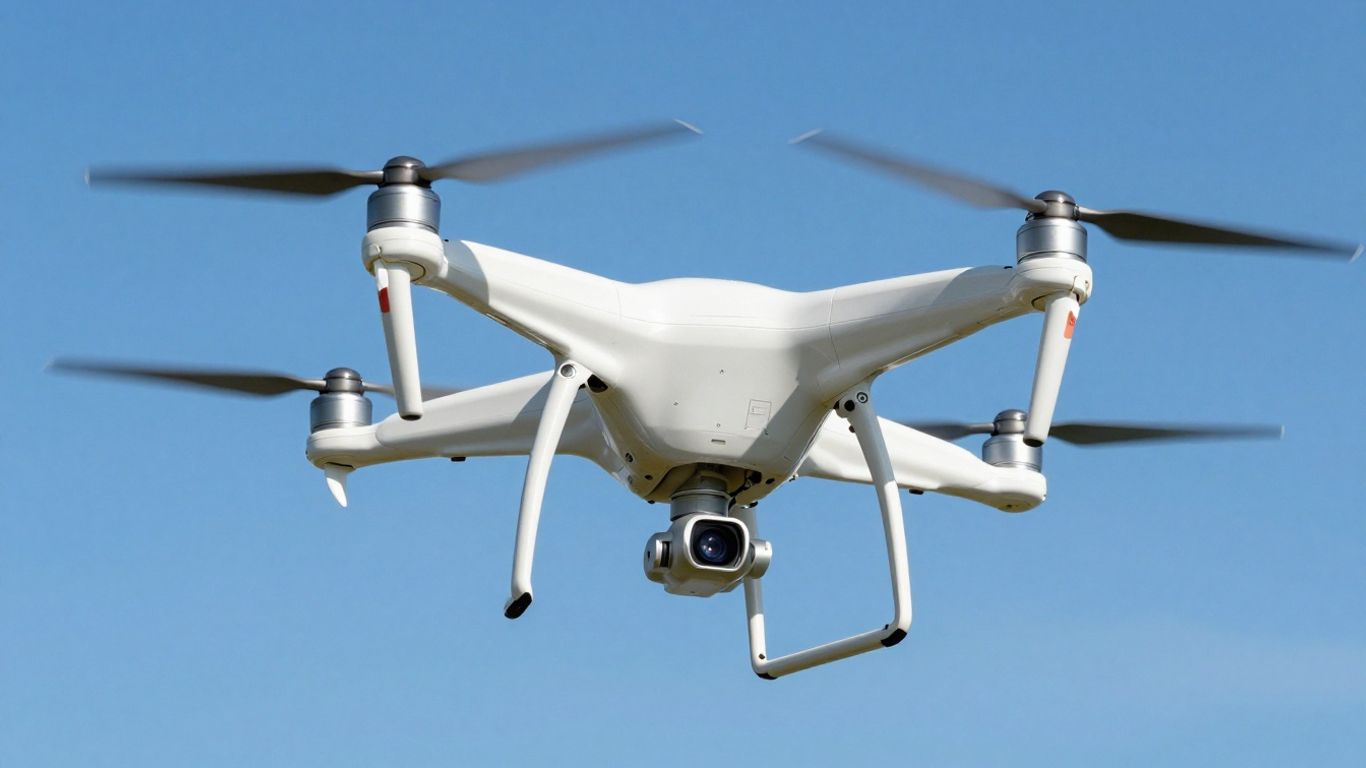
The Autel Evo Lite is a pretty neat drone that packs a punch for its size. It’s not the absolute top-tier, but it really hits a sweet spot for creators who want good quality without breaking the bank. It’s got this 4K camera that shoots some really nice video, and the stills are pretty sharp too.
What I liked about it was how easy it was to get going. You don’t need to be a pro pilot to get some decent shots. It has some smart flight modes that help you get those sweeping cinematic shots that look like they took hours to plan. Plus, the battery life is decent – you can get a good chunk of flying time out of each charge, which is always a plus when you’re out shooting.
Here’s a quick look at some of its specs:
- Camera: 4K Video, 20MP Stills
- Flight Time: Up to 40 minutes
- Obstacle Avoidance: Yes
- Weight: Under 249g (check local regulations)
The Evo Lite is a solid choice if you’re looking for a drone that balances performance with user-friendliness. It’s a great step up from those tiny beginner drones but doesn’t get overly complicated. It’s the kind of drone you can take out on a weekend trip and come back with some genuinely impressive footage.
3. DJI Mavic 3 Pro
Alright, let’s talk about the DJI Mavic 3 Pro. This drone is definitely a step up, and you can tell right away it’s built for serious creators. It’s the first drone I’ve seen with three different cameras all built-in, which is pretty wild. You’ve got your main, really good camera, then a medium telephoto, and another telephoto one. This setup means you can zoom in a lot without losing quality, which is great for getting shots you couldn’t before without moving the drone itself.
When it comes to image quality, the Mavic 3 Pro really shines. The main camera uses a big 4/3 CMOS sensor, which is larger than what you find in most drones. This means it can capture a ton of detail, especially in tricky lighting situations where you have both bright spots and dark shadows. It shoots video in 5.1K, which is super sharp, and can take 48-megapixel photos. The other two cameras are no slouches either, letting you get lossless 4K video at up to 7x zoom, and even a 28x digital zoom if you really need to get close.
Here’s a quick look at what makes it stand out:
- Triple-Camera System: A main wide camera, a medium telephoto, and a telephoto lens for serious zoom capabilities.
- Large Main Sensor: The 4/3 CMOS sensor captures incredible detail and dynamic range.
- Advanced Video: Shoots up to 5.1K video and offers lossless zoom options.
- Rock-Solid Flight: Known for its stability and excellent obstacle avoidance.
One thing to note is that while the cameras are amazing, the subject tracking feature wasn’t as snappy as I’d hoped during testing. It felt a bit slow to catch up sometimes. Also, this drone comes with a pretty high price tag, so it’s an investment. But if you’re looking for top-tier image quality and a lot of creative flexibility from a single drone, the Mavic 3 Pro is hard to beat.
The controller that comes with the Mavic 3 Pro is also a big plus. It has a bright, built-in screen, so you don’t need to mess around with your phone. This makes flying feel much more straightforward and less fiddly, especially when you’re out in the field.
4. DJI Air 3
The DJI Air 3 is a pretty solid drone, especially if you’re looking for something that can keep up with your subject without much fuss. Honestly, its subject tracking is surprisingly good, sticking to whatever you’re following like glue. I tried it out following a bike, and it just stayed right there, making the footage look super smooth. That’s a big part of why the flight itself feels so stable.
It’s got this neat setup of sensors – visual, LiDAR, and infrared – that help it avoid bumping into things. Just remember, if you put it in Sport Mode, it turns off that obstacle avoidance, so be careful then. While it’s not the cheapest drone out there, it feels like a good deal for what it can do. If you’re just starting or need something smaller, there are other options, but for serious creators, the Air 3 is a strong contender.
Here’s a quick look at some of its specs:
| Feature | Specification |
|---|---|
| Folded Dimensions | 7 3/4" |
| Primary Camera | 1" CMOS |
| Secondary Camera | 1/1.3" CMOS |
| Flight Time | Up to 46 minutes |
| Video Transmission | O4 HD up to 10km |
| Obstacle Sensing | Omnidirectional |
When it comes to actually flying it, the Air 3 is pretty straightforward. You get three flight modes on the controller: Cine, Normal, and Sport. This lets you adjust how fast and sensitive the controls are, which is handy for different situations. The DJI Fly app is also really well-designed; it’s easy to see all the features without getting overwhelmed. Plus, you can get to the drone’s storage without even turning it on, which is a nice little touch. Everything about it feels like they put some real thought into making it easy and fun to use.
5. Skydio 2
Alright, let’s talk about the Skydio 2. This drone is pretty wild because it’s all about flying itself. Seriously, it uses a bunch of cameras – six of them, all 4K – to see everything around it. This means it’s super good at not crashing, even if you’re flying it through a forest or something tricky. It’s like it has its own brain for flying.
The main camera is 12 megapixels, which is decent for getting good shots. What really sets it apart, though, is how it tracks things. If you’re filming someone skateboarding or biking, the Skydio 2 can follow them without you having to do much at all. It’s got this powerful chip inside that helps it figure out what to do in real-time, making the footage look really smooth.
The Skydio 2 is a big step up for anyone who wants a drone that handles the flying part so they can focus on the creative side. It’s not just about avoiding obstacles; it’s about making complex shots easier to get.
It’s pretty user-friendly, too. Even if you’re new to drones, you can probably get the hang of it pretty quickly. It’s a solid choice if you want a drone that does a lot of the heavy lifting for you. The US Army even bought a bunch of them, which tells you something about how capable they are. You can find more about its capabilities on Skydio’s website.
The Skydio 2 is a drone that really shines when it comes to autonomous flight and subject tracking.
6. Autel Robotics Dragonfish
The Autel Robotics Dragonfish isn’t your average drone; it’s built for serious professionals who need top-notch aerial footage. Think filmmakers, surveyors, and anyone who needs really clear, detailed shots from way up high. It packs a 6K resolution camera with a big 1-inch CMOS sensor, which means your pictures and videos will look incredibly sharp and smooth, even when you zoom in. It shoots 6K at 60 frames per second, so motion looks really natural.
What’s cool is that you can swap out the lenses, kind of like on a DSLR camera. This gives you a lot of flexibility to get the exact look you want for your project. Plus, it has features like HDR video and D-Log, which are super helpful if you plan to do a lot of editing later. It’s designed to give you more control over the final look of your footage.
The Dragonfish is a serious piece of kit for professionals who demand the best image quality and flexibility from their aerial platform.
One of the best parts is the flight time. With its dual-battery setup, you can stay in the air for up to 50 minutes. That’s a lot of time to get that perfect shot without worrying about landing constantly. It also has smart flight modes like ‘Follow Me’ and ‘Point of Interest’ to help you capture dynamic shots more easily. If you’re looking for a drone that can handle demanding professional work and deliver amazing 6K video, the Dragonfish is definitely worth a look. It’s a step up from many consumer drones and offers a lot of capabilities for serious aerial imaging, similar to what you might find in some professional drone setups.
7. DJI Mini 4 Pro
Alright, let’s talk about the DJI Mini 4 Pro. This little guy is pretty impressive for its size. It’s super portable, which is a big win if you’re always on the move. It’s DJI’s most advanced mini drone to date, packing a lot of punch without being a hassle to carry around.
One of the coolest things is its camera. It’s got a 1/1.3-inch CMOS sensor, capable of shooting 4K video and 48MP stills. What really sets it apart, though, is its ability to shoot in true vertical 4K. This is a game-changer for social media content creators because it means less editing later and better quality for platforms that favor vertical video. It can even tilt its camera 45 degrees for those shots.
When it comes to flying, the Mini 4 Pro is pretty stable and responsive. It also has omnidirectional obstacle sensing, which is a nice safety feature, especially if you’re still getting the hang of things. It makes flying feel more secure, letting you focus more on getting that perfect shot. You can check out some tips for developing drone skills if you’re looking to get more out of your flights.
Here’s a quick look at some of its key features:
- Camera: 1/1.3-inch CMOS sensor, 4K video, 48MP stills
- Special Feature: True vertical 4K video capability
- Obstacle Sensing: Omnidirectional
- Weight: Under 249 grams (regulation-friendly)
- Flight Time: Up to 34 minutes (or 45 minutes with Intelligent Flight Battery Plus)
The Mini 4 Pro really hits a sweet spot for creators who need portability without sacrificing image quality or advanced features. It’s a solid choice for anyone looking to step up their aerial game without needing a massive drone.
If you opt for the Intelligent Flight Battery Plus, you can extend your flight time significantly, which is always a plus when you’re out capturing footage. It’s a small drone, but it definitely punches above its weight class.
8. DJI Air 3S
The DJI Air 3S is a really solid choice if you’re looking for a drone that packs a punch without completely emptying your wallet. It’s got this dual-camera setup that’s pretty neat. You get a main camera with a one-inch CMOS sensor, which is great for pulling out details, especially when the light isn’t perfect or you’ve got tricky contrast. Then there’s a secondary tele camera that lets you zoom in a bit without messing up the 4K video quality.
What really stands out is how well it tracks subjects. Seriously, it sticks to whatever you’re following like glue, whether it’s you hiking or a dirt bike zipping around. This makes getting those smooth, stable shots so much easier. It also has a bunch of sensors for obstacle avoidance, which gives you a bit more peace of mind when you’re flying, though you’ll want to remember that obstacle avoidance turns off in Sport Mode.
Here’s a quick look at some of its specs:
- Camera System: Dual cameras (1" CMOS main, 1/1.3" CMOS tele)
- Video: Up to 4K
- Still Images: 50 MP
- Flight Time: Up to 45 minutes
- Internal Storage: 42 GB
The whole user experience with the Air 3S feels pretty polished. The DJI Fly app is straightforward, and switching between flight modes like Cine, Normal, and Sport right from the controller is super convenient. It’s designed to be easy to use, which is a big plus.
It’s definitely an investment, but for the performance you get, especially that subject tracking and the camera quality, it feels like a good deal. If you’re into things like drone fishing, this model offers professional camera features and good accessory compatibility, making it a versatile tool for various hobbies DJI Air 3S.
| Feature | Specification |
|---|---|
| Main Sensor | 1" CMOS |
| Tele Sensor | 1/1.3" CMOS |
| Max Video | 4K |
| Max Still Resolution | 50 MP |
| Battery Life | ~45 minutes |
9. Autel EVO II Pro V3
The Autel EVO II Pro V3 is a drone that really tries to pack a punch, especially when it comes to its camera. It’s got this big 1-inch CMOS sensor, which sounds impressive, and it can shoot video in 6K. That’s a lot of detail, right? Plus, you can adjust the aperture from f/2.8 all the way to f/11, giving you some control over how your shots look, like how much is in focus.
It also boasts a pretty decent flight time, around 40 minutes, and a good range of about 9 miles, thanks to something called SkyLink 2.0. For safety, it has obstacle avoidance all around it, which is always a good thing. And if you need to follow something moving, it has a dynamic tracking feature.
However, it’s not all perfect. While the 6K video sounds great on paper, some folks found that the actual image quality didn’t quite match up to what DJI’s top-tier drones can do, especially in terms of dynamic range. There were also comments about the gimbal controls feeling a bit sticky or slow to respond, which can make getting smooth video a bit tricky. It captures 20-megapixel stills, which is fine, but not groundbreaking.
Here’s a quick look at some of its specs:
- Sensor: 1-inch CMOS
- Video: Up to 6K resolution
- Stills: 20 Megapixels
- Aperture: Adjustable f/2.8 – f/11
- Flight Time: Up to 40 minutes
- Range: Up to 9 miles
- Obstacle Avoidance: 360 degrees
So, while the Autel EVO II Pro V3 has some strong points, particularly its high-resolution video capability and adjustable aperture, potential buyers should be aware of the reported image quality and control nuances compared to some competitors.
10. DJI Mavic Air 3
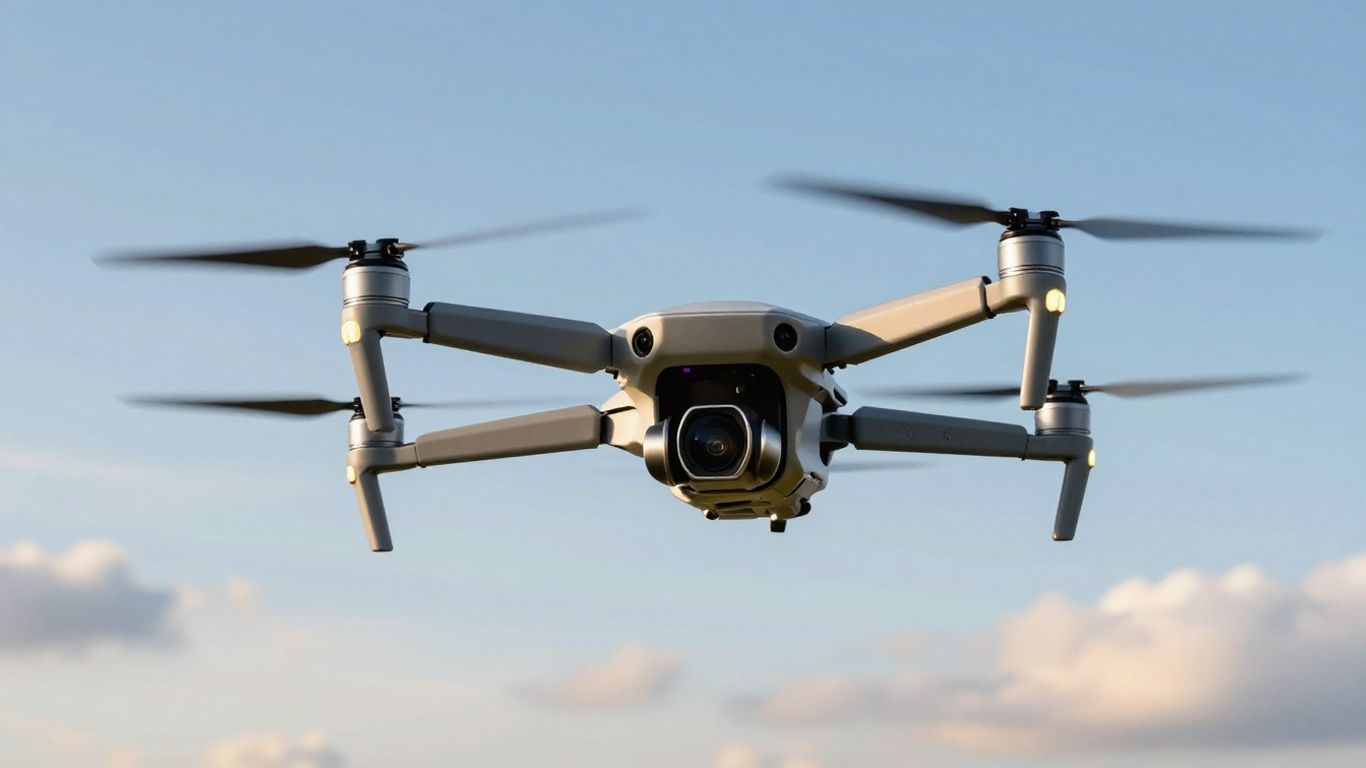
Alright, let’s talk about the DJI Mavic Air 3. This drone really hits a sweet spot for a lot of creators, offering a solid mix of features without completely emptying your wallet. It’s not quite the top-tier professional machine, but it’s way beyond your basic beginner drone.
One of the standout things here is the dual-camera system. You get a wide-angle lens, which is great for those sweeping landscape shots, and then there’s a 3x medium telephoto lens. This telephoto lens is pretty neat because it lets you get closer to your subject without actually having to fly the drone right up to it, which can be a real game-changer for getting more dynamic shots. Both cameras can shoot in 4K HDR, and you’re looking at 48-megapixel photos. That’s some serious detail.
Flight time is also pretty impressive. DJI says you can get up to 46 minutes out of a single battery, which is a good chunk of time to get your shots. Plus, it has obstacle sensing all around it, so you’ve got a bit more peace of mind when you’re flying, especially if you’re not super experienced yet.
Here’s a quick look at some of its specs:
| Feature | Specification |
|---|---|
| Max Flight Time | 46 minutes |
| Video Resolution | 4K HDR |
| Photo Resolution | 48MP |
| Obstacle Sensing | Omnidirectional |
| Video Transmission | O4 HD up to 10km |
| Camera System | Wide-angle + 3x Medium Telephoto |
It folds up nicely, making it pretty easy to pack and take with you. The video transmission system, called O4, is supposed to give you a reliable connection up to about 10 kilometers, which is a decent range for most people’s needs. It also has those intelligent flight modes that can help you get some pretty cool cinematic shots without needing to be a pro pilot. It’s a really capable drone that makes aerial creativity accessible.
Ready to Take Flight?
So, we’ve looked at some pretty cool 4K camera drones. Whether you’re just starting out or you’ve been flying for a while, there’s definitely something out there that can help you get those amazing aerial shots. Remember, the best drone for you really depends on what you want to do with it and how much you’re looking to spend. Don’t be afraid to explore, experiment, and most importantly, have fun capturing the world from a whole new angle. Happy flying!
Frequently Asked Questions
What makes a drone good for 4K video?
A drone is great for 4K video if it has a good camera with a decent-sized sensor, like a 1-inch sensor, and a special gimbal that keeps the video super steady, even when the drone moves around a lot. It also needs to be able to record at 30 frames per second or faster to look smooth.
Do I need a special license to fly a 4K camera drone?
In many places, if you’re flying a drone for fun and it weighs less than 250 grams, you don’t need a license. But if you’re flying for work, like making videos to sell, or if the drone is heavier, you’ll likely need to get a special permit or license from the government.
How long can these drones stay in the air?
Flight times can differ a lot. Some smaller drones might fly for about 20-30 minutes on one battery charge. Bigger, more advanced ones can often fly for 30 to over 40 minutes, giving you more time to get the perfect shots.
Are these drones easy to fly for beginners?
Some drones are made specifically for beginners and are super easy to control, often with helpful features like automatic hovering and obstacle avoidance. Others are more complex and might take a bit more practice, but many still have beginner modes to help you learn.
What is a gimbal on a drone?
A gimbal is like a special mount for the drone’s camera that uses motors to keep the camera level and steady. It stops your videos from looking shaky, even if the drone is flying through wind or making quick turns. Think of it as a super-smooth stabilizer for your camera.
Can I use my drone for more than just taking pictures and videos?
Yes, many drones can do more! Some are used for checking on things like buildings or farms, helping with search and rescue missions, or even for delivering small packages. Drones with special cameras can also be used for mapping and looking at things like plant health.