Top Affordable Drone Accessories to Enhance Your Flight Experience

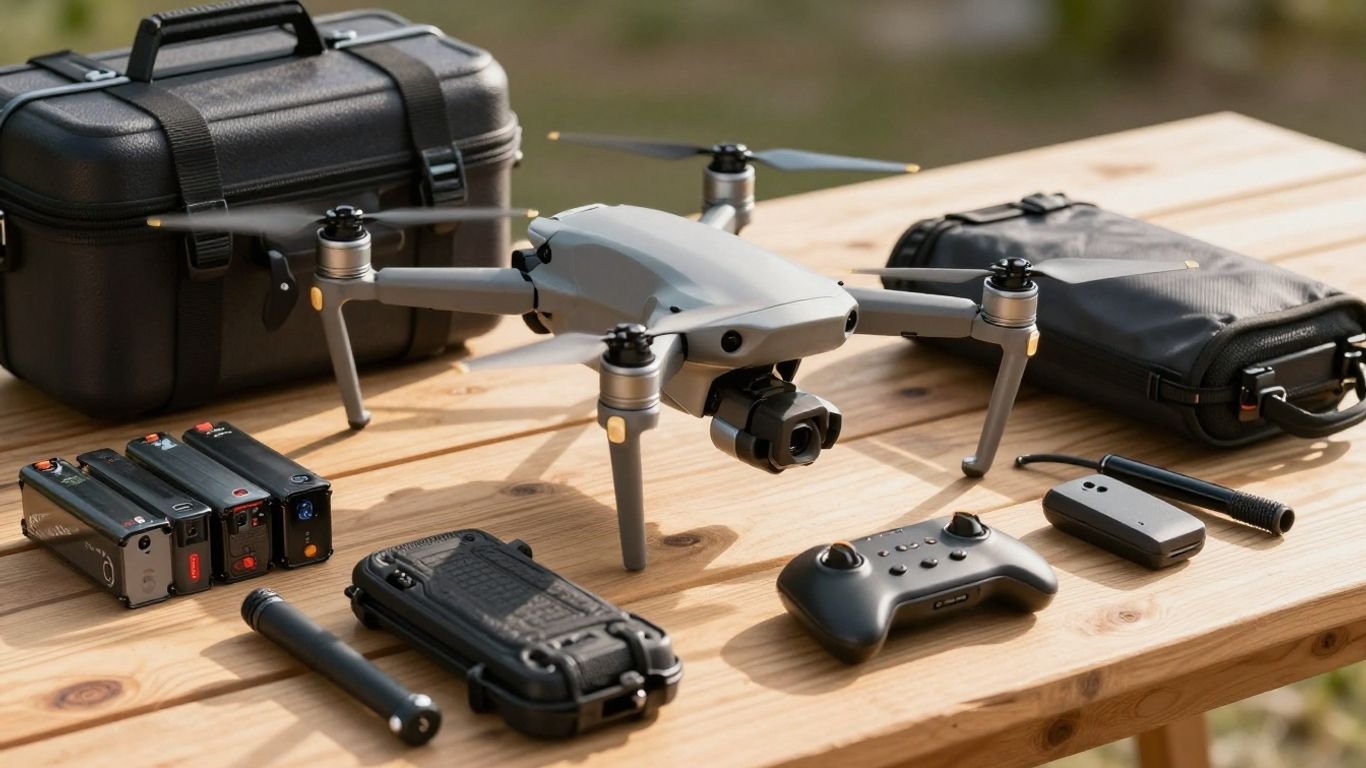
So, you’ve got a drone, huh? That’s pretty cool. But just having the drone is only half the fun, really. You can actually do a lot more with it, and make your flights way better, without spending a fortune. We’re talking about those little extras, the Affordable drone accessories, that make a big difference. Whether you’re just starting out or you’ve been flying for a while, there are some simple things you can get that will seriously upgrade your experience. Let’s check out some of the best ones that won’t empty your wallet.
Key Takeaways
- Getting the right accessories for your drone doesn’t have to cost a lot. Many great options are available for under $100.
- Simple additions like propeller guards and extra batteries are good starting points for improving safety and flight time.
- Accessories can help protect your drone from damage during flights and while it’s being transported.
- Upgrading your drone with things like ND filters can really help you get better photos and videos.
- Even small items, like a landing pad or a carrying case, can make your drone flying much more convenient and enjoyable.
1. Propeller Guards
When you’re just starting out with your drone, or if you plan on flying in tighter spaces, propeller guards are a really smart addition. They basically act like little bumpers for your spinning blades. These guards clip onto your drone’s propellers, creating a protective ring around them. This is super helpful for preventing accidental bumps into walls, trees, or even people. It’s not just about protecting your drone from minor crashes, though; it’s also about safety for everything and everyone around it. Think of them as custom-made armor for your drone’s most vulnerable parts, offering robust and durable protection. They can really boost your confidence when you’re learning the controls, letting you focus more on flying and less on worrying about a sudden collision. For indoor practice, they make a huge difference in safety. While they do add a tiny bit of weight, the peace of mind and protection they offer are definitely worth it. You can find basic sets for smaller drones starting around $15, making them a very affordable way to add a significant layer of safety to your flights. These guards are especially critical in training scenarios, urban exploration or indoor flights where space is limited. Beyond protection, they can help reduce liability risks, making them a go-to for schools, content creators and compliance-conscious operators. You can find these easily online, often designed to clip onto the propellers of specific drone models like those from DJI, ensuring a snug fit. Check out some options for your drone.
2. Spare Drone Batteries
You know, one of the most frustrating things is when your drone battery dies right when you’re getting the perfect shot. It happens more often than you’d think, especially with smaller drones that have shorter flight times. Having a spare drone battery is pretty much non-negotiable if you want to get the most out of your flying sessions. Think about it: most drone batteries take a good hour or more to charge. If you only have one, you’re stuck waiting around. With an extra, you can just swap it out and keep going. It’s a simple fix that makes a huge difference, letting you capture more footage or explore for longer without interruption.
When you’re looking for spares, make sure they’re compatible with your specific drone model. You don’t want to end up with a battery that doesn’t fit or won’t communicate with your drone’s system. Many modern drone batteries are ‘smart’ batteries, meaning they have built-in management systems. These systems help with charging, monitor temperature, and balance power, which is good for the battery’s health and prevents unexpected shutdowns mid-flight. It’s worth checking out options like the LIMITLESS 5 Drone battery if you own that model.
Here are a few things to keep in mind with spare batteries:
- Flight Time Extension: The most obvious benefit is simply flying longer. If your drone gets 20-30 minutes per charge, two batteries give you double that time, minus a little for the swap.
- Peace of Mind: Knowing you have a backup means you can relax a bit more and focus on flying and filming, rather than constantly watching the battery meter.
- Charging Strategy: Consider a multi-battery charging hub. These can charge several batteries at once, often prioritizing the one with the lowest charge, so you have a fresh one ready faster. This is a lifesaver if you’re on a trip or at an event where you can’t easily go home to charge.
Don’t forget battery safety. Lithium batteries need careful handling. Always store them properly, ideally in a fire-safe bag, and never leave them charging unattended. Using the correct charger for your specific battery type is also really important to avoid overcharging or damage.
Investing in a couple of extra batteries might seem like an added expense, but it really opens up your possibilities for aerial photography and videography. You can find batteries for various models, like those for the Drone X Pro AIR, so do your homework to find the right fit for your gear.
3. Landing Pad
Okay, so you’ve got your drone, and you’re ready to fly. But have you thought about where you’re going to land it? This is where a landing pad comes in. It might seem like a small thing, but trust me, it makes a difference.
Think about it: you’re out in a park, maybe the grass is a bit long, or there’s some gravel around. Landing your drone directly on that can kick up dust and debris, which isn’t great for the motors or the camera. A landing pad gives you a clean, flat surface to work with. It’s like giving your drone a nice, soft bed to come home to.
These pads are usually brightly colored, which is super helpful for spotting your landing zone from the air, especially if you’re flying a bit further out or if the terrain is a bit busy. They’re also designed to be durable and often waterproof, so you don’t have to worry about setting it down on damp ground. Many come with stakes or weighted edges to keep them from blowing away in the wind, which is a real lifesaver when you’re dealing with prop wash. It’s a simple accessory, but it really helps protect your gear and makes takeoffs and landings smoother. You can find some pretty decent ones that fold up small, making them easy to toss in your bag. It’s a small investment that can save you a lot of headaches down the line, and it’s definitely worth considering for any drone pilot. Check out some options for a drone landing pad.
Here’s why it’s a good idea:
- Keeps your drone clean: Prevents dust, grass, and dirt from getting into the motors and sensors.
- Provides a stable surface: Helps ensure smooth takeoffs and landings, even on uneven ground.
- Improves visibility: Bright colors make it easier to see your landing spot from the air.
- Protects propellers: Keeps the blades from hitting the ground or debris.
A good landing pad is more than just a piece of fabric; it’s a protective barrier that helps maintain the longevity of your drone. It simplifies operations in various environments and contributes to a more reliable flight experience overall.
4. Carrying Case
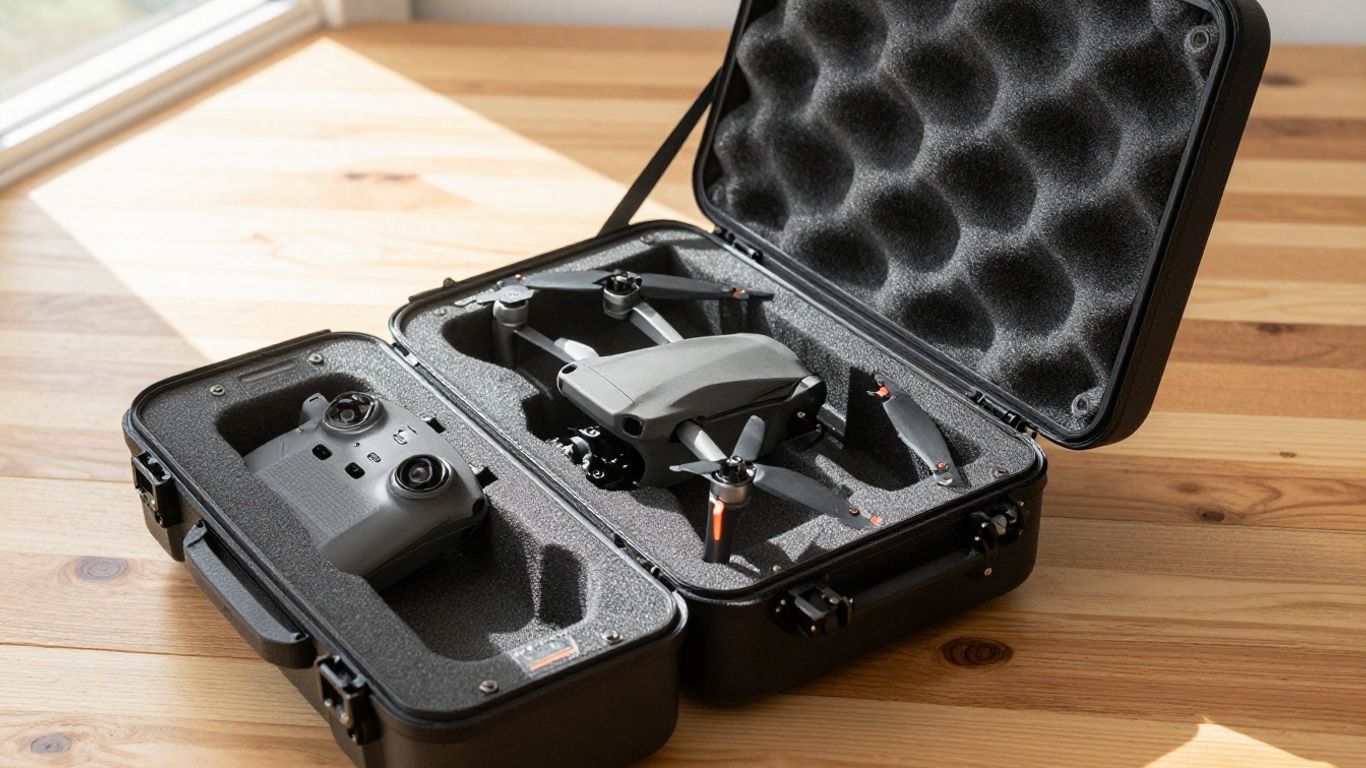
Alright, so you’ve got your drone, maybe a couple of extra batteries, and all those little bits and bobs that come with it. Now, how do you actually get all this stuff from your place to where the flying magic happens without everything getting banged up? That’s where a good carrying case comes in. Seriously, don’t just toss your drone in a regular backpack. You risk scratching the camera, bending propellers, or worse. A dedicated case is designed to keep everything snug and protected.
Think about what you need to carry. Most cases have custom-cut foam or dividers. This means your drone has its own spot, the controller has its own, and your batteries and cables can all be organized neatly. It makes finding things way easier when you’re out in the field. Plus, many are built to be water-resistant, which is a lifesaver if you get caught in a sudden shower or just set your bag down on damp ground. It’s all about keeping your gear safe and sound, whether you’re heading to the park or going on a bigger adventure. A sturdy case is a pretty small investment when you consider the cost of the drone itself.
Here’s a quick rundown of what to look for:
- Protection: Look for hard-shelled or well-padded options that can handle bumps and drops.
- Organization: Plenty of compartments or custom foam inserts to keep everything tidy.
- Durability: Materials that can withstand regular use and different weather conditions.
- Portability: Comfortable straps or handles for easy transport.
Choosing the right case really depends on your drone size and how much extra gear you haul around. Some people prefer a backpack style for easier hiking, while others like a more compact, briefcase-like option. Whatever you pick, make sure it fits your needs and keeps your drone safe during transit. It’s a key part of responsible drone ownership.
When you’re looking at options, you’ll find everything from basic padded bags to rugged, waterproof cases. For example, some folks find that a good drone backpack is perfect for carrying everything they need for a day of flying and shooting photos. It’s worth checking out different styles to see what feels right for your setup and how you usually travel.
5. ND Filters
You know how sometimes when you’re filming outside on a really sunny day, your video looks all washed out and blown out? That’s where ND filters come in. Think of them like sunglasses for your drone’s camera. They cut down the amount of light hitting the sensor, which is super helpful for getting good shots when it’s bright.
Using ND filters lets you keep your shutter speed at a more cinematic level, usually double your frame rate, without overexposing the image. This is key for getting that smooth, natural motion blur that makes footage look professional, rather than choppy and jerky. Without them, you’re often stuck with a fast shutter speed just to avoid a totally white screen, and that just doesn’t look good.
Here’s a quick rundown of what the numbers mean:
- ND4: Reduces light by 2 stops. Good for slightly overcast days or early morning/late evening.
- ND8: Reduces light by 3 stops. A common choice for moderately sunny conditions.
- ND16: Reduces light by 4 stops. Useful for bright, sunny days.
- ND32: Reduces light by 5 stops. Great for very bright, harsh sunlight.
- ND64 and higher: For extremely bright conditions, like shooting over snow or water on a clear day.
Most drone pilots start with a basic set, maybe ND8, ND16, and ND32, as these cover a lot of common shooting scenarios. You can find decent sets for your drone that won’t break the bank, like those from Neewer or Freewell. It’s a small investment that makes a big difference in the quality of your aerial videos.
6. Drone Backpack
When you’re out and about with your drone, you need a solid way to carry it all. That’s where a good drone backpack comes in. It’s not just a bag; it’s a mobile command center for your aerial adventures. A well-designed backpack protects your gear and keeps everything organized, so you’re ready to fly at a moment’s notice.
Think about it: you’ve got the drone itself, controllers, spare batteries, memory cards, maybe even some filters or extra props. Stuffing all that into a regular backpack is a recipe for disaster. Things get jumbled, delicate parts can get damaged, and finding what you need can be a real pain. A dedicated drone backpack usually has custom compartments, often with foam padding, to keep each item snug and secure. This means your drone’s camera and propellers are less likely to get banged up during transit.
When you’re picking one out, look for a few key things:
- Protection: Does it have good padding? Is it made from durable, maybe even water-resistant material? Some offer hard shells for extra security.
- Organization: Are there enough pockets and dividers for all your accessories? Can you easily access what you need?
- Comfort: If you’re hiking to a remote spot, a comfortable backpack with good straps makes a huge difference. Check out options like the Lowepro DroneGuard BP 250 for ideas.
- Size: Make sure it fits your specific drone model and all the gear you typically carry. Some are designed for smaller drones, while others can handle larger setups.
Carrying your drone safely and efficiently is just as important as the flight itself. A good backpack makes the whole experience smoother, from getting to your location to packing up at the end of the day. It’s an investment in keeping your equipment safe and prolonging its life.
7. Landing Gear Extensions
Sometimes, your drone just needs a little more height. That’s where landing gear extensions come in. These simple attachments bolt onto your drone’s existing landing gear, giving it a bit of extra lift off the ground. This extra clearance is surprisingly useful.
Why bother with these? Well, for starters, they help keep your camera and gimbal safe. If you’re flying over grass, sand, or even just a slightly uneven patch of dirt, the drone’s belly can easily get too close to the surface. This can lead to scratches, dust getting kicked up into sensitive components, or worse, a damaged gimbal. Extensions provide a buffer, giving you more peace of mind during takeoff and landing. They’re especially handy if you’re using a drone like the Mavic Air 2, where accessories like these PGYTECH landing gear are quite affordable and offer a good color match.
Beyond just protection, they can also improve stability. A bit more height can make it easier for the drone to settle evenly on less-than-perfect surfaces. Think of it like giving your drone a slightly taller stance. For drones like the Mavic 4 Pro, you can find lightweight plastic extensions that add minimal weight, so you don’t have to worry about them affecting flight performance too much. These are often designed to be sturdy and resistant, weighing only about 8g per piece [aff5].
Here’s a quick rundown of why they’re a good idea:
- Protect your camera and gimbal: Keeps them further away from the ground.
- Improve stability: Helps with landings on uneven terrain.
- Reduce dust and debris: Less chance of kicking up dirt into the drone’s motors or sensors.
- Easier access: Sometimes, the extra height makes it simpler to open panels or swap batteries without scraping the drone’s underside.
These aren’t usually complex pieces of equipment. They’re often just simple plastic or carbon fiber extensions that attach with screws or clips. The main thing is to make sure they’re compatible with your specific drone model. It’s a small addition that can make a noticeable difference in your day-to-day flying, especially if you don’t always have a perfectly smooth runway available.
8. High-Capacity Memory Cards
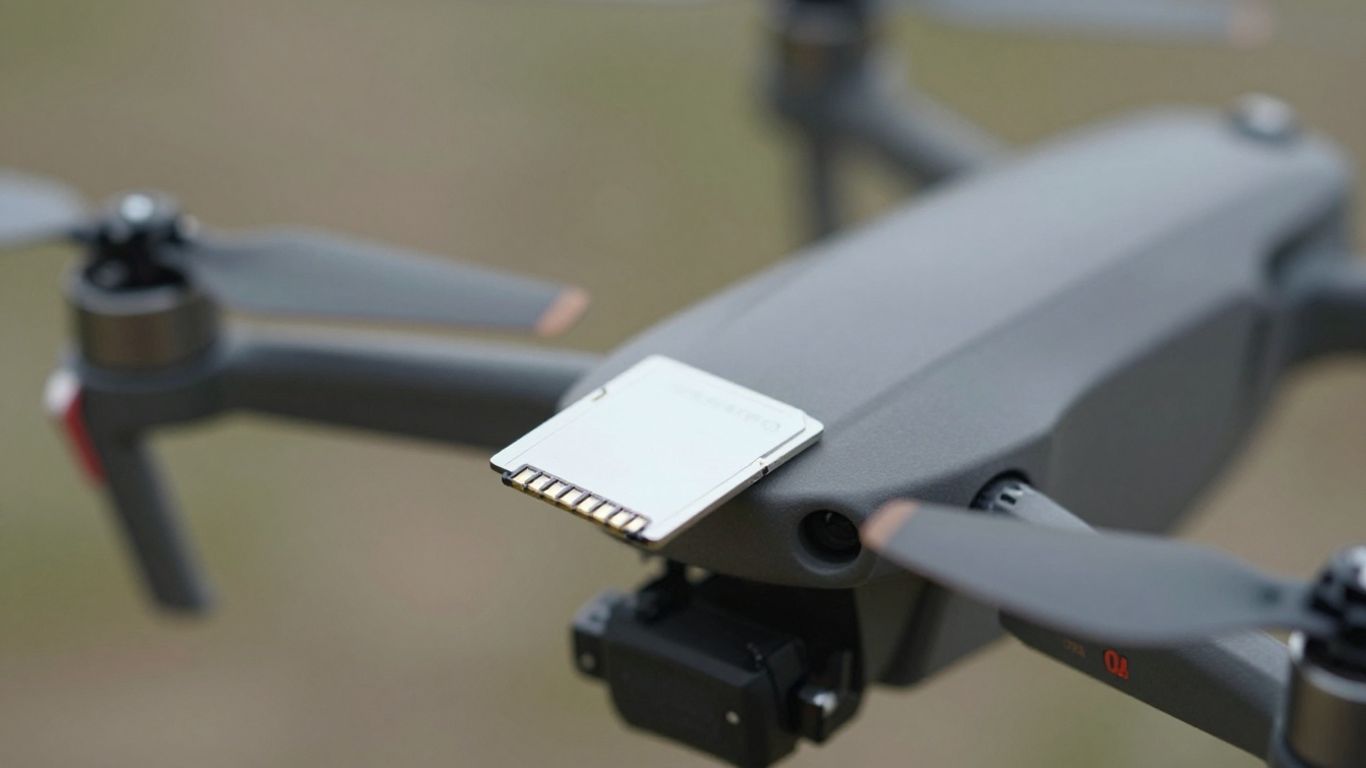
You know, when you’re out flying your drone, the last thing you want is that dreaded ‘storage full’ notification popping up. It’s happened to me, and it’s a real buzzkill, especially if you’re capturing some amazing footage. That’s why having a high-capacity memory card is pretty much a no-brainer.
Think about it: 4K video files are huge. Just a few minutes can eat up gigabytes of space. If your card is too small, you’ll be cutting your flights short or, worse, missing out on shots because you ran out of room. Getting a card with plenty of storage means you can focus on flying and filming, not constantly worrying about space.
When you’re picking one out, look for a few things. You’ll want a decent write speed – that’s how fast the card can save the data your drone is sending it. If it’s too slow, you can get dropped frames or even corrupted files, which is just awful. Most drone manuals will tell you what speed class (like V30 or U3) and type (UHS-I is common) your drone needs. Don’t skimp here; a cheap, slow card can ruin your footage.
Here’s a quick rundown of what to look for:
- Capacity: Aim for at least 128GB, but 256GB or even 512GB is better if you shoot a lot of video. It’s cheaper per gigabyte to buy larger cards.
- Speed Class: Look for V30 or U3 ratings at a minimum for smooth 4K recording.
- Reliability: Stick with well-known brands. You don’t want a card failing when you’re miles away.
Choosing the right memory card is like picking good tires for your car. You need them to perform reliably under pressure, and when they do, you just don’t think about them. But if they fail? Everything stops. For drones, a fast, high-capacity card from a brand like Samsung ensures your footage is captured without hiccups.
It’s also a good idea to have a couple of these cards. That way, you can swap them out and keep shooting if one fills up, or have a backup if something goes wrong. I usually grab a couple of Samsung microSD cards when they’re on sale. It’s a small investment that saves a lot of potential headaches and ensures you get all the shots you want.
9. Range Extenders
Sometimes, the signal between your drone and the controller just doesn’t cut it, especially if you’re flying in an area with a lot of interference or just want to push the limits a bit further. That’s where range extenders come in. They’re basically little boosters that help strengthen that connection, letting you fly farther and with a more stable link. It’s not about flying recklessly, but about having a more reliable connection when you need it.
Think about it: you’re out in a big open field, or maybe near some tall buildings that can mess with the signal. A range extender can make the difference between a smooth flight and one where you’re constantly worried about losing control. They’re particularly useful for tasks like surveying large areas or when you’re trying to capture footage from a distance. It’s a pretty straightforward accessory, often just clipping onto your existing controller’s antennas.
While range extenders can boost your signal, it’s always important to stay aware of your drone’s battery life and the surrounding airspace. Knowing the FAA drone regulations is key, no matter how far you can fly.
Here’s a quick rundown of why you might want one:
- Improved Signal Stability: Less chance of dropped signals or jerky controls.
- Extended Flight Distance: Safely fly further away from your takeoff point.
- Better Performance in Crowded Airspace: Helps cut through interference from other devices.
They’re a relatively inexpensive way to get more confidence in your drone’s connection, especially if you’re doing anything beyond just casual backyard flying. It’s a good piece of kit to have if you’re serious about getting the most out of your drone’s capabilities and want to explore advanced piloting skills.
10. GPS Trackers
Losing a drone can be a real bummer, especially after investing a good chunk of change. That’s where a GPS tracker comes in handy. It’s a small device that can make a huge difference in recovering your lost bird. Think of it as a tiny beacon that helps you pinpoint your drone’s location if it goes down unexpectedly or gets carried away by the wind. This is especially useful if you fly over water, in dense woods, or in remote areas where finding it would otherwise be impossible.
These trackers work by using GPS to determine their location and then transmitting that data, usually via a cellular connection, to an app on your smartphone or a website. Some are standalone units with their own SIM cards, while others might integrate with your drone’s existing systems. When choosing one, keep an eye on the weight, as you don’t want it to negatively impact your drone’s flight performance. A good tracker can provide peace of mind, knowing you have a better chance of finding your drone if the worst happens. For example, one GPS module demonstrated impressive performance, achieving a 3D lock in just 36 seconds [acf1].
Here’s why a GPS tracker is a smart addition:
- Peace of Mind: Reduces the stress of potential loss.
- Faster Recovery: Significantly increases the chances of finding a downed drone.
- Theft Deterrent: Can aid in recovering a stolen drone.
- Remote Area Safety: Invaluable when flying far from home.
While many modern drones have built-in ‘return to home’ features, these rely on a stable GPS signal and battery power. A dedicated tracker offers an independent layer of security, especially if the drone loses power or its own GPS fails. It’s a simple accessory that provides a significant safety net for your investment.
Wrapping Up Your Drone Gear
So, there you have it. You don’t need to spend a fortune to make your drone flights way better. Things like extra batteries or some sturdy propeller guards can really make a difference, whether you’re just starting out or you’ve been flying for a while. Think about what you like to do with your drone most – are you trying to get amazing shots, fly longer, or just keep your gear safe? Pick the accessories that fit what you need. It’s a smart way to get more out of your drone without emptying your wallet. Happy flying!
Frequently Asked Questions
Why should I get accessories for my drone?
Accessories can make flying safer, help you fly longer, improve your photos and videos, protect your drone from damage, and even add new features. Think of them as upgrades for your drone!
Are propeller guards really necessary?
Yes, especially if you’re new to flying or plan to fly indoors or near people and objects. They help prevent minor crashes from damaging your drone’s propellers and also make the drone safer for those around it.
How do extra batteries help?
Drones usually have a limited flight time. Having extra batteries means you can swap them out and keep flying instead of waiting for one battery to charge. This is great for longer trips or when you’re trying to get the perfect shot.
What’s the point of a landing pad?
A landing pad gives your drone a clean, flat spot to land, no matter where you are. This stops dirt, grass, or rocks from getting into the drone’s motors and helps you see where to land, especially if the ground is uneven.
Is a carrying case or backpack important?
Absolutely! A good case or backpack protects your drone and all its parts from bumps, scratches, and weather when you’re traveling. It also keeps everything organized so you can find what you need easily.
What are ND filters and why would I use them?
ND filters are like sunglasses for your drone’s camera. They reduce the amount of light coming into the lens, which helps you get better video and photos in bright sunlight. This allows for smoother motion in videos and prevents overexposed images.