
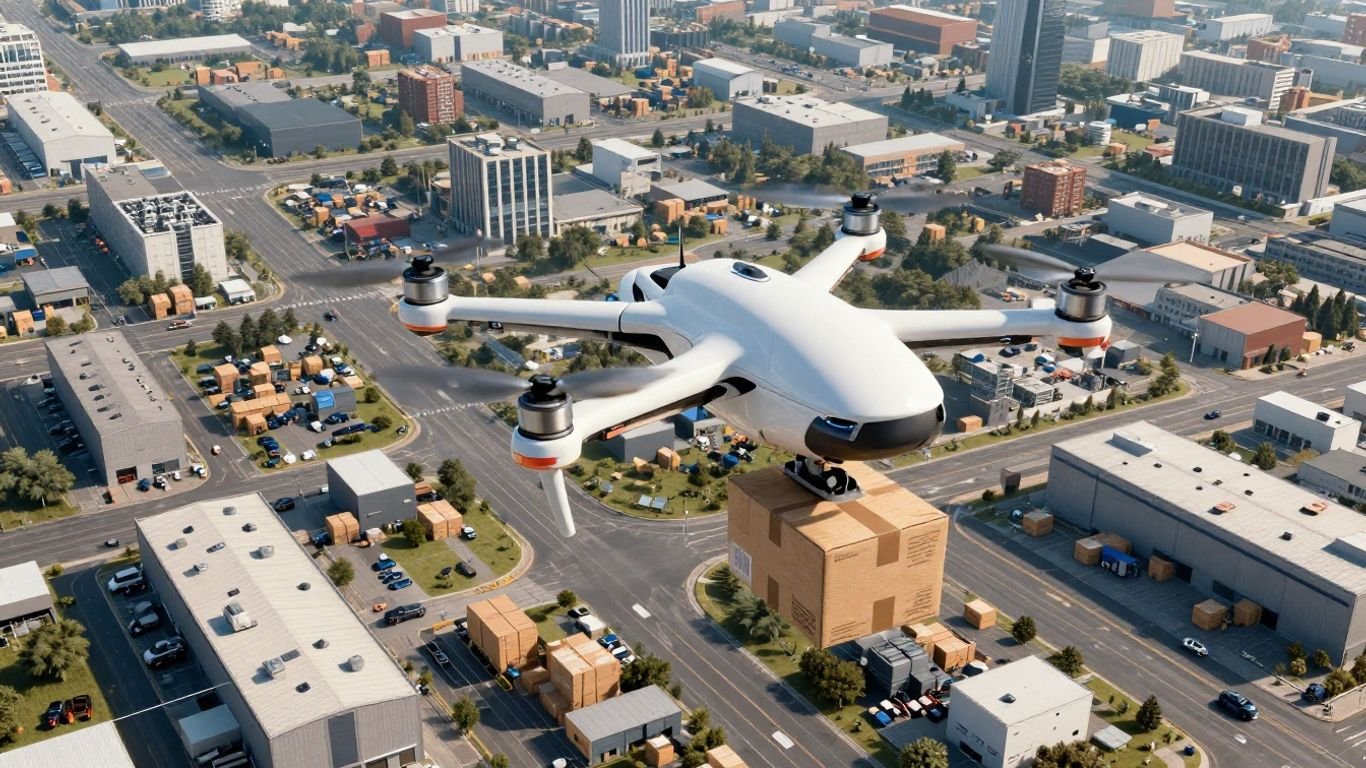
Revolutionizing Supply Chains: The Rise of Drone-Based Logistics Solutions

You know, things are changing fast with how we get stuff. Remember when getting a package took ages? Well, that’s changing. Drones are starting to fly around, dropping off packages. It sounds like something out of a movie, but it’s actually happening. This whole drone thing is shaking up how companies move goods, making things quicker and, honestly, pretty cool. We’re talking about a big shift in getting things from here to there, and it’s all thanks to these flying machines.
Key Takeaways
- Drone-based logistics solutions are changing how goods are moved, making deliveries faster and more efficient.
- Drones help solve problems with traditional ‘last-mile’ deliveries, like traffic jams and high costs.
- These flying devices are used for many things, from delivering medicine in remote areas to managing stock in big warehouses.
- There are still some bumps in the road, like rules and making sure drones are safe and can carry enough weight.
- The future looks bright for drone logistics, with better technology making them fly further and carry more, possibly working together in large groups.
The Evolving Landscape Of Drone-Based Logistics Solutions
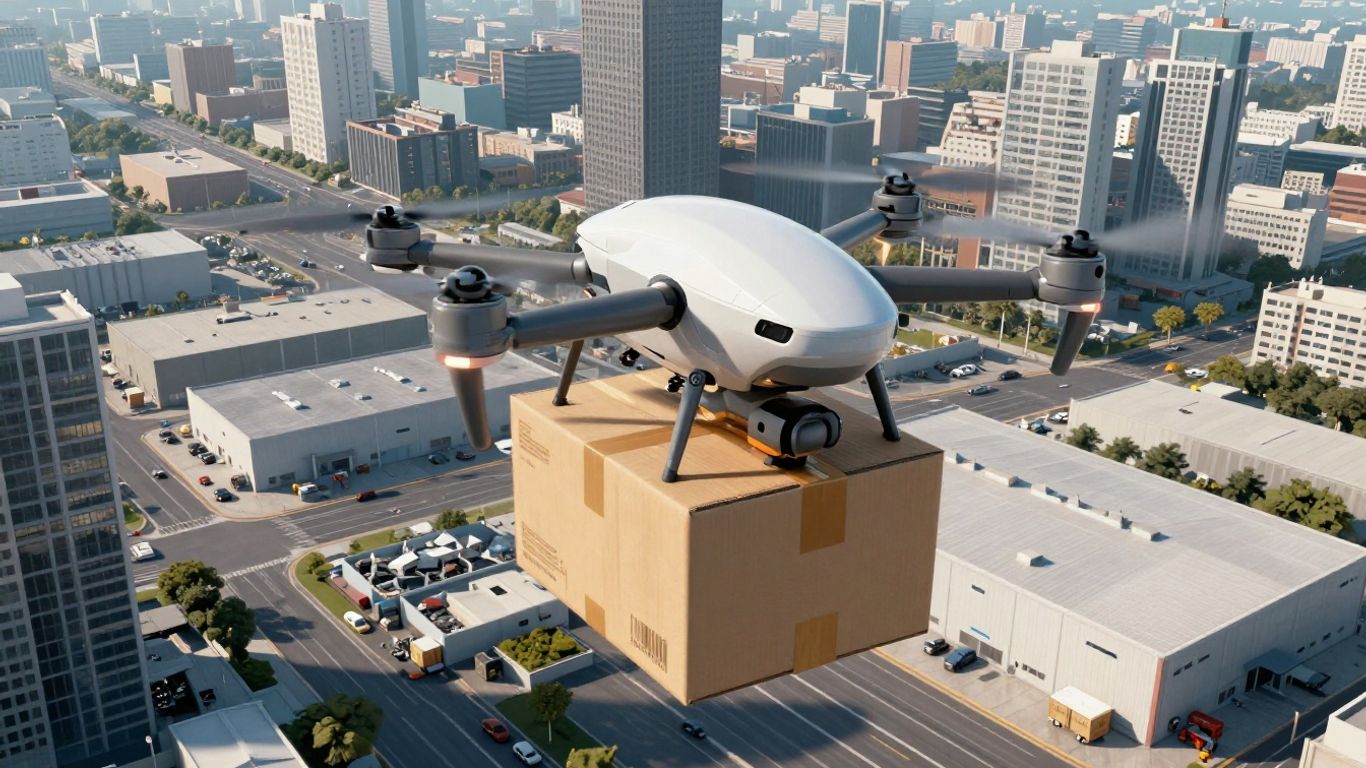
It feels like just yesterday we were talking about how e-commerce was changing everything, and now, here we are, looking at drones zipping through the sky to deliver our packages. It’s a pretty wild shift, right? The whole idea of drone logistics isn’t exactly brand new, but it’s really starting to pick up steam. We’re seeing this market grow at a crazy pace, with projections showing it could add billions to the economy in the next few years. Companies are jumping on board because, let’s face it, the old ways of getting things from point A to point B are getting a bit clunky, especially with all the traffic and rising costs.
Transforming Transportation In The 21st Century
Think about it: traditional shipping methods are often stuck in traffic jams and rely on a lot of fuel. Drones offer a different path. They can bypass road congestion entirely, which means faster deliveries. This is a big deal for everything from getting medicine to remote areas to just getting that online order to your doorstep quicker. It’s not just about speed, though. It’s about making transportation more flexible and, hopefully, more sustainable. The drone delivery service market is expanding rapidly, driven by consumer demand for same-day and on-demand deliveries, and e-commerce companies are really pushing for these faster logistics solutions.
Driving Forces Behind Drone Logistics Growth
So, what’s making all this happen? A few things. First, there’s a huge demand for quicker, more convenient deliveries. People want their stuff, and they want it now. Second, the technology itself has gotten way better. Drones are more reliable, they can fly longer distances, and they’re getting smarter. Plus, companies are investing a ton of money into making this work. We’re seeing major players in retail and logistics experimenting and rolling out their own drone programs. It’s becoming clear that drones are a serious contender for certain types of deliveries, especially for that tricky last mile.
Technological Innovations Enhancing Efficiency
It’s not just about strapping a box to a drone and sending it off. There’s a lot of smart tech involved. We’re talking about AI that helps drones navigate complex routes, sensors that keep them safe from obstacles, and better battery tech that lets them fly further on a single charge. These innovations are key to making drone delivery practical and widespread.
- AI-powered navigation: Helps drones find the best routes, avoiding obstacles and other aircraft.
- Improved battery life: Allows for longer flight times and greater delivery ranges.
- Advanced sensors: Provide real-time data for safer flight operations.
The push for drone logistics is really about finding smarter, faster ways to move goods. It’s a response to changing consumer habits and the limitations of our current infrastructure. The technology is catching up, and the potential impact on supply chains is massive.
It’s an exciting time to watch this space develop, and it’s likely we’ll see even more surprising uses for drones in logistics in the coming years. The drone logistics and transportation market is poised to transform global transportation and logistics networks, and it’s fascinating to see how it all unfolds. This technology is reshaping freight solutions.
Addressing Last-Mile Delivery Challenges With Drones
Understanding Traditional Last-Mile Delivery Hurdles
The final leg of any delivery, often called the last mile, is notoriously tricky and expensive. Think about it: getting a package from a local distribution center to your front door. This part of the journey can eat up a huge chunk of the total shipping cost, sometimes over half for retailers. Why is it so tough? Well, a few things are at play. For starters, traffic in cities can be a real nightmare, causing delays and making deliveries take way longer than planned. Then there’s the cost of it all – paying drivers, keeping vans running, and buying fuel adds up fast. Plus, all those delivery vans aren’t exactly great for the environment. And let’s not forget about things like wrong addresses or nobody being home, which lead to failed deliveries that need to be redone, costing even more time and money. It’s a part of the supply chain that’s always been hard to pin down and control.
The Rise Of Autonomous Drones For Swift Deliveries
This is where drones really start to shine. They bypass traffic jams entirely, flying directly to their destination. This means quicker deliveries, which is exactly what customers want these days. Companies are seeing that drones can be way cheaper to operate per mile than traditional vans, sometimes by as much as 70%. It’s not just about speed and cost, though. Drones can also help cut down on pollution, which is a big win for the planet. Plus, with more people wanting contactless deliveries, drones offer a perfect solution. It’s estimated that over 20,000 drones are already making retail deliveries daily, and the market is expected to explode in the coming years. It’s a pretty exciting time for this technology, and it’s changing how we think about getting packages.
The last mile is where the real challenges lie in logistics, but drones are emerging as a powerful tool to overcome these obstacles. They offer a faster, more cost-effective, and environmentally friendly way to get goods to consumers.
Revolutionizing Customer Experience Through Aerial Delivery
Imagine ordering something online and having it arrive at your doorstep in minutes, not hours or days. That’s the kind of experience drones can provide. This speed and convenience can seriously boost customer satisfaction. For businesses, this means happier customers and potentially more repeat business. It’s not just about getting a package; it’s about the entire experience. Drones can also reach places that are hard for regular vehicles to get to, opening up new possibilities for delivery. While there are still some hurdles to clear, like figuring out how to carry heavier items or dealing with bad weather, the potential for drones to transform how we receive goods is huge. It’s all about making that final step in the delivery process smoother and more efficient for everyone involved, from the company to the person waiting for their order. This technology is helping to build a new ecosystem for last-mile solutions.
Here’s a quick look at how drones tackle common last-mile issues:
- Traffic Congestion: Drones fly above it all, avoiding road delays.
- Cost Inefficiencies: Lower operational costs compared to traditional vehicles.
- Environmental Impact: Reduced carbon emissions and no need for road infrastructure.
- Delivery Speed: Significantly faster delivery times for small, light packages.
- Accessibility: Can reach remote or difficult-to-access locations.
Key Applications Of Drone-Based Logistics Solutions
Drone technology isn’t just a futuristic concept anymore; it’s actively reshaping how we move goods. We’re seeing these aerial devices tackle some pretty big challenges across different industries. It’s pretty amazing how quickly this field is growing, with projections showing the drone logistics market could hit over $18 billion soon.
Last-Mile Delivery In Urban And Suburban Settings
This is probably the most talked-about use for drones. Think about getting a package from a local warehouse to your doorstep. Traditional methods often get stuck in traffic, making deliveries slow and costly. Drones offer a way around that. Companies are using them to deliver everything from groceries to small electronics. The speed and efficiency gains are significant, especially in busy areas where ground transport struggles.
- Faster Delivery Times: Drones can bypass traffic jams, cutting down delivery times considerably.
- Reduced Costs: Lower operational expenses compared to traditional delivery vehicles.
- Environmental Benefits: Less fuel consumption means a smaller carbon footprint.
It’s not just about speed, though. It’s about making deliveries more convenient for everyone. Imagine getting that urgent item within minutes, not hours. This is where drone delivery really shines.
Healthcare Logistics For Remote Regions
When we talk about drones in healthcare, it’s often about reaching places that are hard to get to. Think about rural communities or areas cut off by natural disasters. Getting vital medical supplies like vaccines, blood, or medication to these places quickly can be a matter of life and death. Companies like Zipline have already made millions of flights, delivering critical items where they’re needed most. This kind of application truly shows the life-saving potential of drone technology.
Drones can bridge geographical gaps, providing essential services to underserved populations and improving health outcomes in challenging environments.
Warehouse Automation And Inventory Management
Inside large warehouses, drones are becoming valuable tools. They can fly through aisles, scanning inventory and helping to keep track of stock levels. This is way faster and more accurate than manual checks. Some systems can even transport items within the warehouse. This helps reduce errors and speeds up the whole process of getting goods ready for shipment. It’s a big step towards more automated and efficient warehouse operations.
| Task | Traditional Method | Drone Method | Accuracy Improvement | Time Savings |
|---|---|---|---|---|
| Inventory Counting | Manual scanning | Automated scan | Up to 99%+ | Significant |
| Item Retrieval (Internal) | Forklifts/Manual | Autonomous flight | N/A | Moderate |
Large-Scale Freight Transport Innovations
While many drones are small, there’s a lot of work happening to make them capable of carrying larger loads for longer distances. This could mean moving goods between cities or even across borders without relying solely on trucks or planes. It’s still early days for this, but the idea is to create faster, more cost-effective ways to move significant amounts of cargo. This could really change how global supply chains operate, making them more agile and responsive. The potential for intercity drone transport is huge.
These applications show that drones are not just a novelty; they are becoming a practical and powerful part of modern logistics. As the technology continues to develop, we can expect to see even more innovative uses emerge.
Navigating The Challenges Of Drone Logistics
While the idea of drones zipping around delivering packages sounds pretty cool, and honestly, it’s getting closer to reality every day, there are definitely some big hurdles to clear. It’s not just about having a drone that can fly; it’s about making sure it can do so safely, legally, and reliably, especially as more and more of them take to the skies. The path to widespread drone logistics is paved with practical and regulatory obstacles.
Regulatory Hurdles And Airspace Integration
One of the biggest headaches is figuring out the rules of the road, or rather, the sky. Air traffic control for drones is a whole new ballgame. We’re talking about integrating potentially thousands of unmanned aircraft into airspace that’s already busy with planes and helicopters. This requires clear regulations on flight paths, altitudes, and how drones communicate with each other and with ground control. Getting approval for operations, especially beyond visual line-of-sight (BVLOS), is a complex process that many companies are still working through. It’s a bit like trying to build a new highway system while the old one is still in use – tricky business.
Ensuring Security And Operational Safety
Safety is, of course, paramount. What happens if a drone malfunctions mid-flight? Or worse, what if it’s hacked? Protecting drones from cyber threats and physical tampering is a major concern. We need robust systems to prevent unauthorized access and ensure that drones don’t pose a risk to people or property on the ground. This also includes making sure that sensitive packages, like medical supplies, aren’t compromised during transit. The industry is working on developing stringent safety standards and compliance measures to build public trust and prevent accidents. It’s a big responsibility, and one that can’t be taken lightly.
Addressing Payload Capacity Limitations
Right now, most delivery drones can only carry relatively small and light packages. Think of a small box of medicine or a few groceries. They’re not quite ready to haul large appliances or bulkier items. This limits their application for certain types of deliveries. While there’s a lot of research going into developing drones with higher payload capacities, it’s a significant technical challenge. Battery life and motor strength play a big role here. For now, drones are best suited for specific, lighter-weight delivery needs, but that’s expected to change as technology advances. The current methods for proving adherence to Dangerous Goods (DG) regulations, for instance, aren’t really built for the scale drone logistics might reach, suggesting a need for smarter compliance solutions as the sector grows [5a08].
The integration of drones into our daily lives, especially for deliveries, faces a complex web of challenges. From the skies above to the ground below, every aspect requires careful consideration. Weather conditions can ground flights, regulations are still catching up, and the risk of theft or damage during transit is a real concern. Plus, the rising cost of insurance for these new operations adds another layer of complexity. These factors present significant obstacles to the widespread adoption of drones for logistics and delivery operations [b91b].
Here’s a quick look at some of the key challenges:
- Regulatory Frameworks: Developing clear, consistent, and scalable rules for drone operation.
- Airspace Management: Creating systems to safely manage drone traffic alongside traditional aircraft.
- Security Threats: Protecting drones and their cargo from cyberattacks and physical interference.
- Public Perception: Building trust and acceptance among communities where drones will operate.
- Technological Limits: Overcoming current constraints in battery life, payload, and weather resilience.
The Future Outlook For Drone Logistics
Advancements In Autonomous Flight Systems
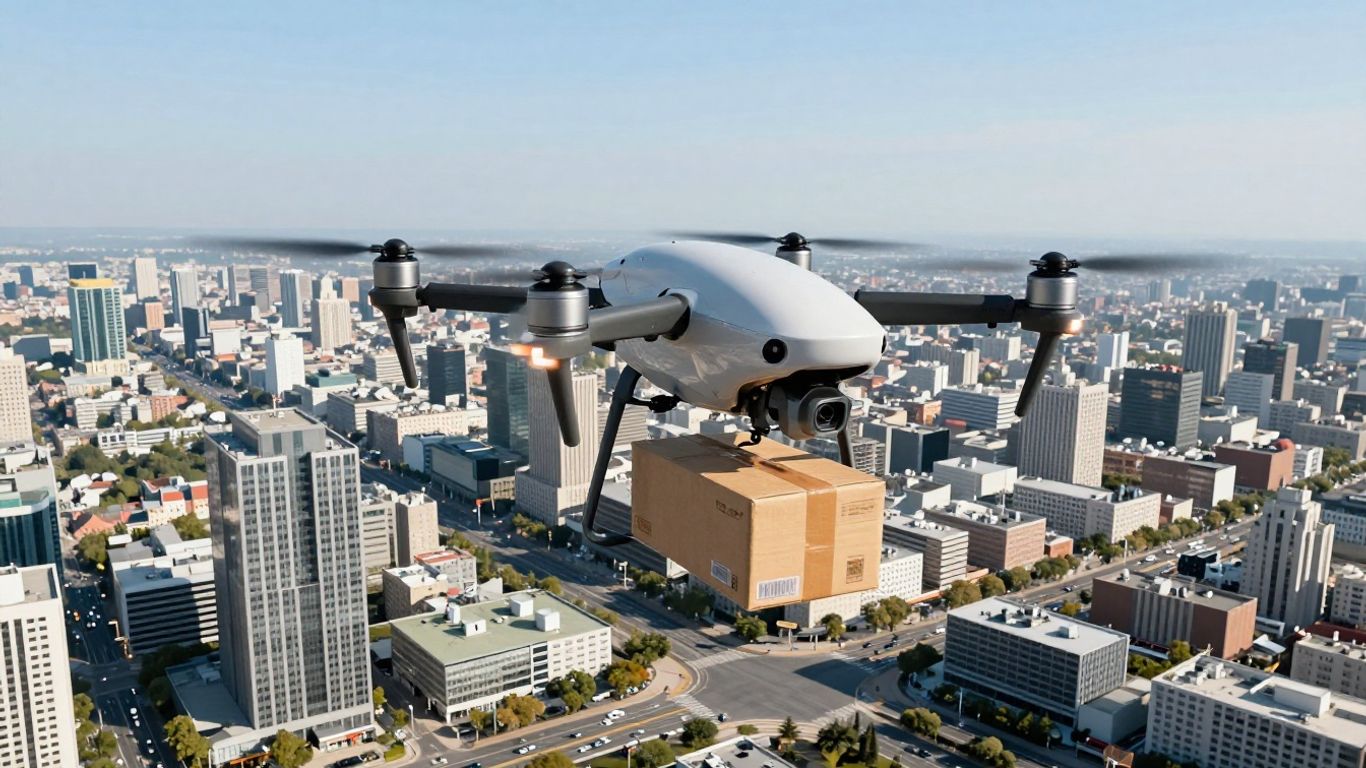
So, what’s next for drone delivery? Well, the tech is getting smarter, fast. We’re talking about drones that can figure out their own way through busy skies, even in tricky weather, without a human pilot constantly watching. This means they can handle more complex routes and deliver goods more reliably. Think of it like self-driving cars, but for the air. This push for better autonomous systems is key to making drone logistics a regular part of our lives, not just a novelty. It’s all about making them safer and more efficient for everyday use.
Enhancing Battery Efficiency For Extended Operations
One of the biggest headaches right now is how long these drones can actually fly and how much they can carry. Battery tech is the name of the game here. Researchers are working on new battery designs that can hold more power, meaning drones can travel further on a single charge. This is a big deal for reaching more remote areas or making longer delivery routes feasible. Imagine a drone that can fly for an hour or more, carrying a decent package – that opens up a whole lot of possibilities for businesses and customers alike. It’s not just about making them fly longer, but also about making them lighter and faster to charge.
The Role Of Swarm Technology In Logistics
This is where things get really interesting. Instead of just one drone doing a job, imagine a whole group of them working together, like a flock of birds. This is called swarm technology. For logistics, it could mean coordinating dozens, or even hundreds, of drones to manage massive delivery operations. They could communicate with each other, divide tasks, and cover a huge area much faster than individual drones. This could be a game-changer for large-scale distribution centers or even for managing city-wide delivery networks. It’s about coordinated action on a grand scale.
Transforming Global Transportation Networks
Ultimately, all these advancements point towards a major shift in how we move goods around the world. Drones aren’t just for small packages anymore. As they get better at carrying heavier loads and flying longer distances, they could start handling bigger parts of the supply chain. This could mean faster shipping times, lower costs, and even a reduced environmental impact compared to traditional trucks and planes. It’s a big vision, but the progress we’re seeing suggests that drones will become a significant piece of the global transportation puzzle, changing how everything from groceries to critical medical supplies gets from point A to point B. We’re already seeing how drones are revolutionizing property assessments, and this is just the beginning of their impact on logistics. Drone delivery networks are set to become more common.
Robotics Development For Drone Logistics
AI Algorithms For Complex Navigation
So, the brains behind these flying delivery bots are getting seriously smart. We’re talking about AI algorithms that are learning to handle all sorts of tricky situations. Think about a drone trying to zip through a busy city or a dense forest – it needs to know how to avoid obstacles, other aircraft, and even unexpected things like birds. The goal is to make drones navigate these complex environments with very little human input. It’s a big step up from just following a pre-set path. Developers are working on systems that can adapt on the fly, making decisions in real-time to keep things safe and on schedule. This kind of advanced AI is what makes autonomous flight in real-world conditions possible.
Innovations In Battery Technology
One of the biggest headaches for drone delivery right now is how long they can actually fly and how much weight they can carry. That’s where battery tech comes in. We’re seeing a lot of work going into making batteries lighter, more powerful, and quicker to recharge. Imagine drones that can fly for hours instead of minutes, or carry heavier packages like a small appliance. This isn’t just about making drones fly further; it’s about making them more practical for a wider range of delivery jobs. Companies are looking at everything from new battery chemistries to smarter power management systems. It’s a constant race to pack more energy into smaller, lighter packages, which is key for expanding what drones can do. You can even find some affordable accessories to help improve flight time and usability, like extra batteries.
Ensuring Regulatory Compliance For Drones
This is a big one, and honestly, it’s a bit of a maze. For drones to really take over delivery routes, they need to play by the rules. That means developers have to build systems that can follow strict regulations, especially when flying beyond what a person can see (that’s called BVLOS). Safety is obviously the top priority. So, a lot of the robotics development is focused on making sure these drones are not only smart but also incredibly safe and predictable. This includes things like fail-safe mechanisms, secure communication systems, and precise flight controls. It’s about building trust so that authorities and the public feel comfortable with drones sharing the sky. Getting this right is just as important as making the drones fly well. The Federal Aviation Administration (FAA) has specific rules, and staying on top of them is a constant job for anyone building these systems. It’s a challenge, but it’s necessary for the whole industry to move forward.
The Sky’s No Longer the Limit
So, where does all this leave us? It’s pretty clear that drones aren’t just a futuristic idea anymore; they’re actively changing how we get things. From getting medicine to remote places super fast to just making sure your online order shows up quicker, these flying machines are making a real difference. Sure, there are still some bumps in the road, like figuring out all the rules and making sure they’re safe, but the progress is undeniable. Companies are investing, the tech is getting better, and people are starting to see the benefits. It feels like we’re just at the beginning of this aerial delivery revolution, and it’s going to be interesting to see how much further it goes.
Frequently Asked Questions
What exactly are drone-based logistics solutions?
Think of drone-based logistics as using flying robots, called drones, to move things from one place to another. Instead of trucks or vans, these drones fly through the air to deliver packages, medicine, or other items. It’s like having a super-fast, airborne delivery service.
Why are drones being used for deliveries now?
Drones are becoming popular because they can deliver things much faster, especially in busy cities where traffic jams slow down regular delivery trucks. They can also reach places that are hard for vehicles to get to, like remote towns or areas after a natural disaster. Plus, they are better for the environment than gas-powered vehicles.
What are the main challenges with using drones for delivery?
There are a few tricky parts. First, rules about where and how drones can fly need to be figured out. Keeping drones and their packages safe from bad weather or theft is also important. Also, most drones can only carry small and light packages right now, not big or heavy ones.
How do drones help with the ‘last mile’ of delivery?
The ‘last mile’ is the final part of the journey, from a warehouse to your doorstep. This part is often the most expensive and time-consuming. Drones can skip traffic and fly straight to your home, making this last step much quicker and cheaper.
Can drones deliver important things like medicine?
Yes! Drones are already being used to deliver important medical supplies, like medicines, vaccines, and blood, especially to places that are hard to reach. This is a huge help for people who need these supplies quickly.
What does the future look like for drone deliveries?
The future is exciting! Drones will likely get smarter, fly longer distances, and carry heavier loads. We might even see many drones working together, like a team, to deliver lots of packages efficiently. This could completely change how we get things delivered in the future.