Drones: The New Way to Inspect Wind Turbines

Wind turbines are pretty important for getting clean energy, right? But keeping them running smoothly means they need checking out regularly. For a long time, this meant people climbing up really high, which is, you know, dangerous and takes ages. Plus, stopping the turbines to do it means lost money. Well, things are changing. We’re seeing more and more companies use wind turbine inspection drones, and it’s making a big difference. These little flying machines are making inspections safer, faster, and even cheaper. Let’s look at how these drones are becoming the go-to tool for keeping those giant blades in shape.
Key Takeaways
- Using wind turbine inspection drones means workers don’t have to climb up high, making the job much safer.
- Drones can spot tiny cracks or issues that people might miss, and sometimes they can even see under the surface.
- Stopping turbines for checks costs money because they aren’t generating power. Drones can often do checks without shutting them down.
- The cost of using drones is usually less than paying people to do the same job manually, saving money overall.
- New drone tech can use different sensors, map the area with LiDAR, and even check inside blades, giving a much better picture of the turbine’s health.
Enhancing Safety and Efficiency with Wind Turbine Inspection Drones
When it comes to keeping wind turbines running smoothly, safety and minimizing downtime are top priorities. Traditional methods for inspecting these massive structures often involve sending people up high, which is inherently risky. Think about it: working at heights, dealing with weather, and navigating tight spaces. It’s a tough job, and frankly, it’s dangerous.
Reducing Risks for Inspection Personnel
This is where drones really shine. They allow for aerial inspection of wind energy assets without putting people in harm’s way. Instead of climbing towers or using complex rope systems, technicians can stay safely on the ground. Drones can get up close to blades, nacelles, and towers, capturing detailed images and data. This shift dramatically cuts down on the potential for accidents and injuries, making the whole process much safer for the folks who maintain these vital machines. It’s a big win for worker well-being.
Minimizing Turbine Downtime and Revenue Loss
Every hour a turbine is offline for inspection is an hour it’s not generating power, and that means lost revenue. Traditional inspections often require turbines to be completely shut down, sometimes for extended periods. Drones, however, can perform many inspections while the turbine is still operational. This means less time spent with the turbine idle, leading to more consistent energy production and less financial impact. For wind farm operators, this efficiency translates directly into better financial performance.
Overcoming Traditional Inspection Challenges
Manual inspections have always had their limitations. High winds, poor visibility, and the sheer scale of modern turbines make it difficult to get a clear picture of their condition. Plus, methods like tapping on blades to check for damage aren’t exactly scientific. Drones equipped with advanced sensors and cameras can overcome these issues. They provide high-resolution imagery, allowing for the detection of even small defects that might be missed by the human eye. This improved data quality leads to more accurate assessments and better maintenance planning.
Here’s a quick look at how drones stack up:
- Safety: Significantly reduced risk to personnel.
- Efficiency: Faster data collection and reduced inspection time.
- Cost: Lower operational expenses compared to traditional methods.
- Data Quality: High-resolution images for detailed defect detection.
The ability to conduct inspections without shutting down the turbine is a game-changer. It means continuous operation and revenue generation, which is a huge advantage in the competitive renewable energy market.
The Technological Leap in Wind Turbine Blade Inspections
Remember when inspecting a wind turbine blade meant sending people up in harnesses, often in less-than-ideal weather? It was slow, risky, and frankly, not always thorough. Now, we’re seeing a massive shift thanks to new drone technology. These aren’t your average hobby drones; they’re sophisticated tools designed for serious industrial work.
High-Resolution Imaging for Defect Detection
One of the biggest game-changers is the imaging capability. Drones equipped with ultra-HD cameras can get incredibly close to the blades, capturing details that the human eye might miss, even from a distance. This allows for incredibly precise wind turbine blade defect detection. We’re talking about spotting tiny surface cracks, leading-edge erosion from constant wind and debris, or even damage from lightning strikes. This level of detail means we can catch problems early, before they become major issues that affect performance.
- Surface cracks
- Leading-edge erosion
- Lightning strike damage
- Bird strike impacts
- Delamination
Internal Blade Inspection Capabilities
Traditionally, inspecting the inside of a wind turbine blade was a huge challenge. Technicians were limited in how far they could go inside, meaning a significant portion of the blade’s internal structure often went unexamined. This is a big deal because internal issues like shear web damage or bonding erosion can be critical. Now, specialized indoor drones can actually fly inside the blades. This opens up a whole new level of inspection, allowing us to see what’s really going on within these massive structures. It’s a much safer and more efficient way to check these often-inaccessible areas.
The sheer size of modern wind turbine blades means that traditional inspection methods often miss critical internal structural components. Drones are changing this by providing access to these previously hidden areas.
Sub-Surface Defect Identification
Beyond just what’s visible on the surface, drones are now capable of looking beneath the surface. Using technologies like thermal imaging, shearography, or ultrasound, these drones can detect internal flaws without even touching the blade. This is huge for identifying structural weaknesses that might not be apparent from the outside. Catching these sub-surface issues early is key to preventing catastrophic failures and extending the life of the blades. It’s a non-destructive way to get a much deeper look at the blade’s integrity, which is vital for maintaining energy production and reducing costly downtime. This advanced inspection capability is a significant step up from older methods and is helping to keep wind farms running smoothly. You can find more information on advanced drone inspection services here.
Cost-Effectiveness of Drone-Based Wind Turbine Inspections
Lower Operational Expenses Compared to Manual Methods
Let’s face it, traditional wind turbine inspections, the ones involving ropes and climbing, are expensive. You’ve got highly trained technicians, specialized safety gear, and the sheer time it takes to get them up and down the tower. Then there’s the cost of shutting down the turbine, which means lost revenue. Drones completely change this picture. They drastically cut down on the need for personnel at height, meaning fewer safety protocols and less specialized labor. Think about it: instead of a whole crew scaling a tower, you have a pilot on the ground. This shift alone leads to significant savings.
Reduced Inspection Costs Per Turbine
When you break it down per turbine, the numbers really start to add up in favor of drones. For a standard visual inspection, drone services can range from $300 to $600 per turbine. Compare that to the costs associated with manual inspections, which can be much higher when you factor in all the associated expenses. This makes drone inspections a really smart choice for keeping operational costs down. It’s not just about saving a few bucks; it’s about making the economics of wind energy more favorable.
Potential for Significant Cost Savings
The real kicker is the potential for massive savings, especially when you consider downtime. A single day a wind turbine is offline can cost anywhere from $3,000 to $17,000 in lost revenue. Drones can perform inspections much faster and often without needing to stop the turbine at all. This means less downtime and more energy generation, directly impacting the bottom line. Some operators have even reported potential savings up to $1 million by switching to drone-based inspections. It’s a clear win for efficiency and profitability in the renewable energy sector.
The ability to gather detailed data quickly and safely from the ground means fewer resources are tied up in the inspection process. This translates directly into lower operational expenditures and a more robust financial outlook for wind farm operators.
Here’s a quick look at how drone inspections stack up:
- Reduced Labor Costs: Fewer technicians needed on-site and at height.
- Minimized Downtime: Faster inspections, often without turbine shutdown, leading to less lost revenue.
- Lower Equipment Needs: Eliminates the need for extensive climbing gear and scaffolding.
- Improved Data Quality: High-resolution imagery can detect issues early, preventing costly major repairs down the line.
This makes drone technology a truly cost-effective solution for maintaining wind turbine health and maximizing energy output. It’s a smart investment for any wind farm looking to optimize its operations and stay competitive.
Advanced Drone Technology for Comprehensive Turbine Assessments
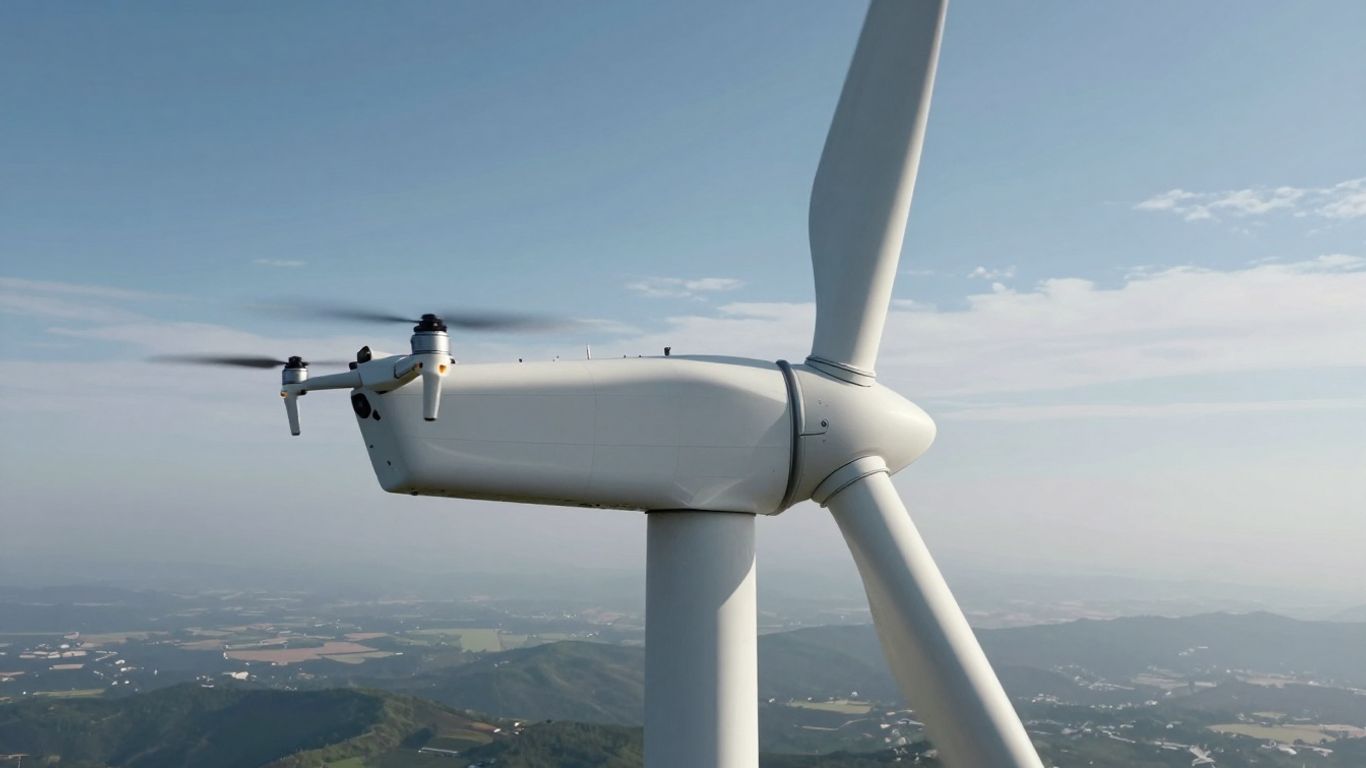
When it comes to keeping wind turbines running smoothly, the tech we’re using is getting seriously smart. We’re talking about more than just a camera on a stick; these are sophisticated tools designed for really thorough checks. The goal is to get a complete picture of a turbine’s health without all the old headaches.
Utilizing Interchangeable Sensors for Diverse Inspections
One of the coolest things about modern inspection drones is how adaptable they are. Think of them like a multi-tool for turbines. You can swap out different sensors depending on what you need to check. This means one drone can handle a lot of different jobs, from looking for tiny cracks to checking the heat signatures of components.
- Visual Inspection: High-resolution cameras capture every detail of the blades and tower.
- Thermal Imaging: Detects overheating components in the nacelle or electrical systems.
- LiDAR Scanning: Creates detailed 3D models of the turbine and its surroundings.
- Ultrasonic Testing: Can sometimes identify internal issues within the blades.
This flexibility means we’re not limited to just one type of data. We can gather a whole range of information to make better decisions about maintenance. It’s a big step up from just looking for obvious damage.
LiDAR Mapping for Real-Time Environment Visualization
LiDAR technology is a game-changer for understanding the turbine’s environment. It uses lasers to create incredibly precise 3D maps. This isn’t just for show; it helps in a few key ways. For instance, it can map out how the turbine interacts with its surroundings, which is important for things like wind flow analysis or planning maintenance access. It also helps in identifying any potential obstructions or changes in the terrain around the base of the turbine, which is useful for safety and planning. This kind of detailed environmental data is something we just couldn’t get easily before. It’s all about having a clearer picture of the whole setup.
Integrated Thermal and 4K Camera Systems
Many of these advanced drones come equipped with both high-definition 4K cameras and thermal imaging capabilities. The 4K cameras provide incredibly sharp visual data, letting inspectors spot even minor surface defects like small cracks or erosion on the blades that might be missed by the naked eye. Then, the thermal cameras come into play by detecting temperature variations. This is super useful for spotting issues within the nacelle, like a bearing that’s starting to overheat, or problems with electrical connections. By combining these two views, we get a much more complete understanding of the turbine’s operational health, catching potential problems before they become serious failures. This dual-sensor approach is a big part of why unmanned aerial vehicles for renewable energy are becoming so popular for routine checks and more in-depth automated wind turbine assessment.
The ability to see both the physical surface and the thermal output of components simultaneously allows for a proactive maintenance strategy. Instead of reacting to failures, we can identify early warning signs and schedule interventions efficiently, minimizing unexpected downtime and associated revenue loss.
The Future of Wind Turbine Maintenance with Drones
The wind energy sector is growing fast, and with that comes a bigger need for keeping all those turbines running smoothly. It’s not just about fixing things when they break; it’s about being smart and proactive. This is where drone services for wind farms really shine. We’re moving away from old, risky methods towards something much safer and more efficient.
Think about it: traditional inspections often mean shutting down a turbine for hours, which is lost income and energy production. Plus, sending people up high on ropes is inherently dangerous. Drones change that game entirely. They can get up close to blades and towers without putting anyone in harm’s way on the ground. This means fewer risks for the inspection teams and less downtime for the turbines.
Increasing Demand for Efficient Inspection Solutions
As more wind farms pop up, the sheer number of turbines needing checks goes way up. We’re talking about inspections happening a couple of times a year for each one. Drones make it possible to do these checks more often and faster than before. They capture super clear images, sometimes even seeing tiny issues that a person might miss. This early detection is key to preventing bigger problems down the line. It’s all about staying ahead of the curve and keeping the energy flowing.
Drone Inspections as a Standard Practice
It’s becoming clear that using drones for wind turbine checks isn’t just a new idea; it’s becoming the norm. The technology is getting better all the time, with drones that can fly themselves and use advanced sensors. This means we get more detailed information, faster. For example, some drones can now inspect the inside of blades, a place that was really hard to get to before. This level of detail helps ensure the long-term health of the turbines.
Autonomous Flight Patterns for Precision
One of the coolest advancements is how drones are learning to fly themselves. Instead of a pilot manually controlling every move, drones can follow pre-programmed paths, getting consistent data every time. This is especially useful for things like checking lightning protection systems or looking for subtle cracks. The precision of these autonomous flights means we get reliable data that can be compared over time, helping to spot any changes or potential issues before they become serious. This technology is really transforming how we maintain these vital energy sources, making the whole process more reliable and less costly. You can find more information on how drone technology is revolutionizing maintenance.
The shift towards automated and drone-based inspections is driven by a clear need for better safety, reduced operational costs, and minimized energy production loss. These advanced tools provide a level of detail and efficiency that manual methods simply cannot match in the modern wind energy landscape.
Specialized Drones for Internal and External Turbine Inspections
Indoor Drones for Confined Space Blade Analysis
When it comes to inspecting the inside of wind turbine blades, traditional methods really fall short. Technicians are only allowed to go so far inside, meaning a big chunk of the blade’s internal structure often goes unexamined. Plus, climbing into those confined spaces is dangerous and takes a lot of time. This is where specialized indoor drones come in. Drones like the Elios 3 are built for these tight spots. They can fly autonomously, equipped with high-definition cameras and lighting systems that can spot tiny cracks, corrosion, or other structural issues that might be missed otherwise. These drones can inspect areas humans can’t safely reach, significantly improving the thoroughness of internal checks. This technology means we can get a much clearer picture of a blade’s health without putting people at risk.
Outdoor Drones for Tower and Nacelle Assessments
For the exterior of the turbine, from the tower all the way up to the nacelle, outdoor drones are a game-changer. They can quickly survey vast areas, capturing high-resolution images and video. This allows for detailed visual inspections of the tower’s surface for any signs of damage or wear, and a thorough check of the nacelle components. Some drones can even be fitted with interchangeable sensors, like thermal cameras, to detect overheating parts in the nacelle or identify areas of delamination on the blades that might not be visible to the naked eye. This kind of detailed external assessment helps catch problems early, preventing bigger issues down the line. It’s a much faster and safer way to cover the entire exterior compared to manual climbing methods.
Automated Inspections While Blades Are Rotating
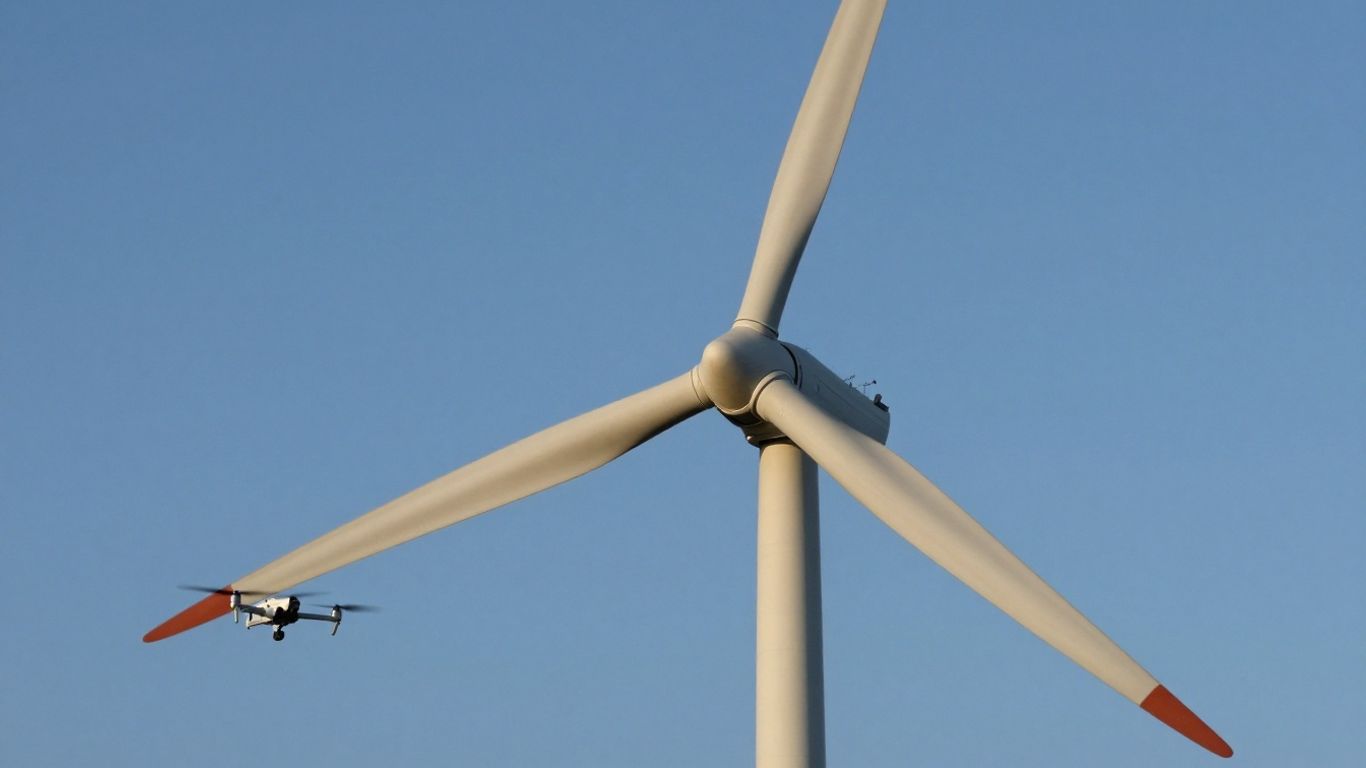
One of the biggest advantages drone technology brings is the potential for inspections without shutting down the turbine. Traditionally, turbines have to be taken offline, leading to lost energy production and revenue. However, certain advanced drone systems are being developed to perform inspections even while the blades are in motion. This capability drastically reduces downtime. Imagine a drone flying close to or even around a slowly rotating blade, gathering data without interrupting power generation. This not only saves money but also allows for more frequent checks, keeping turbines running at peak performance. It’s a significant step towards more efficient wind farm operations and a key part of the future of wind turbine maintenance.
The Future is Flying
So, it looks like drones are really changing the game when it comes to checking on those giant wind turbines. Instead of sending people way up high, which is risky and takes ages, we can now use these flying gadgets. They get super clear pictures, can even check inside the blades, and don’t make the turbine lose money by shutting it down. It just makes sense that as we need more clean energy, we’ll see more of these drones doing the heavy lifting. It’s safer, faster, and honestly, just a smarter way to keep those turbines running smoothly.
Frequently Asked Questions
Why are drones being used to inspect wind turbines now?
Drones are a newer, smarter way to check wind turbines. They help keep workers safe by letting them stay on the ground. Plus, drones can find small problems that people might miss, making sure the turbines run well and don’t break down unexpectedly.
How do drones make wind turbine inspections safer?
Climbing tall wind turbines is risky. Drones can fly up to the blades and towers, taking pictures and gathering information. This means fewer people have to work at dangerous heights, reducing the chance of accidents.
Can drones inspect the inside of wind turbine blades?
Yes, special indoor drones can fly inside the blades. Older methods couldn’t reach the whole inside, but these drones can see all the parts to check for cracks or damage that could cause problems.
Do wind turbines need to be stopped for a drone inspection?
Often, no! Some drones can inspect turbines while they are still running. This is a big deal because it means the turbine keeps producing electricity and making money, instead of being shut down and losing income.
Are drone inspections cheaper than the old ways?
Generally, yes. While there’s a cost for the drone and the pilot, it’s usually less than sending a team of people up the turbine, using ropes, and taking more time. This can save wind farm owners a lot of money over time.
What kind of problems can drones find on wind turbines?
Drones use special cameras to find all sorts of issues. They can spot cracks in the blades, rust on the tower, problems with the lightning protection system, and even tiny defects you can’t see with just your eyes. Some drones can even see heat differences to find hidden issues.