Drone Radar: What You Need to Know

Here are the main things to remember about drone detection radar. It’s a powerful tool, but it’s important to know its strengths and weaknesses.
Key Takeaways
- Radar is the backbone of drone detection because it works in all weather and can see drones even if they aren’t sending out signals.
- Detecting small drones is hard because they have a tiny radar signature, similar to birds, and fly low where ground clutter can interfere.
- Specialized drone radar uses techniques like micro-Doppler analysis to tell drones apart from birds and other false alarms.
- Different types of radar, like FMCW and phased array, have different strengths for various situations and coverage needs.
- The best drone detection system uses radar along with other sensors (like cameras and radio frequency detectors) for a complete picture.
Understanding Drone Detection Radar Technology
When we talk about keeping an eye on the sky for unwanted visitors, especially those small, buzzing drones, radar is a big player. It’s the backbone of many anti-drone radar systems because it can spot things even when other methods can’t. Think about it: radar works day or night, through fog, rain, or even smoke. That’s a pretty big deal when you need reliable detection.
The Foundation of Counter-Drone Systems
Radar’s ability to see objects in the air, regardless of whether they’re sending out radio signals or not, makes it a top choice for detecting unauthorized drones. Unlike optical or acoustic sensors, radar doesn’t need light or sound to work. It sends out radio waves and listens for the echoes that bounce back. This makes it a foundational piece of technology for any serious counter-drone setup. It’s the primary way to get eyes on potential threats in the airspace, especially those trying to stay hidden. For a broader look at how radar fits alongside RF sensors, cameras, and acoustic detectors, check out this guide on drone detection technology.
Why Detecting Drones with Radar Is Challenging
Now, spotting drones with radar isn’t as simple as finding a big airplane. Drones are small, often flying low, and don’t reflect radar signals very well. Their "radar cross-section" (RCS), which is basically how much radar energy they bounce back, can be tiny – sometimes as small as a large bird’s. This low reflectivity means radar has to work much harder to pick them up. Plus, drones often fly in areas with a lot of "clutter" – things like trees, buildings, and hills that also reflect radar signals. This clutter can easily hide the faint signal from a drone, making it hard to distinguish. Traditional air surveillance radar, built for large aircraft, often misses these small, slow-moving targets altogether. This is where specialized drone tracking technology comes in.
Radar’s Role in a Multi-Sensor Approach
While radar is powerful, it’s not always a solo act. It’s often part of a bigger picture, working alongside other ground-based drone sensors like cameras and acoustic detectors. Radar is great at detecting that something is there and giving its location. However, telling exactly what it is can be tricky. That’s where other sensors and advanced processing come in. Combining radar with other technologies helps create a more complete and accurate picture, reducing false alarms and improving the overall effectiveness of the security system. This layered approach is key to reliably detecting unauthorized drones in complex environments. You can learn more about how different systems work together in this guide on how drone detection radar functions.
How Drone Detection Radar Works
So, how exactly does radar manage to spot these tiny flying machines when they’re trying to be sneaky? It’s all about sending out signals and listening for echoes. Think of it like shouting in a canyon and waiting for your voice to bounce back. Radar systems emit radio waves, and when these waves hit an object – like a drone – a small portion bounces back as an echo. The radar then picks up this echo and analyzes it to figure out where the object is, how fast it’s moving, and even a bit about its size and shape.
Radar Cross-Section and Detectability
One of the biggest hurdles in detecting drones is their radar cross-section, or RCS. This is basically a measure of how much radar energy an object reflects back to the radar. Drones, especially smaller ones, have a very small RCS. We’re talking about values comparable to a large bird. This means the echo they send back is faint, making them hard to distinguish from background noise or other small objects. The smaller the RCS, the harder it is to detect. This is why specialized drone detection radar is built differently than the kind used for tracking big airplanes.
Distinguishing Drones from Birds
This is where things get tricky. Birds and drones can look surprisingly similar to radar. Both have small RCS values and often fly at similar low altitudes and speeds. This can lead to a lot of false alarms, which is a major headache for security teams. Imagine getting an alert every time a pigeon flies by – you’d quickly stop paying attention. To combat this, modern drone radars use advanced techniques to tell them apart.
The Importance of Micro-Doppler Classification
This is a game-changer. The spinning propellers on most drones create a unique signature in the radar echo, known as the micro-Doppler effect. It’s like a subtle vibration or wobble in the signal that’s different from the steady beat of a bird’s wings. By analyzing these specific patterns, radar systems can confidently identify a drone even when its RCS is similar to a bird’s. It’s a sophisticated form of signal processing that dramatically cuts down on false positives, making the radar a much more reliable tool for airspace security. Without this capability, a radar system might be almost useless in areas with lots of bird activity.
Detecting drones is a complex challenge, and radar is a key part of the solution. While other sensors like RF detectors, cameras, and acoustic sensors have their roles, radar provides a persistent, all-weather capability to see objects that might otherwise go unnoticed. It’s the backbone for many counter-drone efforts, offering a wide view of the airspace.
Here’s a quick look at how different detection methods stack up:
- Radar: Excellent for detecting objects in all weather conditions (day/night, fog, rain). It provides volumetric coverage and can detect drones even if they aren’t transmitting any signals. However, it can struggle with precise identification without advanced processing.
- RF Detection: Identifies drones by picking up their communication signals (like Wi-Fi or radio control). It’s good for detecting drones that are actively communicating but useless against autonomous or silent drones. It also helps pinpoint the drone’s controller.
- Optical (Cameras): Uses visual detection, often with PTZ (pan-tilt-zoom) cameras. Great for positive identification once a drone is spotted by another sensor, but limited by visibility (daylight, clear weather) and range.
- Acoustic: Listens for the distinct sound of drone propellers. Can be effective at close range but is highly susceptible to background noise and environmental conditions. It’s often used as a complementary sensor. Drone detection technology relies on combining these methods for the best results.
Types of Drone Detection Radar Architectures
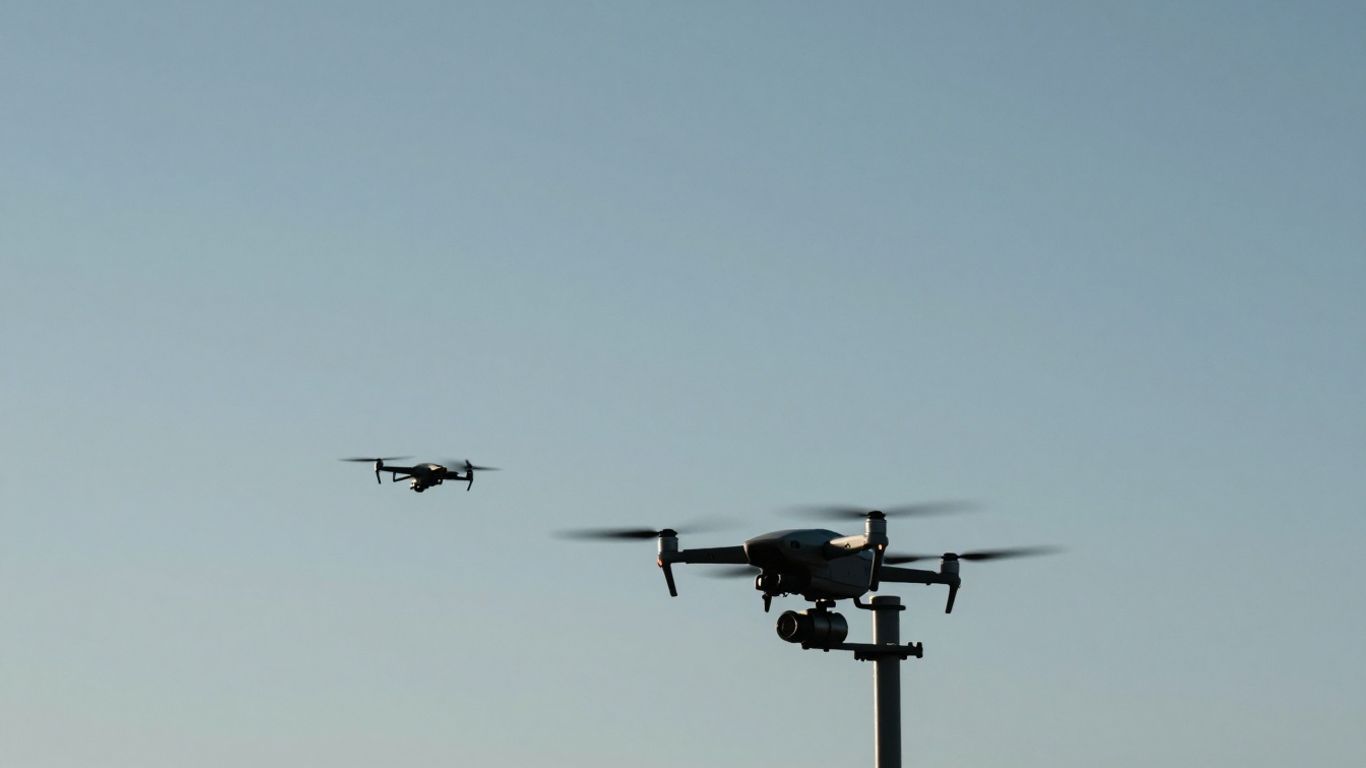
When we talk about spotting drones, radar is usually the main player. It’s like the eyes of the operation, working day and night, through fog and rain. But not all radar is built the same. Different designs, or architectures, are better suited for different jobs. Let’s break down a few common types you’ll run into.
Frequency Modulated Continuous Wave (FMCW) Radar
Think of FMCW radar as a workhorse for detecting smaller, closer targets. It constantly sends out a radio wave that changes its frequency over time. By listening to the echo and comparing its frequency to what was sent, the radar can figure out how far away something is. These systems are often good at picking up the faint signals from commercial drones, especially when they’re not too far away. They’re generally more affordable and simpler to set up, making them a popular choice for many security needs. A single FMCW unit can cover a few kilometers, which is great for smaller areas.
Phased Array Radar Systems
Now, phased array radar is a bit more sophisticated. Instead of a big dish that spins around, it uses a bunch of small antenna elements. By precisely timing the signals sent from each element, the radar beam can be steered electronically, almost instantly. This means it can scan a huge area, even a full 360 degrees, without any moving parts. This makes them super fast and able to track multiple drones at once. Because they can cover such a wide area and are very precise, phased array systems are often used at high-value locations like airports or large event venues where threats could come from any direction. They are a top choice for securing places like airports where multiple threats might appear simultaneously.
Specialized Waveforms and Signal Processing
Beyond the basic hardware setup, the magic in drone detection radar often lies in the signals it uses and how it processes the echoes. Traditional radar is designed for big planes, not tiny drones. Drones have a very small radar cross-section (RCS), meaning they don’t reflect much radar energy back. Plus, they often fly low, where ground clutter – echoes from buildings, trees, and hills – can easily hide the drone’s signal. To combat this, specialized waveforms are used. These are like clever ways of sending out radar pulses that are better at cutting through the noise and picking out the faint drone returns. Think of it like trying to hear a whisper in a noisy room; you need to use a specific tone or pattern to make it stand out. Advanced signal processing then takes these weak signals and uses algorithms to clean them up, distinguish them from clutter, and even identify what kind of drone it might be. This is where technologies like micro-Doppler classification come into play, which we’ll touch on more later.
Detecting drones is tough because they’re small, fly low, and can look a lot like birds on radar. Traditional radar systems just aren’t built for this. Purpose-built drone detection radar uses special tricks with its signals and processing to overcome these challenges.
When you’re looking at radar systems, it’s not just about the type of architecture. You also need to consider how well it can tell a drone apart from other things in the sky. This is where other sensor types come into play. While radar is great for detecting objects in the air, it’s not always perfect at identifying them. Acoustic sensors can pick up the sound of drone propellers, and optical sensors (like cameras) can visually confirm a drone. Radio Frequency (RF) detectors can find drones that are actively transmitting signals. Combining these different types of sensors with radar creates a more robust detection system that can reduce false alarms and provide better overall situational awareness.
Advanced Capabilities of Modern Radar
Modern drone detection radar systems have come a long way, incorporating sophisticated techniques to overcome the challenges of spotting small, fast-moving targets in complex environments. These aren’t your grandpa’s radar systems; they’re built with cutting-edge tech to specifically find and track drones.
Space-Time Adaptive Processing (STAP)
One of the big leaps in radar technology is Space-Time Adaptive Processing, or STAP. Think of it like trying to see a faint star next to a bright streetlight. STAP helps the radar ignore overwhelming signals, like strong ground clutter or interference from other sources, so it can pick up those tiny drone returns. It’s like giving the radar a special pair of sunglasses to block out the glare, allowing it to focus on what really matters. This is especially useful in busy areas where lots of signals are bouncing around.
Multi-Path Mitigation Algorithms
Urban environments are a nightmare for radar. Signals bounce off buildings, cars, and even the ground, creating confusing echoes. Multi-path mitigation algorithms are designed to sort this out. They figure out where a signal actually came from, even if it took a scenic route bouncing off a few surfaces before reaching the radar. This means the radar can accurately pinpoint a drone’s location, even when surrounded by tall buildings. It’s a bit like knowing the shortest route to the store, even if you have to take a few detours.
Onboard Machine Learning for Classification
Distinguishing a drone from a bird or even a piece of debris is a major hurdle. Modern radar systems are now packing onboard machine learning. These systems are trained on vast amounts of data to recognize the unique signatures of different aerial objects. For instance, the distinct whirring of drone propellers creates a specific Doppler effect that these algorithms can identify with high accuracy. This allows the radar to not just detect an object, but also classify it, significantly reducing false alarms and helping operators focus on real threats. This technology is key to making sure you’re not scrambling security for a flock of geese. It’s a big step up from just looking at a blip on a screen; it’s about understanding what that blip is. This is particularly important when you consider the diverse applications of drones, from delivering medical supplies to aiding in wildfire management.
Beyond radar, other detection methods like RF scanning, acoustic sensors, and optical cameras play a role. RF sensors can detect the radio frequencies drones use for control, acoustic sensors listen for the distinct sound of drone propellers, and optical cameras provide visual confirmation. Integrating these different sensor types with radar creates a more robust and reliable detection network, offering layered security that’s harder to fool.
Choosing the Right Drone Detection Radar
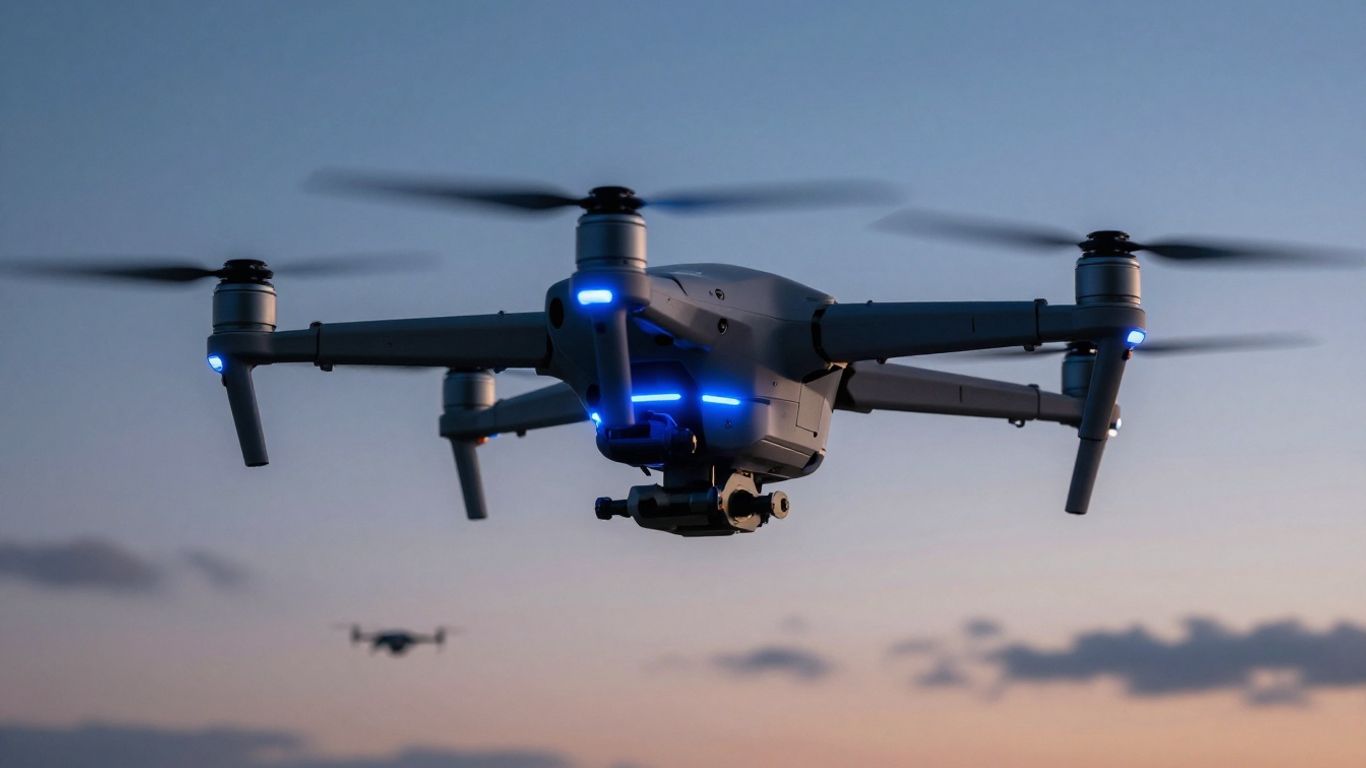
So, you’ve decided radar is the way to go for spotting those pesky drones. That’s a smart move, as radar is pretty much the backbone of any serious counter-drone setup. It’s the only tech that can see drones whether they’re broadcasting signals or not, and it works day or night, rain or shine. But picking the right radar isn’t as simple as just buying the first one you see. It really boils down to a few key things.
Assessing Coverage Area Needs
First off, think about how big an area you need to cover. A single radar unit might be fine for a small facility, but if you’re protecting something like an airport or a large industrial complex, you’ll need multiple units working together, maybe a phased array system, to get complete perimeter coverage. It’s like trying to see your whole backyard with just one tiny window – you’ll miss a lot.
Matching Radar to Threat Profile
What kind of drones are you worried about? If it’s mostly commercial drones, like the ones people fly for fun or photography, a standard Frequency Modulated Continuous Wave (FMCW) radar with good micro-Doppler capabilities should do the trick. But if you’re concerned about more sophisticated threats – maybe drones modified to be stealthy or those that operate without sending out radio signals – you’ll need a radar that’s more sensitive and has smarter ways to tell the difference between a drone and, say, a bird. This is where advanced classification algorithms become really important.
Considering Environmental Factors and Clutter
Where is this radar going to be set up? Urban areas with lots of buildings and traffic create what we call ‘clutter’ – signals bouncing off everything. This makes it tough for radar to pick out the faint signal from a drone. Open areas, like borders or large fields, are generally easier for radar. You’ll want a system that can handle this clutter, often through specialized signal processing, so you don’t get swamped with false alarms.
Radar works by sending out radio waves and listening for them to bounce back off objects. The time it takes for the wave to return and how it changes tells the radar system about the object’s size, speed, and direction. For drones, which are small and often fly low, these reflected signals are weak and can easily get lost in the noise from other objects or the ground itself. This is why purpose-built drone detection radar uses special techniques to find these tiny targets.
Integration with Existing Security Infrastructure
Don’t forget how this new radar system will play with your current security setup. A radar that can’t easily share its data with your existing command and control (C2) platform or other sensors is basically a standalone gadget. You want a system that can talk to your cameras and other detection gear, like RF sensors, to give you a complete picture. This layered approach, where radar is the primary search tool and other sensors help confirm and identify, is key. For instance, when radar spots something, it can automatically cue a camera to look at that spot and an RF sensor to check for signals. This multi-sensor approach is vital for effective security.
The best radar system is the one that fits your specific threat, your location, and your existing security infrastructure.
When looking at different detection methods, remember that radar is just one piece of the puzzle. While it’s great for detecting objects in the air, it doesn’t tell you who’s flying the drone or what it’s carrying. Other sensors have their own strengths: RF detection can pick up radio signals from drones, acoustic sensors listen for the sound of propellers, and optical sensors (like cameras) provide visual confirmation. Combining these different types of sensors, often managed by a central system, provides the most robust defense against unauthorized drone activity. This is why many organizations are looking into drone detection radar systems as part of a broader security strategy.
The Cost and Funding of Drone Radar
So, you’re looking into drone detection radar and wondering about the price tag and where the money comes from. It’s a big question, and honestly, there’s no single number that fits all. The cost really depends on what you need.
Factors Influencing Radar Hardware Pricing
First off, the radar hardware itself can vary a lot. Think about the range you need – are you covering a small area or a whole airport? The more area you need to watch, the more complex and expensive the system will be. Then there’s the type of radar. Some are simpler, while others use advanced tech like phased arrays for better tracking. The complexity of the radar’s design and the required coverage area are major drivers of hardware cost. You’ll also find that radars designed specifically for detecting small, low-flying drones are different – and often pricier – than older radar systems built for big airplanes. It’s like comparing a basic flashlight to a high-powered spotlight; they do different jobs.
Total System Cost Considerations
But the radar unit is just one piece of the puzzle. When you add everything up, the total system cost can be significantly higher. You’ve got to factor in the command and control (C2) software that ties everything together, the installation work, calibrating the system to your specific site, and training your team to use it effectively. These integration costs can sometimes be as much as the hardware itself. It’s not just about buying a box; it’s about making it work as part of your overall security setup. Sometimes, you might also need other sensors to complement the radar. For instance, radar is great at detecting something is there, but it might not tell you what it is. That’s where other technologies come in:
- RF (Radio Frequency) Detection: This looks for the radio signals drones use to communicate with their operators. It’s good for identifying authorized drones or those that are broadcasting their presence, but it can miss drones that are flying silently or using encrypted signals.
- Acoustic Detection: Microphones can pick up the sound of drone propellers. This is useful for detecting low-flying drones, especially in quieter environments, but it can be overwhelmed by background noise and struggles with drones that are far away or flying high.
- Optical Detection (EO/IR): Cameras, both regular (EO) and thermal (IR), provide visual confirmation. They can identify the drone’s type and sometimes even its payload, but they rely on good visibility (daylight, clear weather) and line-of-sight.
Federal Funding Opportunities for Radar Systems
Now, about the money. For many organizations, especially government agencies and critical infrastructure operators, federal funding can be a big help. The Department of Homeland Security (DHS) has invested heavily in counter-drone capabilities, and programs like the FEMA C-UAS Grant Program are specifically designed to help state and local entities acquire these systems. This grant program, for example, offers substantial funding, sometimes up to 100% federal funding with no local match required, for eligible equipment like radar systems. It’s worth looking into these opportunities, as they can significantly reduce the out-of-pocket expense. You can find more details on these programs and the broader anti-drone market here.
The reality is that while radar is often the most expensive single component, it’s also the most critical for initial detection. Without a robust radar system, other sensors might not even know where to look. Therefore, budgeting for a capable radar system, even with its higher upfront cost, is usually a necessary step for effective airspace security.
Conclusion
So, drone detection radar is a pretty big deal for keeping an eye on our skies. It’s not just about seeing things; it’s about seeing the right things, even when they’re trying to hide. While it’s super useful, remember it’s just one piece of the puzzle. Combining it with other tools gives you the best chance of staying ahead of any unwanted flyers. Choosing the right radar means looking at what you need to protect, what kind of threats you’re worried about, and where you’re putting it. It’s a complex tech, but understanding the basics helps make sure you’ve got the right eyes in the sky.
Frequently Asked Questions
What exactly is drone detection radar?
Think of drone detection radar like a special kind of radar designed to spot small flying objects, like drones. Regular radar is usually for big planes, so it often misses drones. This special radar is built to see those tiny things even when they’re flying low or trying to be sneaky.
Why is it so hard for radar to find drones?
Drones are really small, and they don’t bounce radar waves back very well. It’s like trying to see a tiny pebble from far away. Also, they fly close to the ground, where buildings and trees can mess up the radar signal, making it hard to tell a drone from background noise.
Can radar tell the difference between a drone and a bird?
This is a big challenge! Drones and birds can look similar on radar. But, newer drone radars use a cool trick called ‘micro-Doppler analysis.’ It looks at the way the drone’s propellers spin, which creates a unique pattern that’s different from how a bird’s wings flap. This helps the radar tell them apart.
Are there different kinds of drone detection radar?
Yes, there are. Some are called FMCW radars, which are good for seeing things up close. Others are phased array radars, which can scan a large area really fast without moving parts. The type you need depends on how big an area you want to watch and what kind of drones you’re worried about.
Does radar work alone to find drones?
Not really, it’s best when used with other tools. Radar is great for spotting something in the air, but it might not know *what* it is. So, it’s often paired with cameras to see the object visually and radio frequency sensors to check if the drone is sending out signals. This team approach gives you a much clearer picture.
How much does drone detection radar cost?
The price can vary a lot. Simple systems might cost tens of thousands of dollars, while more advanced ones for big areas like airports could cost hundreds of thousands. The cost depends on how far it can see, how many features it has, and how easy it is to set up with your existing security gear.