Inside the V-BAT Shield AI: Technical features and mission applications

Key Takeaways
This article examines the advanced technical architecture and mission-critical applications of modern autonomous aerial platforms used in defense. The following points summarize the impact and capabilities of these systems:
- Advanced VTOL technology eliminates the need for traditional runway infrastructure.
- Autonomous navigation software enables operation in GPS-denied and contested electromagnetic territories.
- Decentralized swarming capabilities allow for complex coordination across multiple unmanned units.
- Modular sensor integration supports diverse intelligence, surveillance, and reconnaissance (ISR) mission requirements.
- High endurance and heavy-fuel efficiency extend operational reach in maritime and land-based theaters.
Overview and design architecture
Designing modern unmanned aerial vehicles requires balancing physical resilience with high-performance flight mechanics. These systems are engineered to thrive in challenging operational theaters where traditional aviation infrastructure is unavailable or under threat. By prioritizing architectural simplicity, developers can ensure that assets remain airworthy in environments ranging from open seas to dense urban centers.
Vertical Take-Off and Landing (VTOL) capabilities
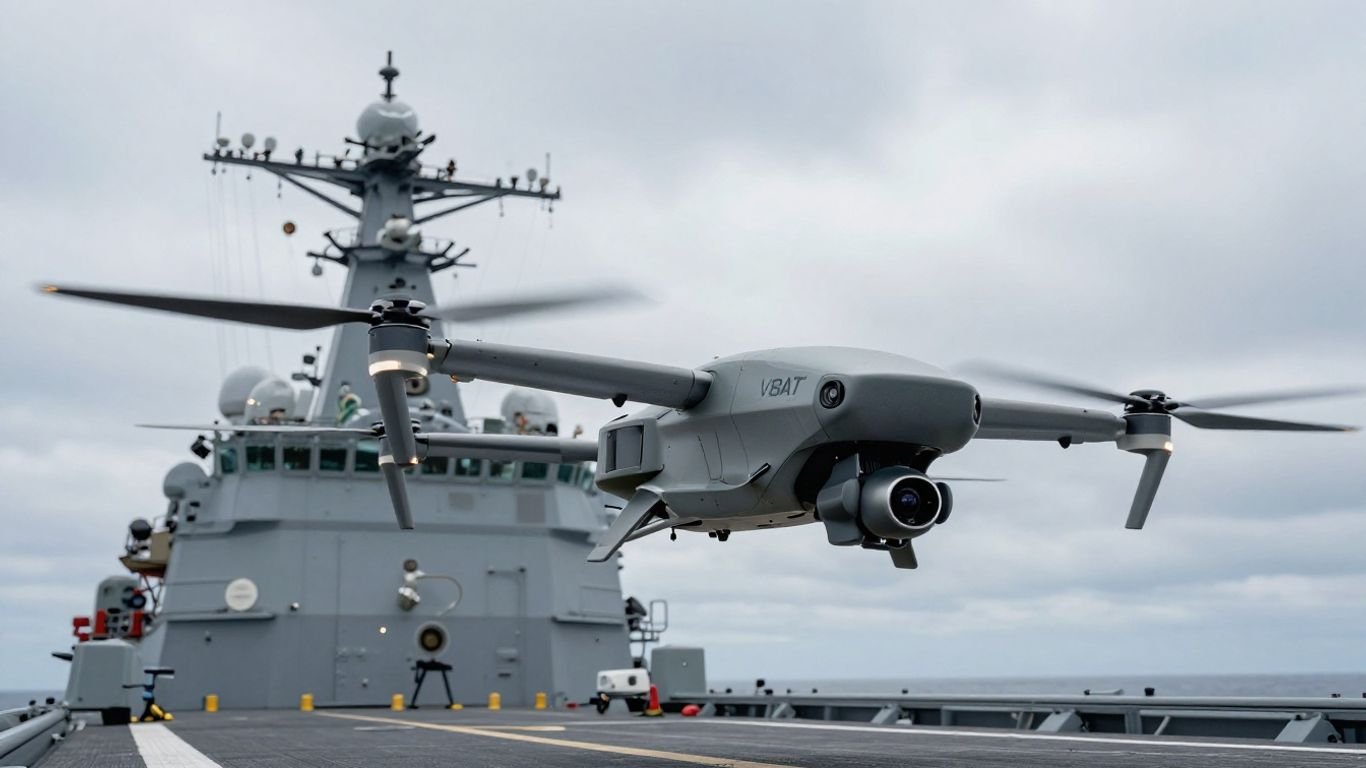
The V-BAT platform utilizes advanced ducted-fan technology to achieve precise vertical takeoff and landing. This mechanical configuration allows the aircraft to transition smoothly between a hover state and efficient horizontal flight, providing commanders with significant flexibility when operating from austere sites. Shifting from static observation to rapid transit is a cornerstone of this tactical design.
Portability and deployment footprints
Operational success often depends on how quickly a unit can stand up deployment readiness. These aerial systems are designed to minimize the logistical burden on ground crews, fitting into smaller transit containers or vehicles than conventional drone platforms. This compact footprint ensures that units remain mobile and difficult for adversaries to target during relocation efforts.
Range, endurance, and flight performance
Optimizing for long-duration missions requires a highly efficient power delivery system that maximizes time aloft. Integrating heavy-fuel engines allows these aircraft to maintain persistent presence over designated areas, providing commanders with long-tail intelligence rather than fleeting snapshots of the battlefield.
Sensor payload modularity and integration
Modern reconnaissance relies heavily on the quality and flexibility of internal sensor suites. Operators must choose between thermal, optical, or synthetic aperture payloads depending on the specific environmental conditions and mission objectives. The following specifications detail common modular configurations found in high-end tactical units:
| Sensor Type | Application Purpose | Operational Condition |
|---|---|---|
| Electro-Optical | Daylight target identification | High-visibility zones |
| Mid-Wave Infrared | Nighttime surveillance tasks | Low-light environments |
| Acoustic Array | Threat signature detection | Contested noise sectors |
By leveraging this modularity, units adapt rapidly to shifting mission requirements without needing to replace the entire vehicle fleet. System-wide adaptability remains a critical operational priority for commanders managing diverse tactical landscapes during extended deployments.
Autonomous flight software
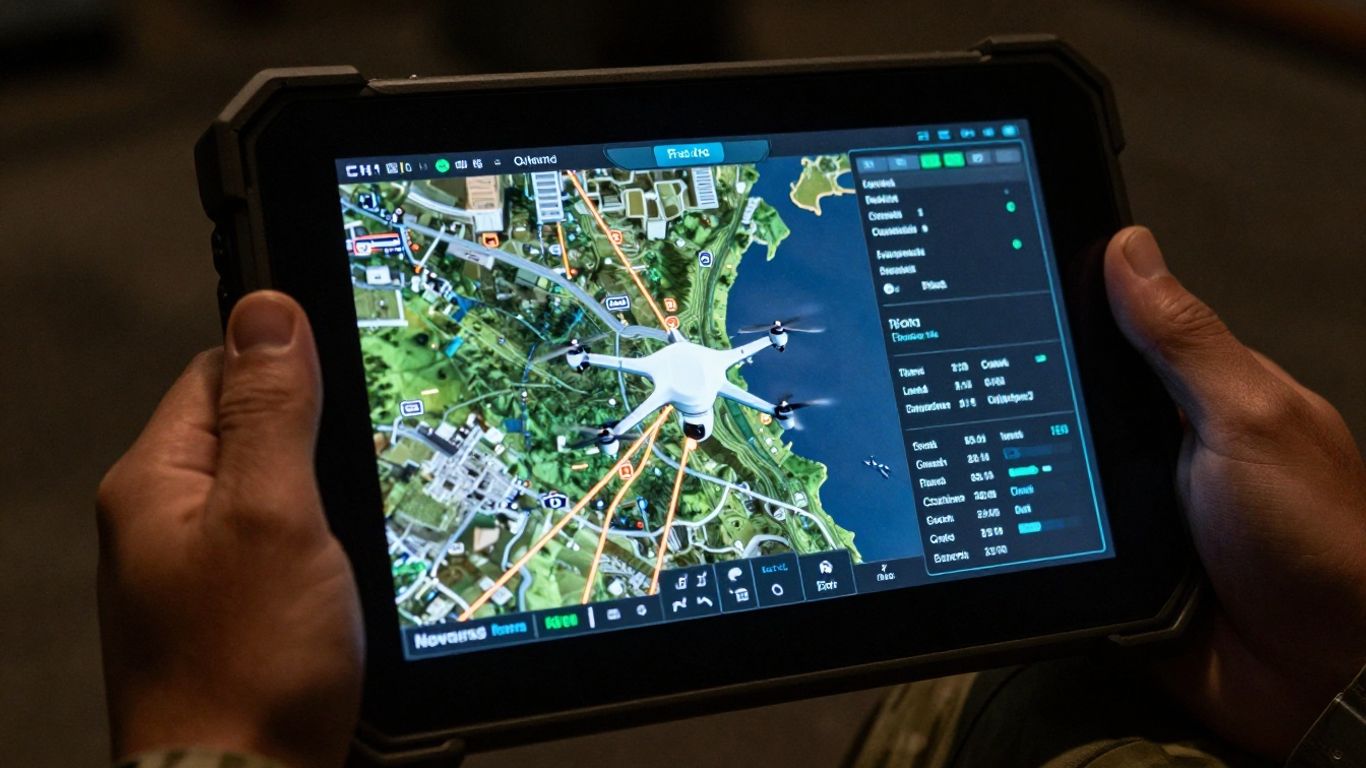
Integrating sophisticated autonomy software fundamentally changes how unmanned systems respond to unplanned variables. Rather than relying on constant human pilot input, these platforms utilize edge computing to process environmental data internally. This shift to machine-led decision cycles ensures that complex maneuvers and safety checks occur in milliseconds, preserving unit integrity.
Hivemind AI integration for decentralized flight
Utilizing Shield AI technology allows for decentralized flight profiles that do not require a central command link for every movement. This distributed approach enables individual units to make independent adjustments based on local topography or shifting threats. By reducing reliance on a single high-bandwidth connection, the overall reliability of the intelligence network increases significantly.
Navigating contested environments without GPS
Modern theaters present significant challenges to traditional GNSS-based navigation, requiring aircraft to use visual odometry and internal sensor fusion. By mapping the local terrain in real-time, the vehicle maintains precise positioning even when satellite signals are unreliable. This capability prevents mission failure in zones dominated by heavy signal interference or intentional jamming tactics.
Collaborative swarming and mission coordination
Swarm coordination allows a fleet of aircraft to act as a unified sensor grid, triangulating targets with higher precision than single-vehicle approaches. By synchronizing paths and sensor focal points, these groups monitor larger perimeters effectively. This collaborative architecture relies on a shared data protocol that automates the distribution of flight responsibilities among available vehicles.
Real-time threat detection and obstacle avoidance
Autonomous platforms must execute rapid split-second decisions to avoid collision with terrain or identified threats. Integrated software scan cycles identify incoming projectiles or static hazards, triggering an automatic divert path. This reactive capability, similar to the precision seen in X-BAT specifications, minimizes losses while increasing the lifespan of the equipment in dangerous zones.
Strategic applications in intelligence, surveillance, and reconnaissance (ISR)
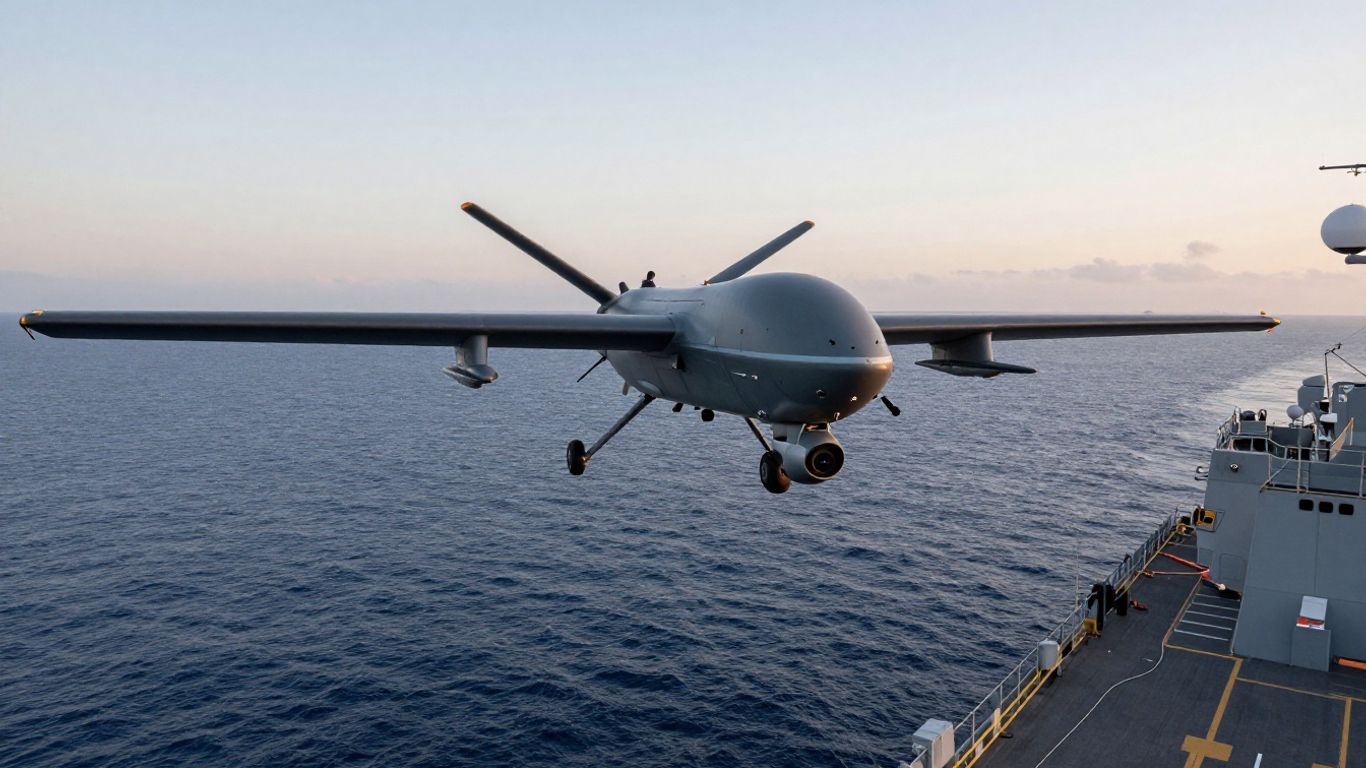
Successful intelligence gathering requires persistence and the ability to operate in environments where traditional methods fail. Providing persistent eyes over key regional infrastructure or hostile maritime lanes offers a distinct advantage that keeps ground forces informed of adversary movements. Tactical success in these sectors relies on the seamless integration of raw visual data into readable intelligence products for higher command.
Maritime domain awareness and shipboard operations
Operating from a ship deck requires a system that can withstand high wind speeds and turbulent landing conditions. These aircraft are specifically designed for maritime resilience, offering a small-scale takeoff solution that fits within existing shipboard layouts. As naval operations evolve, such platforms provide a,
- Enhanced capability to track naval traffic patterns.
- Rapid deployment cycle for ship-based intelligence.
- Increased safety profile due to shielded, internal rotors.
- Real-time broadcast of data to shipboard command center.
Border security and large-scale area monitoring
Large-scale geography requires an aerial solution capable of covering massive distances while identifying potential incursions. Autonomous systems provide a cost-effective way to maintain surveillance over remote or rugged borders. This persistent presence acts as a deterrent and an informational asset, flagging anomalies the moment they occur.
Over-the-horizon intelligence gathering
Beyond-line-of-sight operations are fundamental for modern long-range defense. Transmitting data through secure satellite or high-frequency relay links enables commanders to maintain awareness across massive distances. This global view ensures that strategic decisions are based on accurate, near-instantaneous tactical inputs.
Target identification and tactical tracking
Identifying specific target signatures in cluttered environments is a primary objective for tactical units. Advanced algorithms analyze imagery to differentiate between civilian and combatant hardware, reducing the risk of unintended outcomes. Once tagged, targets remain under persistent observation, allowing for precise intelligence analysis and follow-up support if necessary.
Operational advantages over traditional unmanned aerial vehicles
Transitioning away from legacy platforms offers substantial gains in flexibility and mission success. Standard drones often impose constraints on the team, requiring extensive support and specialized land access. Modern autonomous solutions flip this logic, allowing the technology to adapt to the constraints of the field rather than the other way around.
Elimination of specialized runway requirements
Moving to VTOL architectures eliminates dependency on hardened runways, allowing for deployment on remote island chains, forested clearings, or limited-space forward operating bases. This change allows forces to set up and strike operations in minutes rather than hours. Reduced logistical tethering effectively expands the footprint of tactical operations globally.
Reduced logistical support and minimal crew size
Operations can be managed by much smaller teams, reducing the risk to human operators in high-threat sectors. By automating the launch and recovery procedures, the team focuses on intelligence assessment rather than mechanical maintenance. Streamlined staffing levels facilitate faster force deployments and easier rotations in international operations.
Resilience against sophisticated electronic warfare
Electronic warfare environments demand airframes that operate without consistent communication links or global positioning assistance. Hardware built to operate in these degraded conditions maintains stability, whereas traditional, software-dependent drones often suffer from data-link failure. This inherent resilience allows for consistent performance in challenging theaters.
Scalability in diverse mission environments
Scaling operations from single-unit reconnaissance to full-fleet coordination is essential for multi-domain superiority. A platform that starts small but expands its mission set as the theater grows is ideal for long-term strategic projects. This scalability ensures that equipment acquired today remains relevant as newer software updates increase individual aircraft utility.
Global industrial and defense adoption
Integrating autonomous systems into formal defense planning requires consistent cooperation between industry partners and military organizations. As nations seek to modernize, the focus shifts toward interoperability and training proficiency. Building a robust ecosystem around these assets ensures that hardware maintenance and software growth stay synchronized with evolving threats.
Implementation strategies for NATO allied forces
Allied integration relies on standardizing data protocols and mission planning software to ensure that assets from different nations cooperate seamlessly. Sharing reconnaissance data across a unified secure network provides a collective advantage in regional security challenges. This coordinated approach optimizes resources and prevents the fragmentation of intelligence assets between allied command structures.
Personnel training and technical proficiency requirements
Effective deployment depends on adequately training personnel to manage automated systems, interpret sensor data, and perform field diagnostics. Moving beyond basic flight tasks, training programs emphasize autonomous system logic and electronic warfare countermeasures. Proficiency in these areas elevates the overall technical capability of field units.
Strategic partnerships within the defense technology sector
Industry collaborations facilitate the development of advanced payloads and navigation modules that update in line with operational requirements. By maintaining clear communication channels between technical development teams and field operators, partners identify problems and implement patches more efficiently. This partnership-driven model ensures that the hardware remains resilient against shifting tactics.
Future development and manufacturing roadmaps
Long-term sustainability depends on evolving manufacturing techniques that favor modular components and rapid scaling. Future roadmaps focus on integrating higher levels of AI-driven autonomy while maintaining the physical integrity that field operations require. Continuous software refinement keeps existing units at the forefront of combat-ready intelligence tools.
Conclusion
The evolution of autonomous unmanned systems represents a profound shift in modern conflict and reconnaissance strategies, moving away from vulnerable, infrastructure-reliant models toward flexible, self-sustaining platforms. By integrating advanced artificial intelligence, resilient hardware capable of operating in GPS-denied environments, and modular sensor payloads, modern forces achieve superior situational awareness while minimizing the logistical burden on personnel. Investing in these technologies provides consistent, scalable intelligence, ensuring that decision-makers maintain a decisive edge in complex and contested theaters.
Frequently Asked Questions
What defines an autonomous unmanned aerial vehicle?
An autonomous vehicle is a system capable of flying a pre-planned or adaptive mission without constant human pilot intervention, using internal software to react to its environment.
Why is vertical takeoff essential for modern surveillance?
Vertical takeoff allows for deployment in confined environments like urban rooftops or small boat decks where traditional aircraft would require expensive, long-runway infrastructure.
How do these systems function during electronic warfare attacks?
These aircraft use internal sensor-based navigation like visual odometry to maintain a steady course and data transmission even when satellite GPS or radio frequencies are actively jammed.
What are the main benefits of swarm cooperation?
Swarm capabilities allow multiple aircraft to share real-time data, enabling a combined sensor grid that provides wider geographic coverage and higher-fidelity tracking of key points.
How is sensor modularity helpful in the field?
Modularity allows crews to swap between day, night, and special-task sensors depending on the specific mission profile, making a single platform viable for multiple operational needs.
What prevents these aircraft from hitting obstacles?
Obstacle avoidance relies on onboard AI processing that monitors for incoming terrain or threats, automatically calculating a path of least resistance to protect the integrity of the unit.
How does reduced crew size improve tactical safety?
Fewer required personnel means less exposure in dangerous forward locations, lowering human risk while still delivering the high-quality intelligence data needed for safe decision-making.