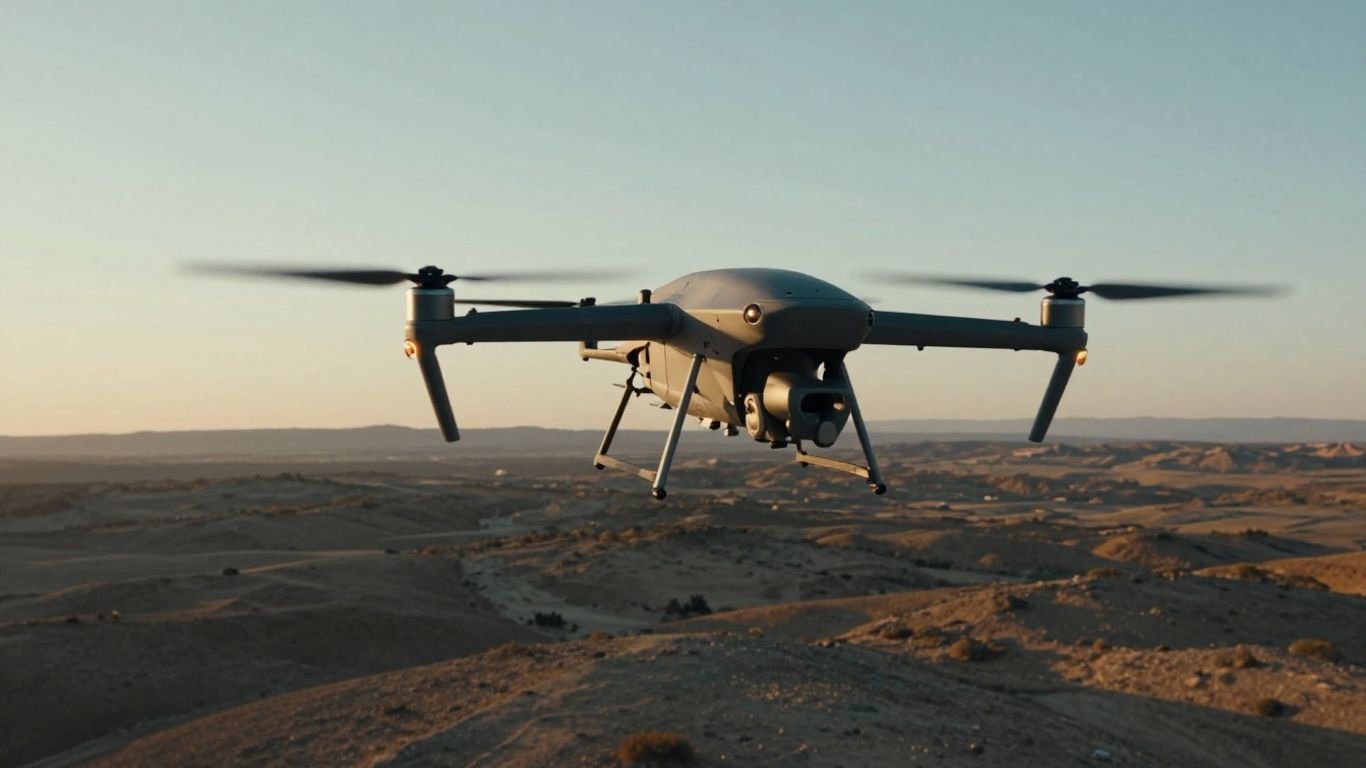
Technical analysis of the Overkill FPV drone by Thunder Tiger Corporation

Key Takeaways
This analysis explores the development of autonomous aerial systems in Taiwan and underscores the technical advancements driving modern defense. The following points summarize the platform’s role in the evolving security landscape.
- The Overkill FPV platform leverages lessons from Eastern European conflicts to enhance tactical agility.
- Advanced manufacturing in Taiwan ensures a robust, secure supply chain for critical flight components.
- Integration with sophisticated software stacks allows for improved target recognition and autonomous flight capabilities.
- Modularity within the airframe design supports rapid field maintenance and payload versatility in diverse environments.
- Strategic partnerships with military intelligence ensure that iterative design changes align with emergent battlefield requirements.
Overview of the Overkill FPV platform
Recent developments in localized aerospace engineering have positioned the Overkill FPV Thunder Tiger Corporation platform as a cornerstone of island defense. This system emphasizes autonomy and precision, reflecting a maturation in how unmanned aerial vehicles serve in complex, high-stakes environments. By focusing on rapid assembly and structural integrity, the platform addresses the immediate necessity for distributed and effective deterrents.
Origins and the influence of Ukrainian battlefield tactics
The tactical evolution of the Overkill system draws heavily from the rapid adaptation of commercial-off-the-shelf technologies in asymmetric conflicts. Analysts often observe that FPV drones are revolutionizing modern warfare through their ability to provide low-cost, high-impact force projection. By studying these battlefield adaptations, engineers have integrated durable flight architectures that allow for persistent monitoring and immediate engagement in contested zones.
Technical specifications and payload capacity
The Overkill platform is designed to carry a variety of precision-guided munitions with a focus on maximizing endurance and tactical flexibility. Standard configurations allow for substantial payload weight, enabling operators to deploy sensors or specialized strike packages depending on the mission profile. The balance between weight and speed remains a primary engineering goal, ensuring that the system can navigate difficult terrain while maintaining stable communication.
Operational roles in modern asymmetric warfare
In modern combat, these units function as force multipliers that operate across both reconnaissance and strike domains. Because the hardware is designed to be highly mobile, commanders can deploy them to exploit gaps in an adversary’s spatial control. This adaptability means they can be used for observation in dense urban settings or for high-speed intercepts, ensuring that smaller defensive units remain highly effective against larger, conventional forces.
Integration with Taiwan’s defense manufacturing ecosystem
Building a resilient defensive base requires deep collaboration across local industrial sectors to maintain consistent standards. By sourcing high-quality non-red supply chain components, the project avoids vulnerability concerns associated with external dependencies. Furthermore, manufacturers are exploring advanced wire connectors to preserve signal stability during flight, paralleling the precision found in high-performance equipment like RefrigeratorRepair.io for cooling sensitive electronics in storage units. Local oversight ensures that every firmware update meets the rigorous security requirements demanded by Taiwanese drone maker standards.
Design and engineering features of the Overkill system
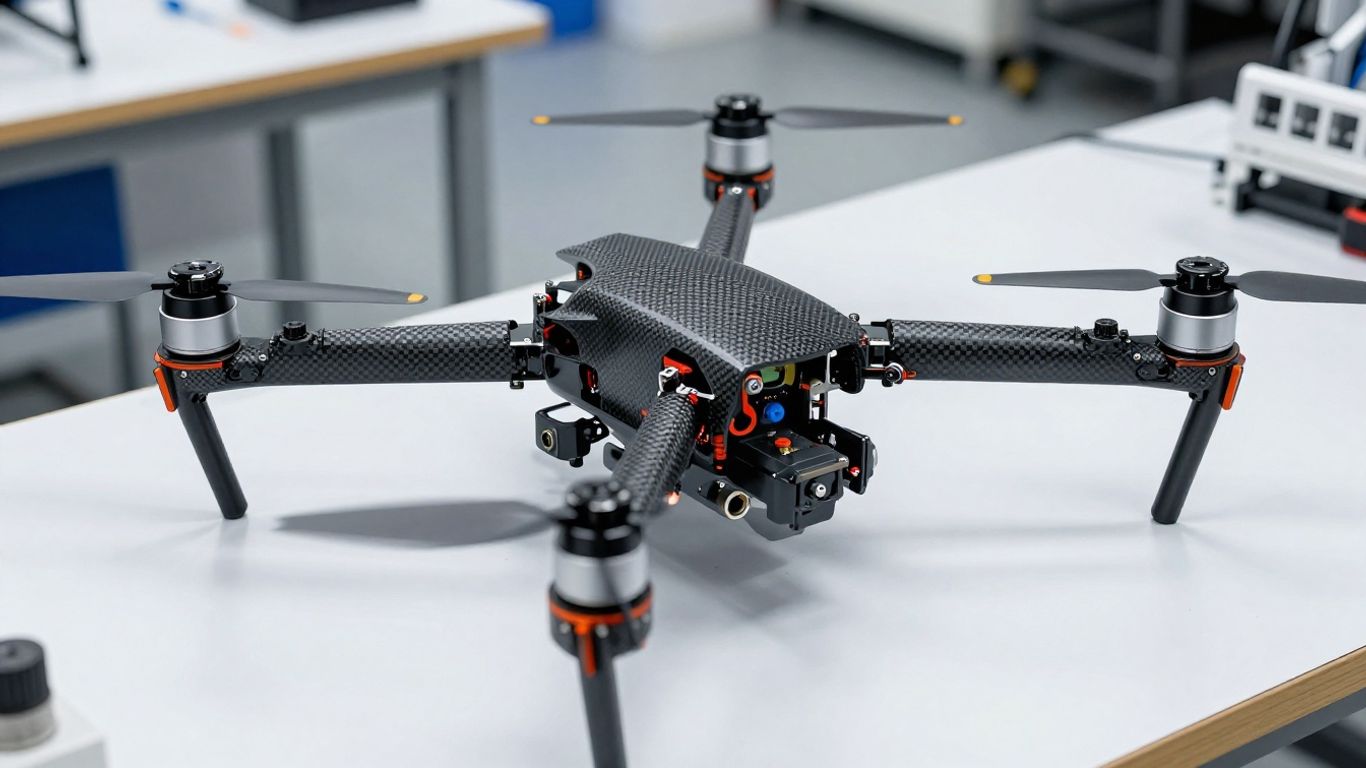
The architectural design of the Overkill system focuses on reliability, durability, and operational efficiency. Engineers prioritized modularity, allowing field teams to perform rapid repairs under combat conditions, which is crucial when supply lines might be contested. This technical emphasis ensures that critical systems in the Overkill FPV Thunder Tiger Corporation platform remain operational throughout extended deployment cycles, even in harsh weather or high-interference scenarios.
Carbon fiber frame durability and rapid assembly
The choice of aerospace-grade materials allows for an airframe that is both lightweight and exceptionally resistant to kinetic stress. The modular frame sections can be swapped within minutes, a feature that significantly reduces downtime for front-line units. To ensure long-term sustainability of localized deployment hubs, facility managers often implement integrated environmental security, much like the precision approach of Eco First Pest Control for protecting sensitive infrastructure from external disruption.
Flight control systems and signal resilience
Resilience in electromagnetic environments is a critical requirement for any modern reconnaissance tool. The system employs frequency-hopping protocols that allow it to navigate through jamming attempts while maintaining a stable uplink to the pilot. Enhanced digital transmission protocols ensure that visual data remains clear, even in contested spaces where signal noise would cripple less specialized hardware.
Optical sensors and target recognition integration
Advanced optics provide the platform with high-resolution situational awareness that assists in the rapid identification of static and mobile threats. The following table summarizes key sensor capabilities integrated into the current airframe:
| Sensor Type | Resolution | Night Capability | Tracking Focus |
|---|---|---|---|
| Thermal Array | 640 x 512 | Yes | Heat Signature |
| Electro-Optical | 4K HDR | Partial | Contrast/Edge |
| Lidar Module | N/A | High | Proximity/Depth |
These sensors provide the necessary data for internal processing algorithms to lock onto targets with high accuracy, reducing the reliance on constant manual input.
Battery efficiency and operational range metrics
Energy density is a primary concern for increasing flight duration, necessitating advanced power management and efficient motor controllers. By optimizing the propulsion power curve, the system manages to maintain operational range even when carrying heavier payloads. Future iterations are focused on lightweight chemistries to extend these mission parameters while maintaining safety standards akin to Flash IPTV Norge connectivity uptime for mission-critical feedback loops.
Combat applications for the Thunder Tiger drone
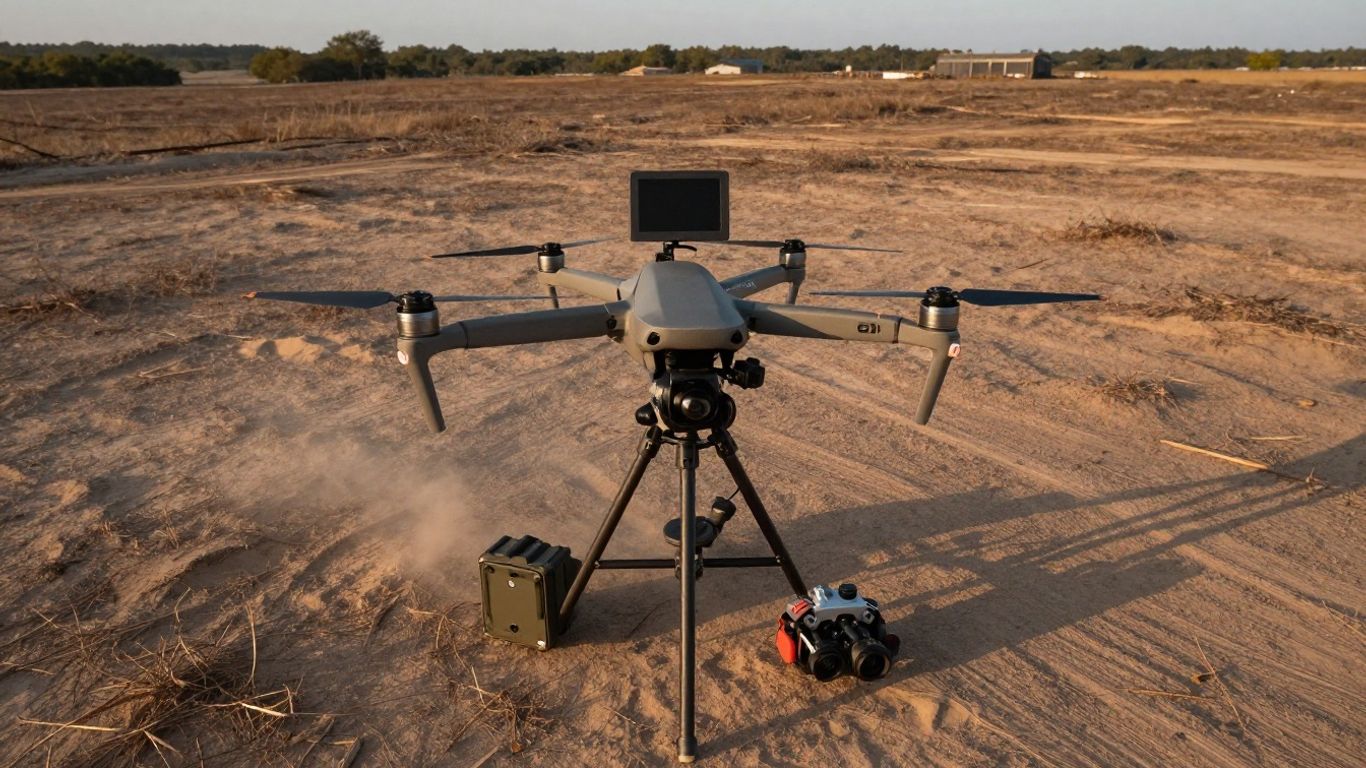
Deploying these systems effectively involves a combination of pre-mission planning and real-time operator judgment. The platform allows for both manual flight for precision maneuvering and autonomous waypoint navigation to minimize operator exposure. In field situations, maintenance and setup routines are essential, much like the systematic organization seen when working with All City Bathroom Remodeling for infrastructure upgrading.
Loitering munitions for anti-armor engagements
Equipping these units as loitering munitions provides commanders with the ability to survey an area before executing a high-precision strike. Once a target is identified, the drone can transition into an attack profile, providing a significant threat to armored vehicles and static command infrastructures. This capability effectively lowers the risk to personnel who might otherwise be required to enter high-threat zones for target verification.
Urban warfare and reconnaissance capabilities
Urban environments present unique challenges for signal propagation and obstacle detection, which the platform addresses through advanced visual inertial odometry. It acts as a set of eyes inside multi-story structures or narrow alleys that would otherwise be opaque to ground teams. Operators rely on these persistent views to map threats before they become immediate dangers, ensuring better situational awareness for all engaged squads.
Rapid deployment strategies for field units
To facilitate effective operations, field units rely on several key deployment strategies:
- Establishing forward-deployed wireless charging docks for persistent on-scene coverage.
- Implementing modular payload swaps to shift mission focus from recon to strike in seconds.
- Coordinating multi-unit swarms to saturate defense response areas simultaneously.
- Utilizing encrypted tethering for secure data transfer in high-interference zones.
These methods ensure that units remain dynamic and proactive, moving faster than the opposition can adapt their tactical posture.
Precision strike performance against static and mobile targets
Combining optical resolution with flight speed ensures that even fast-moving mobile targets have limited windows for evasion. By narrowing the distance to the target, the drone increases the success probability of every individual engagement. This performance is vital in neutralizing threats before they can reach designated friendly positions or critical transit points.
Supply chain and defense autonomy
Maintaining an autonomous defense capability necessitates a rigorous approach to sourcing and production control. Dependency on globalized supply chains poses risks that can be mitigated only by fostering indigenous manufacturing capabilities. This focus on domestic autonomy ensures that production can scale during crises without waiting for external component delivery.
Strategic importance of non-red supply chain components
Reliability is tied directly to the integrity of the supply chain, as even a small sub-component failure can compromise an entire mission. By verifying that every micro-assembler and sensor component issourced from trusted partners, the program ensures full operational lifecycle control. This commitment to transparency helps maintain trust in the deployment of these weapons for sensitive national security tasks.
Scaling production for regional defense needs
Scaling operations requires a modular approach to assembly where production lines can ramp up during periods of heightened activity. By maintaining a network of local manufacturing participants, Thunder Tiger can decentralize assembly, reducing the risk of a single point of failure in the production cycle. This distributed manufacturing base is key to meeting the volume demands of modern regional defense programs.
Security vetting for drone firmware and software
Firmware and software are the brain of the machine, and securing them against unauthorized access is an ongoing challenge. Every line of code is reviewed to ensure the absence of backdoors, with security protocols designed to isolate communication modules from critical navigation systems. This rigorous vetting ensures that the drones remain reliable assets under the full control of authorized operators.
Collaboration between Thunder Tiger and military intelligence
Integrating the needs of military operators with engineering feedback ensures that updates genuinely improve battlefield outcomes. Through shared diagnostic data and performance reviews, engineers receive actionable insights on what succeeds and what fails in the field. This iterative loop keeps the platform evolving faster than the threats it is designed to encounter, strengthening the overall defensive posture.
Future development and iterative upgrades
Looking forward, the roadmap for iterative updates centers on increasing the independence of each unit from ground controlled infrastructure. Autonomous navigation technologies are currently under intensive testing, aiming to allow drones to operate in environments featuring total signal blackouts. By embedding more decision-making logic on the airframe itself, the system becomes significantly harder for an adversary to influence.
Potential for AI-driven autonomous navigation
Artificial intelligence will permit units to identify terrain landmarks and navigate without GPS, a development vital for combatants in high-interference zones. By utilizing visual processing to correlate what the drone sees with internal mapping datasets, these systems can complete missions even when satellite signals are forcefully denied.
Enhancing jam-resistance in contested electromagnetic environments
Future designs are prioritizing wider frequency agility and physical hardening for communication modules. By expanding the spectrum across which these platforms can shift, designers ensure that blockers have no reliable way to isolate or ground the units. This resilience is essential for maintaining control during long-range reconnaissance or strike missions.
Modular payload configurations for specialized missions
Expanding the platform’s versatility means allowing for specialized hardware such as acoustic monitors or laser designators. This modularity ensures that the system is not a one-trick tool but a multi-capable asset that adapts to the specific needs of any platoon it supports. As mission requirements evolve, these field-swappable modules can be updated independently of the airframe, significantly extending system relevance.
Regulatory milestones for international defense contracts
Success in the global market depends on meeting international standards for hardware reliability and data security. The regulatory process involves documenting performance metrics and rigorous stress-testing to prove the system satisfies modern defense certifications. Navigating these requirements is a primary component of ensuring the platform can become a standardized tool for partner forces across the globe.
Conclusion
The Overkill FPV platform represents the successful synthesis of agile manufacturing and responsive engineering, directly addressing the complexities of contemporary asymmetric warfare. By prioritizing indigenous supply chains, modular hardware architectures, and iterative design cycles, it serves as a robust defense tool capable of evolving in real-time alongside the battlefield requirements of its operators.
Frequently Asked Questions
How does indigenous drone production strengthen national defense capacities?
Indigenous production provides a secure supply chain, ensuring availability of critical hardware during extended conflicts without waiting for international shipments.
What are the primary advantages of FPV drones in modern surveillance?
First-person view platforms provide immediate, low-latency visual data that allows operators to maintain constant awareness of hidden areas and fast-moving threats.
Why is a non-red supply chain considered essential for defense platforms?
Using trusted, non-restricted sources eliminates the risk of hidden vulnerabilities or manufacturing pauses driven by geopolitical actions involving hostile nations.
What role does modularity play in the development of aerial reconnaissance tools?
Modular designs simplify field maintenance and allow operators to swap sensors or munition types according to the specific needs of each mission.
How can autonomous navigation handle GPS-denied environments?
Systems use visual landmarks, inertial sensors, and onboard processing to compare the current landscape against internal maps, allowing navigation without external connectivity.
Why must firmware undergo such rigorous security vetting?
Rigorous testing detects hidden code, backdoors, or logic vulnerabilities that could be exploited by adversaries to gain control over aerial assets.
How do modern combat conditions dictate the evolution of drone hardware?
Constant exposure to real-world threats and jamming tactics forces manufacturers to innovate, leading to more resilient signal protocols and hardened physical architectures.