
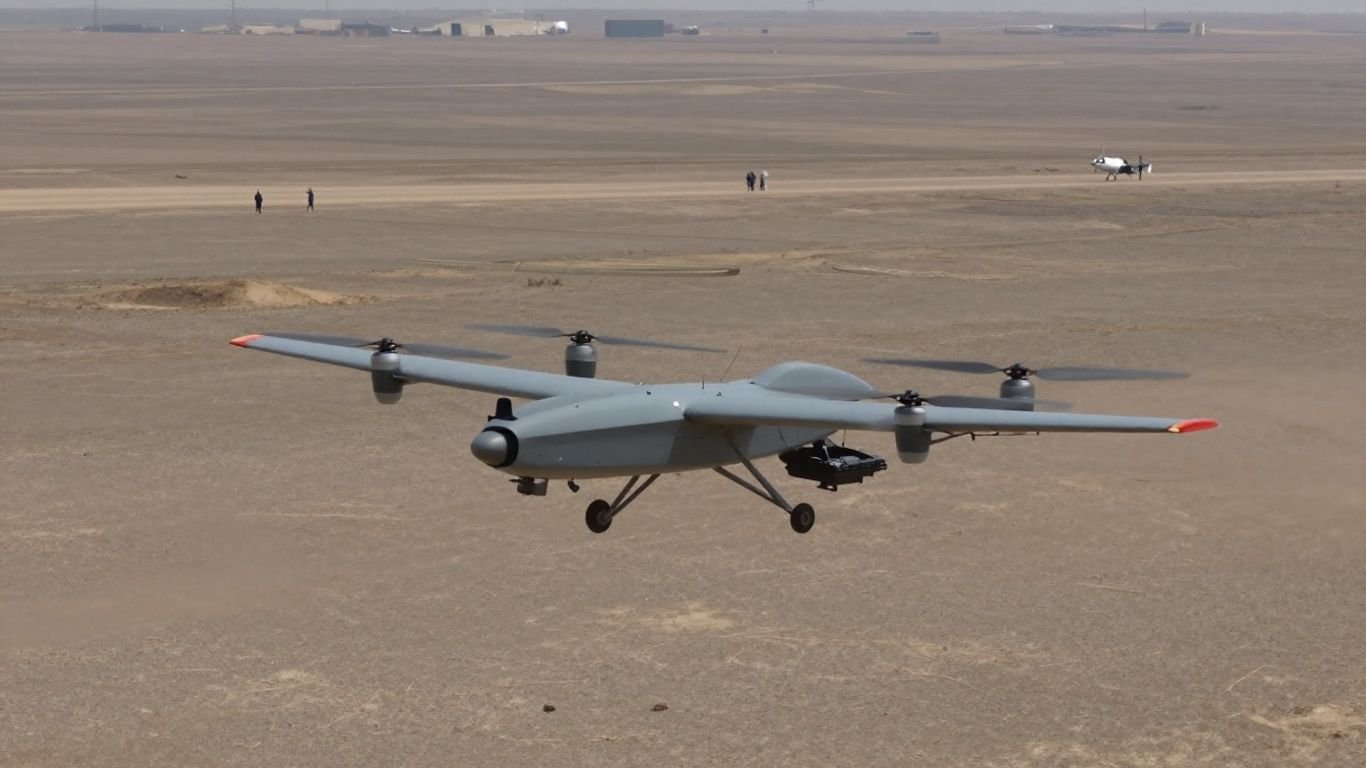
RQ-28A (Short Range) Small quadcopter-class ISR: mission, capabilities, and Army role

Key Takeaways
The RQ-28A is discussed publicly as a short-range, quadcopter-class Army reconnaissance system. Its broad role is easier to describe than its detailed performance, much of which is not established in the public material referenced here.
- The “short-range” label points to a close tactical role, not a published distance figure.
- Public descriptions identify the RQ-28A as a small quadcopter-class ISR system.
- Its intended value is timely aerial observation for units operating on the ground.
- Public reporting does not establish every sensor, flight, or communications specification.
- Small drones can inform decisions, but they do not replace other sources of intelligence.
What the RQ-28A is and where it fits
The RQ-28A (Short Range) Small quadcopter-class ISR is best understood as a small unmanned aircraft intended to support intelligence, surveillance, and reconnaissance at the tactical level. Public descriptions associate it with the Army’s Short-Range Reconnaissance effort and describe a quadcopter system designed for field use. That broad role is useful context, but it does not reveal every technical detail or define a precise operating envelope. The designation is a starting point for understanding where the aircraft fits, rather than a complete specification sheet.
Understanding the short-range designation
“Short-range” describes the mission category, not a confirmed number of miles or a guarantee about how long an aircraft can remain airborne. In practical terms, it points toward observation close enough to support a unit’s immediate questions: what lies beyond a nearby obstacle, along a route, or around an area of interest? Those questions can vary from one situation to another. Without a verified range figure, it is more accurate to treat the label as an indication of intended role than as a performance promise.
What small quadcopter-class ISR means
ISR combines intelligence gathering, surveillance, and reconnaissance: collecting information, observing activity, and helping build a clearer picture of an area. A quadcopter is a multirotor aircraft with four rotors, a form that public reporting describes for the RQ-28A. At this scale, the concept is about giving a ground unit another way to observe nearby terrain, not about providing a complete picture of a wider operating area. The value depends on whether the resulting information is timely and useful to the people who must interpret it.
How the RQ-28A fits into the Army’s reconnaissance toolkit
The RQ-28A belongs in a layered view of reconnaissance: different platforms and human sources can answer different questions at different distances. A small aircraft can offer a local overhead perspective, while other systems may be suited to broader coverage or longer observation. For a wider look at how a distinct small-aircraft role is discussed, see the RQ-12 Wasp; it is a separate system, not a substitute source for RQ-28A specifications. Keeping those roles distinct prevents broad comparisons from turning into unsupported claims about interchangeable equipment.
Missions and operational use
A small reconnaissance aircraft is useful when a unit needs more visual context than it can obtain from its current position. Public accounts describe the RQ-28A as a short-range system intended to provide rapidly deployable ISR, but they do not establish that every mission follows one standard pattern. The practical question is always what information is needed, how quickly it is needed, and what decisions it can support. This makes the aircraft’s role part of a larger process rather than an answer on its own.
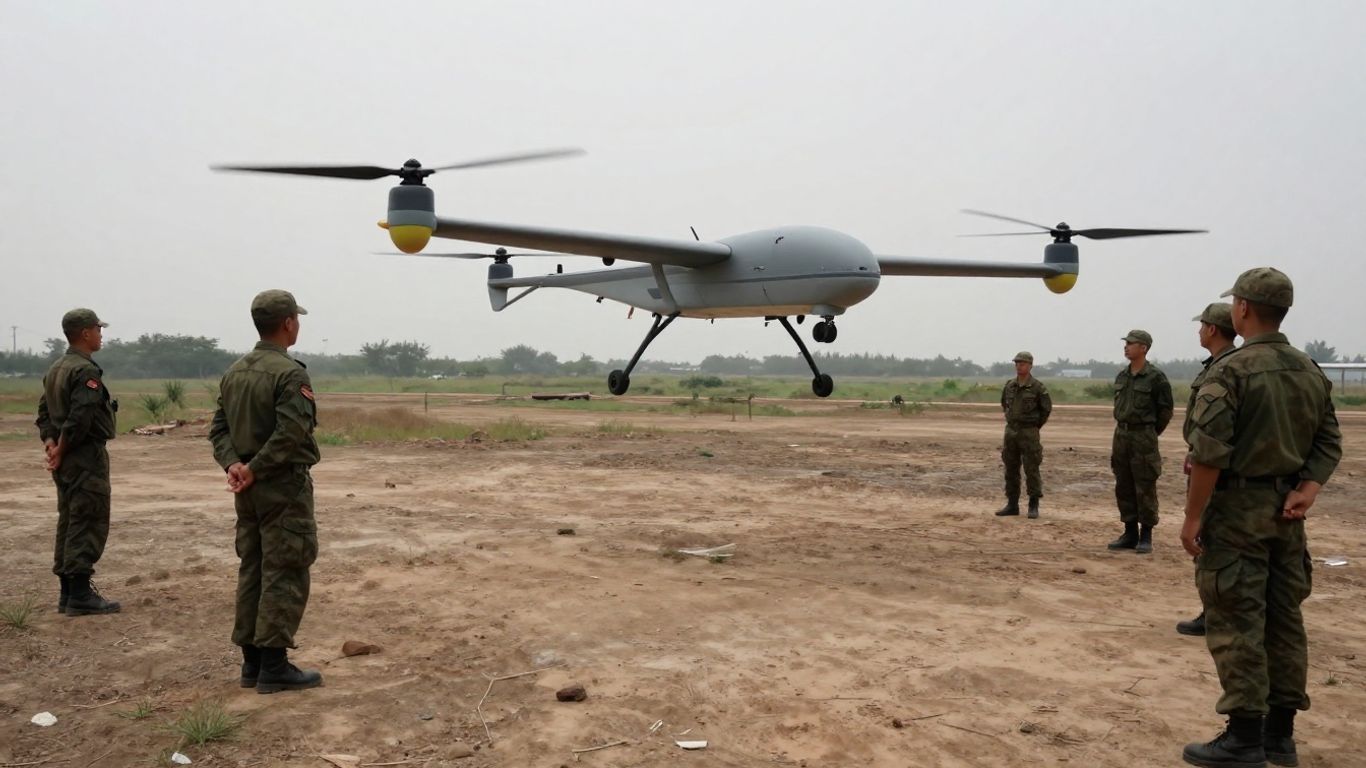
Gathering imagery for units in the field
Aerial imagery can help personnel inspect a nearby area without relying only on a ground-level view. The RQ-28A is described in public reporting as an ISR aircraft; specific sensor models and image characteristics should not be assumed where they have not been publicly confirmed. Even a clear view is only one input: the operator and unit must assess what it shows, when it was captured, and whether it answers the question at hand. Useful context, not certainty is the right way to think about imagery gathered from a small aircraft.
Supporting reconnaissance at short range
At short range, reconnaissance often means checking a limited area or gaining an additional angle on terrain relevant to a unit’s movement or position. Different small UAS have distinct designs and operating approaches; for a separate example, the RQ-20 Puma is described as a hand-launched aircraft, unlike the quadcopter class discussed here. This comparison is about broad categories, not a claim that the systems share capabilities. It also underlines why mission planning should begin with the information need, rather than assuming one aircraft can serve every purpose.
How operators can use information to inform decisions
Observation has value when it reaches the people making a decision in time to matter. A report from an aircraft may help a unit decide whether it needs another look, whether the available view is sufficient, or whether uncertainty remains. The following sequence is a general way to think about using aerial information, not a claim about a specific RQ-28A procedure.
- State the question the observation is meant to answer.
- Consider whether the view is current and clear enough to interpret.
- Share relevant observations through the unit’s established process.
- Reassess if the available information leaves important uncertainty.
The point is not to treat an image as a conclusion. It is to use observation carefully, alongside other information and the judgment of the people responsible for the decision.
Publicly reported capabilities
Public accounts provide a useful outline of the RQ-28A’s place in Army short-range reconnaissance, while leaving many technical questions open. The clearest descriptions identify it as a quadcopter-class system and connect it to tactical ISR. Such descriptions can explain the broad purpose without confirming exact flight performance, sensor configuration, or communications details. A careful account separates what is reported from what might be assumed based on the aircraft’s general class.
What its quadcopter design enables
A quadcopter layout is consistent with vertical takeoff and landing, a feature included in public descriptions of the Army’s short-range reconnaissance concept. That can be relevant where a runway is not part of the intended field setting. But a design category alone does not establish the aircraft’s endurance, stability in particular weather, or ability to operate in every kind of terrain. Those details require specific, reliable reporting rather than inference from the word “quadcopter.”
How onboard sensors support ISR
Sensors are the means by which an unmanned aircraft gathers information, but public material referenced here does not confirm a detailed RQ-28A sensor suite. It is reasonable to describe the system broadly as supporting ISR, because that is its reported role; it is not sound to assign it particular camera types, image resolution, or day-and-night performance without a source. For comparison, descriptions of other aircraft, such as the RQ-11 Raven, do not establish what sensors are fitted to this system. The distinction matters when a reader is trying to understand what is known rather than what is typical of a category.
What public information does—and does not—confirm
Public reporting is strongest on broad program framing and weakest on details that would require a current technical specification. This table separates those levels of information so that general descriptions are not mistaken for verified performance figures.
| Topic | Publicly described | Not established here |
|---|---|---|
| Role | Short-range reconnaissance and ISR | A complete list of mission types |
| Aircraft class | Small quadcopter | Exact dimensions or weight |
| Concept | Rapidly deployable capability | A verified flight-time figure |
| Sensors | ISR information gathering | Specific sensor models or image resolution |
The table is deliberately cautious: a stated role is not the same as a confirmed technical specification. Readers should look for dated, authoritative Army material before treating an individual performance claim as settled.
Deployment and operator considerations
A fielded aircraft is only one part of an operational capability. People need to understand the equipment, plan around local conditions, and coordinate how observations are shared. Public reporting has described the RQ-28A in the context of Army fielding and training, but that does not make every unit’s procedures public or identical. The details below are general considerations for small UAS operations, not a guide to operating a specific military system.
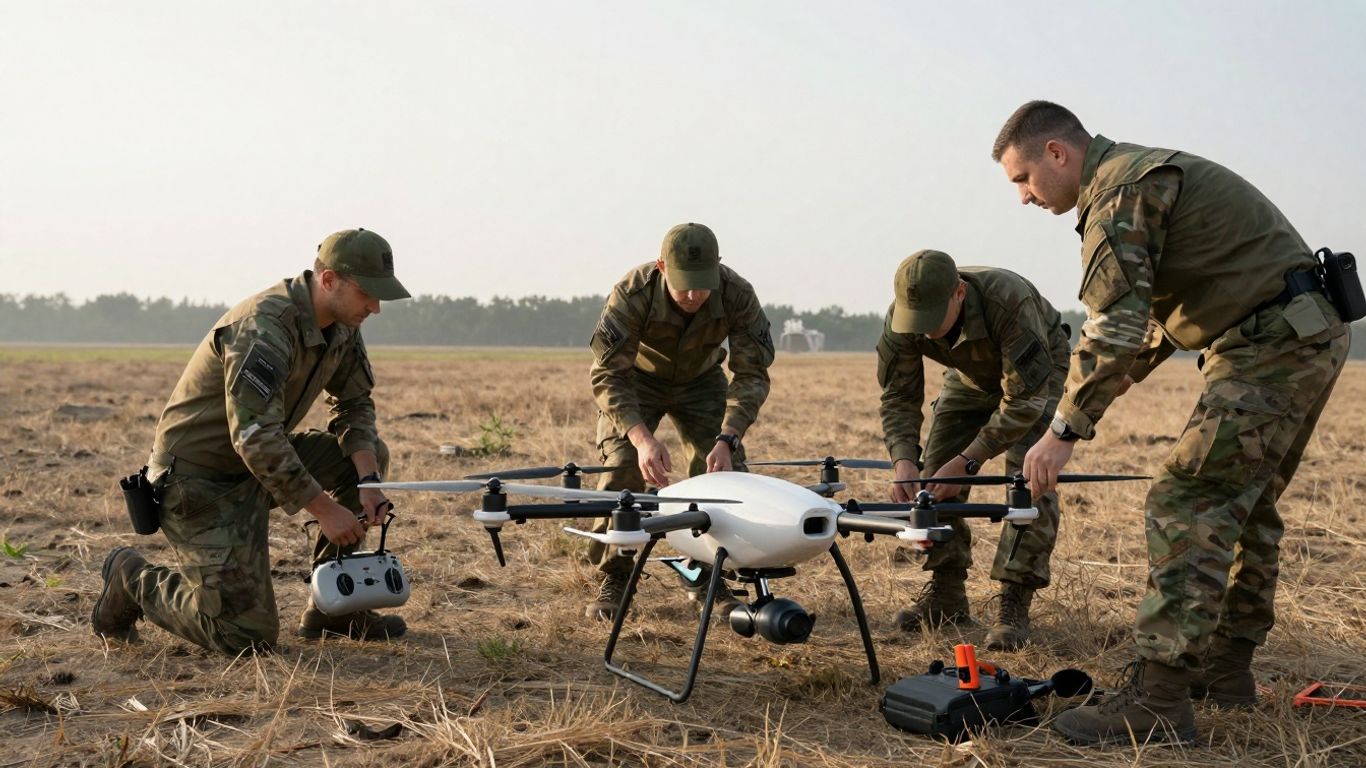
Preparing the aircraft and control equipment
Before any flight, a team generally needs to account for the aircraft, the equipment used to control it, and the information required for the task. The exact RQ-28A setup and checklist are not confirmed by the public material discussed here, so it would be misleading to prescribe a system-specific procedure. Training and unit guidance determine how personnel prepare and use their equipment. The basic principle is to confirm readiness and responsibilities before the aircraft is needed for a time-sensitive observation.
Factors that shape flight planning
Planning is shaped by the question being asked, the operating area, and the conditions on the day. Rather than assume that one flight profile fits every setting, teams generally need to consider several connected factors. These are broad planning prompts, not confirmed RQ-28A specifications.
- The area to observe and the information sought.
- Weather and visibility at the time of the task.
- Available battery capacity and the time required for the observation.
- The team’s ability to communicate and interpret what is seen.
Each factor can affect whether a planned observation is practical. The aircraft’s published specifications and local procedures, where available, should take precedence over general assumptions about small drones.
Coordinating drone operations with other units
Aerial observation is most useful when the relevant people know what information is being collected and how it will be shared. Coordination can help avoid duplicated effort and reduce the chance that different teams interpret the same observation without context. Public reporting on Army fielding, including this Army fielding account, offers program context but does not document every unit-level coordination procedure. For broader reference, relationship management is a separate subject; it is not evidence about military drone operations.
Limitations and practical trade-offs
Small aircraft can provide a useful local view, but every observation depends on conditions and has limits. Public descriptions of the RQ-28A do not provide enough detail to make precise claims about its endurance, range, or performance in particular environments. General trade-offs for small UAS are still relevant as questions to ask, provided they are not presented as verified specifications of this aircraft. That distinction keeps expectations grounded.
Battery life, range, and environmental conditions
Battery capacity, distance, and weather can shape how much observation a small aircraft can provide, but the specific RQ-28A figures are not confirmed in the material cited here. A short-range designation should not be converted into a numerical range, and a quadcopter description does not answer how long a given flight lasts. Conditions also vary by mission and location. For practical planning, verified system documentation matters more than broad assumptions about aircraft of the same general class.
Communications, visibility, and operating context
An observation is useful only if the people who need it can receive and interpret it in context. Visibility, communications, and the surrounding operating environment can affect what information is available and how confidently it can be understood. The public material summarized here does not establish the RQ-28A’s specific communications performance or operation under particular conditions. Those gaps should be treated as unknowns, rather than filled with claims borrowed from other aircraft.
Why small drones complement rather than replace other ISR assets
A small drone offers a particular kind of view, at a particular scale. It cannot be assumed to provide every kind of coverage or persistence that another source may offer, and no single observation resolves every uncertainty. The Army’s reconnaissance toolkit is better understood as a mix of capabilities whose usefulness depends on the question, the setting, and the information available. That is why comparing roles is more informative than declaring one category a universal replacement for another.
Program context and what to watch
The public story of the RQ-28A includes fielding and follow-on program activity, but program descriptions can change as testing and acquisition proceed. Older reporting should not automatically be treated as a statement of the current status. A useful reader’s habit is to note the date, source, and specific claim behind each update. That helps separate a program milestone from a technical fact about the aircraft.
Public reporting on Army fielding and testing
Public accounts have described Army fielding of the RQ-28A and subsequent work on the broader Short-Range Reconnaissance effort. Reports on prototype testing provide context for the program’s next steps, but they do not by themselves establish the outcome or current status of every activity. The prototype testing report is one example of coverage to read as a dated account, rather than as a final specification. For the RQ-28A itself, current official material would be needed to confirm later changes or milestones.
The role of user feedback in capability development
Testing and field use can help identify what works for the people expected to use a system, and what needs further attention. Public sources may describe training or testing without releasing all the feedback or the changes that follow. It is therefore sensible to distinguish evidence that an activity occurred from claims about its effects. The latter need direct reporting, not an assumption that development automatically resolves every operational challenge.
Questions to track as more information becomes available
The clearest future updates would answer basic questions that broad program summaries leave open: which specifications are officially published, what training or fielding milestones have been confirmed, and how the Army describes the system’s current role. A source audit should keep unrelated material out of the evidence chain: pages on AI Overviews, Cloud ERP, Mental Health First Aid, and Falco Outdoors do not substantiate aircraft specifications. The same standard applies to any comparison with another drone: it must be based on relevant, specific documentation. Until then, restraint is more useful than filling gaps with confident-sounding detail.
Conclusion
The RQ-28A is publicly framed as a small, short-range quadcopter-class ISR system for Army use, with its value centered on providing nearby units another way to gather information. That broad description explains its place in reconnaissance, while many technical details remain unconfirmed in the material considered here. Reading future updates with attention to source and date will keep the distinction between mission role and verified capability clear.
Frequently Asked Questions
What does ISR mean?
ISR stands for intelligence, surveillance, and reconnaissance: activities concerned with gathering and observing information to help build an understanding of an area or situation.
What does “short-range” mean for a reconnaissance aircraft?
It describes a general mission category, but it does not provide a verified distance figure unless a reliable source publishes one.
What is a quadcopter?
A quadcopter is a multirotor aircraft with four rotors. The term describes its broad design, not its specific flight performance or equipment.
Why use a small drone for reconnaissance?
A small aircraft can offer an aerial perspective that may help people assess nearby terrain. Its usefulness depends on the mission, conditions, and how the information is interpreted.
Does aerial imagery answer every operational question?
No. Imagery is one source of information and may be incomplete, unclear, or out of date. It should be considered alongside other relevant information.
What can affect a small drone’s operation?
Factors can include weather, visibility, battery capacity, communications, and the task being attempted. The exact limits vary by system and should be checked against reliable documentation.
Where should readers look for confirmed specifications?
Readers should prioritize current official material and clearly dated reporting that identifies its source. General descriptions of an aircraft class are not a substitute for system-specific specifications.