A comprehensive guide to the Rotron DT-300 from Mountain Horse Solutions

Key Takeaways
Understanding the capabilities of state-of-the-art heavy-lift systems helps operators choose the right aerial platforms for complex mission requirements. The Rotron DT-300 offers unique advantages for modern industrial needs.
- The system features a proven 70km flight range while carrying a 30kg payload capacity.
- Dual-rotor architecture reduces operational costs compared to traditional heavy-lift platforms.
- Full electrification minimizes the environmental footprint during long-duration flight missions.
- Mountain Horse Solutions ensures all units meet stringent Blue UAS cybersecurity integrity standards.
- Advanced payload integration allows for rapid reconfiguration based on specific operational needs.
Overview of the Rotron DT-300 system
The Talon DT-300 Drone Plus represents an evolution in vertical take-off and landing technology. By integrating high-capacity power solutions with robust design, it addresses the fundamental challenges of modern unmanned aviation.
Key technical specifications and payload capacity
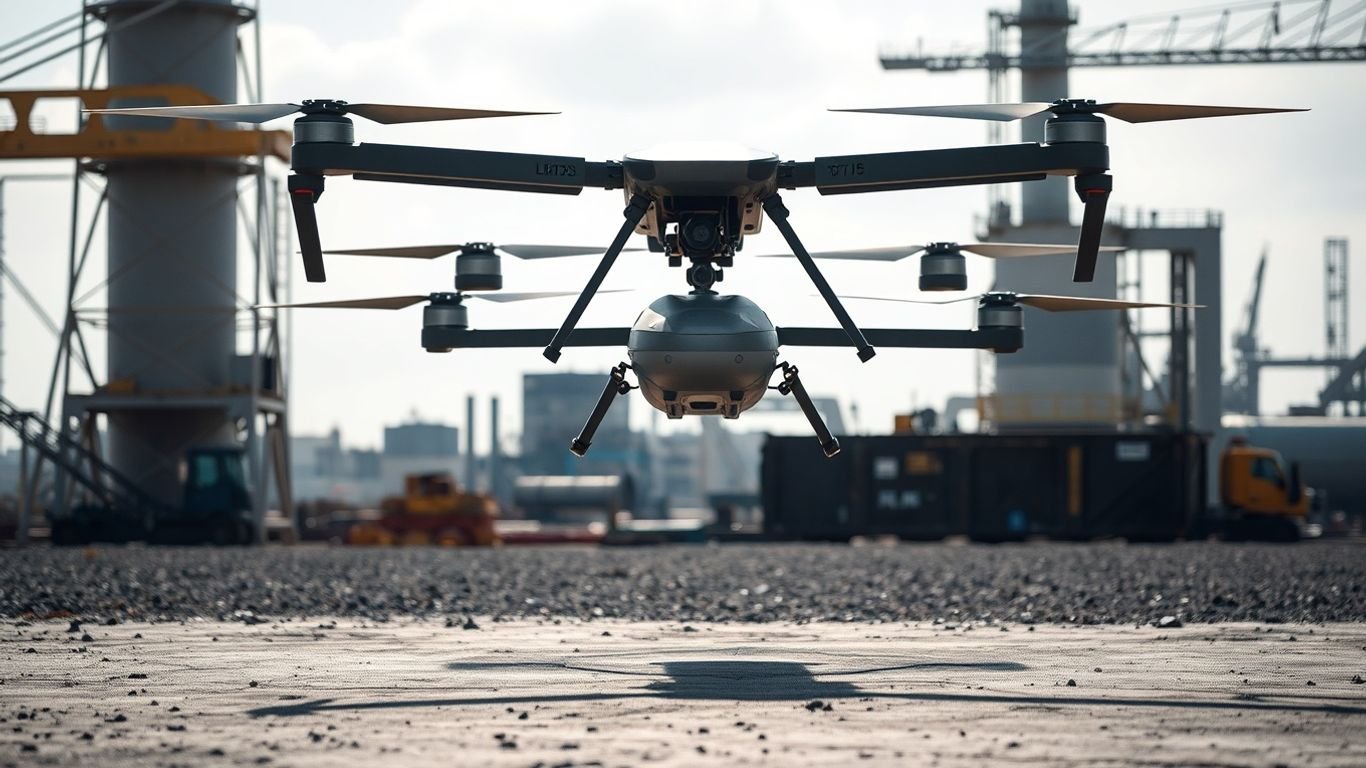
The airframe is built to support significant weights while maintaining structural integrity. It utilizes a twin-rotor architecture that optimizes lift without needing complex mechanical systems, which enhances durability and streamlines maintenance tasks for enterprise teams.
Flight endurance and performance metrics
Capable of reaching a 70km range with a 30kg payload, the system bridges the gap between short-range observation drones and long-haul transport. This unmatched performance allows operators to cover extensive ground without frequent battery swaps, ensuring critical data or cargo arrives promptly at the target destination.
Strategic partnership with Mountain Horse Solutions
Applications for industrial heavy-lift drones
Modern industry relies on precision and reliability, and the DT-300 is designed to facilitate complex tasks that were previously difficult to automate. By deploying intelligent systems, companies can achieve higher efficiency while minimizing hazards to personnel.
Precision agriculture and forestry management
Efficient crop monitoring reaches new levels with the ability to carry heavy hyper-spectral imaging payloads across vast rural landscapes. This creates a data-rich environment for land managers to make informed decisions without deploying ground crews.
Logistics and supply chain support in remote areas
Transporting critical medical supplies or essential hardware is a standard function of this platform. The following use cases demonstrate the versatility of the system:
- Rapid delivery of replacement parts to isolated infrastructure sites.
- Emergency medical transport during environmental disasters or power grid outages.
- Routine replenishing of stock for remote research outposts.
- Secure document transport between secure maritime or inland nodes.
By ensuring consistent delivery cycles, operations remain stable even when infrastructure is compromised.
Search and rescue operations
Search professionals utilize the endurance of the system to map terrain or identify heat signatures in difficult regions. Integrating advanced surveillance tools provides real-time situational awareness for ground teams navigating the site.
Large-scale infrastructure inspection and mapping
Large grid sectors or complex pipelines can be surveyed with high-fidelity sensors. Using a quadcopter architecture for lighter tasks alongside this heavier lifter creates a comprehensive monitoring suite for utility providers.
Tactical advantages of the Rotron engine
Efficiency at scale requires a propulsion system that does not sacrifice power for longevity. The Rotron platform is engineered to balance these needs for demanding, continuous operations.
Superior power-to-weight ratio
By focusing on a high-efficiency electric motors, the drone produces enough lift to carry bulky cargo while maintaining a nimble form factor. This is essential for landing in tight, unpredictable terrain common to industrial sites.
Reliability and maintenance cycles
Maintenance requirements are significantly lower than combustion counterparts, allowing for a higher return on investment. Teams follow standard maintenance practices similar to FPV system workflows to ensure the hardware remains flight-ready at all times.
Fuel efficiency in extreme flight conditions
Despite heavy winds or variable weather, the power management system stabilizes energy usage. This consistency is vital for maintaining flight logs that comply with regional safety headers.
Integrating the DT-300 into operational workflows
Success in the field requires more than just high-quality hardware; it requires a deep understanding of standard operating procedures. Integrating the system involves mapping its capabilities to existing communication and planning protocols.
Operator training and certification requirements
Personnel must undergo rigorous training to master flight controllers and payload management. Utilizing a hexacopter aviation framework for base training helps them prepare for the unique, heavy-lift flight characteristics of the DT-300.
Compatibility with existing software and communication protocols
Data pipelines are designed to ingest directly from the onboard systems into existing mission control interfaces. This interoperability prevents bottlenecks during the transition between raw data capture and actionable analysis.
Environmental and regulatory site assessment
Before every mission, teams conduct a thorough site survey to assess radio interference and local airspace conditions. This prevents signal loss and ensures compliance with civil aviation navigation requirements.
Customization options provided by Mountain Horse Solutions
Every mission has unique requirements, and Mountain Horse Solutions offers tiered configurations. They ensure that specialized sensors work in concert with the main aircraft control unit.
Specialized payload bay configurations
The internal storage can be adjusted to house diverse equipment. The following table summarizes the primary mounting options available to enterprise clients:
| Configuration Type | Payload Capacity | Primary Use Case |
|---|---|---|
| Standard Cargo Tray | 30 kg | Logistics Delivery |
| Multi-Sensor Gimbal | 15 kg | Mapping and Survey |
| External Winch Unit | 20 kg | Search and Recovery |
These configurations allow for maximum reuse of the platform across departments.
Sensor and camera integration support
Custom brackets and communication interfaces are available to ensure third-party cameras perform optimally. The integration process is supported by documentation that details power requirements and signal latency.
Field support, training, and maintenance services
Dedicated technical teams assist with heavy-lift fleet performance diagnostics. This end-to-end support ensures that operators are never left without guidance when technical hurdles arise in the field.
Safety and compliance standards for heavy drones
FAA and regional flight regulation adherence
Documentation is provided for every flight controller to ease the waiver application process inside specific jurisdictions. Following these protocols is critical for operational continuity.
Automated fail-safe and emergency protocols
Advanced features ensure that in the event of signal loss, the system triggers a secure return-to-home protocol. This logic is built into the primary flight controller to provide peace of mind in high-stakes environments.
Secure data handling and encryption standards
Communication between the controller and the drone is fully encrypted to prevent unauthorized access. Keeping data integrity as the highest priority confirms the system is safe even for sensitive reconnaissance needs.
Conclusion
The Rotron DT-300, supported by the engineering expertise of Mountain Horse Solutions, provides a scalable solution for heavy-lift aerial logistics and inspection. As the requirements for automated delivery and wide-area monitoring continue to evolve, the platform offers the performance and regulatory compliance necessary for sustained impact in demanding industrial environments.
Frequently Asked Questions
What are the core benefits of a heavy-lift electric VTOL system?
These systems provide the ability to move significant weights vertically without the logistics and fuel complexities of traditional combustion aircraft, reducing noise and carbon emissions.
How does environment affect flight time for heavy-lift drones?
Environmental factors like high-altitude density, humidity, and wind speed play significant roles in battery consumption, often requiring operators to build safety margins into mission flight plans.
Is specialized training required to pilot heavy-lift drones?
Yes, operating industrial-grade UAVs requires certifications that cover not only flight skills but also emergency protocols, payload management, and data handling requirements for specific industrial sectors.
What does Blue UAS cleared status represent?
It indicates that the system is fully vetted by U.S. government standards for cybersecurity, supply chain integrity, and operational safety, making it eligible for use in government and critical infrastructure projects.
Can industrial drones be customized for specific industry needs?
Most industrial platforms offer payload bays and sensor ports that allow for modular swaps, making a single airframe useful for various tasks ranging from delivery to mapping.
How are heavy-lift drones integrated into existing logistics?
Integration involves utilizing mission planning software to map out flight trajectories while ensuring the ground control software interface seamlessly feeds telemetry and inspection data into enterprise databases.
Why is data security critical for industrial drone operations?
Industrial mission data often includes sensitive imagery or logistical pathways, necessitating encrypted signal lines to protect the information from unauthorized interception during live flight operations.