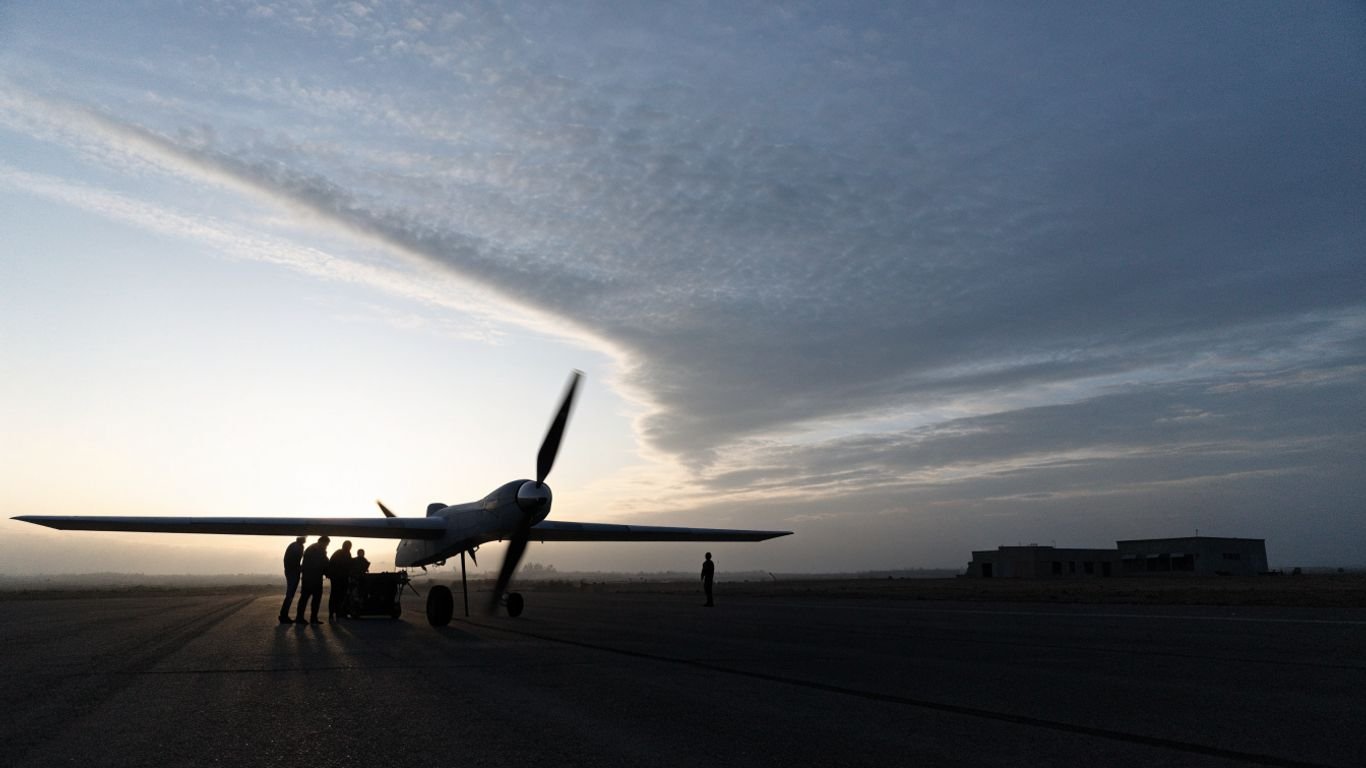
MQ-1 Predator (former): The legacy armed/ISR MALE drone explained

Key Takeaways
The MQ-1 Predator began as a remotely piloted surveillance aircraft and later took on an armed role. Its history also shows how endurance, sensors, communications, and human judgment shape the usefulness—and limits—of an unmanned aircraft.
- The Predator evolved from a reconnaissance platform into an armed intelligence, surveillance, and reconnaissance aircraft.
- Its central contribution was persistent observation, not speed or high-altitude performance.
- Electro-optical, infrared, and radar options supported different surveillance needs, each with trade-offs.
- Armed missions added a strike capability but did not remove the need for human decisions and coordination.
- The aircraft was retired as newer platforms took on its role, while many of its operational lessons endured.
Origins and development
The MQ-1 Predator emerged from a period of experimentation with remotely piloted aircraft and long-duration surveillance. Its early purpose was to keep sensors over an area for extended periods, offering a view that could be shared with decision-makers far from the aircraft. Over time, the platform’s mission expanded beyond observation. The result was an aircraft associated with both persistent reconnaissance and the changing role of unmanned systems in military operations.
From reconnaissance concept to operational aircraft
The Predator’s operational story began with a straightforward idea: an aircraft could remain overhead for hours, gathering imagery without placing a pilot in the cockpit. Early use established the value of sustained observation, particularly when a single pass by a crewed aircraft would leave long gaps. That did not make the platform a complete picture of events; weather, sensor limits, and the interpretation of what was seen still mattered. The MQ-1 Predator’s history offers a useful overview of how its reconnaissance role developed into a broader mission.
General Atomics and the Predator program
General Atomics developed the Predator program into a remotely piloted aircraft system, with the aircraft forming only one part of its operation. Ground stations, communications links, crews, and supporting intelligence processes all contributed to what the platform could do. This system-level view helps explain why the aircraft’s influence cannot be measured by its airframe alone. Its history is also part of the larger development of remotely piloted aviation, rather than a story of one machine acting independently.
How the MQ-1 designation reflected its role
The designation changed as the aircraft’s mission changed. It was initially identified as the RQ-1, reflecting a reconnaissance role, and later as the MQ-1 after it gained a multi-role function that included armed operations. The change marked a real shift in how the aircraft could be tasked, but it did not erase the surveillance work that remained central to its use. The label is a compact reminder that mission categories can evolve alongside technology and operational practice.
Airframe and flight capabilities
The Predator was a medium-altitude, long-endurance aircraft designed around staying aloft and carrying surveillance equipment. Its operating concept differed from that of a fast aircraft built for brief, high-speed missions: time over an area was a defining feature. Flight depended on remote pilots and a wider control system, rather than an onboard crew. Those characteristics made it useful for sustained observation, while also leaving it exposed to conditions that faster or more heavily protected aircraft might better withstand.
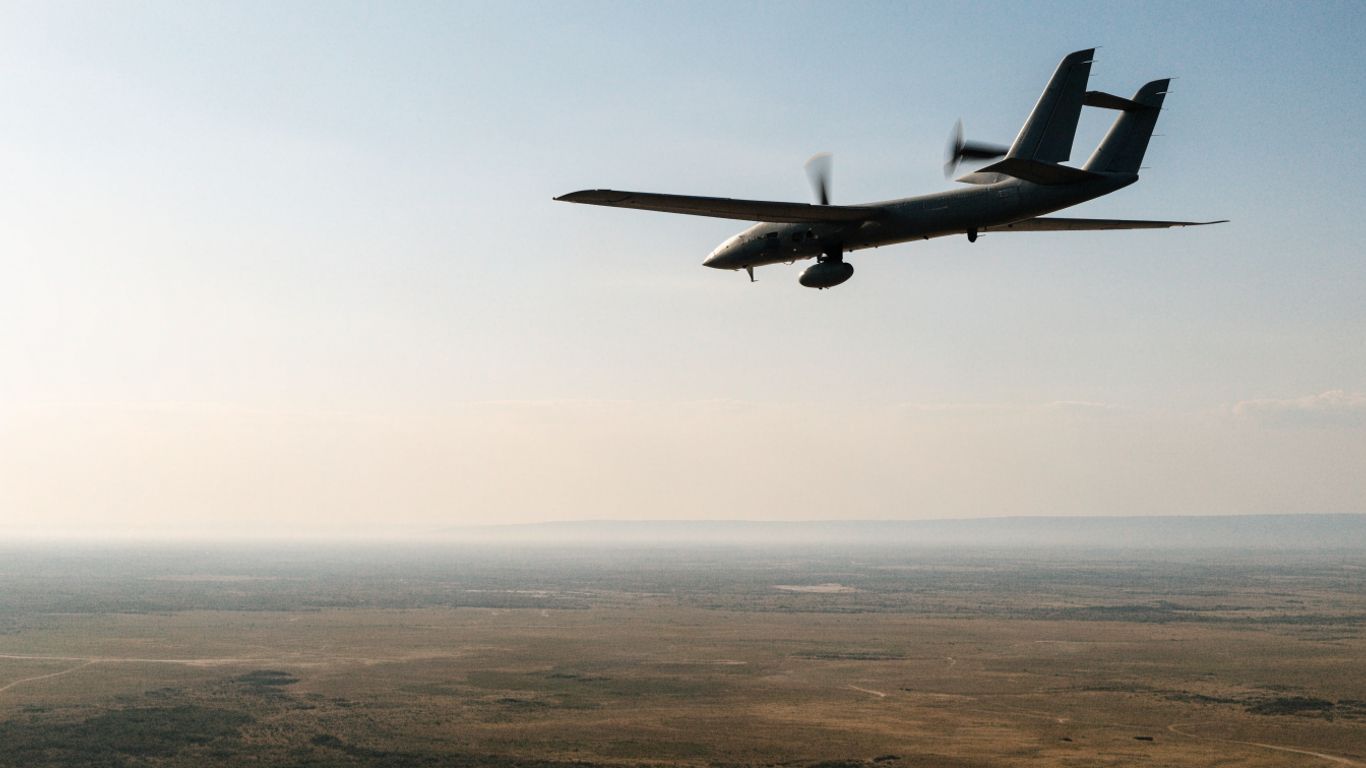
A remotely piloted MALE aircraft
MALE stands for medium-altitude, long-endurance, describing a broad category of unmanned aircraft rather than a specific sensor or mission. The MQ-1 was remotely piloted, so crews operated it from the ground and monitored information sent back from the aircraft. This arrangement moved the aircrew away from the immediate flight environment, but it did not make operations automatic or effortless. Pilots and mission teams still had to manage the aircraft, communications, and the demands of a changing task.
Endurance, altitude, and operating range
The Predator’s long endurance allowed it to remain over an area of interest far longer than a typical short-duration observation flight. That persistence could help teams notice changes over time, although the value of remaining overhead depended on visibility, sensor performance, and the mission’s purpose. Medium-altitude operation offered a practical vantage point for surveillance, not immunity from weather or air defenses. In this kind of aircraft, duration and access matter as much as a single headline performance figure.
Ground control and satellite communications
Control stations and communications links connected operators with the aircraft and its mission equipment. Satellite communications could support operations beyond the reach of a direct line-of-sight link, though communications remained a dependency rather than a guarantee. The aircraft’s remote nature also meant that a mission involved coordination between pilots, sensor operators, and other personnel. A break or delay in the information chain could affect how quickly observations were understood and acted upon.
Sensors and mission equipment
The Predator’s mission equipment supported observation from a distance, with sensor choices shaped by what a task required. Cameras and radar did not produce interchangeable views: one might offer useful visual detail in suitable conditions, while another could support observation when visibility was less favorable. Equipment also had to fit within the aircraft’s payload and operating constraints. Looking at the sensor suite as a set of trade-offs gives a clearer picture than treating any one device as a universal answer.
Electro-optical and infrared imaging
Electro-optical imaging captures visible-light imagery, while infrared sensors detect heat differences. Together, these types of imagery could provide different ways to observe activity, depending on the conditions and the target of interest. Neither view automatically explains what an image means; operators need context, time, and careful interpretation. The sensor-and-operator relationship was therefore as important as the camera itself: collected imagery became useful intelligence only through analysis and communication.
Synthetic aperture radar and surveillance options
Synthetic aperture radar offered a radar-based approach to observation, complementing camera imagery. Different sensors could help address different environmental or mission needs, but adding options did not remove the limits of the aircraft or the need to choose where to focus attention. The central question was not simply which sensor was available, but what kind of information a mission needed and how it would be interpreted. Sensor comparisons are most meaningful when considered in that operational context.
| Equipment or capability | General contribution | Consideration |
|---|---|---|
| Electro-optical imaging | Visible-light observation | Depends on visibility and viewing conditions |
| Infrared imaging | Observation based on heat differences | Requires careful interpretation of thermal patterns |
| Synthetic aperture radar | Radar-based surveillance | Provides a different kind of observation from camera imagery |
The table shows why the sensor suite is better understood as a collection of complementary tools than as a single all-purpose camera. Each option shaped the information available to a mission team, while the aircraft’s payload and operating conditions constrained how that information could be gathered. In practice, choosing an observation method was part of defining the mission itself.
Payload limits and mission trade-offs
Every aircraft has limits on what it can carry and how equipment affects its operation. For a long-endurance platform, mission planners had to weigh sensor needs against the demands of remaining airborne and completing the assigned task. Extra equipment could add useful information, but it could not be treated as cost-free. The result was a practical balance between payload, time on station, communications, and the specific questions a mission needed to answer.
Intelligence, surveillance, and reconnaissance missions
The MQ-1’s ISR role centered on collecting information over time and sharing it with people who needed to understand activity on the ground. Persistent observation could fill gaps between brief visits, but it did not provide perfect or complete awareness. Teams had to connect imagery with other information and judge what warranted attention. The broader military drone technology discussion reflects how unmanned aircraft have continued to evolve, while the Predator remains an important example of earlier persistent ISR practice.
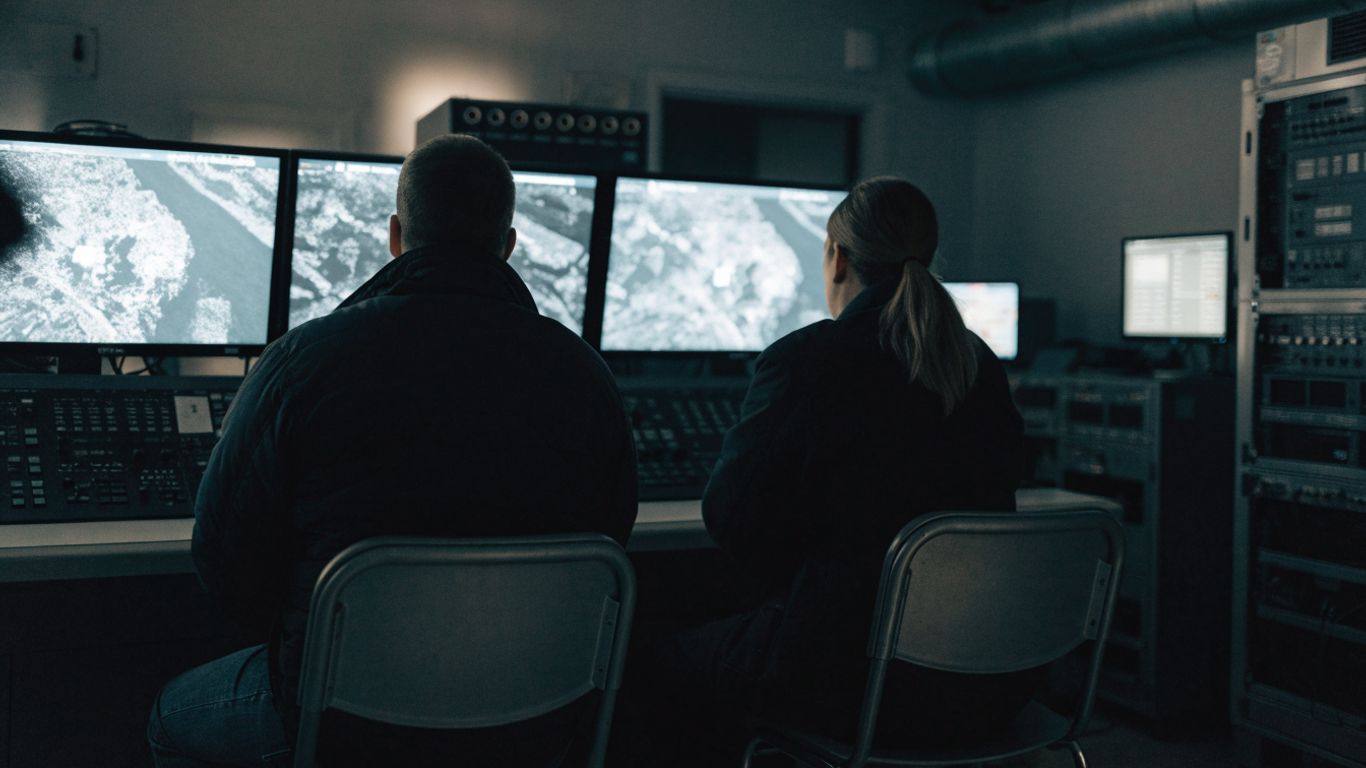
Persistent monitoring of areas of interest
An aircraft that can loiter over an area offers the possibility of observing patterns and changes that are easy to miss in a snapshot. That persistence can be useful for surveillance, but it is not the same as seeing everything: field of view, weather, sensor settings, and attention all shape what is noticed. Crews must also decide what to watch and for how long. The value of an extended mission comes from the quality and relevance of the information collected, not simply from its duration.
Supporting situational awareness and target identification
Imagery can help build situational awareness by showing where activity occurs and how it changes. It can also contribute to target identification, but an image alone does not establish intent or settle every question about a person or object. Interpretation relies on context and corroborating information, with uncertainty communicated rather than concealed. That distinction matters especially when surveillance may inform consequential decisions.
Coordinating aircraft, operators, and intelligence teams
ISR was a coordinated process involving aircraft control, sensor operation, analysis, and communication with people responsible for decisions. A useful sequence might include:
- Defining the area and the questions the mission is meant to address.
- Choosing observation priorities and adjusting them as conditions change.
- Reviewing imagery alongside relevant context and other available information.
- Sharing findings with decision-makers while making uncertainty clear.
That sequence describes a general workflow, not a guarantee that every observation produces a timely or complete answer. Unmanned aircraft also sit within a much wider information environment: for example, hostile reconnaissance describes a separate security topic, not a military-aircraft capability. The distinction helps keep the Predator’s ISR role in focus without treating every use of the word reconnaissance as equivalent.
Armed operations and operational limits
The Predator’s role expanded when it was adapted to carry weapons, joining surveillance with the ability to conduct strikes. That shift affected how missions were planned and how sensor information could be used, while making human judgment and accountability even more consequential. Weapons integration did not eliminate uncertainty or remove operational constraints. The aircraft still depended on communications, functioning equipment, and conditions that allowed it to operate effectively.
Hellfire integration and the shift to strike missions
Integration with Hellfire missiles marked a change from an unarmed reconnaissance aircraft to one capable of armed operations. The same platform could gather information and, in some circumstances, carry out a strike, linking surveillance and action more closely than before. That combination became a defining feature of the Predator’s history. It also meant that observation and weapon use had to be treated as distinct stages, each with its own requirements and consequences.
Targeting workflows and human decision-making
A sensor image is only one part of a targeting process. People must interpret what is visible, assess the information available, and make decisions within the relevant operational rules. Remote operation can change where participants are located, but it does not make the judgment itself mechanical. The history of armed unmanned aircraft is therefore also a history of human roles: who gathers information, who evaluates it, and who is responsible for decisions.
Vulnerabilities, weather, and contested airspace
The Predator was not designed to be invulnerable. Weather could affect visibility and flight operations, while hostile or defended airspace created risks for an aircraft with limited speed and protection. Communications and sensor availability also shaped whether a mission could proceed as planned. These constraints are part of the platform’s story, not footnotes to it; they help explain why endurance alone could not determine operational effectiveness.
Retirement and lasting influence
The MQ-1 was eventually retired from U.S. Air Force service, as the armed ISR mission continued with newer aircraft and changing operational requirements. Retirement did not mean that the ideas associated with the Predator disappeared. Persistent remote surveillance, distributed crews, and the pairing of sensors with strike options all became part of wider discussions about unmanned aviation. The aircraft’s legacy is best understood through both its practical limitations and the practices it helped establish.
Why the MQ-1 was phased out
The phase-out reflected a transition to newer platforms and the changing demands placed on remotely piloted aircraft. As systems and missions developed, the MQ-1’s capabilities and limitations were weighed against what was needed from a contemporary fleet. No single factor explains retirement on its own; platform age, operational needs, and the direction of replacement all matter to the broader account. It was a shift in service, not a declaration that the aircraft had left no mark.
The transition to the MQ-9 Reaper
The MQ-9 Reaper followed the Predator in the armed ISR family of aircraft. The transition illustrates how a mission concept can continue even as a platform changes, with later aircraft taking on related tasks under different requirements. It is useful to distinguish continuity of role from sameness of design: a successor is not simply the earlier aircraft with a new name. The MQ-9A Reaper overview provides additional context on the next stage of that development.
How Predator shaped later unmanned aircraft operations
The Predator helped make persistent remotely piloted surveillance a familiar part of military aviation. Its operational history also brought attention to how ground crews, communications, sensors, and decision-makers must work together. Later systems have developed in varied directions, from larger aircraft to small tactical platforms, so its influence is not a template that every unmanned aircraft follows. For related background, the RQ-7B Shadow’s tactical ISR role offers a distinct example of how mission and scale shape the practical use of an unmanned aircraft.
The web contains many subjects that have nothing to do with military aviation, and their presence in search results should not be mistaken for evidence about the Predator. Examples include Natural E., sun damage guidance, AI for expat life, and the ADO Time Tracker. They concern separate topics; the aircraft’s history is best assessed through material directly about aviation and military operations.
Conclusion
The MQ-1 Predator’s story traces a clear shift from long-duration reconnaissance to armed ISR and then to retirement as newer aircraft assumed related roles. Its legacy lies not only in what the airframe could do, but in the operating model built around remote crews, persistent sensors, communications, and human decisions. Understanding both its reach and its limits gives a more complete view of its place in unmanned aviation.
Frequently Asked Questions
What does MALE mean in aviation?
MALE means medium-altitude, long-endurance. It describes a broad class of unmanned aircraft designed for sustained operations at medium altitudes.
What was the MQ-1 Predator primarily used for?
It was used for intelligence, surveillance, and reconnaissance, and later for armed operations as well. Its long-duration observation role remained central to its history.
What is the difference between ISR and reconnaissance?
Reconnaissance is one way of gathering information. ISR—intelligence, surveillance, and reconnaissance—describes a broader process that includes collection, monitoring, and turning information into something decision-makers can use.
What kinds of sensors were associated with the Predator?
The aircraft used electro-optical and infrared imaging, and synthetic aperture radar was among the surveillance options associated with the platform. Sensor choice depended on mission needs and operating conditions.
Why was the Predator remotely piloted?
Remote piloting allowed crews to operate the aircraft from ground control stations rather than from an onboard cockpit. The approach still required people to control the aircraft and interpret mission information.
Why was the MQ-1 retired?
It was phased out as the U.S. Air Force moved toward newer platforms and changing operational requirements. Retirement was part of a broader transition in the fleet.
What is the Predator’s lasting significance?
The aircraft helped establish persistent remote surveillance as a prominent military aviation practice. Its history also illustrates the importance of communications, sensor interpretation, and human responsibility in unmanned operations.