
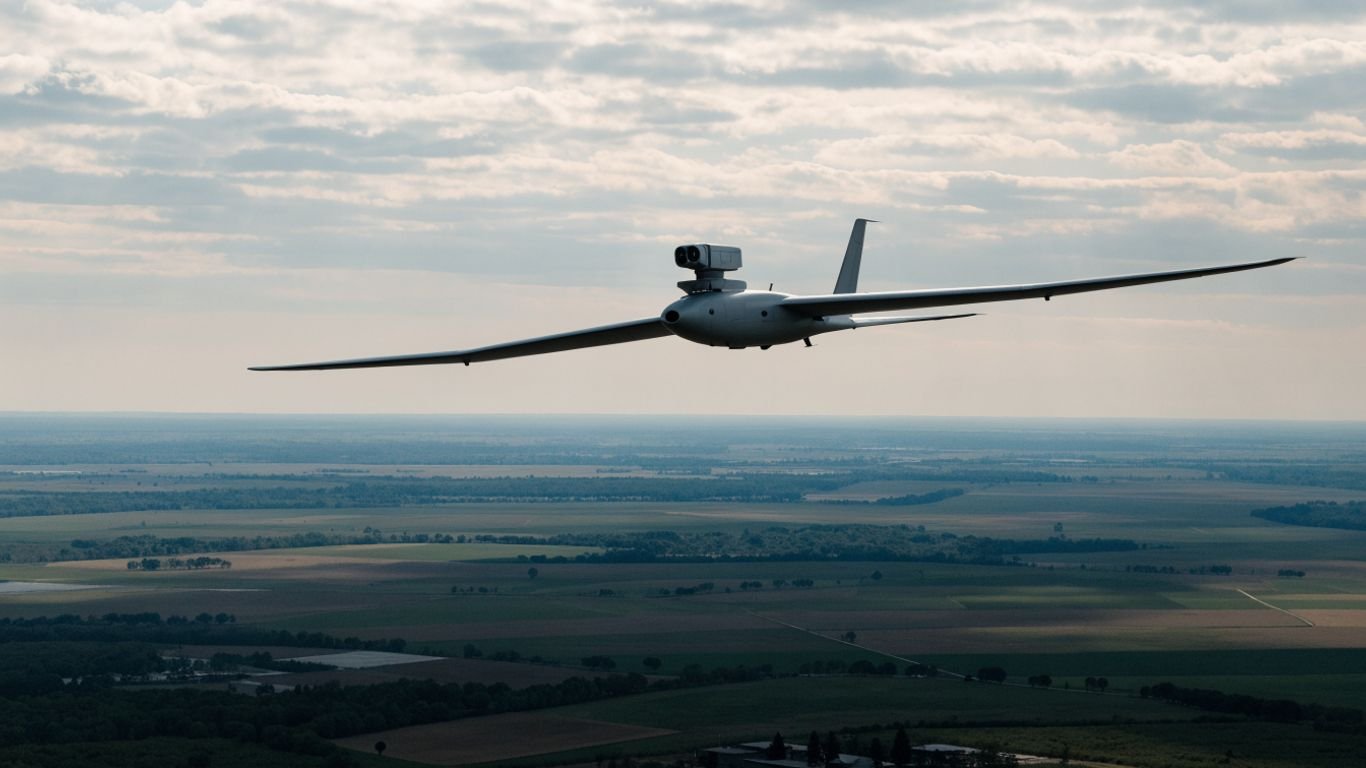
MQ-9 Reaper Armed/ISR MALE: Capabilities, Missions, and Operational Limits

Key Takeaways
The MQ-9 Reaper combines long-duration remote flight with surveillance sensors and the ability to carry weapons. Its value, and its limits, depend on the mission, aircraft configuration, communications, and operating environment.
- “Armed/ISR MALE” describes a medium-altitude, long-endurance aircraft equipped for intelligence, surveillance, reconnaissance, and armed missions.
- The aircraft is one part of a wider system that includes remote crews, control stations, communications, and maintenance support.
- Sensor payloads can help crews observe and track activity over time, while available equipment varies by configuration.
- The Reaper can support strike missions, but decisions to use weapons remain subject to command authority and rules of engagement.
- Long endurance does not remove constraints: contested airspace, communications, logistics, and crew demands all shape what the aircraft can do.
What the MQ-9 Reaper is
The MQ-9 Reaper is a remotely piloted aircraft designed for long-duration missions that can combine surveillance with the ability to strike. It is commonly described as an armed/ISR MALE aircraft, a compact label for a broad set of roles rather than a promise that every sortie includes every capability. Understanding the aircraft means looking beyond the airframe to the people and equipment that operate it. Its development is also part of a wider shift from dedicated observation toward aircraft that can perform multiple mission types.
The meaning of armed/ISR MALE
MALE stands for medium-altitude, long-endurance, while ISR means intelligence, surveillance, and reconnaissance. “Armed” signals that the aircraft can carry weapons in suitable configurations; it does not mean that every flight is a strike mission. Together, the terms describe an aircraft intended to spend extended periods collecting information and, when authorized and equipped, to engage targets. The label is useful shorthand, but it leaves out important details such as mission rules, sensor fit, and the limits of the operating environment.
How the Reaper fits into the MQ-9 family
The Reaper belongs to the MQ-9 family of remotely piloted aircraft, with configurations and mission equipment shaped by operator requirements. It followed the MQ-1 Predator in the development of armed, persistent-ISR aircraft; readers can explore that earlier platform in this overview of the MQ-1 Predator. The family name does not mean every aircraft has identical equipment or operating characteristics. For a broader view of the aircraft’s history and role, see this MQ-9 Reaper overview.
The aircraft, ground control station, and support network
The aircraft is only the visible part of the system. A crew operates it remotely from a ground control station, while other personnel support communications, mission planning, maintenance, and the handling of collected information. That arrangement allows flight crews to be far from the aircraft’s operating area, but it also makes the mission dependent on a functioning support network. A Reaper sortie is therefore best understood as a coordinated operation, not simply an aircraft flying overhead.
How it differs from unarmed surveillance drones
An unarmed surveillance drone is configured to collect or relay information without carrying weapons for a strike role. The Reaper can combine surveillance with an armed option, which may shorten the gap between identifying a potential target and having an aircraft available to act. That distinction does not make it interchangeable with every other ISR platform: smaller systems, for example, may serve different unit-level tasks. The right comparison is about mission, range, payload, and support needs, rather than whether one aircraft is universally more capable.
Flight profile and aircraft design
The Reaper’s design is associated with endurance and the ability to carry multiple mission payloads, rather than with the speed of a crewed fighter aircraft. Its exact flight profile depends on the aircraft configuration, the mission, and operating conditions. Remote operation also means that communications and ground systems are part of the practical design picture. The MQ-9A Reaper is described as a multi-mission aircraft, but published figures should be read in the context of the specific variant and loadout.
Medium-altitude, long-endurance operations
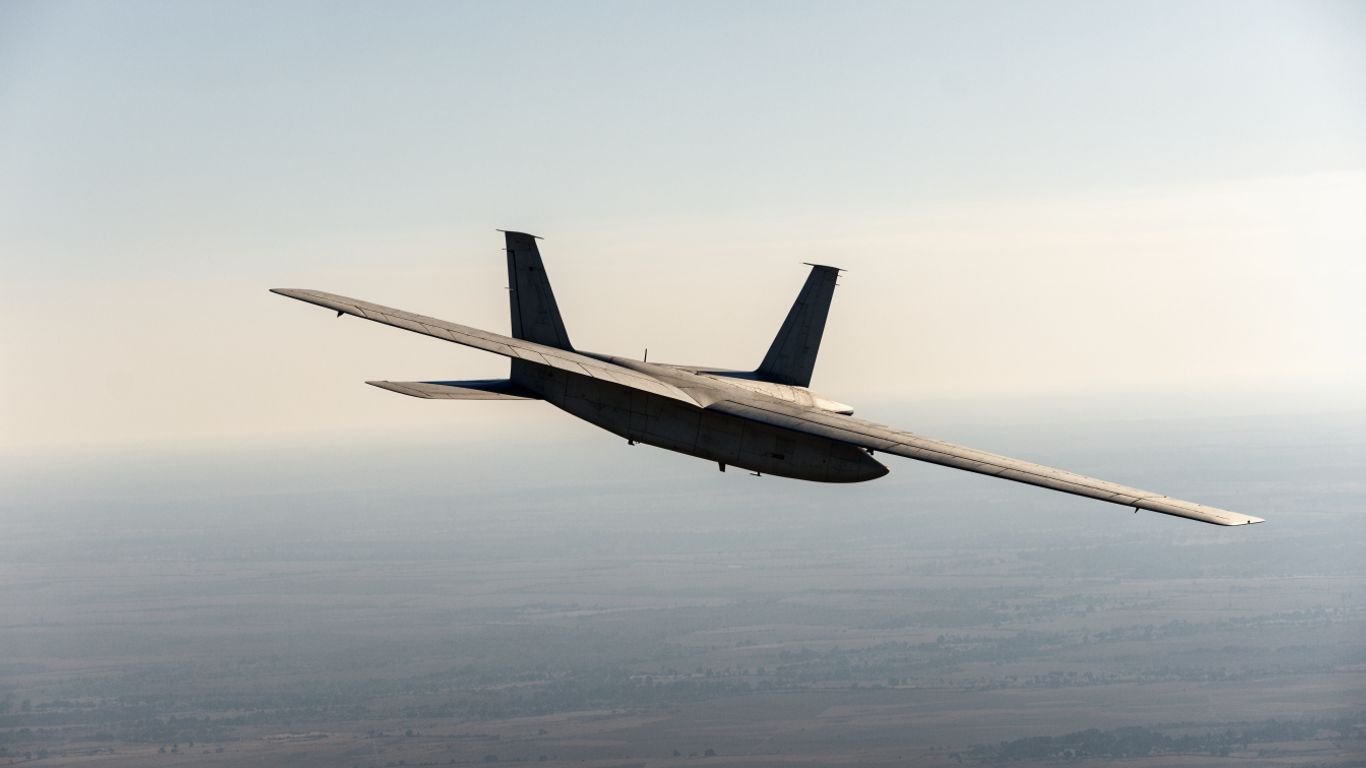
Long endurance allows crews to plan for extended time in an area rather than a brief pass over it. Public descriptions of the MQ-9A cite endurance of more than 27 hours, but a figure like that is not a guarantee for every sortie: mission profile, payload, weather, and reserve requirements affect actual time aloft. The medium-altitude role is similarly a general description, not a fixed operating height for all missions. In practice, planners balance persistence against the distance to the operating area and the time needed to return.
Remote piloting and satellite communications
A remote crew controls the aircraft from a ground station, with satellite communications used when mission distances require them. This makes long-range operations possible without placing a pilot aboard, but it introduces reliance on communication links and supporting infrastructure. Remote control does not mean that the aircraft operates without human oversight: crews monitor the flight and manage mission tasks. The arrangement also requires coordination between the people flying the aircraft and those responsible for its mission and support.
Payload capacity and mission configuration
The aircraft can be configured with different combinations of sensors and other payloads, and the selected fit affects what it can do on a given sortie. Public descriptions of MQ-9A configurations list electro-optical/infrared systems, radar, electronic support measures, and weapons among possible mission equipment. Those options should not be read as equipment carried all at once on every aircraft. A payload choice reflects the mission’s priorities, and adding equipment can affect available capacity and flight planning.
Factors that affect range and time on station
Endurance and time on station are related but not identical. The aircraft must travel to and from its operating area, and it may need to retain reserves or adjust its route; payload and conditions also influence how much mission time remains. The following distinctions help clarify why published performance figures rarely describe a complete sortie:
| Planning factor | Why it matters |
|---|---|
| Distance to the operating area | Transit reduces time available over the mission area. |
| Payload configuration | Equipment and external stores affect mission planning. |
| Weather and flight conditions | Conditions can influence route and operating choices. |
| Reserve and return planning | Crews must account for the full sortie, not just loiter time. |
These are planning considerations rather than a formula for predicting a specific flight. A published maximum or endurance figure gives context, but mission planners need the aircraft’s actual configuration and conditions to estimate useful time on station.
Intelligence, surveillance, and reconnaissance capabilities
ISR is not a single sensor or a single kind of information. It can involve observing activity, collecting imagery or other data, and passing relevant information to people making operational decisions. The Reaper’s payload is selected to match the mission, so sensor descriptions should be treated as possible capabilities rather than a universal fit. The most useful question is not simply what equipment an aircraft can carry, but what information the crew needs and how it will be shared.
Electro-optical and infrared sensors
Electro-optical sensors collect visual imagery, while infrared sensors can detect differences in heat. Together, these sensor types can support observation in different lighting conditions, depending on the system and circumstances. Their output helps crews examine activity from a distance, but imagery still requires interpretation and context. An image alone may not establish who or what is present, what they intend, or whether a situation has changed since the observation was made.
Radar and other surveillance payloads
Radar and other payloads can provide information that complements imagery, though the aircraft’s exact equipment depends on its configuration. Public MQ-9A descriptions identify multi-mode radar and electronic support measures among possible payloads. These systems do not produce interchangeable kinds of information: each has its own purpose and limits. A mission plan should therefore connect the selected equipment to a clear collection need instead of assuming that more sensors automatically mean a complete picture.
Tracking targets over extended periods
Extended flight can let a crew revisit an area and observe changes over time. That continuity can help distinguish a brief event from a developing pattern, though it cannot remove uncertainty or guarantee that every relevant detail is visible. The crew’s attention, sensor field of view, weather, and the quality of the collected data all matter. Persistent observation is most useful when the information is interpreted carefully and checked against other available reporting.
Sharing intelligence with other forces
Collected information has operational value only when it reaches the people who can use it. Depending on the mission and systems in place, crews may coordinate with commanders and other forces to pass along observations and updates. The timing, format, and reliability of that exchange affect how useful the information is. Wider drone coverage can also help readers compare how different aircraft fit into ISR tasks, including this guide to the RQ-7 Shadow.
Weapons and strike missions
The Reaper is associated with missions that combine surveillance and the option to use weapons. That combination can allow crews to maintain observation while commanders assess whether a strike is appropriate. It does not make the process automatic: decisions involve identification, authorization, coordination, and consideration of potential harm to civilians. The aircraft’s weapon fit and the rules governing a mission are distinct questions, and both shape what a sortie can do.
Commonly associated precision-guided weapons
Public descriptions commonly associate the Reaper with Hellfire missiles and precision-guided bombs, including Paveway-type weapons. The weapons available on a particular aircraft depend on its configuration and the mission’s requirements. A weapon’s ability to be guided toward a designated point does not by itself answer whether a target has been correctly identified or whether an engagement is lawful. Those are operational and command decisions, not properties of the weapon alone.
How sensor data supports target engagement
Sensor data can help crews observe a potential target and provide information to commanders before an engagement is considered. The quality of that support depends on what the sensors can see, how current the information is, and how confidently it can be interpreted. Crews and decision-makers must distinguish observed facts from assumptions, especially when the situation is changing. Surveillance can inform a decision, but it does not replace the judgment and authorization required for a strike.
Coordinating strikes with commanders and other aircraft
A strike mission may involve communication among the remotely piloted aircraft crew, commanders, and other forces operating in the area. Coordination helps clarify roles, timing, and the information needed before action is taken. The details vary by mission, and communications or changing conditions can complicate the process. A long-duration aircraft can remain available for extended periods, but it still operates within a larger command structure and shared airspace.
Rules of engagement and civilian-harm considerations
Rules of engagement and applicable law govern whether force may be used; they are not optional extensions of sensor capability. Before a strike, decision-makers need to assess target identification, the context around it, and the risk to civilians. Uncertainty can remain even when imagery is available, so the process must allow for further assessment or a decision not to proceed. The existence of a weapon on board is never, by itself, a reason to use it.
Operational roles and deployment
The Reaper can be assigned to a range of missions, with the operating concept and payload selected for each task. Its long endurance makes it suited to sustained observation, while its potential weapon fit supports armed missions when authorized. Actual deployment depends on the broader operation, including airspace, available communications, support personnel, and mission priorities. For context, other aircraft in the wider military drone field are built around different combinations of range, scale, and task.
Persistent surveillance and reconnaissance
A long-duration sortie can support repeated observation of an area and provide crews with time to follow activity as it develops. That persistence can be valuable when a brief snapshot would leave important questions unanswered. Still, an aircraft can only collect information within the limits of its sensors, location, and communications. Commanders must weigh what the crew has observed against other reporting rather than treating one stream of imagery as a complete account.
Counterterrorism and close air support
Public discussion of the Reaper often connects it with counterterrorism and support to forces on the ground. In those settings, surveillance and strike options may be relevant to the same mission, but their use remains subject to authorization and operational rules. Close air support requires coordination with the supported forces and attention to conditions on the ground. The aircraft’s presence does not remove the need for communication, identification, and careful judgment.
Border, maritime, and force-protection missions
Aircraft with suitable payloads may be assigned to missions involving border observation, maritime surveillance, or force protection. The fit depends on the task: a mission focused on observing a wide area may call for different equipment and planning from one focused on monitoring a particular location. Publicly described payload options include radar and electro-optical/infrared systems, but specific mission use is configuration-dependent. These roles illustrate the flexibility of the platform without implying that every operator uses it in the same way.
How mission demands shape deployment
Deployment planning connects the aircraft’s capabilities to the requirements and constraints of the operation. It also depends on the people and systems needed to sustain flights and share information. For example, planners may need to account for:
- The distance between the operating base and mission area.
- The sensor or other payload needed for the task.
- Communications coverage and coordination with other forces.
- Crew availability, maintenance, and support arrangements.
These factors interact rather than standing alone. A demanding mission may require more support or a different configuration, while a persistent flight plan still has to fit within available resources. As a caution against treating figures as universal, cost references such as International Contractor Rates and ABA Therapy Costs concern entirely different fields and should not be mistaken for aviation cost data.
Limitations and the future of the Reaper
Long endurance and a broad mission role do not make the Reaper suitable for every operating environment. The aircraft depends on communications, ground support, and access to airspace where it can function. Costs, maintenance, and the availability of trained personnel also influence how many missions can be sustained. The future of the platform will depend on how operators balance these practical demands against changing mission requirements.
Vulnerability in contested airspace
An aircraft designed for long-duration operations can face serious challenges in airspace where an adversary can interfere with or attack it. The level of risk depends on the threat environment and the protections available; it should not be reduced to a single universal judgment about survivability. Mission planners may need to change routes, limit exposure, or decide that a particular task is not appropriate. Persistence is useful only when the aircraft can safely reach and operate in the area.
Dependence on communications and ground infrastructure
Remote piloting depends on communication links between the aircraft and its control system, and missions also rely on ground facilities and support. Disruption or degraded connectivity can restrict what crews can do, while the absence of nearby support may complicate operations. Satellite communications can enable long-range control, but they do not remove the underlying dependence on the network. This is a system-level limitation, not simply a question of the aircraft’s flight performance.
Cost, maintenance, and crew requirements
Sustained operations require more than an airframe: crews, maintenance, mission planning, communications, and other support all contribute to the effort. The precise resource burden varies by operator, configuration, and tempo, so broad comparisons can be misleading. A useful assessment considers the entire operating system rather than just the purchase price of an aircraft. Unrelated material about AI Daily Fantasy Sports, Traffic Secrets, and Snoooz addresses other subjects and offers no evidence about Reaper operating costs or staffing.
Modernization and possible replacement paths
Modernization can involve changes to equipment, communications, or other aspects of the aircraft and its operating system. Whether a particular upgrade is adopted depends on the operator’s requirements and the technical and budget constraints involved. Discussions of successor aircraft also reflect a broader question: how to provide useful surveillance and strike options while managing cost and risk in changing conditions. Any specific replacement plan should be checked against current official announcements rather than inferred from general talk of future capability.
Conclusion
The MQ-9 Reaper’s defining feature is the combination of long-duration remote flight, surveillance options, and the capacity for armed missions in suitable configurations. Those qualities can support persistent observation and, when properly authorized, strikes, but they do not eliminate uncertainty, operational risk, or the need for a substantial support network. A clear view of its capabilities therefore includes its limits: mission equipment varies, communications matter, and crews and commanders remain central to decisions.
Frequently Asked Questions
What does MALE mean in military aviation?
MALE means medium-altitude, long-endurance. It describes a general operating category, not one exact flight profile shared by every aircraft or mission.
What does ISR stand for?
ISR stands for intelligence, surveillance, and reconnaissance. The term covers collecting and interpreting information to support awareness and decision-making.
Does long endurance mean an aircraft stays over one area for its full flight?
No. Transit to and from an operating area, reserve planning, payload, and conditions affect how much time is available over a particular location.
What is the difference between surveillance and reconnaissance?
The terms overlap in everyday use. Broadly, surveillance suggests continued observation, while reconnaissance often refers to gathering information about a particular area or activity.
Does carrying precision-guided weapons guarantee a precise outcome?
No. Guidance is one part of weapon use; target identification, information quality, authorization, and conditions around the target also matter.
Why do remotely piloted aircraft need ground crews?
Ground crews operate and monitor the aircraft and support mission planning, communications, maintenance, and the handling of collected information.
What can limit a long-endurance aircraft’s usefulness?
Communications, support infrastructure, payload choices, weather, crew availability, and threats in the operating area can all constrain a mission.