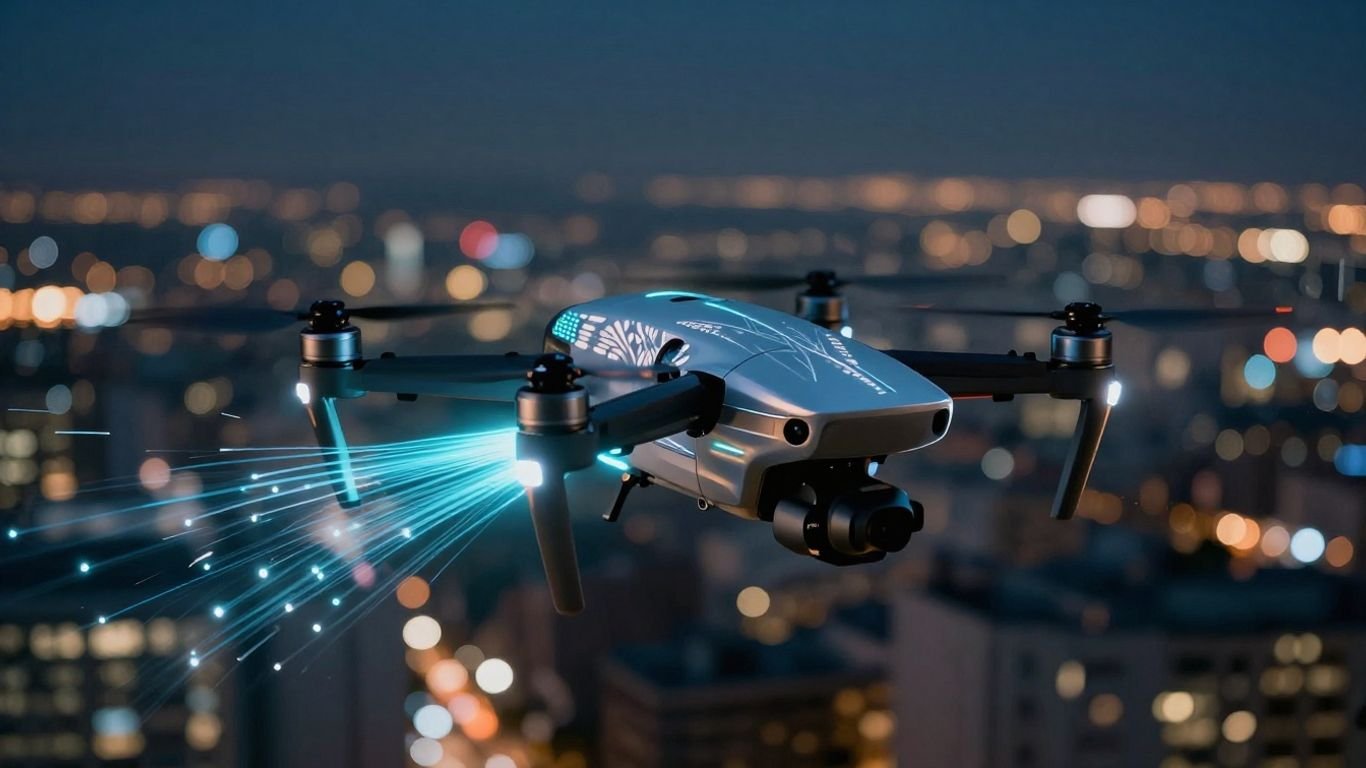
Fiber Optic Drones: What’s the Buzz?

Here are the main points to remember about these advanced flying machines.
Key Takeaways
- Fiber optic drones use a thin cable, called a tether, to connect to a ground station.
- This tether lets them send and get information really fast and without getting interrupted.
- They can also get power through the tether, meaning they can fly for much longer periods.
- These drones are useful for watching places for a long time and getting real-time info.
- The technology is getting smaller and will likely be used in many new ways soon.
Understanding Fiber Optic Drones Explained
The Core Concept of Tethered Drones
So, what exactly is a fiber optic drone? At its heart, it’s a drone that’s physically connected to a ground station via a tether. Think of it like a kite, but way more advanced and with a lot more going on. This tether isn’t just any old string; it’s usually a specialized cable that carries data and, often, power. This connection is what sets it apart from the free-flying drones you might see buzzing around parks or being used for aerial photography. The tether provides a constant link, which is a big deal for certain jobs.
How Fiber Optics Enhance Drone Capabilities
Now, why fiber optics specifically? Well, fiber optic cables are pretty amazing for sending information. They use light pulses to transmit data, which means they can move a huge amount of data incredibly fast and over long distances without much signal loss. For drones, this translates into a few key benefits. You get real-time video feeds, sensor data, and control signals flowing back and forth without lag. It’s like having a super-fast, super-reliable internet connection for your drone, but it’s physical. This is a big step up from radio frequencies, which can get crowded and interrupted. It’s a bit like comparing a dial-up modem to the latest fiber internet – the difference is night and day for data transfer. This technology is also being looked at for things like airport logistics, where reliable data is key.
Advantages of Fiber Optic Tethering
There are some pretty solid reasons why people are looking at fiber optic tethers. For starters, you get uninterrupted data transmission. Unlike radio signals that can be blocked by buildings or interfered with by other devices, a physical fiber optic cable offers a direct, clean line. This means your video feed stays clear, and your commands get through every time. It also means enhanced security and reduced interference. It’s much harder for someone to intercept or jam a signal traveling through a physical cable compared to a radio wave. Plus, the tether can often carry power, meaning the drone doesn’t need to worry about its battery running out. This allows for much longer operational times, sometimes indefinitely, as long as the ground station has power. It’s a game-changer for missions that need to stay airborne for extended periods.
Uninterrupted Data Transmission
This is probably the biggest draw. Imagine you’re monitoring a large area, or you’re in a situation where you absolutely cannot lose your video feed or control. Radio-controlled drones can sometimes experience dropouts or interference, especially in busy urban environments or areas with lots of electronic activity. A fiber optic tether bypasses all that. The data travels as light pulses through glass or plastic strands, making it incredibly robust. You get a consistent, high-bandwidth connection that’s not susceptible to the usual wireless headaches. It’s like having a dedicated, private highway for your drone’s data.
Enhanced Security and Reduced Interference
When you’re dealing with sensitive information or operating in a contested environment, security is paramount. Radio signals can be intercepted, spoofed, or jammed. A fiber optic tether, however, is inherently more secure. It’s a physical connection, making it significantly harder for unauthorized parties to tap into the data stream. Furthermore, because it’s not relying on radio frequencies, it’s not subject to the same kind of electronic interference that can plague wireless systems. This means your drone’s communication stays clean and private, which is a big plus for many applications.
Power Delivery Over the Tether
One of the limitations of traditional drones is flight time, dictated by battery life. Fiber optic tethers can often be designed to carry electrical power as well as data. This means the drone can be powered directly from the ground station. If the ground station has a reliable power source, the drone can theoretically stay airborne for as long as needed. This is a massive advantage for applications requiring continuous surveillance or long-duration operations. It removes the need for battery swaps or recharging cycles, simplifying operations and extending mission capabilities significantly. It’s a bit like plugging in a lamp instead of relying on batteries – you get consistent power.
Applications in Surveillance and Reconnaissance
When you think about surveillance, especially for long periods, fiber optic drones really start to shine. They’re perfect for keeping an eye on a specific location without interruption. This could be for border monitoring, securing a large event, or keeping watch over critical infrastructure. The ability to transmit high-definition video and sensor data in real-time back to operators is invaluable for making quick decisions.
Persistent Aerial Monitoring
Because these tethered drones can stay up for so long, they’re ideal for persistent monitoring. Instead of a drone flying for 30 minutes, landing, swapping batteries, and taking off again, a tethered system can stay aloft for hours, even days. This provides a continuous aerial perspective that’s hard to achieve otherwise. Think of it like having a security camera in the sky that never needs to be recharged. This kind of constant oversight is a big deal for security and situational awareness.
Real-Time Intelligence Gathering
The high-speed data link provided by fiber optics means that operators get intelligence as it happens. They aren’t waiting for data to be downloaded later; they’re seeing live video feeds, receiving sensor readings, and can even direct the drone’s sensors to focus on specific points of interest immediately. This rapid flow of information is critical for responding to unfolding events or making tactical decisions on the ground. It’s about having the most up-to-date picture possible.
Fiber Optic Drones in Electronic Warfare
In the world of electronic warfare (EW), where controlling the electromagnetic spectrum is key, fiber optic tethered drones offer some unique advantages. They provide a stable platform for EW payloads and a secure communication link that’s hard to disrupt. This makes them a valuable tool for gathering intelligence, jamming enemy communications, or providing electronic support.
Why Tether/Fiber Systems Matter
In EW, the battlefield is often a chaotic mess of signals. Radio frequencies are constantly being jammed, spoofed, or monitored. A fiber optic tether provides a lifeline that’s resistant to these kinds of attacks. It offers a secure, high-bandwidth communication channel that is physically isolated from the electromagnetic chaos. This means EW systems mounted on the drone can operate reliably and send their data back without being compromised. It’s like having a secure phone line in a crowded, noisy room.
Jamming Resistance and Signal Integrity
Radio-based systems are vulnerable to jamming. If an adversary can flood the airwaves with noise, they can effectively blind or deafen your drone’s communication. Fiber optics, however, transmit data using light, which is not affected by radio frequency jamming. This ensures that the signal remains intact and the drone stays connected and controllable, even in a heavily contested electronic environment. This signal integrity is absolutely vital for maintaining operational effectiveness when facing sophisticated electronic countermeasures.
Technical Considerations for Fiber Optic Drones
While the benefits are clear, there are definitely some engineering challenges to consider when working with fiber optic tethered drones. It’s not as simple as just attaching a cable. You need specialized systems to manage the tether, ensure the cable itself can withstand the rigors of flight, and integrate the drone’s payload effectively.
Tether Management Systems
Managing the tether is a big one. As the drone ascends and descends, or maneuvers, the tether needs to be spooled out and retracted smoothly without snagging or tangling. This requires sophisticated automated tether management systems. These systems need to be robust, reliable, and able to handle the tension and movement of the cable during flight. Think of it like a high-tech fishing reel, but for a critical data and power line. Getting this right is key to safe and effective operation. It’s a bit like moving house – you need good organization.
Fiber Optic Cable Durability
Drone tethers are subjected to a lot of stress. They can be buffeted by wind, pulled, twisted, and exposed to varying temperatures. The fiber optic cable itself needs to be designed for this harsh environment. It needs to be strong, flexible, and resistant to abrasion and kinking, all while protecting the delicate optical fibers inside. Special reinforced cables are often used to meet these demanding requirements.
Drone Payload Integration
Finally, you have to consider what the drone is actually carrying. The tether needs to supply power and data to the payload, which could be anything from high-resolution cameras and sensors to electronic warfare equipment. The weight and power requirements of the payload, along with the drone’s own capabilities, all need to be factored into the design. The tether system must be able to support the payload’s needs without compromising the drone’s flight performance or the integrity of the tether itself.
The Future of Fiber Optic Drone Technology
This technology is still evolving, and the future looks pretty exciting. We’re seeing continuous improvements in miniaturization, making these systems lighter and more portable. The applications are also expanding beyond just military uses, finding their way into civilian sectors.
Advancements in Miniaturization
One of the main areas of development is making everything smaller and lighter. This includes the drones themselves, the tether management systems, and the fiber optic cables. As these components become more compact and weigh less, it allows for smaller, more agile drones that can carry more sophisticated payloads or operate in tighter spaces. This miniaturization is key to making the technology more accessible and practical for a wider range of uses.
Expanding Use Cases Beyond Defense
While defense applications have been a major driver, fiber optic tethered drones are starting to show up in other areas. Think about long-term environmental monitoring, providing temporary communication networks in disaster zones, or even powering remote sensing equipment for scientific research. The ability to provide stable, high-bandwidth, and persistent connectivity opens up a lot of possibilities outside of traditional military roles. It’s a technology with broad potential.
Advantages of Fiber Optic Tethering
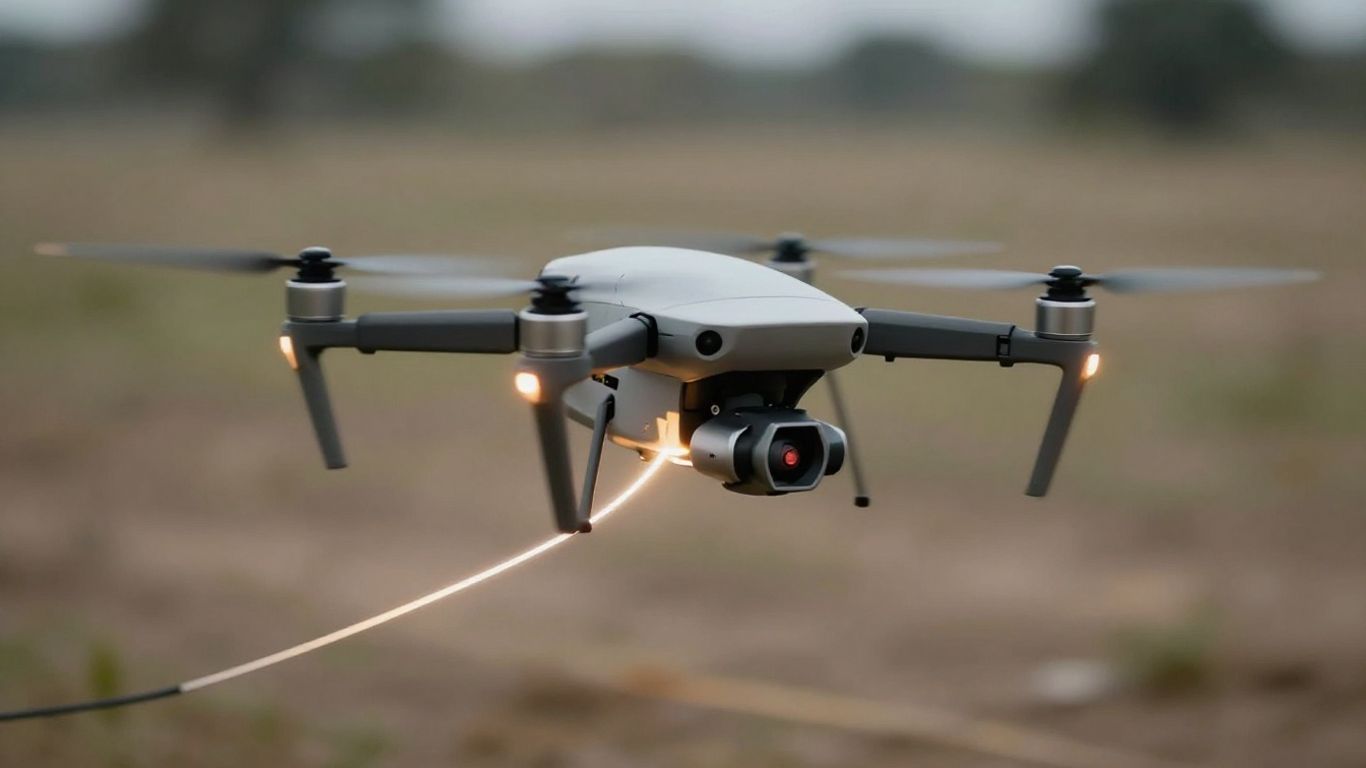
So, why bother with a tether, especially one made of fiber optics? It really comes down to a few big wins that make these drones super useful. Think about it: you’re up in the air, needing to send and get a ton of information, and you can’t afford any hiccups. That’s where the fiber optic tether shines.
Uninterrupted Data Transmission
This is probably the most obvious benefit. Unlike wireless signals that can get fuzzy or drop out, a fiber optic cable gives you a solid, consistent connection. It’s like having a direct phone line to your drone, no matter what. This means you get a steady stream of video, sensor data, and control commands without any lag or dropped packets. For tasks where every second counts, like spotting something on the ground or guiding a vehicle, this reliability is a game-changer. It provides a stable and uninterrupted data feed, significantly improving the accuracy of reconnaissance and strike missions [47af]. You get consistent and predictable data rates, supporting high-quality video feeds and instantaneous control [5a5f].
Enhanced Security and Reduced Interference
Wireless signals can be intercepted or jammed, which is a big problem if you’re trying to keep your operations secret or if you’re in an area with a lot of radio noise. Fiber optics are pretty much immune to electromagnetic interference. Plus, it’s way harder for someone to tap into a fiber optic cable without you knowing. This makes them a much more secure option for sensitive missions.
Power Delivery Over the Tether
Another neat trick is that the tether can carry power. This means the drone doesn’t have to worry about its battery running out. It can stay up in the air for as long as you need it, which is fantastic for long-term monitoring. No more worrying about landing to swap batteries or recharge; the drone just keeps going.
Persistent Aerial Monitoring
Because the tether provides continuous power and a solid data link, these drones can stay airborne for extended periods. This is perfect for keeping an eye on a specific area for hours or even days. Imagine watching a construction site, a border, or a protest without interruption. It’s like having a permanent eye in the sky.
Real-Time Intelligence Gathering
With that uninterrupted data flow, you’re getting information as it happens. This means operators on the ground can make decisions based on the most current intel. Whether it’s spotting a moving target or assessing a developing situation, having that real-time feed is incredibly useful for quick responses.
Why Tether/Fiber Systems Matter
In electronic warfare, the battlefield is often a chaotic mess of signals. Trying to communicate wirelessly can be like shouting in a hurricane. Tethered fiber optic systems cut through that noise. They offer a protected channel for command and control, as well as for transmitting sensitive data. This means your drone can operate effectively even when enemy forces are actively trying to disrupt communications.
Jamming Resistance and Signal Integrity
Fiber optics don’t use radio waves, so they can’t be jammed by traditional electronic warfare tactics. This inherent resistance means your drone’s communication link stays strong. You maintain control and receive data reliably, which is a massive advantage when you’re up against an adversary trying to blind or disable your assets. It keeps the signal clean and the mission on track.
Applications in Surveillance and Reconnaissance
When you need eyes in the sky for extended periods, especially in tricky situations, fiber optic tethered drones really shine. They’re not just for watching; they’re about getting clear, constant information.
Persistent Aerial Monitoring
Imagine a drone that can just hang out up there, watching a specific area for hours, even days. That’s what fiber optics make possible. Because the drone is connected to a ground station via a thin fiber cable, it doesn’t have to worry about its battery dying or losing its wireless signal. This means you can have a drone providing continuous oversight for things like border patrol, monitoring large construction sites, or keeping an eye on critical infrastructure without interruption. It’s like having a permanent lookout post that can move.
- Constant video feed: No more worrying about battery swaps or signal dropouts.
- Extended flight times: Drones can stay airborne for days, not just minutes.
- Stable platform: Ideal for detailed observation and tracking.
This kind of persistent monitoring is a game-changer for security and situational awareness. You can get a real-time view of what’s happening, which is pretty amazing when you think about it. For instance, tracking wildlife or monitoring environmental changes over long periods becomes much more feasible with these systems. You can find more about drone uses in general at various drone applications.
Real-Time Intelligence Gathering
What’s really cool is the quality and speed of the data you get. Fiber optic cables can handle massive amounts of information, meaning you can stream high-definition video, sensor data, and other intelligence back to your command center without any lag. This is super important when you need to make quick decisions based on what the drone is seeing. Think about search and rescue operations; being able to see exactly what’s happening on the ground, in high detail, can make all the difference.
The ability to transmit vast amounts of data instantly means that operators on the ground receive information as it happens, allowing for immediate analysis and response. This direct line of sight, coupled with high-capacity data transfer, transforms a drone from a simple camera platform into a powerful intelligence asset.
This constant flow of information is key. It allows teams to react faster and more effectively. Whether it’s identifying a threat, locating a missing person, or assessing damage after an event, the speed and clarity of the data are paramount. It’s about having the right information, right when you need it, which is pretty much the goal of any surveillance operation.
Fiber Optic Drones in Electronic Warfare
Why Tether/Fiber Systems Matter
In the world of electronic warfare (EW), maintaining a secure and reliable communication link is absolutely vital. Think about it: you’re trying to gather intel, jam enemy signals, or direct a strike, and suddenly your connection drops. That’s a bad day. This is where fiber optic tethered drones really shine. Unlike wireless signals that can be intercepted, jammed, or spoofed, a physical fiber optic cable provides a much more robust and secure pathway for data. It’s like having a direct phone line instead of shouting across a crowded room. This direct connection means your drone can keep transmitting critical information, like enemy radar locations or communication frequencies, without worrying about interference. It’s a game-changer for real-time intelligence gathering [49ac].
Here’s why these systems are so important in EW:
- Jamming Resistance: Traditional radio frequencies are easy targets for jamming. A fiber optic cable, however, is immune to radio frequency interference. It’s a physical link that can’t be easily disrupted by enemy jamming efforts.
- Signal Integrity: The data traveling through fiber optics is incredibly clean. You get a consistent, high-quality signal, which is crucial for sensitive EW tasks like signal analysis or precise targeting.
- Stealth: While the drone itself might be visible, the communication link is inherently harder to detect and locate compared to a broadcast radio signal. This adds a layer of operational security.
The persistent nature of a tethered drone means it can loiter over an area for extended periods, providing continuous situational awareness. This constant stream of data is invaluable for understanding enemy movements and electronic activity, allowing friendly forces to react effectively.
Jamming Resistance and Signal Integrity
When we talk about electronic warfare, we’re often talking about a battle for the electromagnetic spectrum. Adversaries will try to flood that spectrum with noise to disrupt your communications and sensors. This is where the physical nature of fiber optics becomes a massive advantage. A fiber optic tether isn’t broadcasting anything that can be easily jammed. It’s a direct, physical connection. This means that even if the airwaves are thick with enemy jamming signals, your drone can still send high-resolution video, sensor data, or control commands back to base without a hitch. This reliability is key for operations that can’t afford any downtime, such as monitoring enemy radar systems [ae0c]. The data quality remains high, too. You’re not going to get a degraded signal because of atmospheric conditions or enemy electronic countermeasures. It’s a clean, consistent stream of information, which is exactly what you need when making critical decisions in a combat zone.
Technical Considerations for Fiber Optic Drones
Tether Management Systems
Setting up a fiber optic drone isn’t just about the drone itself; you’ve got to think about the string connecting it to the ground. This tether isn’t just any old wire. It’s carrying data and sometimes power, so it needs to be managed carefully. Imagine a drone hovering for hours, and the tether gets tangled or snagged. That’s a problem. Good tether management systems are key. They help spool and unspool the fiber smoothly, preventing knots and damage. Some systems even have tension control to keep the tether taut but not stressed. It’s a bit like managing a fishing line, but with much higher stakes and way more delicate equipment. Getting this right means the drone can stay airborne longer and operate without interruption.
Fiber Optic Cable Durability
These fiber optic cables have to be tough. They’re out there in the elements, getting buffeted by wind, maybe even getting a bit wet. Unlike regular wires, fiber optics are made of glass or plastic, so they can be brittle if not protected. Manufacturers build these tethers with special coatings and reinforcements to make them resistant to bending, stretching, and abrasion. Think of it like a reinforced garden hose that can also carry super-fast internet. The type of fiber used also matters – single-mode or multi-mode – depending on the distance and data speed needed. For really long deployments, you might need a thicker, more robust cable, which adds weight and complexity. It’s a balancing act between durability and keeping the tether light enough for the drone to carry.
Drone Payload Integration
What the drone actually does is determined by its payload, and with fiber optic drones, integrating that payload with the tethered system needs careful thought. You’re not just slapping a camera on; you need to make sure the data from that camera can get down the fiber without delay. This means the drone’s onboard systems have to be compatible with the fiber optic transmission equipment. Sometimes, the payload itself might be the communication gear, like a high-powered antenna. The weight and power requirements of the payload directly impact the drone’s flight time and the tether’s specifications. It’s a whole ecosystem where each part has to work perfectly with the others. For instance, if you’re using a drone for persistent aerial monitoring, the camera and its data downlink need to be top-notch, and the fiber connection has to support that high-bandwidth stream. This is where the benefits of fiber optics really shine, providing uninterrupted data transmission that wireless simply can’t match for certain tasks.
Why Tether/Fiber Systems Matter in Electronic Warfare
In the world of electronic warfare (EW), staying connected and keeping your signals clean is everything. Wireless communication is vulnerable to jamming and interception. A fiber optic tether, however, provides a physical link that’s incredibly difficult to disrupt. It’s like having a private, super-secure phone line that can’t be easily cut off by enemy signals. This means your drone can maintain its mission, whether it’s gathering intelligence or disrupting enemy communications, without worrying about its own link being compromised. The signal integrity is maintained, allowing for real-time data flow even in a chaotic electromagnetic environment. This reliability is a game-changer for EW operations, where losing contact can mean mission failure.
The physical nature of a fiber optic tether creates a secure channel, bypassing the vulnerabilities inherent in radio frequency transmissions. This direct connection is vital for maintaining command and control and data exfiltration in contested airspace.
Here’s why these systems are so important for EW:
- Jamming Resistance: Unlike radio waves, light signals traveling through fiber optics are immune to traditional jamming techniques. This keeps your communication lines open.
- Signal Integrity: Fiber optics can carry massive amounts of data with very little loss over long distances. This means clearer video feeds, more accurate sensor data, and reliable command signals.
- Reduced Interception Risk: While not impossible, tapping into a fiber optic cable is significantly harder and more detectable than intercepting wireless signals. This adds a layer of security to sensitive operations.
These advantages make fiber optic tethered drones a compelling option for military applications, especially when you need a reliable presence and continuous data flow. Planning for such systems is similar to acquiring other critical equipment for an operation; it requires careful consideration of needs and capabilities.
The Future of Fiber Optic Drone Technology
Advancements in Miniaturization
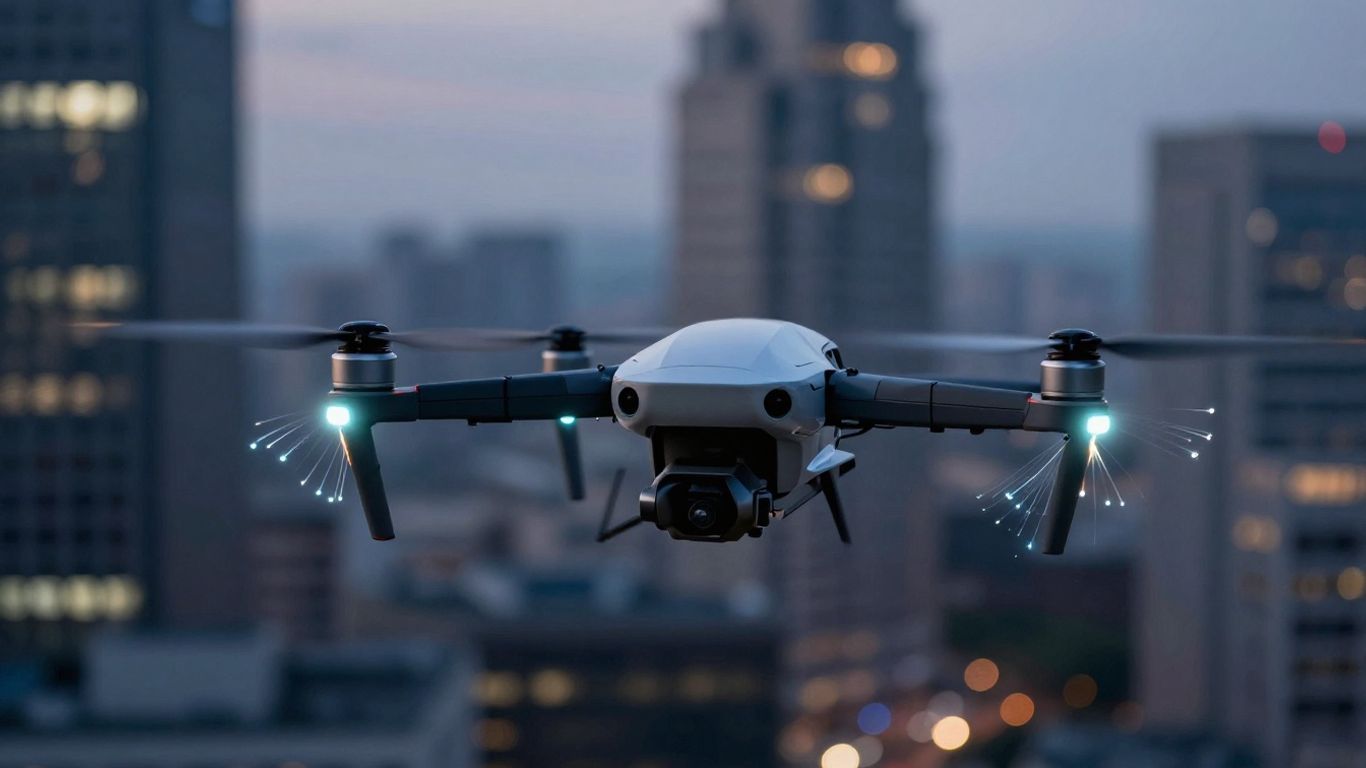
So, what’s next for these tethered flyers? One big area is making them smaller. Right now, some of these systems can be a bit bulky, especially the tether management gear. But engineers are working hard to shrink everything down. Think smaller reels, lighter cables, and more compact power systems. This means fiber optic drones could become much more portable and easier to deploy, even in tight spots. It’s like going from a big desktop computer to a sleek laptop, but for drones. This push for miniaturization is key to making them practical for a wider range of jobs, from quick aerial surveys to more intricate tasks. We’re seeing progress in drone design itself, too, with lighter materials and more efficient motors, all contributing to a smaller overall footprint.
Expanding Use Cases Beyond Defense
While fiber optic drones have seen a lot of attention in military and security circles, their potential stretches way beyond that. Imagine them being used for persistent monitoring of critical infrastructure, like pipelines or bridges, where a constant, high-bandwidth connection is needed. They could also be a game-changer for disaster response. For instance, during a major earthquake or flood, a tethered drone could provide a stable communication link and live video feed for rescue teams, even if ground networks are down. This is similar to how drones are already helping in firefighting efforts, but with the added benefit of a reliable, high-speed data connection. They could also be used for environmental monitoring, like tracking pollution levels over a specific area for extended periods, or even for providing temporary Wi-Fi hotspots in remote locations. The possibilities are pretty exciting.
The core idea is to have a drone that can stay airborne for as long as needed, sending back tons of data without worrying about battery life or signal dropouts. This opens doors for applications that require continuous oversight or very specific, high-quality information streams that current wireless drones just can’t manage reliably.
We’re also looking at advancements in the fiber optic cables themselves. They’re getting stronger, more flexible, and even thinner. This makes them less prone to damage and easier to handle, which is a big deal when you’re talking about a cable that might be miles long and getting dragged around. Plus, the drone payloads are getting smarter. Instead of just cameras, we’re seeing integration with advanced sensors, communication relays, and even small robotic tools. This means a single fiber optic drone could perform multiple functions simultaneously, making it a very versatile tool. It’s not just about staying up longer; it’s about what the drone can do while it’s up there. The ongoing development in drone technology for search and rescue shows how adaptable these platforms are becoming.
Conclusion
So, fiber optic drones are pretty neat, right? They’re not just for spy movies anymore. By using a thin fiber optic cable, these drones can stay in the air much longer, send tons of data back super fast, and even get power from the ground. This makes them super useful for things like watching an area for a long time, gathering information right away, and even in military situations where clear signals are a big deal. As the tech gets smaller and better, we’ll probably see these drones popping up in more places than we can imagine. It’s a really exciting area of technology that’s changing how we look at aerial capabilities.
Frequently Asked Questions
What exactly is a fiber optic drone?
Think of it as a drone, like the ones you see flying around, but it’s connected to the ground by a super thin, strong string made of glass fibers. This string is called a tether, and it’s how the drone talks to the people on the ground and gets power.
How is it different from a regular drone?
Regular drones usually run on batteries and can only fly for a limited time before needing a recharge. They also send their information wirelessly, which can sometimes be slow or get messed up. Fiber optic drones, because of the tether, can fly way longer and send information much faster and more reliably.
Can the tether get in the way?
That’s a good question! The tether is designed to be managed. There are special systems that wind and unwind it so it doesn’t get tangled or snagged. It’s a bit like a fishing reel, but for a drone.
Why is fast data important for these drones?
Imagine you’re watching a live video feed from a drone. If the video is choppy or delayed, it’s hard to see what’s going on. Fiber optics allow for super quick, clear video and data, which is great for things like watching an area or helping out in emergencies.
Are these drones only used by the military?
While they have strong uses in defense, like for watching borders or in tricky situations, they can also be used for other things. Think about monitoring large events, checking on power lines, or even helping with search and rescue missions where you need a drone to stay up for a long time.
Is the fiber optic cable fragile?
They’re made to be tough! While glass is delicate, the cables are built with protective layers to handle being pulled, bent, and exposed to different weather. They’re designed for real-world use, not just in a lab.