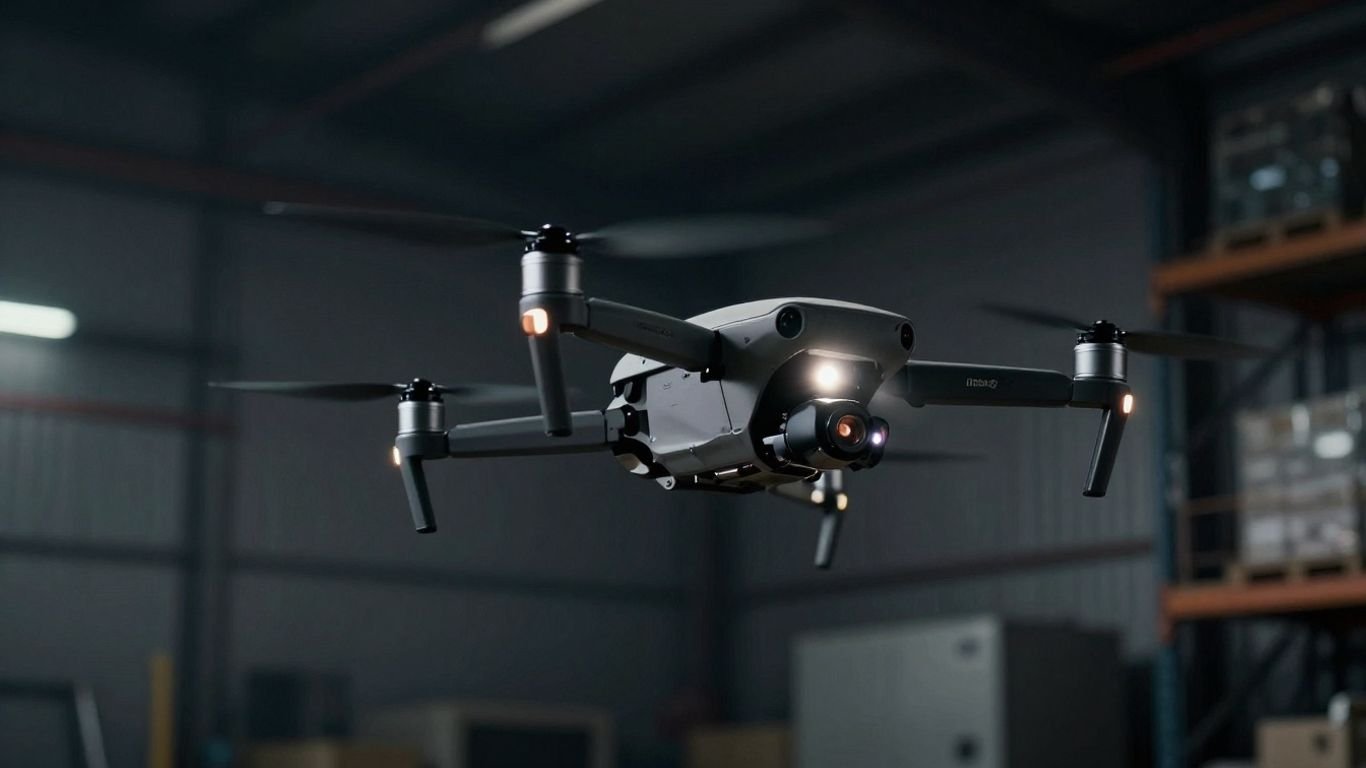
A comprehensive guide to the Stinger Vision FPV from ModalAI

Key Takeaways
The Stinger Vision FPV represents a shift in how autonomous, small-scale drones are utilized for industrial and government reconnaissance. This guide explores the technical capabilities of the Stinger Vision FPV, detailing its architecture, performance, and customization potential.
- Advanced obstacle tracking via Multi-Cam Visual Inertial Odometry.
- Long-range digital video streaming using the integrated MVX system.
- Onboard AI-assisted processing powered by the VOXL 2 Mini.
- Blue UAS Framework compliance for secure government deployment.
- Automated return-to-home functionality triggered by video link loss.
Understanding the Stinger Vision FPV architecture
Hardware components and sensor suite
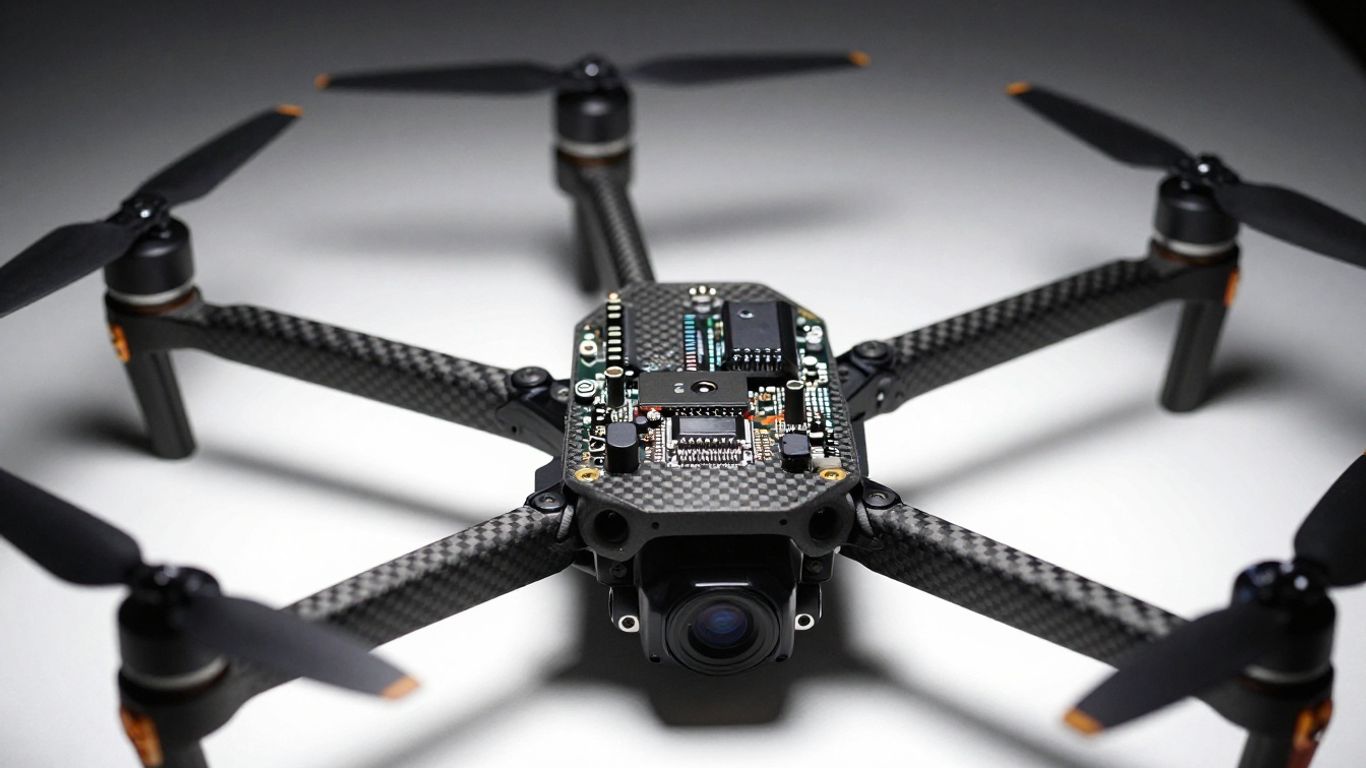
The physical build of the drone is centered on high-efficiency components designed for weight reduction and mission longevity. The frame houses a dense sensor package, including dual fisheye cameras for navigation and specialized image sensors for FPV streaming.
Integration with the VOXL 2 platform
At the heart of the vehicle lies the VOXL 2 Mini, a compute platform built to manage complex autonomy workflows on the fly. By offloading computational tasks to the onboard chipset, the system enables real-time decisions without external reliance.
Compliance and Blue UAS standards
Security is a fundamental pillar of this design, aligning with national mandates for secure flight operations. This NDAA-compliant drone ensures that data remains local and shielded from external vulnerabilities.
Performance metrics in indoor environments
Obstacle tracking and spatial mapping
Navigation in cluttered, indoor spaces requires precise environmental awareness and reaction times. Using Multi-Cam VIO, the onboard system constructs a spatial map to maneuver around walls or obstacles while maintaining a stable heading.
| Feature | Performance Level | Metric |
|---|---|---|
| VIO Frequency | High | 100 Hz |
| Map Resolution | Precise | 5cm Grid |
| Data Sync | Real-time | 10ms Latency |
This table summarizes the core performance of the vision system during high-speed maneuvering within tight interior corridors.
Flight stability and battery life considerations
The balance between power consumption and flight endurance remains a priority for long-duration reconnaissance. Operators must monitor the telemetry data closely to ensure the vehicle retains enough energy to return home before a critical battery failure occurs.
Latency benchmarks for real-time FPV flying
For pilots, the link between the camera and the displays determines the precision of their flight path. The MVX system maintains a glass-to-glass delay of under 45 milliseconds, facilitating high-speed maneuvers in environments where split-second reaction is essential.
Development and customization workflows
Setting up the VOXL SDK development environment
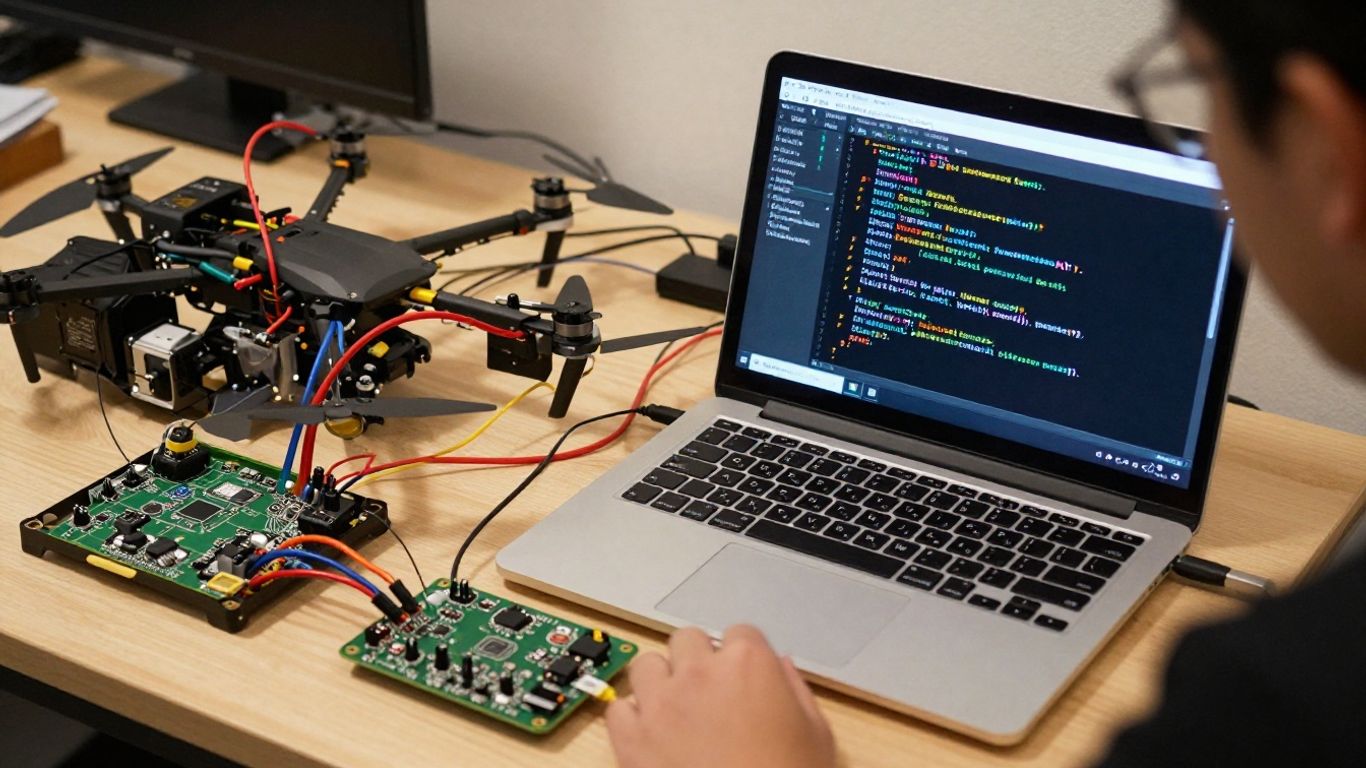
Developers looking to push the boundaries of current flight models can access the software development kits provided by the manufacturer. This flexibility allows for the integration of custom perception pipelines which can turn the drone into a sophisticated surveillance tool.
Implementing autonomous navigation algorithms
Creating a custom navigation profile requires deep testing of trajectory algorithms to ensure safe operation. These algorithms allow the drone to operate in GPS-denied operational zones by relying entirely on internal camera and IMU sensors for position estimation.
Managing telemetry and communication protocols
Efficient communication is necessary for maintaining control and receiving sensor feedback. Users generally follow these steps to establish a reliable connection:
- Verify hardware link status on the 915 MHz band.
- Configure the telemetry baud rates within the flight controller settings.
- Test the fail-safe recovery mode periodically on the ground.
- Calibrate the radio transmitter to ensure low dead-band response.
Following these steps helps ensure that the communication remains stable throughout the mission duration, preventing common signal drops.
Maintenance and troubleshooting technical issues
Sensor calibration and alignment procedures
Maintaining the accuracy of the multi-camera suite involves routine checks to ensure all sensors are correctly aligned with the chassis. Misalignment can manifest as drift during static flight, requiring a recalibration of the vision-to-IMU extrinsic parameters.
Managing firmware updates and system stability
Firmware maintenance is a critical aspect of ensuring that the onboard computation platform performs at peak efficiency. Keeping the latest version of the flight controller software installed prevents bugs and enhances the overall stability of the navigation stack.
Common networking problems and fixes
When the digital link experiences interference, checking the dual-band configuration is the first point of diagnosis. Ensure that the antenna gain is sufficient for the mission profile, especially if deploying in dense urban areas where WiFi signals may overlap with the flight bands.
Deploying Stinger Vision FPV for professional use
Navigating GPS-denied operational zones
Professional applications in subterranean or structurally complex areas demand high-level navigation autonomy. The system excels by utilizing its visual inertial odometry to maintain a steady position regardless of the lack of satellite availability.
Leveraging onboard AI for edge processing
Integration with advanced AI models allows for real-time identification of targets, shifting the burden away from the pilot toward automated object detection. This capability creates an autonomous flight environment that can be easily repurposed for various industrial security tasks.
Data handling and security protocols
Security and encryption remain critical when dealing with sensitive information captured during flights. By utilizing standardized AES-256 encryption, the drone ensures that the high-definition video stream is accessible only to authorized ground stations, maintaining the integrity of the captured data throughout the transmission.
Conclusion
The Stinger Vision FPV provides a mature, capable platform for users needing reliable, NDAA-compliant flight in confined and GPS-denied spaces. Its blend of high-performance compute and advanced sensor arrays enables operations that were previously prohibitive for smaller enterprise systems.
Frequently Asked Questions
Can the drone fly in complete darkness?
The platform supports infrared-sensitive sensors and secondary thermal imaging options which allow for navigation in low-light conditions where standard visible-light cameras would fail.
How does the drone handle loss of signal?
The system is equipped with an automated backtrack flight mode that initiates if the link between the pilot and the vehicle is disrupted, retracing the flight path until the signal is recovered.
Is the vehicle suitable for outdoor reconnaissance?
While optimized for interior environments, the vehicle functions outdoors, provided the pilot remains conscious of wind conditions and the specific range limitations of the integrated digital video link.
What is the maximum flight time expected?
Under standard operating parameters with its recommended battery, the airframe typically supports around 12 minutes of flight time, depending on the payload and maneuvers performed.
Are there options for different camera payloads?
Users can toggle between multiple onboard cameras, including EO, downward-facing position cameras, and thermal imagers depending on the specific model configuration selected.
Is specialized pilot training required?
While experience is helpful, the inclusion of AI-assisted flight modes and autonomous navigation systems significantly reduces the technical barrier to entry compared to traditional, fully manual FPV drones.
Where can I find software support documentation?
Technical documentation and community support forums are available through the manufacturer’s official digital resources, providing comprehensive guides on sensor configuration and firmware management.