
AI Drones: What’s the Big Deal?

Key Takeaways
AI-powered technology is transforming the aerial landscape, shifting flight from human-guided control to sophisticated, independent decision-making systems. To understand this transition, here are the essential pillars of modern drone intelligence:
- Advanced computer vision enables real-time environmental analysis and object recognition for complex flight paths.
- Onboard edge computing reduces dependency on external signals, allowing for instantaneous processing during remote missions.
- Intelligent mapping and navigation allow drones to operate safely in environments where GPS connectivity is limited or unreliable.
- Integration with swarm technology and network communication allows multiple drones to coordinate and execute synchronized tasks in real-time.
- Future advancements focus on miniaturized sensors and self-learning algorithms aimed at improving energy efficiency and long-term autonomy.
Fundamentals of AI drones
Defining artificial intelligence in unmanned flight
When we look at AI drones explained, we are essentially looking at the marriage of high-speed processing with flight hardware. Unlike traditional models that are tethered to manual radio frequency inputs, these platforms leverage onboard machine learning to interpret raw sensor data in real-time. This shift allows the machine to perceive its surroundings and adjust its flight path without a human pilot constantly correcting the stick inputs, fundamentally changing how Unmanned Aerial Vehicles function across various global sectors.
How autonomous drones differ from remote-piloted aircraft
Remote-piloted systems operate as an extension of the human pilot’s senses, meaning every movement is reactive to someone watching a screen. In contrast, autonomous systems possess the agency to execute mission goals independently, such as following a predefined trajectory while dynamically avoiding obstacles. This distinction is critical for mission success in environments, as highlighted by AI in drone technology studies that show improved safety and task completion rates when the platform manages the flight physics.
The evolution from basic flight controllers to neural networks
Early drones utilized simple proportional-integral-derivative controllers that functioned on rigid pre-programmed responses. Today’s systems utilize sophisticated neural networks capable of recognizing features, textures, and three-dimensional spaces, allowing for nuanced aerial maneuvers. This progression has been supported by the emergence of Blue UAS, which standardizes these technologies for higher-security environments.
Core technologies driving autonomy
Computer vision and real-time object tracking
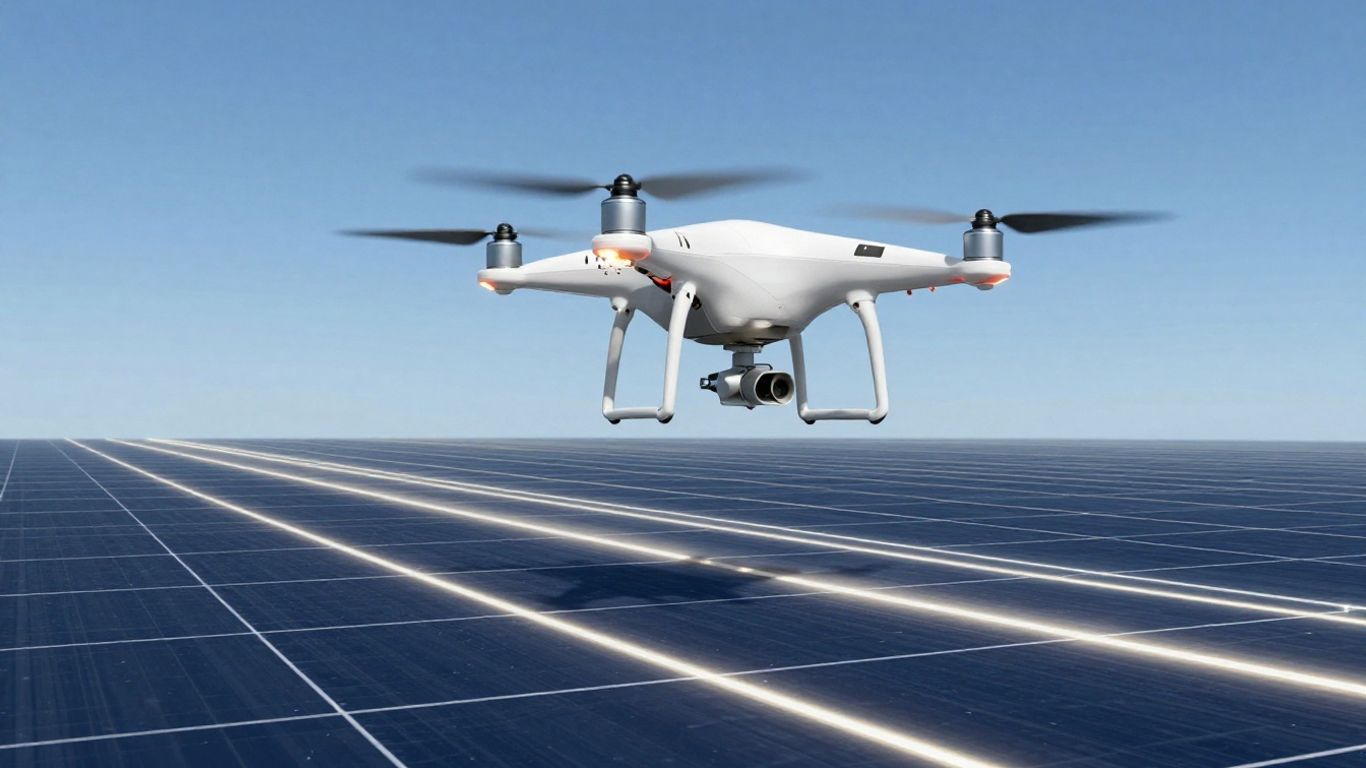
Computer vision serves as the foundation for modern flight autonomy, allowing the drone to convert pixel data into spatial understanding. By utilizing depth-sensing cameras and light detection systems, the unit identifies moving targets and maintains steady focus during variable flight conditions. This ability to maintain lock-on tracking is the primary reason why specialized systems have become preferred in tasks requiring high-resolution data acquisition.
SLAM (Simultaneous Localization and Mapping) for navigation
SLAM technology enables a drone to build a map of an unknown environment while simultaneously tracking its position within it. This is essential for operations performed indoors or under thick tree canopies where standard satellite positioning is unavailable. By integrating these systems, developers offer more autonomous drones that do not require external signals to complete high-precision surveillance or scouting tasks safely.
Obstacle avoidance systems without human intervention
Modern obstacle avoidance utilizes a combination of infrared, ultrasonic, and optical flow sensors to detect physical hazards. When the drone calculates a potential collision, it can adjust its velocity or trajectory autonomously before the operator even perceives the threat. To better understand the operational capability of these sensors, it is helpful to contrast the performance metrics of different hardware configurations, as seen in the table below.
| Sensor Type | Operational Range | Data Processing Speed | Ideal Conditions |
|---|---|---|---|
| Optical Flow | 0.5 – 10 meters | High | Well-lit interiors |
| LiDAR | 5 – 100 meters | Very High | Night/Low-light |
| Ultrasonic | 0.1 – 5 meters | Extremely Fast | Proximity/Landing |
Edge computing capabilities for onboard processing
Edge computing moves the heavy lifting of data analysis from the cloud directly to the drone’s internal hardware. By performing image recognition and path planning directly on the aircraft, system latency is minimized, and the risk of failure due to signal dropouts is significantly reduced. This allows for highly responsive and autonomous navigation in contested scenarios where consistent connectivity is simply impossible.
Industrial applications and inspections
Automated infrastructure and wind turbine maintenance
Industrial inspections now benefit from platforms that can follow precise inspection routes along massive structures without direct pilot intervention. These systems capture consistent imagery that is critical for long-term health monitoring, reducing the human hours typically dedicated to dangerous height-based maintenance routines.
AI-driven agricultural mapping and crop health monitoring
Farmers use AI-enhanced optical data to analyze plant hydration and nutrient mapping across vast fields. By interpreting multispectral imagery locally, drones can adjust their flight speed or sweep density over areas that appear distressed, ensuring full coverage of a farm’s most valuable assets.
Streamlining search and rescue operations via thermal imaging
Thermal sensors paired with AI-driven detection algorithms are changing how responders locate individuals in dense forests or disaster zones. Instead of flying a broad grid with human operators scanning multiple feeds, the AI processes heat signatures and notifies human teams immediately upon identifying a potential concern.
Disaster response for rapid site assessment
Following natural disasters, drones provide immediate situational awareness to local authorities. The ability to deploy a swarm or an individual unit to survey damaged power lines or blocked transport routes allows responders to prioritize their efforts more logically. Many organizations monitor drone data security closely during these deployments to preserve the integrity of the captured site imagery.
Impact on defense and contemporary warfare
Swarm intelligence in tactical field environments
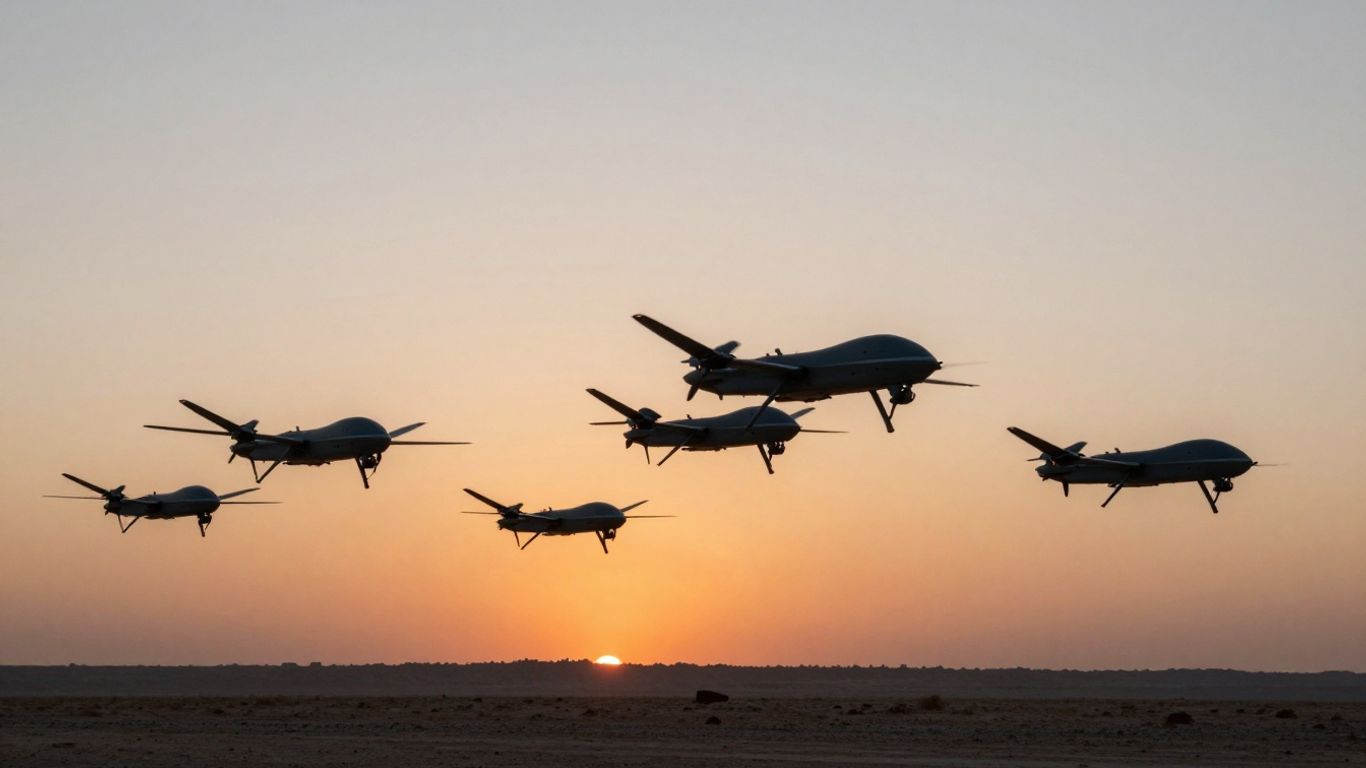
Swarm intelligence allows a fleet of aircraft to act in concert, sharing data to achieve complex objectives without needing individual commands for each unit. This cooperative behavior, which is a major focus for recent AI-enhanced drone warfare analysis, enables a level of coordination previously impossible with single-operator tactics.
Precision targeting and situational awareness
Advanced sensors facilitate the identification of assets at range, helping to maintain high situational awareness on the ground. By automating the extraction of targets from environmental clutter, these systems improve accuracy and reduce the reaction time required to verify operational needs.
Counter-drone technologies and electronic warfare trends
As the proliferation of low-cost aerial technology increases, so does the development of electronic countermeasures designed to disrupt or neutralize unauthorized activity. These defensive systems analyze radio signatures and movement patterns to identify threats, often forcing defenders into a race for better jamming and spoofing technologies.
Ethical considerations of lethal autonomous weapons
Recent developments in drone technology and AI raise significant moral questions regarding human oversight in target acquisition. While proponents argue that automation can improve precision and reduce accidental collateral damage, critics emphasize that delegating life-or-death decisions to algorithms creates unpredictable variables, particularly when facing the rise of quiet, bio-inspired drone designs that are harder to track.
Key technical challenges and limitations
Latency issues in communication and data transmission
Even with onboard intelligence, data transmission between the drone and command centers can suffer from signal interference. Managing this lag requires robust error-correction protocols and sufficient local buffer storage to ensure no data is lost during transit.
Balancing energy efficiency with heavy computational tasks
High-performance AI chips consume power that would otherwise contribute to flight duration. Developing systems that balance these competing demands remains a primary engineering hurdle, as designers try to integrate smarter detection without forcing aircraft to land more frequently.
Cybersecurity risks and the threat of system hijacking
As systems move toward higher autonomy, securing the software against intrusion becomes paramount. Protecting access points through encrypted firmware updates and secure data links is necessary to prevent bad actors from manipulating drone behavior during public or private operations.
Navigating regulatory hurdles and public safety concerns
Rapid technological growth often outpaces legal frameworks, leaving operators in a cloud of regulatory uncertainty. Maintaining public trust through transparency and strict adherence to safety guidelines allows for wider integration of flight systems into civilian airspace.
Future trends in drone intelligence
Advancements in self-learning flight algorithms
Next-generation aircraft will likely feature algorithms that learn from every flight, improving efficiency and hazard perception over time. By adjusting patterns to account for localized wind resistance or obstacles in specific environments, drones will become tailored to their mission area.
Integration with smart cities and 5G networks
Future urban environments will see drones integrated into city-wide 5G networks for real-time logistics and safety. This connectivity will allow for massive scaling of operations, where centralized traffic management systems coordinate thousands of flights simultaneously.
Miniaturization of onboard AI sensors and hardware
Future designs are focusing on shrinking the physical footprint of onboard processors and sensor arrays. This will eventually allow even the smallest micro-drones to carry powerful AI capabilities that rival today’s bulky enterprise aircraft.
Conclusion
Artificial intelligence is no longer a peripheral development but the driving force behind the next era of unmanned aerial vehicles, moving us toward a future where autonomous decision-making handles our most demanding aerial tasks. By balancing the necessity of smart navigation with the reality of energy and regulatory limitations, industries can harness these tools to achieve unprecedented levels of precision and safety. As the technology continues to mature, we will see its influence expand from specialized industrial use into the very fabric of our everyday infrastructure and logistics.
Frequently Asked Questions
How does artificial intelligence change the way a drone flies?
AI shifts the burden of flight from the operator to the machine, enabling the drone to perceive its environment, calculate paths, and react to obstacles in real-time.
What are the main benefits of using AI-powered drones in agriculture?
These drones can map crop health, analyze soil hydration, and provide targeted irrigation or fertilization advice, which results in higher yields and reduced resource waste.
Are autonomous drones allowed in residential areas?
Regulations vary significantly by region and typically depend on the operator’s clearance, the purpose of the flight, and local airspace restrictions regarding the protection of privacy and public safety.
What makes a drone "autonomous" instead of just "smart"?
An autonomous drone has the capability to perform its entire mission cycle—including takeoff, navigation, target identification, and landing—without needing manual control commands during the process.
How is edge computing used for small drones?
Edge computing allows the onboard processor to analyze visual data instantly, which is essential for navigation, avoiding collisions, and tracking targets without relying on a remote data connection.
Does AI contribute to cybersecurity vulnerabilities in drones?
Any system connected to a network is susceptible, but drones with AI often incorporate advanced encryption and secure firmware to mitigate risks of signal hijacking and data theft.
What are the biggest hurdles preventing widespread drone use?
Key difficulties include managing flight time relative to processing power, solving complex airspace traffic management in urban areas, and maintaining public acceptance through transparency regarding safety and privacy.