Skydio Competitors: What Else is Out There?

Skydio has made a name for itself with smart, self-flying drones, but they aren’t the only game in town. If you’re looking for different options, there are several other companies making cool drones. Here’s a quick look at some of the main players and what they offer.
Key Takeaways
- DJI is a major player, offering everything from drones for fun to serious tools for businesses.
- Aerodyne Group and Aeronyde focus on using drones for specific jobs like inspecting things or managing large areas.
- Skydio stands out with its advanced cameras and smart flying tech that helps it avoid crashing.
- When comparing drones, think about how easy they are to fly, the camera quality, and special features like autonomous tracking.
- Other companies like SkyCurrent and Wingtra are working on specialized drones for tasks like maintenance and mapping.
Exploring Skydio Alternatives For Enterprise Needs
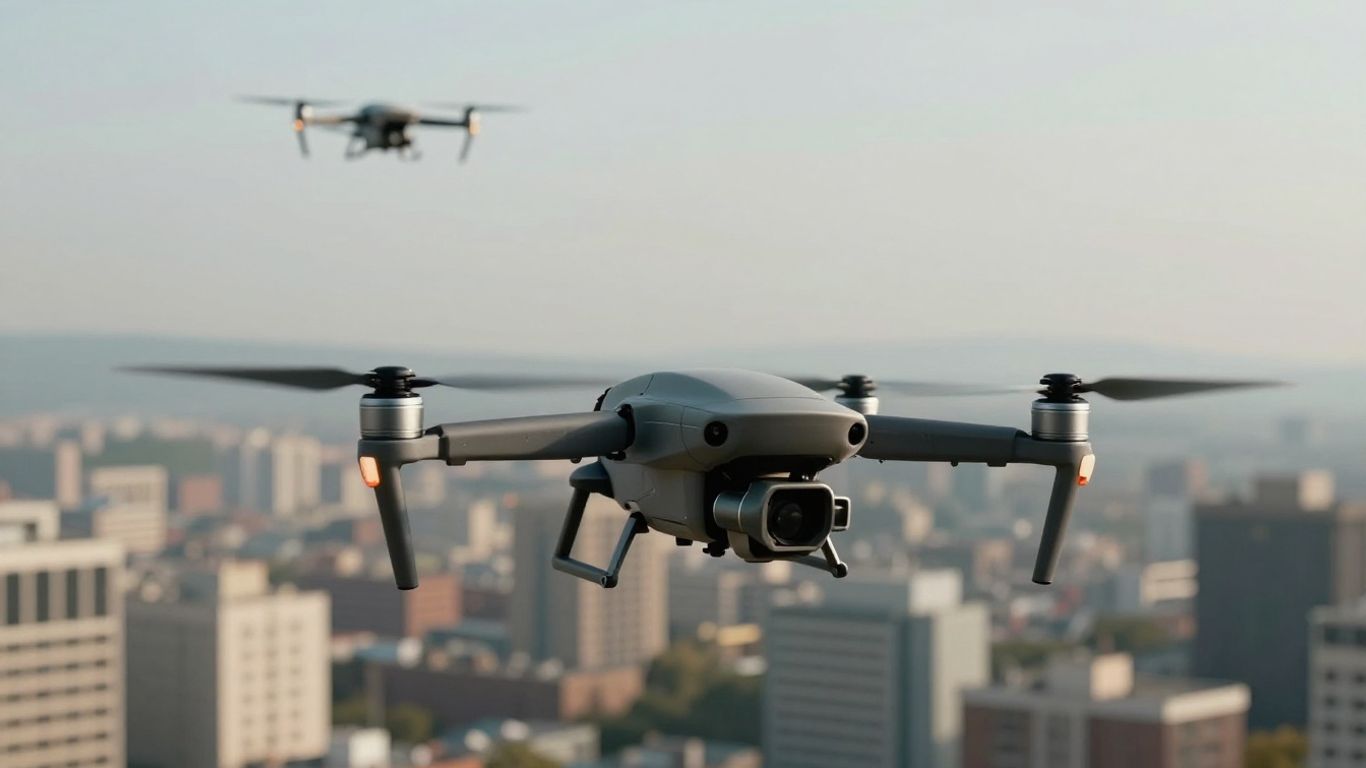
Skydio has really shifted its focus, moving away from the consumer market to concentrate on enterprise solutions. This means if you’re looking for drones like Skydio, especially for business applications, you’ll need to look at what other companies are doing in the professional space. It’s not just about having a cool gadget anymore; it’s about reliable tools for specific jobs. When considering competitors to Skydio drones, DJI is still a major player, but there are others carving out their own niches.
DJI Enterprise Solutions
DJI remains a giant in the drone world, and their enterprise line is no exception. They offer a wide range of platforms designed for various industries, from agriculture and construction to public safety and infrastructure inspection. These solutions often come with specialized payloads and software for data analysis. While DJI has historically dominated the consumer market, their enterprise offerings are robust and widely adopted. It’s a classic case of DJI vs Skydio in terms of market approach, with DJI aiming for broad industry coverage.
Aerodyne Group’s Digital Transformation
Aerodyne Group takes a different approach, focusing on digital transformation services powered by drone technology. They use AI-driven analytics to help businesses manage assets and improve operations. Their work spans sectors like oil and gas, utilities, and transportation. If you’re looking for a partner to integrate drone data into your existing workflows, Aerodyne is worth a look. They’re not just selling drones; they’re selling solutions.
Aeronyde’s Autonomous Aerial Systems
Aeronyde is another company pushing the boundaries of autonomous flight, particularly for critical applications. They provide remote inspection and monitoring services, with a Level 6 autonomy UAV service aimed at emergency responders and disaster relief. Their system includes fleet management and real-time intelligence, which is pretty advanced stuff. For organizations needing highly reliable autonomous operations, especially in unpredictable situations, Aerodyne’s focus on advanced autonomy makes them a compelling option.
When you’re evaluating enterprise drone solutions, think beyond just the hardware. Consider the software, the support, and how the technology integrates with your current operations. The best "drone like Skydio" for your business will depend heavily on your specific needs and goals.
It’s a competitive landscape out there, and while Skydio is making its move in the enterprise sector, companies like DJI, Aerodyne, and Aeronyde are also offering sophisticated tools. The key is to match the technology to the task at hand. For instance, if your work involves complex aerial surveys, you might find specialized VTOL drones more suitable, a niche some other manufacturers are exploring. The evolution of FPV drones in professional settings also highlights how diverse the market has become.
Key Competitors in The Autonomous Drone Market
While Skydio has shifted its focus away from the consumer market, the landscape of autonomous drones still has some major players, especially when you look at enterprise needs. It’s not just about who makes the most popular drone anymore; it’s about who can offer reliable, intelligent flight for serious work.
DJI’s Dominance and Consumer Offerings
DJI has been the name everyone knows in drones for a long time. They pretty much own the consumer and prosumer space. Even though Skydio is moving towards business applications, DJI still has a massive presence. They offer a wide range of drones, from those you might use for fun to serious tools for professionals. Their enterprise solutions are pretty robust, covering everything from agriculture to public safety. It’s hard to ignore them, even if you’re looking for something more specialized.
Skydio 2.0’s Autonomous Capabilities
Skydio 2.0 really stands out when you talk about autonomy. This drone is built from the ground up to fly itself, avoiding obstacles like a pro. It uses six 4K navigation cameras to build a 3D map of its surroundings in real-time. This means it can track a subject, like a person or a car, through complex environments without you needing to constantly pilot it. It’s powered by the NVIDIA Jetson TX2, which is basically a mini supercomputer for flying. This allows it to process a ton of information very quickly, making those smart decisions needed for safe, autonomous flight. For businesses needing reliable aerial data collection, this level of self-flying capability is a big deal.
Comparing Skydio 2.0 and DJI Mavic Pro 2
When you put Skydio 2.0 next to something like the DJI Mavic Pro 2, the differences become clear, especially for enterprise users. While the Mavic Pro 2 is a solid drone, Skydio 2.0 is designed with a different philosophy. It’s less about manual control and more about letting the drone handle the flying while you focus on the task.
Here’s a quick look at how they stack up for autonomous features:
| Feature | Skydio 2.0 | DJI Mavic Pro 2 (as a comparison point) |
|---|---|---|
| Primary Focus | Autonomous flight, subject tracking | Versatile aerial photography/videography |
| Obstacle Avoidance | Advanced, omnidirectional, AI-driven | Good, but less sophisticated |
| Subject Tracking | High-performance, AI-based | Capable, but requires more user input |
| Processing Power | NVIDIA Jetson TX2 (high-end embedded AI) | Less emphasis on onboard AI processing |
| Control Method | App, Beacon, Controller (optional) | Remote controller, mobile app |
The core difference lies in their design intent. Skydio 2.0 prioritizes making autonomous flight accessible and reliable, even in challenging conditions. DJI, while improving its AI, still leans heavily on user control for its professional lines, aiming for a balance of manual precision and automated features. For tasks requiring consistent, hands-off operation, Skydio’s approach is quite compelling.
For businesses looking for the best autonomous drones, the choice often comes down to whether you need a drone that can truly fly itself with minimal intervention, or a more traditional platform with advanced camera features. While DJI has some consumer drones with AI tracking, Skydio’s entire platform is built around that concept for more demanding applications. If you’re exploring options for advanced aerial robotics, looking into American-made drones might also be a good idea for security and specific capabilities [233a].
Advanced Autonomy and Sensing Technologies
When you’re looking at drones for serious work, not just fun, the brains behind the operation are what really matter. Skydio has put a lot of effort into making their drones smart, especially for enterprise use where reliability is key. They’ve moved away from the consumer market, focusing instead on making drones that can handle tough jobs without constant supervision.
Skydio’s Six 4K Navigation Cameras
Skydio’s approach to autonomy starts with its eyes – or rather, its cameras. The Skydio 2.0 is equipped with six 4K navigation cameras. These aren’t just for pretty pictures; they provide a full 360-degree view around the drone. This constant stream of visual data, totaling 45 megapixels, allows the drone to build a detailed 3D map of its surroundings in real-time. Think of it like the drone having eyes everywhere, all the time. This setup is pretty different from how many other drones, especially older enterprise models, handle obstacle avoidance. It’s all about seeing and understanding the environment to fly safely and intelligently.
The Skydio Autonomy Engine Explained
All those cameras feed into what Skydio calls the Autonomy Engine. This is where the real magic happens. It’s a sophisticated piece of software that takes all the visual information and figures out what to do next. The engine is designed to understand the drone’s environment, predict potential issues, and make flight decisions multiple times every second. This means it can react to unexpected obstacles, like a sudden branch or a change in terrain, without you having to intervene. For businesses using drones for inspections or monitoring, this level of predictive autonomy is a game-changer, reducing the risk of crashes and ensuring mission completion. It’s a big step up from drones that rely solely on GPS or basic sensors.
NVIDIA Jetson TX2 Powering Skydio 2.0
To handle all this complex processing, Skydio 2.0 relies on some serious onboard computing power. At its core is the NVIDIA Jetson TX2. This isn’t just any chip; it’s a powerful, energy-efficient AI computer designed for embedded systems. With its 256 GPU cores, it can perform trillions of operations per second. This allows the drone to run multiple deep learning networks simultaneously, which is what powers the Autonomy Engine. Having this kind of processing capability on the drone itself means it doesn’t need to rely on a constant connection to a ground station for complex decision-making, which is a big plus for operations in remote areas or places with spotty connectivity. This makes it a truly capable tool for tasks like infrastructure inspection, where complex data analysis is often required.
Here’s a quick look at the processing power:
| Component | Specification |
|---|---|
| Main Processor | NVIDIA Tegra X2 SOC |
| GPU | 256-core NVIDIA Pascal™ GPU |
| CPU | Dual-Core NVIDIA Denver 2 64-bit CPU |
| Onboard AI | 9 custom deep networks |
The focus on advanced onboard processing and a comprehensive sensor suite means Skydio drones are built for environments where manual piloting would be difficult or dangerous. This makes them suitable for a range of enterprise applications, from public safety to industrial inspections.
This advanced technology stack is what sets Skydio apart, particularly when you compare it to some of the more traditional drone manufacturers that might be focusing on different aspects of the market. Companies like DJI also have strong enterprise offerings, but Skydio’s emphasis on AI-driven autonomy is a key differentiator.
Control Methods and User Experience
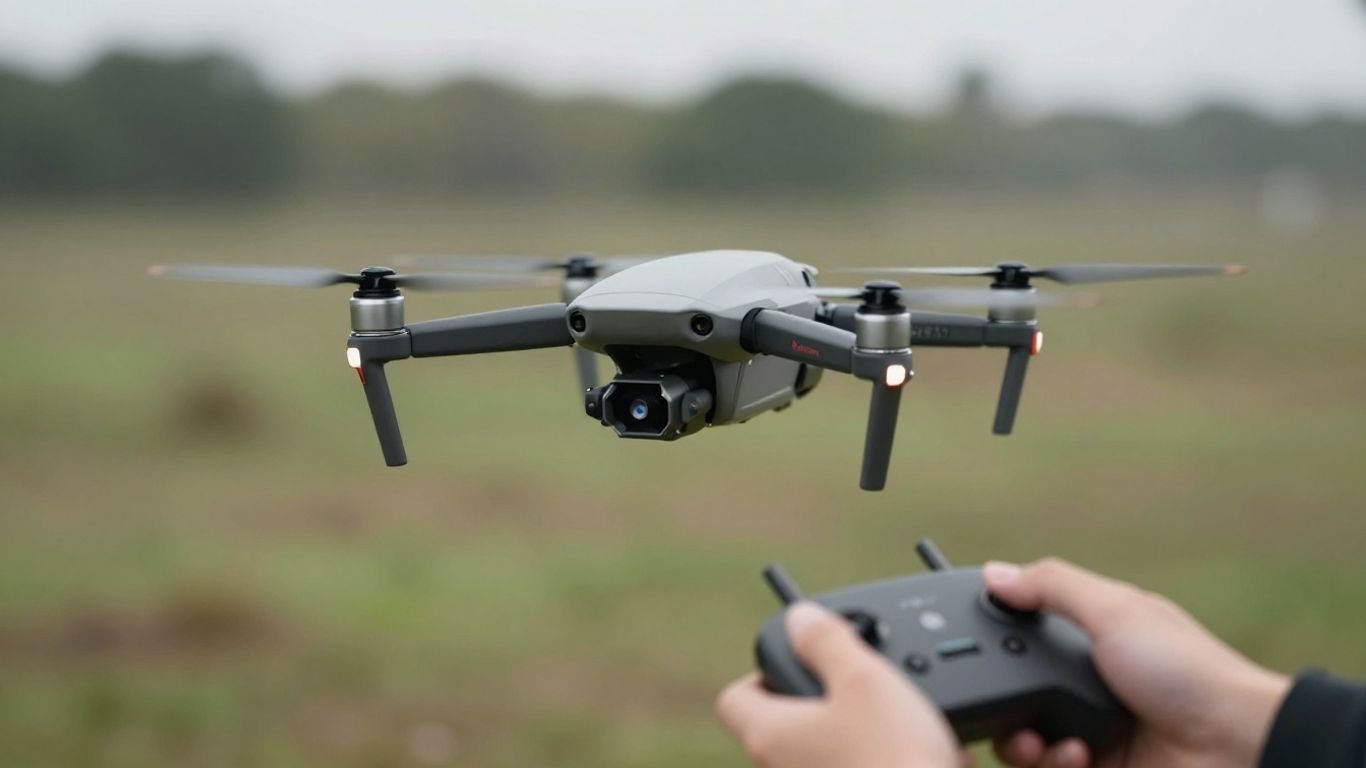
When you’re looking at enterprise drones, how you actually fly and interact with the machine is a pretty big deal. Skydio, especially with its shift away from the consumer market, has put a lot of thought into making its systems intuitive, even for complex tasks. The goal is to let the drone handle the tricky flying so you can focus on the job at hand.
Skydio 2.0 App Control (iOS & Android)
For many users, the primary way to interact with the Skydio 2.0 is through its mobile app, available on both iOS and Android. It’s designed to be straightforward. You can launch the drone with a simple tap, and from there, the autonomous flight capabilities take over. This means you’re not constantly wrestling with joysticks, especially when the drone is tracking a subject. The app provides a visual interface for managing flight modes, checking drone status, and initiating specific cinematic movements. It’s built to be accessible, even if you’re not a seasoned pilot.
Skydio Controller: A Parrot Anafi Partnership
If you prefer a more traditional, hands-on approach, Skydio offers an optional controller. Interestingly, this controller is a result of a partnership with Parrot, using the same hardware found in their Anafi drones. However, it comes pre-loaded with Skydio’s proprietary software, making it exclusively compatible with Skydio 2.0. This gives pilots a familiar physical interface for more precise manual control when needed, though it’s an additional purchase.
Skydio Beacon for Extended Range Tracking
One of the more unique control accessories is the Skydio Beacon. This device is designed for situations where you need the drone to follow a subject from a significant distance, up to nearly a mile away. Even if the drone momentarily loses direct line of sight with the subject, the Beacon helps it maintain tracking. This is particularly useful for applications like following vehicles or individuals across varied terrain, where keeping the subject in frame autonomously is key. It’s a smart piece of tech for maintaining a consistent viewpoint without constant manual input. For government and defense applications, ensuring secure and reliable drone operations is paramount, and programs like Blue UAS are designed to meet these stringent requirements.
The user experience with Skydio drones is heavily influenced by their advanced autonomy. Instead of focusing on piloting mechanics, the interface often guides users toward defining tasks and subjects for the drone to manage. This design philosophy aims to reduce the cognitive load on the operator, allowing them to concentrate on the mission objectives rather than the intricacies of flight control. It’s a shift towards drones as intelligent tools rather than just remote-controlled aircraft.
Here’s a quick look at the control options:
- App Control: Intuitive interface for basic commands and autonomous mode management.
- Controller: Physical controls for precise manual piloting, a familiar option for experienced users.
- Beacon: Enables extended range subject tracking, ideal for dynamic scenarios.
When comparing drone manufacturers for enterprise use, understanding these control methods is as important as camera specs or flight time. For instance, while DJI is a major player, companies like Autel are also making waves with features that appeal to specific markets, such as longer flight times and fewer restrictions, which can be important for certain professional tasks. Autel’s competitive features are worth considering alongside other options.
Camera Specifications and Imaging Performance
When you’re looking at drones for serious work, the camera is obviously a big deal. Skydio 2.0 packs a pretty decent setup, though it’s geared more towards its autonomous flight capabilities than being a pure cinema camera. It uses a Sony IMX577 sensor, a 12.3-megapixel CMOS chip, paired with a Qualcomm RedDragon QCS605. This combo allows for some solid video and photo options.
Skydio 2.0 Camera Sensor and Processor
The heart of the Skydio 2.0’s imaging system is its ability to capture 4K video at up to 60 frames per second, with HDR support. If you need slow-motion, it can also shoot HD footage at a snappy 120fps. For stills, there’s a dedicated photo mode that captures 12-megapixel HDR images. The lens is a 20mm equivalent with an f/2.8 aperture. The whole system is powered by the NVIDIA Jetson TX2, which is a powerhouse for onboard AI processing, making sure the drone can see and react to its environment while it’s recording. This processor is key to how Skydio achieves its advanced autonomous flight.
Video and Photo Capabilities
Here’s a quick rundown of what you can expect:
- Video Resolutions: 3840×2160 (24, 30, 48, 60 fps), 1920×1080 (60, 120 fps)
- Bitrate: 100 Mbps
- Codecs: MPEG-4 (H.264, H.265)
- Photo Resolution: Up to 4056×3040 (12 MP)
- Photo Formats: JPEG, DNG (RAW)
- Photo Modes: Single, Interval
It’s worth noting that there aren’t any 25p modes available, which might be a sticking point for some European productions. Storage is handled via Micro SD cards, requiring UHS Speed Class 3 or V30.
Image Quality Comparisons
When comparing Skydio 2.0 against some of its competitors, like the DJI Mavic 2 Pro, independent tests show that both perform well. The Skydio 2.0 holds its own, especially considering its primary focus isn’t just image capture. While lab tests might show slight differences in noise or dynamic range compared to, say, the DJI Air 3S, in real-world use, the footage is generally quite good for professional applications. The drone’s ability to build a 3D map of its surroundings using its six 4K cameras is a significant part of its appeal for enterprise users who need reliable data capture in complex environments. Building strong team connections through open communication is also vital for any project, whether it involves drones or not, and these practices can help foster better outcomes.
While Skydio 2.0 offers robust video and photo capabilities, its true strength lies in how its imaging system supports its advanced autonomy. The six navigation cameras work in tandem with the onboard AI to create a detailed understanding of the environment, which is paramount for tasks requiring precise, automated flight.
It’s important to remember that Skydio has shifted its focus away from the consumer market. Therefore, when evaluating its camera system, it’s best to compare it against other enterprise-focused drones rather than consumer models. The image quality is certainly capable for many professional uses, but the overall package, including its autonomous features, is what sets it apart.
Other Notable Drone Manufacturers
AI and Robotics Ventures Ecosystems
While Skydio focuses on autonomous flight, some companies are building broader robotics ecosystems. AI and Robotics Ventures, for instance, is involved in developing a range of robotic systems, not just drones. This includes aerial, ground, and even subsea systems. Their work supports the creation and maintenance of these complex robotic platforms for various applications. It’s a different approach, aiming to provide a wider suite of automated solutions.
SkyCurrent’s Automated Maintenance
SkyCurrent is tackling a specific niche within the drone industry: automated maintenance. Think about it, keeping a fleet of drones operational requires a lot of upkeep. SkyCurrent is developing systems to streamline this process, which is pretty important for any large-scale drone operation. This focus on the backend infrastructure is key for scaling drone usage.
Wingtra’s VTOL Surveying Drones
Wingtra is another player making waves, particularly in the surveying and mapping sector. They specialize in Vertical Take-Off and Landing (VTOL) drones. These drones are designed for efficiency in tasks like aerial surveying. Their VTOL capability means they can take off and land like a helicopter but fly like a fixed-wing aircraft, covering large areas quickly. This makes them a strong contender for businesses needing detailed aerial data without the runway requirements of traditional fixed-wing drones. You can find more about non-DJI drone options if you’re curious.
The drone market is getting pretty crowded, and it’s not just about who makes the best flying camera anymore. Companies are finding specific needs, like automated maintenance or specialized surveying, and building solutions around them. It shows how the industry is maturing beyond just the consumer gadget phase.
Conclusion
While Skydio has carved out a niche with its advanced autonomous flight features, the drone market is vast and varied. For those seeking alternatives, companies like DJI offer a broad range of solutions from consumer-friendly options to robust enterprise platforms. Aerodyne Group and Aeronyde are also pushing boundaries with specialized services and autonomous systems. The choice ultimately depends on your specific needs, whether it’s advanced AI, camera quality, or overall system integration. It’s worth exploring these Skydio alternatives to find the best fit for your projects.
Frequently Asked Questions
Why would I look for Skydio alternatives?
Skydio used to make drones for everyone, but now they focus more on businesses. So, if you’re just a regular person wanting a drone for fun or personal use, you might want to check out other companies that still make drones for consumers. Plus, it’s always good to see what else is out there to make sure you’re getting the best drone for your money.
Is DJI a good alternative to Skydio?
Definitely! DJI is like the biggest name in drones. They have tons of different models. Some are super easy for beginners, while others are powerful tools for professionals and businesses. They have a lot of options, so you can probably find something that fits what you need, even if it’s not a Skydio.
What makes Skydio drones special?
Skydio drones are known for being really smart. They have a bunch of cameras that help them see everything around them, so they’re great at flying themselves and not bumping into things. They can follow you or a car really well, which is pretty neat for filming.
Are there drones that can fly themselves like Skydio?
Yes, other companies are working on that too! While Skydio is famous for its self-flying tech, other companies are developing similar smart systems. It’s a growing area in the drone world, so more options might pop up.
What should I consider when choosing a drone besides Skydio?
Think about what you want to do with the drone. Do you need amazing video quality for filming? Or maybe it needs to be super tough for work? How easy is it to fly? Does it have cool features like following you automatically? Also, check the price and how long it can stay in the air.
What are some other companies that make drones?
Besides DJI, there are companies like Aerodyne Group and Aeronyde that use drones for special jobs. You also have Wingtra, which makes drones for mapping, and SkyCurrent that works on drone maintenance. The drone world has lots of different players!