Thermal Drone Cameras: What’s the Deal?

Thermal drone cameras are changing how we see the world, helping with everything from finding people to inspecting buildings. Here are the main things to remember:
Key Takeaways
- Thermal cameras detect heat, not light, allowing us to see things invisible to the naked eye.
- Drones equipped with thermal cameras are used in search and rescue, building checks, farming, and more.
- The resolution of a thermal camera affects how much detail you can see and how far away you can spot things.
- When choosing a thermal drone, consider what you need it for: just spotting heat or measuring exact temperatures.
- This technology is constantly improving, becoming more capable and accessible for many different jobs.
Understanding Thermal Drone Camera Technology
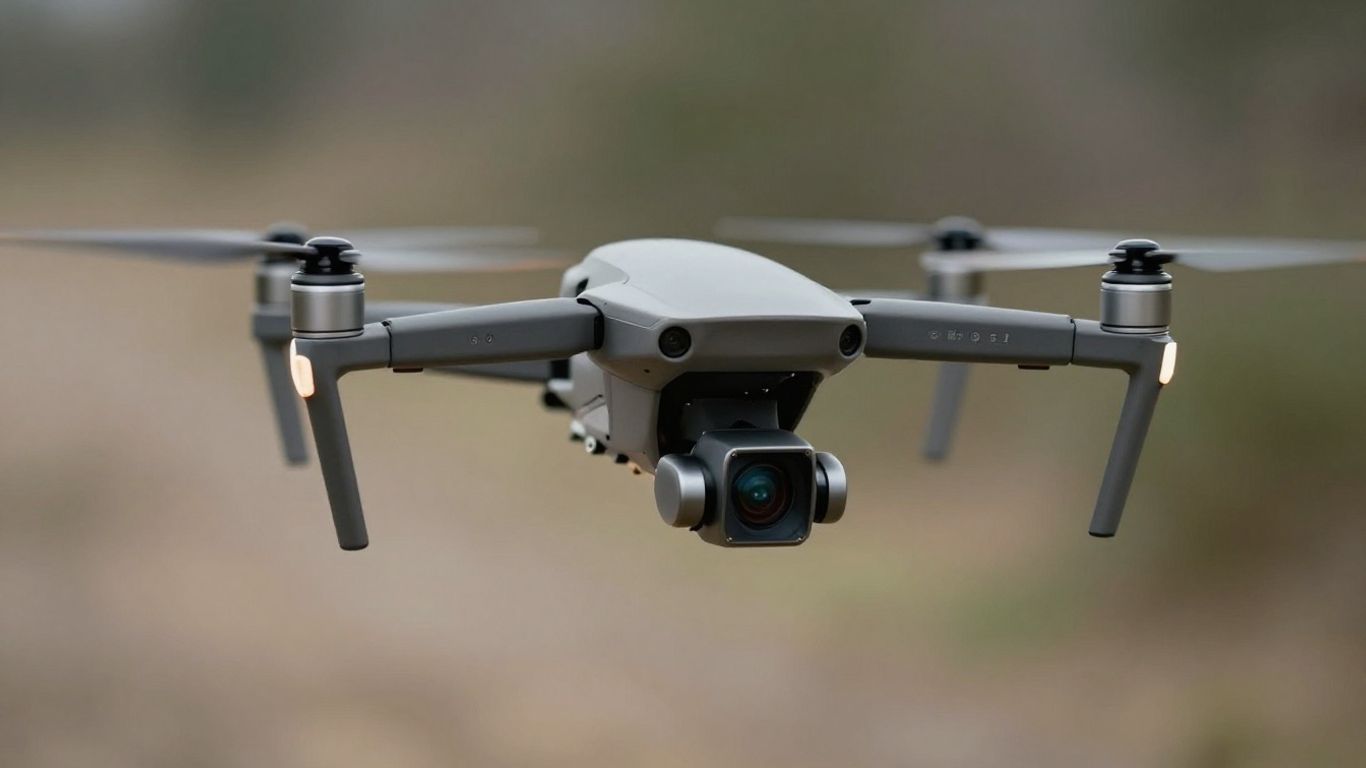
So, what’s the deal with these thermal drone cameras? Basically, they’re not like the cameras you use for taking vacation photos. Instead of capturing visible light, they pick up on infrared radiation, which is essentially heat. This means they can see things even when it’s pitch black outside or if there’s smoke or fog blocking your view. It’s pretty neat how they work, turning heat signatures into images we can understand. This technology is a big step up for many tasks, from finding lost people to checking buildings for heat loss. Understanding how thermal imaging cameras work is key to appreciating their capabilities.
What Is a Thermal Camera?
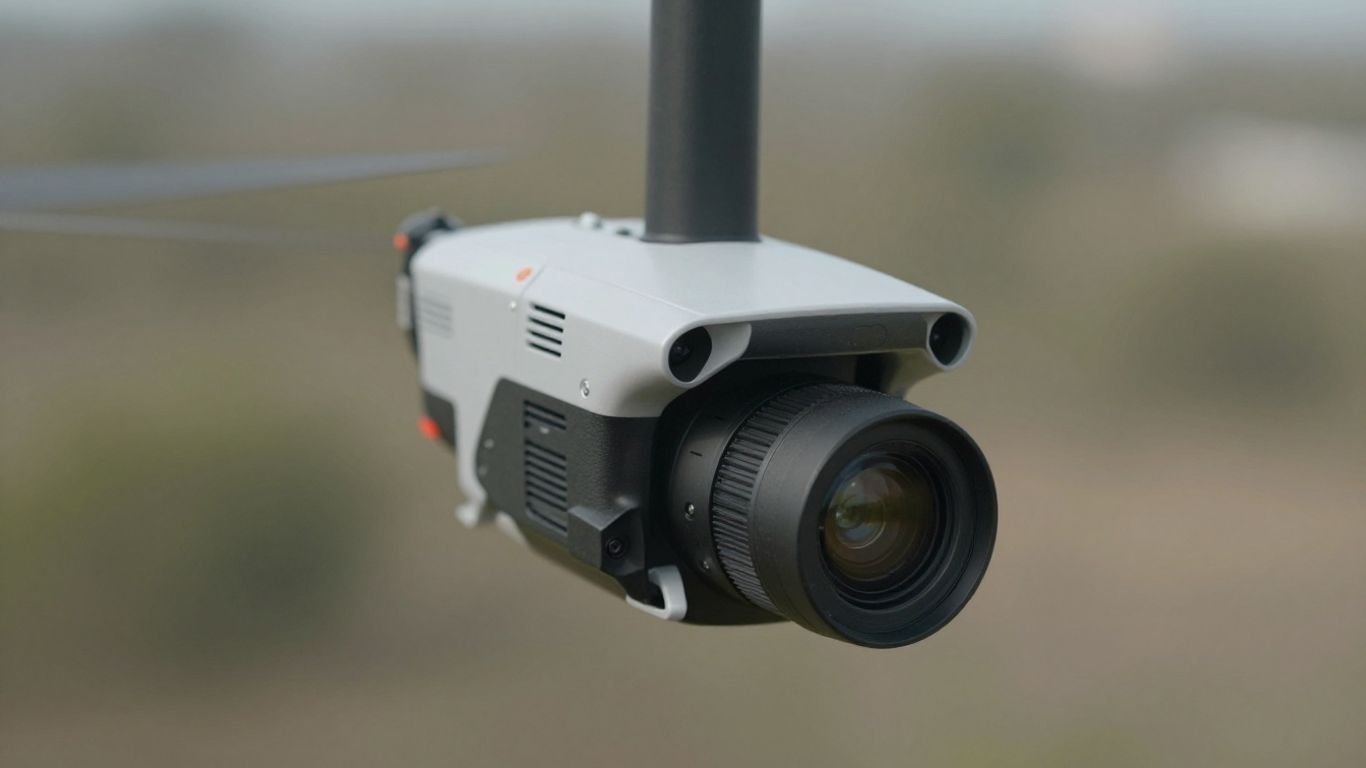
A thermal camera is a device that detects infrared radiation, or heat, emitted by objects. Unlike regular cameras that see light reflected off surfaces, thermal cameras see the heat signature. This heat is then translated into a visual image, often displayed with a color scale where warmer areas might appear red or yellow, and cooler areas blue or purple. The exact colors depend on the camera’s settings and the palette chosen by the operator. These cameras have been around for a while, initially used in military settings, but now they’re becoming much more accessible for various professional uses.
How Thermal Cameras Work on Drones
When you put a thermal camera on a drone, you get a mobile heat-sensing platform. The camera itself uses specialized lenses to focus infrared energy onto a sensor. This sensor, often a microbolometer, converts the heat it detects into an electrical signal. This signal is then processed to create a thermal image. To keep the image steady while the drone is flying, the camera is usually mounted on a gimbal, which also allows it to pan and tilt. This setup lets operators see heat patterns from above, which is incredibly useful for tasks like spotting heat leaks in buildings or finding people in difficult terrain. The ability to see heat, not just light, is what makes understanding infrared camera technology so important for drone applications.
Key Components of Thermal Drone Systems
Putting together a thermal drone system involves a few main parts. First, you have the drone itself, which needs to be capable of carrying the extra weight of the thermal payload. Then there’s the thermal camera, which is the heart of the system. These cameras come with different resolutions, affecting how much detail you can see. You also need a way to view the thermal images, usually through a controller with a screen. Software plays a big role too, allowing you to adjust color palettes, set temperature alerts, and analyze the data. Some advanced systems even combine thermal cameras with regular visual cameras, giving you both types of information at once. For more on how these systems are integrated, you can look into drone swarm technology.
The effectiveness of thermal imaging can be influenced by several environmental factors. Things like smoke, dust, and even the time of day can affect how clearly heat signatures are detected. The surface properties of an object, like its shininess or roughness, also play a part. Understanding these variables helps in getting the most accurate readings from a thermal camera.
Here’s a quick look at some common thermal resolutions:
- 320×256 pixels: Good for general detection and basic inspections.
- 640×512 pixels: Offers more detail, better for identifying smaller objects or at greater distances.
- 1280×1024 pixels: Provides the highest level of detail, ideal for precise analysis and long-range observation.
When choosing a system, it’s important to consider if you need radiometric capabilities, which allow for precise temperature measurements, or just detection, which simply highlights heat differences. This choice significantly impacts the system’s cost and complexity. For more on the types of cameras available, check out thermal imaging drones.
Exploring the Capabilities of Thermal Imaging
Thermal imaging devices are pretty neat. They basically let you see heat, which is invisible to our eyes. Think of it like a special kind of camera that picks up on infrared radiation, the heat energy everything gives off. This lets you see temperature differences, turning heat into a visual picture. It’s a game-changer for a lot of tasks, from finding lost people to checking buildings.
Thermal Resolution Explained
When we talk about thermal cameras, resolution is a big deal. It tells you how many individual points the sensor can measure temperature for. More points mean a more detailed picture. This is important because it affects how far away you can spot something and how clear the image will be. For example, a higher resolution camera can pick out smaller details or see heat signatures from much further away. This is super helpful for things like inspecting power lines or searching large areas.
Radiometric vs. Detection Capabilities
There are two main types of thermal cameras to think about: radiometric and detection. Detection cameras are good at spotting heat sources, like finding a person in the dark. They tell you if something is hot. Radiometric cameras, on the other hand, are more precise. They measure the exact temperature of every pixel in the image. This is what you need for tasks where knowing the exact temperature matters, like checking for insulation gaps in a building or monitoring solar panels. Radiometric data is key for quantitative analysis and precise diagnostics.
Understanding Emissivity and Other Factors
Getting accurate readings from a thermal camera isn’t always straightforward. A few things can mess with the picture. One of those is emissivity. This is basically how well a surface gives off heat. Different materials have different emissivity values, and if you don’t set the camera correctly for the material you’re looking at, your temperature readings will be off. Other things like atmospheric conditions (fog, smoke), the angle you’re viewing from, and even the time of day can affect what the camera sees. It’s like trying to read a book in dim light – you can still see the words, but it’s not as clear. For serious work, understanding these factors is pretty important. You can find some great resources on how thermal cameras work if you want to dig deeper.
Here are some common uses for thermal cameras:
- Search and Rescue: Locating people in difficult conditions like darkness, smoke, or dense foliage.
- Building Inspections: Identifying moisture, insulation issues, and air leaks.
- Electrical and Utility Maintenance: Spotting overheating components in power grids or machinery.
- Agriculture: Monitoring crop health and irrigation systems.
The benefits of thermal surveillance are clear when you consider its ability to see the unseen. It provides a non-contact way to gather critical temperature data, which is invaluable for safety, efficiency, and problem-solving across many industries. This technology allows for proactive maintenance and quicker response times in emergencies.
Diverse Applications for Thermal Drones
Thermal drone cameras aren’t just fancy gadgets; they’re becoming indispensable tools across a bunch of different fields. Their ability to see heat signatures opens up possibilities that were pretty much impossible before. Think about it – spotting things the naked eye, or even regular cameras, just can’t pick up.
Public Safety and Search and Rescue
This is where thermal drones really shine. When disaster strikes, whether it’s a wildfire, a flood, or someone lost in the woods, time is absolutely critical. Thermal cameras can cut through smoke, darkness, and even light foliage to find people. For firefighters, they can map out hot spots in burning buildings or track the spread of wildfires, helping crews get ahead of the danger. In search and rescue missions, they can detect a person’s body heat from the air, even at night or in difficult terrain. This capability significantly speeds up the process of locating missing individuals, potentially saving lives.
- Wilderness Search: Detecting heat signatures through dense trees.
- Disaster Response: Identifying survivors in collapsed structures or floodwaters.
- Maritime Rescue: Spotting individuals in water, even in low visibility.
The aerial perspective offered by thermal drones provides a unique advantage in chaotic emergency situations, allowing first responders to make quicker, more informed decisions about where to direct resources and personnel.
Infrastructure and Building Inspections
Inspecting large structures like bridges, power lines, or solar farms used to be a real hassle, often involving dangerous climbs or extensive scaffolding. Thermal drones change all that. They can quickly scan vast areas, identifying potential problems like electrical faults, water leaks, or insulation issues that might not be visible otherwise. For buildings, this means spotting energy inefficiencies or structural damage early, saving property owners money on repairs and energy bills. It’s a much safer and more efficient way to keep tabs on critical infrastructure.
Agriculture and Livestock Management
Farmers and ranchers are finding thermal drones to be surprisingly useful. They can monitor crop health by detecting temperature variations that indicate stress, disease, or pest infestations. For livestock, thermal cameras can help locate wandering animals in large pastures, even at night. This technology helps optimize resource use, improve crop yields, and ensure the well-being of herds. It’s a smart way to apply technology to make farming more precise and less guesswork. You can even use them to find baby animals hidden in tall grass before mowing, preventing accidental harm. American-made drones are increasingly being used in this sector for their reliability.
Industrial and Utility Maintenance
Keeping industrial plants, refineries, and utility grids running smoothly is a huge job. Thermal drones offer a non-contact way to inspect equipment for overheating or other issues that could lead to failure. This is especially important in hazardous environments where sending humans in close proximity is risky. By spotting potential problems early, companies can schedule maintenance proactively, preventing costly downtime and ensuring safety. This proactive approach is a game-changer for maintaining complex industrial operations.
Choosing the Right Thermal Drone Camera
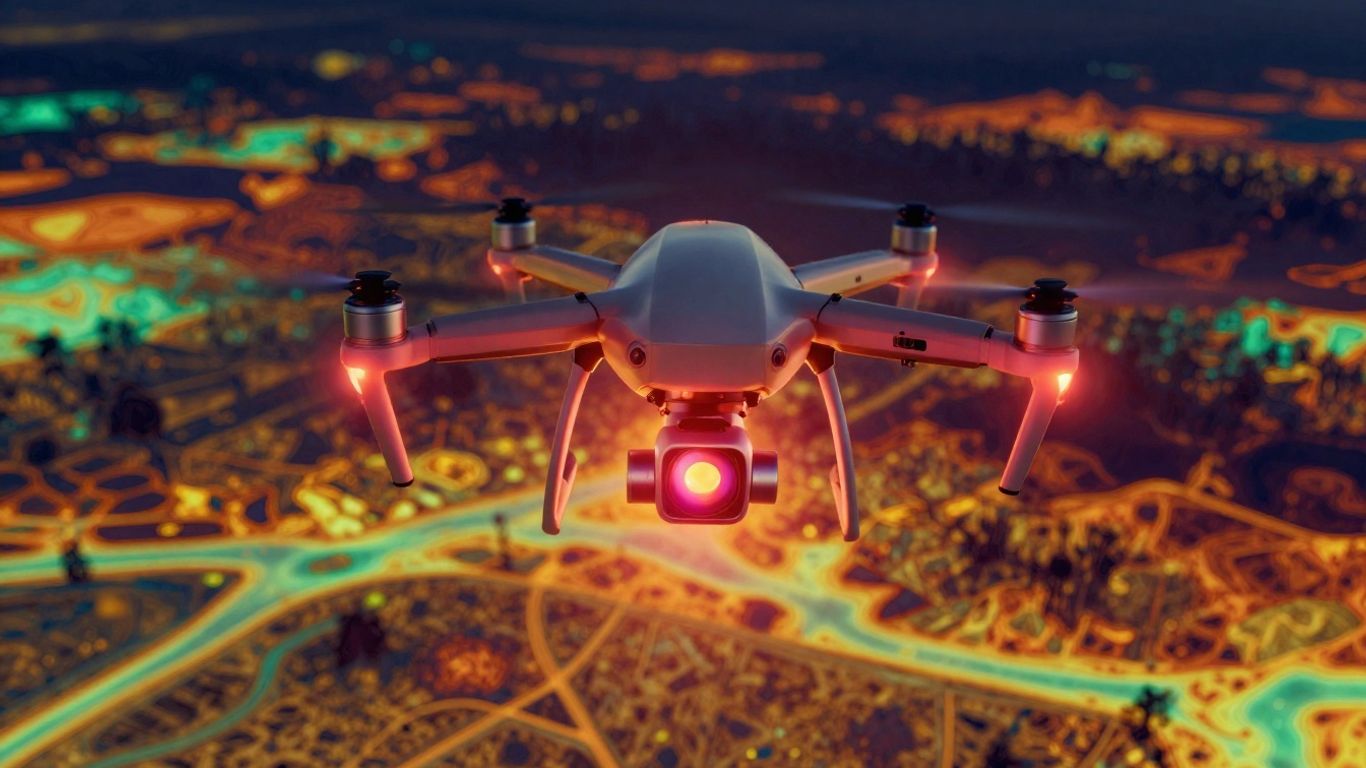
So, you’re looking to get a thermal drone camera, huh? It’s not as simple as just grabbing the first one you see. You’ve got to think about what you actually need it for. The right payload depends on your aircraft, your mission, and whether you need calibrated temperature data or just detection capability. It’s a bit like picking out jewelry; you want something that looks good, but more importantly, it needs to do the job you bought it for. Think about what you’ll be using it for most. Are you trying to spot a lost hiker in the woods, check for hot spots in a building’s insulation, or monitor crops? Each of these tasks might need a different kind of camera.
Payload Options and Aircraft Compatibility
First off, what drone are you flying? Not every thermal camera will just clip onto any drone. You need to make sure the payload you choose is compatible with your specific aircraft. Some drones, like certain DJI Matrice models or the Autel EVO II Dual, have thermal sensors built right in. Others require a separate payload. Companies like DJI, Teledyne FLIR, and Sentera make a variety of thermal cameras that can be mounted on different drone platforms. It’s a good idea to check compatibility lists or even talk to a dealer to make sure everything will work together. You don’t want to buy a fancy camera only to find out your drone can’t even lift it or communicate with it properly. It’s worth looking into FPV drones if you’re interested in advanced drone capabilities, though thermal payloads are typically for more professional, non-FPV applications.
Considering Cooled vs. Uncooled Sensors
When you’re looking at thermal cameras, you’ll see two main types of sensors: cooled and uncooled. Uncooled sensors are the more common and affordable option. They work at ambient temperature and are great for most general tasks, like finding people or animals by their heat signature. They’re lighter and don’t need as much power. Cooled sensors, on the other hand, use a cryogenic cooling system. This makes them much more sensitive and better for detecting very small temperature differences or seeing things from a really long distance. They’re usually more expensive and heavier, so they’re typically used for high-end applications where precision is absolutely key, like certain industrial inspections or long-range surveillance.
Advanced Features for Enhanced Analysis
Beyond the basic resolution and sensor type, there are other features that can make a big difference. Think about the field of view (FOV) – how wide an area the camera can see. A wider FOV is good for covering more ground quickly, while a narrower FOV can give you more detail on a specific spot. Some cameras offer dual-sensor payloads, meaning they can capture both thermal and regular visual images at the same time. This is super helpful for pinpointing exactly what you’re seeing in the thermal image. You can also look for features like user-customized isothermal settings, which let you set specific temperature ranges to highlight. This can be a game-changer for tasks like spotting overheating equipment or potential fire hazards. Software is also evolving, with tools that can track temperatures over time or overlay thermal and visual images, making the data easier to interpret.
When you’re evaluating thermal cameras, remember that atmospheric conditions, like smoke or dust, can affect readings. Also, factors like emissivity (how well a surface emits heat) and the viewing angle play a role in what the camera sees. It’s not just about the camera itself; it’s about understanding how the environment impacts the thermal data you collect.
The Evolution of Thermal Drone Solutions
Early Innovations in Thermal Imaging
Thermal imaging itself isn’t exactly new, but getting it airborne in a practical, accessible way has been a journey. Initially, thermal cameras were bulky, expensive, and required significant power, making them suitable only for very specialized, high-budget applications. Think military or large-scale scientific research. These early systems often used cooled sensors, which are great for sensitivity but add complexity and cost. The idea of putting them on a drone was pretty much science fiction for most people.
Modern Drone and Camera Integration
Things really started changing with the advancement of drone technology and more affordable, uncooled thermal sensors. Suddenly, it became feasible to integrate these cameras as payloads onto smaller, more agile aircraft. This opened the door for a whole new range of uses. The integration of thermal sensors with high-resolution visual cameras on a single drone platform has been a game-changer. This allows operators to switch between views or even overlay them, providing much richer data than either camera could alone. For instance, in search and rescue, you can spot a heat signature with the thermal camera and then zoom in with the visual camera to identify the person. This multi-sensor approach is becoming standard, especially for professional use cases. You can find some pretty advanced setups now, like those offered by Autel, which are built for demanding enterprise tasks.
Future Trends in Thermal Drone Technology
What’s next? We’re seeing a push towards even higher resolution thermal sensors, better radiometric capabilities for more precise temperature measurements, and AI-powered analysis tools. Drones are becoming more weather-resistant, and battery life continues to improve, meaning longer flight times and more comprehensive missions. Modular payload systems are also gaining traction, allowing users to swap out different sensors depending on the job. This flexibility means a single drone can be adapted for various tasks, from inspecting power lines to monitoring crops. The cost is also coming down, making this technology accessible to more industries and organizations than ever before. It’s exciting to think about how these tools will continue to evolve and what new applications will emerge as the technology gets better and cheaper.
The trend is clear: thermal drones are moving from niche tools to mainstream solutions. As sensors become more sensitive and affordable, and drones more capable, their adoption across industries like public safety, infrastructure inspection, and agriculture will only accelerate. The ability to ‘see’ heat is proving incredibly useful in ways we’re still discovering.
Conclusion
So, thermal drone cameras are pretty amazing tools. They’ve come a long way from just being for the military. Now, they help us find lost people, check buildings for problems, and even keep an eye on farms. As the technology gets better and cheaper, we’ll probably see them used in even more ways. It’s exciting to think about how these heat-seeing eyes in the sky will keep changing things for the better.
Frequently Asked Questions
What exactly is a thermal camera on a drone?
Think of it like a special camera that sees heat instead of light. Everything gives off heat, and this camera picks up that heat and turns it into a picture. So, you can see a hot engine or a person even if it’s dark or there’s smoke.
How do these heat cameras work on drones?
The camera has a sensor that catches heat waves, called infrared radiation. This sensor turns the heat into electrical signals. Then, a computer turns those signals into a picture you can see on a screen. The drone’s gimbal keeps the picture steady, even when the drone is moving.
Can a thermal drone camera see through walls?
Nope, not usually. Thermal cameras can see heat signatures on surfaces, but they can’t see through solid objects like walls or most materials. They’re great for spotting heat loss in a house from the outside, though!
What’s the difference between ‘radiometric’ and ‘detection’ thermal cameras?
A radiometric camera is like a super-accurate thermometer; it can tell you the exact temperature of things in the picture. A detection camera just shows you where the hot or cold spots are, without giving precise numbers. For most jobs, knowing where the heat is (detection) is enough, but for some tasks, you need the exact temperature (radiometric).
Why are some things hard for thermal cameras to see?
Some shiny, smooth things don’t give off much heat that the camera can easily pick up. They kind of bounce the heat away. Things like metal or very smooth plastic can be tricky. But things like people, wood, or concrete show up really well because they hold heat better.
What does ‘thermal resolution’ mean for a drone camera?
Thermal resolution is like the number of tiny dots (pixels) the camera uses to make its heat picture. A higher resolution means more dots, which gives you a clearer, more detailed image. This helps you see smaller things or spot heat from farther away.